
Hat Sizing & Fit for International Markets: US, EU, UK, JP Standards - Supplier Checklist
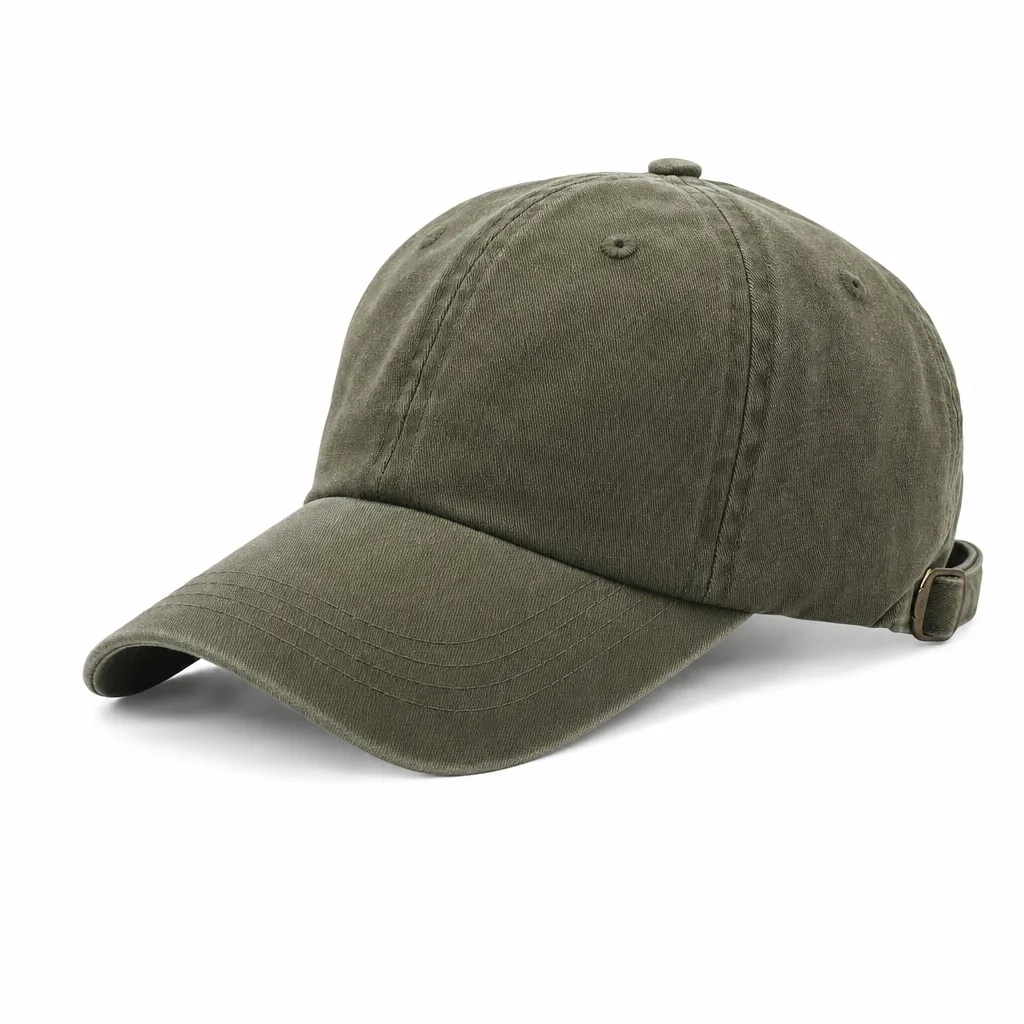
Every week, our sales team answers detailed questions about hat sizing & fit for international markets: us, eu, uk, jp standards - supplier checklist. We wrote this guide so that wholesalers, streetwear brands, corporate buyers and promotional resellers can compare options with full information, and avoid the traps that show up only after production has started.
Why sizing varies by region
Regional sizing problems usually start with grading assumptions, not labeling. A generic hat sizing chart may show the same 57 cm circumference for the US, EU, UK, and Japan, but the wear outcome changes if the block was drafted for a different head form, crown depth, or sweatband build. In production, 3-4 mm added at the side seam or a 1.5 mm thicker sweatband can shift pressure from the occipital area to the temples, which is exactly why two caps with the same nominal size can fit completely differently. US streetwear programs usually tolerate more ease in the crown and a looser visual profile, especially on structured 6-panel snapbacks with 11-12 cm crown height. Japanese accounts tend to reject that same draft as too deep or too boxy, and they are typically less forgiving on half-size execution around 56-58 cm. The bigger issue is that regional fit expectations are tied to silhouette, not just circumference. UK and EU buyers often sit between US and Japan on head size range, but they usually punish inconsistency faster across replenishment orders because retail returns show up immediately when a size run drifts by even 0.5 cm. A supplier using one master block for fitted caps, dad caps, and truckers across all markets is creating avoidable risk. On our floor, we separate the base pattern by market and cap category, then confirm internal circumference, crown height, visor curvature, and sweatband position before approving bulk. If the hat sizing chart is correct but the front panel stiffness, buckram weight, or closure geometry is wrong, the customer still reads it as a sizing failure.
Product category changes regional sizing behavior more than many buyers expect. A fitted cap size chart cannot be copied into a snapback or one-size program because closure range, back opening shape, and band construction alter perceived fit. For example, a snapback may cover roughly 54-61 cm depending on strap pitch and hole spacing, but if the closure lands too high on the occipital bone it will feel unstable even when the circumference is technically correct. For knit or elastic-backed styles, the tech pack should specify stretch percentage and recovery after wash or heat exposure; otherwise a band that tests fine at ex-factory can grow or tighten enough in transit to trigger complaints. In practical terms, internal circumference should be listed in centimeters, sweatband thickness in millimeters, and tolerance called out clearly, typically within ±0.5 cm for premium retail and tighter where the market requires it. Japan is the clearest example of why precision matters. A 1 cm miss there is often commercially fatal on a fitted or low-profile baseball cap, especially when the product is sold on a clean size run rather than as adjustable headwear. US buyers, by contrast, may accept more volume in the upper crown if the shape, embroidery placement, and closure still hit the intended look. Sports-team, uniform, and licensed programs in the EU and UK are usually the least tolerant overall because repeat orders must match prior production with minimal drift. That is why the grading sheet should define target market, end use, headwear category, and tolerance before sampling starts; otherwise the hat sizing chart becomes a paper exercise that does not survive wear testing.
Fitted caps: US numeric vs EU centimeter sizing
Most fit claims go wrong because US fitted numbers are not direct body measurements; they are retail size codes derived from head circumference in inches, then rounded into 1/8-size steps. A clean hat sizing chart should show the paired system without ambiguity: 6 7/8 = 21 5/8 in = 55 cm, 7 = 22 in = 56 cm, 7 1/8 = 22 3/8 in = 57 cm, 7 1/4 = 22 3/4 in = 58 cm, 7 3/8 = 23 1/8 in = 59 cm, 7 1/2 = 23 1/2 in = 60 cm, 7 5/8 = 23 7/8 in = 61 cm, 7 3/4 = 24 1/4 in = 62 cm. Put both values on the PO, care label approval, polybag sticker, and master carton. If the carton says “58 cm” but the ERP line says “7 1/4,” distributors routinely split inventory into duplicate SKUs, and that turns into picking errors, chargebacks, and customs classification noise.
The measurement itself has to be controlled the way the factory actually builds the cap. On fitted styles, circumference is checked at the inner sweatband seam line after steaming, cooling, and at least 24 hours of shape recovery; measuring straight off the blocking line gives false readings. A realistic finished tolerance is ±0.5 cm, taken with a flexible tape under light tension. Tighter promises sound good in sales decks but fall apart once you add 1.8-2.2 mm PE buckram, a 28-30 mm woven sweatband, visor binding tension, and heavy front embroidery on Tajima or Barudan heads that can stiffen the crown and reduce perceived ease. That is why two caps both marked 58 cm can fit differently if one is a high-profile 6-panel with dense 3D puff and the other is a soft unstructured twill cap. At CrownsForge, final size verification is normally folded into AQL 2.5 inspection, with the fit intent stated on the spec sheet as true-to-size, +0.3 cm relaxed, or -0.2 cm performance fit.
Adjustable / one-size models
One-size programs fail when buyers approve a closure type instead of a measured fit range. A plastic snapback on an adult 6-panel cap usually covers about 54-61 cm, but only if the back opening, tab length, and snap-hole pitch are drafted correctly; 7 mm pitch and at least 70-75 mm of usable adjustment is a practical baseline. That range works in the US and much of Europe, where OSFM expectations are broad, but Japan often sells better at 53-59 cm because the loose end of the range drives avoidable returns. Do not accept “OSFM” in a tech pack without circumference readings taken on the sweatband line at minimum, midpoint, and maximum closure positions. Those are the numbers that matter when you compare labels across US, EU, UK, and JP markets. A physical hat sizing chart should be part of pre-production approval, checked on a headform, not guessed from the crown pattern.
Closure choice changes both sell-through and perceived value. Plastic snaps remain the most forgiving commercial option for team caps, promo goods, and entry streetwear because they are cheap, easy to adjust, and easy to replace if breakage occurs. A fabric strap with a metal slide or buckle looks better on washed chino twill, brushed cotton, or 10 oz canvas, but the usable range is usually narrower unless the loose strap extends 80-90 mm past the slider; shorter than that, larger head sizes get squeezed out, longer than that, the tail looks sloppy at retail. On these styles, 18-20 mm strap width and nickel-free hardware are the sensible spec for EU REACH-sensitive programs. If the buyer also carries fitted sizes, map the adjustable range to a hat sizing chart so retail staff can say a mid-setting approximates 7 1/8 while the upper range reaches around 7 1/2, instead of treating one size as universal.
Elastic-fit caps are where suppliers overpromise. A stretch sweatband can hide poor pattern control in a fitting room, then fail after packing, steaming, or washing. If the crown geometry is off by 5-7 mm at the side seam or back-seam tension is inconsistent, the cap will either pinch at the temples or ride too high once it recovers from transit. We test relaxed circumference, maximum comfortable extension, and recovery after 500 extension cycles; below 90% recovery, especially on 95/5 polyester-spandex bands, the style should not be sold as dependable one-size inventory. Washed shells complicate the range further. A brushed cotton twill or garment-washed chino body can shrink 1.5-2.0% after finishing or laundering, enough to move a nominal 58 cm cap down by more than 1 cm in wearable circumference once the band and shell tighten together. Ask suppliers to declare post-wash shrinkage, not just cut-panel dimensions, and keep “adjustable,” “stretch-fit,” and “fitted” separate in packaging copy. A snapback that passes AQL 2.5 for workmanship can still generate complaints if the carton label implies fitted consistency.
Children's and youth sizing
Below 52 cm finished head circumference, an adult-small label stops being credible. Children’s programs need their own size architecture because the jump from 50 cm to 54 cm is not just a smaller circumference; it changes crown depth, panel width, and bill proportion. In factory terms, toddler caps usually sit at 48–50 cm or 50–52 cm, youth at 52–54 cm, and older kids at 54–56 cm, with actual sellable ranges depending on closure type. A hook-and-loop back can give 4–6 cm of adjustment, while a plastic snapback on a youth shell is more realistically 3–4 cm before the back opening looks oversized. If the retailer is selling in US age brackets such as 2–4T or 4–7, treat those only as merchandising labels; the spec must still be anchored to a hat sizing chart built on actual circumference in cm and inches.
The common production error is reducing only the back closure on an adult 6-panel block. You may hit the nominal circumference, but the ear-to-ear sweep stays too wide, crown height is usually 8–12 mm too tall, and the visor often over-projects by 10 mm or more on a child’s face. A proper youth pattern shortens bill length, narrows the front panels, lowers button height, and rebalances the back opening so the cap does not ride low over the ears. Our standard practice is to check fit on rigid headforms at 50 cm, 52 cm, and 54 cm before bulk approval, then hold finished circumference tolerance to ±3 mm for fitted or semi-fitted styles. Embroidery also needs to be redigitized, not simply scaled down: on lighter 180–220 gsm brushed cotton twill, a front logo that sews cleanly on a Tajima adult cap can pucker on youth panels unless density is reduced and width is kept closer to 85–95 mm.
Tech-pack sizing instructions
Most tech packs fail on sizing because they stop at labels: S/M, 7 1/4, 58 cm, and no actual measurement method. A usable hat sizing chart should lock the finished inside circumference at the sweatband stitch line, measured on the completed cap after steaming and setting, not from the paper pattern or outer shell. Put the target in millimeters and the tolerance by size, for example 560 mm +/-3 mm, 580 mm +/-3 mm, and 600 mm +/-4 mm. That is the only way to keep US, EU, UK, and JP conversions from drifting in production. A 7 1/4 fitted cap can end up closer to 7 1/8 if the sweatband shrinks after pressing or the oval is flattened by the wrong gauge. The factory should verify size with a cap oval gauge and a finished-cap check, because a flat tape around a structured front can hide a 2 to 5 mm error.
Crown height needs the same discipline. State exactly where it is measured: from the top of the visor seam to the highest point at center front, or from the table to the button if you want an external height spec. On a structured 6-panel baseball cap, 165 to 175 mm front height is common; on a low-profile dad cap, 145 to 155 mm is more realistic. Add crown depth at center back and the head-shape requirement, because round, regular oval, and long oval fit differently in Japan and the UK even when circumference is correct. If the style uses heavy front embroidery, include the buckram spec too, usually 0.55 to 0.75 mm heat-fused buckram, because it changes how the front stands and how tight the cap feels over the forehead. Without those notes, a factory can hit the size number and still ship a cap that wears wrong.
Do not reduce brim instructions to “7 cm visor.” Specify the centerline length from crown seam to tip, the width at the widest point, the sandwich thickness if there is one, and the target curve on a forming jig. Adult sports caps usually sit at 70 to 75 mm brim length; streetwear flat bills often run 76 to 80 mm with a 1.8 to 2.2 mm PE insert; washed twill dad hats tend to feel better at 68 to 72 mm with a softer insert. For snapbacks and other adjustable styles, define the full closure range, such as 540 to 610 mm finished internal circumference across all snaps engaged, plus the number of usable positions and the pull strength. If the hat is sold as one size fits all, call for at least 7 adjustment positions and a 50 N closure-pull test. Otherwise the middle setting may pass sample approval while the smallest and largest settings fail the end user, which is where returns start.
Sample fitting protocols
A sample fitting protocol only works when “medium” is treated as a market-specific label, not a universal size. For export programs, test at least four head-shape clusters: North American oval, Northern European long-oval, East Asian round-oval, and youth proportions, where crown depth often fails before circumference does. A hat sizing chart is the starting reference, not proof of fit; it does not capture side-seam pressure, front-panel collapse, or how a sweatband settles after 20 to 30 minutes of wear. For fitted caps, use 8 to 12 wear-testers per target market and split the group by gender where relevant and by hairstyle volume for fashion and streetwear accounts. Record head circumference in centimeters and inches, plus front-to-back length, ear-to-ear over the crown, and preferred wear position above the brow. Those extra measurements explain why a 58 cm sample can pass in the US and miss in Japan on the same day.
Run wear tests on production-intent samples only: final shell fabric, final buckram, final sweatband, and the exact closure hardware you will ship, whether that is a 7-hole PVC strap, self-fabric tuck strap, or 24-tooth snapback set. For international cap fit, use three wear stages: immediate try-on, 30 minutes of stationary wear, and 2 hours of walking or light sport. Log forehead-mark depth, hot spots at the side panels, crown lift, brim-angle drift, and closure slippage in 2 mm steps. On fitted styles, compare results against the local fitted hat size chart and snapback conversion table, because buyers often assume adjustable SKUs cover the same users as fitted SKUs; they usually do not. Reject any closure setup where more than 15% of testers sit on the first or last snap position, since that is a practical sign the usable size window is too narrow for retail.
Do not overstate the range of a one-size-fits-all snapback. A typical adult snapback built on a 58 cm body with a standard plastic closure usually covers about 54 to 61 cm, but comfort falls off at the edges as the back opening widens, the side panels torque, and the front logo loses its square stance. For US, EU, UK, and JP sell-in, document fit in both circumference and local notation, for example US 7 1/8, EU 57, UK 7, JP 57 cm, then revise the hat sizing chart only after checking finished production tolerance from pilot runs. In woven or washed cotton caps, finished circumference can drift plus or minus 0.5 cm after sweatband sewing; in wool-blend fitteds, steam pressing can shift crown shape enough to change perceived fit by half a size. Sample-fit each fabric group separately, because a 210 gsm cotton twill and a 300 gsm melton wool body do not wear the same even when the pattern is identical.
Frequently Asked Questions
What logo decoration techniques do you offer?
3D puff embroidery, flat embroidery, woven patch, leather patch, PVC patch, screen printing, sublimation, applique and laser etching, all in-house with no subcontracting.
Can I order a sample before bulk production?
Yes. We strongly recommend approving a pre-production sample before mass production. Samples are charged at 35 to 60 USD each plus express shipping, fully refundable against confirmed bulk orders over 500 pieces.
What is the minimum order quantity (MOQ) for custom hats?
Our standard MOQ is 100 pieces per design and color, with sampling available from 1 piece. For complex multi-color logos or premium fabric upgrades, the MOQ can be lowered with a small per-piece surcharge.
How long does production take?
Sampling takes 7 to 12 days. Bulk production runs 20 to 30 days depending on quantity, fabric availability and decoration complexity. Inspection and packing adds another 3 to 5 days before shipment.
What file format should I send for my logo?
Vector files (AI, EPS, PDF) are ideal. High-resolution PNG or JPG at 300 dpi on transparent background works as a fallback. Provide Pantone color references for accurate reproduction.
What's the MOQ for custom new era 59fifty fitted hats no minimum?
When evaluating custom new era 59fifty fitted hats no minimum, the key considerations are construction quality, decoration capability, MOQ flexibility and lead time. Head shape, retail expectations, fashion norms. Conversion chart 6 7/8 = 55cm, 7 = 56cm etc.
What should buyers know about new era 9fifty snapback?
When evaluating new era 9fifty snapback, the key considerations are construction quality, decoration capability, MOQ flexibility and lead time. Head shape, retail expectations, fashion norms. Conversion chart 6 7/8 = 55cm, 7 = 56cm etc.
How does ordering baseball cap embroidered custom work?
When evaluating baseball cap embroidered custom, the key considerations are construction quality, decoration capability, MOQ flexibility and lead time. Head shape, retail expectations, fashion norms. Conversion chart 6 7/8 = 55cm, 7 = 56cm etc.
What's the MOQ for custom embroidered baseball caps no minimum?
When evaluating custom embroidered baseball caps no minimum, the key considerations are construction quality, decoration capability, MOQ flexibility and lead time. Head shape, retail expectations, fashion norms. Conversion chart 6 7/8 = 55cm, 7 = 56cm etc.
Looking for a reliable hat manufacturer in China?
CrownsForge has produced custom hats for 800+ brands across 40 countries. From 100-piece launches to 100,000-piece retail programs, we deliver on time and on spec.
Get in touchRelated guides

BSCI vs Sedex vs WRAP vs WCA: Compliance Audit Standards Compared (2026 Update) - 2026 Buyer's Guide
Read article →
Sustainable Cap Packaging: Options, Costs and Retail-Buyer Demands - 2026 Buyer's Guide
Read article →Bucket Hat Corduroy Fabric And Trim Spec Guide for Custom Hat Buyers
Read article →Sourcing custom hats does not have to be complicated. With the right manufacturing partner, clear specifications and a small upfront investment in sampling, you can launch a retail-quality product in 30 to 45 days.