
Custom Made Trucker Hat: The 2026 Sourcing & Manufacturing Playbook - 2026 Buyer's Guide - 2026 Buyer's Guide - 2026 Buyer's Guide - 2026 Buyer's Guide
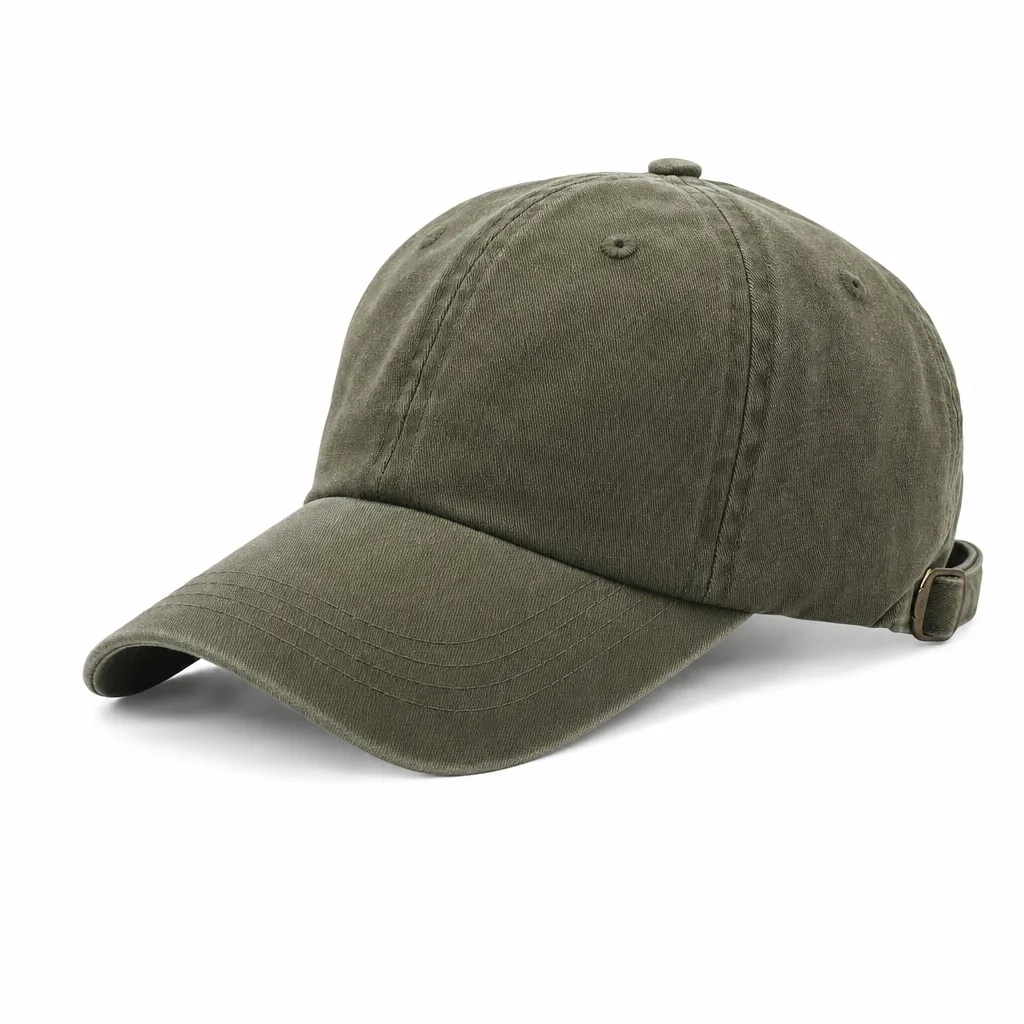
Custom Made Trucker Hat: The 2026 Sourcing & Manufacturing Playbook - 2026 Buyer's Guide - 2026 Buyer's Guide - 2026 Buyer's Guide - 2026 Buyer's Guide is one of the most-asked questions we receive from international buyers, and for good reason. With dozens of factories competing for your order and an alphabet soup of technical terms in every supplier quote, even experienced importers can feel lost. This guide consolidates what we have learned producing custom hats for clients in 40+ countries.
Custom Embroidered Hats
Embroidery is still the most reliable premium finish for a custom made trucker hat, but the real quality decision happens at digitizing, not on the sewing line. On structured trucker caps, the front panel should be embroidered flat before assembly on Tajima, Barudan, or ZSK multi-head machines; once the crown is built, dense stitching over buckram and the center seam will pull the panel out of shape. A proper tech pack should lock down logo size in millimeters, stitch count, satin versus fill areas, thread brand and color codes such as Madeira Classic or Gunold Poly, Pantone TCX references, backing spec, and whether 2 to 3 mm EVA foam is required for 3D puff. If artwork crosses the center seam, say so directly, because even good factories can see 1 to 2 mm registration drift if the file was not digitized around seam allowance, crown curvature, and buckram thickness. The first failure points are predictable: text under 4 mm cap height, satin columns below about 0.8 mm, and enclosed counters in letters like A, R, and P tend to close up or stitch poorly, especially on foam-backed fronts.
The second quality lever is cap construction. For a 5-panel or 6-panel custom made trucker hat, confirm front panel fabric weight, typically 260 to 320 gsm cotton twill or poly-cotton twill, mesh spec such as 100% polyester 60 to 100 denier, buckram stiffness, visor board thickness, crown height, and snapback resin grade. At 300 pieces, a straightforward embroidered trucker cap with 5,000 to 8,000 stitches usually lands around $2.30 to $3.90 FOB China; add 3D puff, metallic thread, applique, or custom inside taping and the workable range moves to roughly $4.50 to $6.20. Digitizing normally costs $25 to $60 per logo, while a pre-production sample is often $35 to $80 depending on revisions and trim complexity. Inspection is where buyers protect margin: use AQL 2.5, hold logo placement to within plus or minus 2 mm, and check for puckering, thread breaks, foam exposure, visor deformation, mesh seam splits, and snap closure damage after carton compression. Thread shade should be approved against Pantone TCX or physical swatches, because a small Delta-E miss in red, navy, or forest can trigger rejects on branded or licensed programs.
Custom Hat Embroidery
Embroidery is where a custom made trucker hat either looks like licensed retail or low-end promo stock, and the decision is usually made in digitizing before a single panel hits the sewing line. A workable tech pack should specify machine platform (Tajima TMEZ, Barudan BEKY, or ZSK Sprint 7 multi-heads), file format (.DST or .DSB), finished logo size in mm, target stitch count, thread line, needle size, and backing construction. “Pantone matched” is not a real approval standard for embroidery; polyester thread will drift from Pantone TCX, so buyers should lock the nearest Madeira Classic No. or Gunold Poly No. and set a visual tolerance, typically Delta-E under 3.0 on the dominant brand color. For 3D puff, call out EVA foam thickness—2.0 to 3.0 mm is standard—and define whether the file uses satin only or mixed fill and satin, because that affects edge sharpness and cap yield. The shell construction has to be engineered around the embroidery, not treated as a separate issue. A structured 5-panel trucker with PE-coated buckram or laminated foam front can carry 8,000 to 12,000 stitches on a center logo with stable registration; a softer 180 to 220 gsm cotton twill front will start puckering if density, underlay, and pull compensation are copied from a foam-front file. I would also lock visor stitch rows, crown height, and front panel seam tolerance, because a 2 to 3 mm shift at the center seam will ruin symmetry on bold logos. Our standard practice is to approve sew-outs on actual production shells, not on random stock blanks, since embroidery tension, hooping, and panel memory behave differently once the final buckram, mesh, and sweatband are in the build.
Most embroidery defects come from artwork that ignores cap physics. Text under 5 mm cap height usually fills in after steaming and packing, satin columns below 0.8 mm look ragged, and tight inside corners collapse in 3D puff unless the digitizer opens the angle, reduces density, and adds a proper edge-walk underlay. On a trucker cap, I also watch for flagging on tall front panels, especially when factories run high-speed heads above 850 rpm on lightweight shells. If the front crown caves, you are usually looking at the wrong cap frame, weak buckram, or stitch density that was pushed past what the shell can hold. Those are process failures, not cosmetic accidents. Bulk inspection should check registration drift between color blocks, exposed bobbin on satin edges, needle cuts through foam, loose thread tails inside the crown, and distortion after embroidery and top-button setting. AQL 2.5 is reasonable for finished caps, but pre-production control matters more than end-line sorting; one approved sew-out and one sealed golden sample prevent most repeat defects. In 2026, FOB China pricing for a basic custom made trucker hat with front flat embroidery typically sits around $2.40 to $4.90 at 144 to 300 pcs per colorway, assuming 4,000 to 8,000 stitches and standard polyester thread. Add 3D puff, side or back hits, metallic thread, applique, or stitch counts above 12,000, and the workable range moves to roughly $5.60 to $7.80. If the artwork has gradients, hairline outlines, or more than eight colors, woven patches, TPU badges, or printed heat-transfer emblems usually deliver cleaner detail and a lower defect rate than forcing embroidery to do a job it is not built for.
Custom Trucker Hat
The make-or-break point on a custom made trucker hat is front-panel stability, not decoration. Start the spec with structure: 5-panel or 6-panel build, crown height 10.5-12.0 cm, 3-5 mm EVA or PU foam laminated to 120-160 gsm polyester twill or brushed microfiber, 75D-150D polyester mesh, and a pre-curved PE visor with 6-8 rows of topstitching. Promo-grade truckers often use low-density foam and open-hole mesh that buckle after carton compression; retail-grade caps hold shape better with tighter hex mesh, cleaner seam taping, and denser foam that rebounds after stacking pressure. If the hats are shipping through e-commerce or 3PL networks, carton loading matters as much as sewing: a weak foam front will crease permanently when packed 100-144 pcs per master carton without crown support.
Embroidery on foam-front truckers needs separate digitizing logic from a cotton twill baseball cap. Dense fills that look clean on flat fabric can tunnel, pucker, or sink into foam unless underlay, stitch density, and pull compensation are tuned to the actual crown profile. Tajima, Barudan, and ZSK heads can all run these jobs well, but the real checkpoint is a sew-out on the exact panel construction, not a substitute blank. A usable tech pack should lock panel count, visor curve, mesh color, snap type, sweatband material, seam tape artwork, stitch count, and logo position from center front. Most production errors on trucker caps come from missing construction details before sampling, not from operators sewing badly.
Pricing only becomes credible once the construction is frozen. For a custom made trucker hat with stock polyester face fabric, stock mesh, and one-position flat embroidery, realistic 2026 China FOB pricing is roughly $2.10-$3.40 at 300 pcs and $1.65-$2.60 at 1,000 pcs, with stitch count, foam grade, and packing method driving the spread. MOQs of 144-300 pcs per colorway are normal on stock materials; dyed-to-match mesh, custom woven seam tape, TPU or molded PVC patches, and branded snap molds usually push the MOQ to 500-1,000 pcs. Common adders are $0.18-$0.45 for woven labels, $0.35-$0.90 for TPU or rubber patches, and $0.60-$1.50 for chainstitch, moss stitch, or mixed embroidery. Control the predictable failures—warped visors, asymmetrical crown height, brittle snaps, foam bubbling, off-center logos, and shade variation—with a measurement chart, ±0.5 cm tolerances on key dimensions, and final random inspection to AQL 2.5. If color match matters, specify Pantone TCX for textile components, Pantone Coated for printed trims, and an acceptable Delta-E before bulk dyeing.
Custom Trucker Hats
A custom made trucker hat lives or dies on structure, not graphics. The non-negotiables are front-panel rigidity, mesh rebound, visor symmetry, and clean crown geometry after embroidery. The commercial baseline is still a 5-panel or 6-panel build using a foam-backed polyester front, polyester mesh back, PE visor board, PP snapback, and a 16-20 mm poly-cotton sweatband. In production, the front support is usually 2-3 mm EVA or PU foam lamination; that thickness is what keeps a 10,000-15,000 stitch logo from collapsing or tunneling the crown. If the buyer wants a softer retail hand, switch the front panels to 10 oz cotton twill, 280 gsm chino twill, brushed canvas, or 600D polyester, then adjust digitizing with lighter fill density, proper edge-run underlay, and realistic pull compensation on Tajima, Barudan, or ZSK machines. The spec sheet has to lock down more than artwork. A workable tech pack should call out crown height in millimeters, profile, panel count, visor curve, mesh gsm or aperture size, snap color and peg count, sweatband composition, seam tape print, embroidery size, target stitch count, and Pantone TCX for every visible component. Stock-material programs in China commonly open at 144-300 pieces per colorway, but once you introduce custom-dyed shell fabric, proprietary mesh, molded closures, or branded inner tape, MOQ usually moves to 500-1,000 pieces because the trim and dye lots stop being shared inventory. That is also where weak factories start substituting near-match mesh or lower-density foam unless approvals are controlled tightly.
Pricing spreads fast because trucker caps that look similar on a quotation sheet can be built to very different tolerances. A basic promotional custom made trucker hat with stock mesh and one front embroidery location usually lands around $2.20-$3.80 FOB China at 300-1,000 pieces. A retail-spec version with 280 gsm chino twill, cleaner seam binding, woven flag label, printed seam tape, custom snap, better shaping, and tighter embroidery finishing is more realistically $4.20-$7.50 FOB. Color control is an early warning sign: shell fabric should be held close to the approved lab dip, and in practice a Delta-E of 1.5 on main visible components is a sensible target, because a black brim against a green-cast black mesh looks defective immediately under retail lighting. Inspection should focus on wear failures, not just obvious packing defects. The repeat issues on trucker runs are crown asymmetry, visor twist, mesh tearing at seam joins, broken snap prongs, embroidery puckering, exposed seam tape, and front panels with inconsistent stiffness between lots. I also check whether the sweatband is fully caught in the seam and whether the snapback withstands repeated opening cycles without cracking at the posts. AQL 2.5 is a normal bulk standard, but for licensed or higher-value programs I tighten appearance tolerances and measure crown height, brim width, head opening, and logo placement across multiple cartons. If a supplier cannot keep mesh shade, panel tension, and logo registration stable on pre-production samples, they will not magically control it at 3,000 pieces; in this category, supplier choice is really a process-control decision disguised as sourcing.
Hat Trucker Custom
The build spec decides whether a custom made trucker hat looks retail-ready or collapses into promo grade after one hot container ride. Start with the right architecture: 5-panel for a clean oversized front logo, 6-panel if you need better crown stability and easier fit grading. For the back, 75D-100D polyester mesh is standard; for the front, the real choice is 3-5 mm foam versus a face fabric like 10 oz cotton twill, brushed canvas, or 220-250 gsm recycled polyester. Foam is cheaper and gives the classic high-crown trucker profile, but it creases under compression and telegraphs embroidery flaws fast. On Tajima or Barudan cap frames, most front logos land in the 6,000-12,000 stitch range, and dense fills on foam need clean edge-run, tatami underlay, and sane pull compensation or the crown will tunnel and the artwork will skew. If the logo crosses a center seam or drops near the visor break, sequencing and panel setup should be decided at sample stage, not improvised on the sewing line.
A usable spec sheet for a custom made trucker hat needs measurable tolerances, not vague color names and reference photos. Call out crown height, visor length, 6-8 rows of visor topstitching, sandwich color, snapback resin type, sweatband composition, seam tape artwork, top button color, and exact logo size and placement tolerance. “Black mesh” is meaningless unless it is tied to a Pantone TCX target or an approved physical swatch. In production, solid front fabrics can often hold Delta-E under 1.5 to lab dip, while mesh commonly drifts closer to 2.0 because open construction and yarn-lot variation scatter light differently. MOQ is usually 144-300 pieces per colorway with stocked mesh and trims, but dyed-to-match components, recycled mesh, custom woven labels, or printed taping usually push the workable minimum to 500-1,000 pieces. In Yiwu, a stock-material foam-front cap with one embroidery hit typically lands around $2.10-$3.40 FOB at 300-500 pieces; a retail-spec version with branded internals, multiple decorations, and tighter QC is more realistically $4.20-$7.50 FOB.
Most trucker-cap failures are repetitive, not random: visor warp, off-center embroidery, mesh seam puckering, weak snap closure, sweatband staining, and topstitch drift that becomes obvious by the third visor row. The fix is process control backed by inspection, not a last-minute carton glance. I would inspect at AQL 2.5, hold front logo placement to +/-2 mm, check crown symmetry on a cap form instead of a flat table, and compare first-off against bulk for stitch density and registration. Shade should be checked under D65 light, because warehouse lighting hides bad navy, charcoal, and black. If the front panel is sublimated, inspect for seam-fold ghosting and migration; if it uses TPU, woven, or merrowed patches, test adhesion again after 24 hours because under-cured glue often fails after 45-50 C container exposure. For licensed or chain-retail orders, verify sedex-audit-cap-supplier-guide.html">BSCI 2.0 or Sedex SMETA 4-Pillar status before the PO is released, because compliance problems are far more expensive than a few cents saved on the quote.
Trucker Custom Hat
A custom made trucker hat only looks simple until you inspect it at arm’s length. The core build is still a 5-panel or 6-panel cap with a foam-front crown, polyester mesh back, pre-curved PE visor, and plastic snap closure, but small spec errors show up fast: a warped visor, crushed foam, uneven mesh tension, or embroidery that sinks into the crown. For a cleaner retail silhouette, most factories use 3 mm PU foam laminated to tricot; for taller promo profiles, 5 mm foam is more common but less forgiving in sewing. Mesh is typically 75D to 150D polyester, brim board 1.8 to 2.2 mm, and sweatbands usually 28 to 32 mm wide in polyester, cotton twill, or CVC. Decoration choice has to match the crown structure. Flat embroidery works reliably on foam fronts, while 3D puff needs disciplined digitizing, proper underlay, and enough satin width to hold the edge without cutting through the foam. On Tajima, Barudan, or ZSK heads, bad files are obvious: jump stitches, collapsing puff, and distorted letterforms around the center seam.
The spec sheet is what separates a clean shipment from a chargeback. For a custom made trucker hat, lock down crown height, panel count, visor curve, stitch rows on the bill, snap type, top button, eyelet method, sweatband composition, inside seam taping, label placement, and Pantone references for every visible component. If the program is color-sensitive, ask for lab dips or physical swatch approval and define Delta-E tolerance up front—1.5 max is realistic for retail programs, while 2.0 is usually acceptable for promotions. In China, MOQ normally lands around 144 to 300 pieces per colorway if you use stock mesh, stock snaps, and standard foam; once you move into custom camo, molded PVC patches, proprietary mesh, or printed seam tape, 500 to 1,000 pieces is the practical floor. A realistic 2026 FOB range is about $2.20 to $3.40 for basic foam-front screen-print caps, $3.20 to $5.80 for embroidery-led builds, and $5.50 to $8.50 for caps with appliqué, woven patches, custom trims, and retail packing. Final inspection should run at AQL 2.5, with special attention to logo placement within +/-2 mm, crown symmetry, foam bubbling, visor deformation, mesh trimming, skipped sweatband stitches, and snap pull security.
Working with CrownsForge for custom made trucker hat programs
A custom made trucker hat program goes off track long before final inspection if the factory starts bulk cutting without locking the spec pack. The non-negotiables are crown profile, front foam thickness, mesh type, visor curve, closure, artwork size, Pantone TCX references, and a signed BOM with every trim callout down to seam tape width and sweatband composition. In practice, a clean sampling path is 3 to 5 working days for digital artwork layout and material confirmation, then 7 to 12 days for a physical pre-production sample after vector files and color standards are approved. For stock-supported 5-panel foam-front mesh caps, MOQ usually lands at 144 to 300 pieces per colorway; shift to custom-dyed cotton twill, proprietary camo, printed seam tape, or branded inside labels and the economic MOQ usually moves to 800 to 1,200 pieces because dye minimums, trim setup, and cutting waste start to drive the math. Small pattern changes matter more than buyers expect: a 5 mm crown-height adjustment, a lower-slope visor, or a different sweatband fold can change fit, silhouette, and pack-out enough to trigger a full resample.
Decoration is where a custom made trucker hat either looks dialed-in or cheap. Foam-front panels do not forgive the wrong method. Bold logos with open fills usually run best as 3D puff on Tajima or Barudan heads; fine letterforms under roughly 0.8 mm line width are safer as woven patches; dense fills that would crush 5 mm EVA foam are better handled with heat transfer or screen print. Good factories control embroidery registration within +/-1 mm, keep thread tension consistent across heads, and choose the right backing so the panel stays flat instead of torquing after bagging and carton compression. On production control, the baseline should be BOM sign-off, PP approval, line-start swatch check, in-line QC, and final inspection to AQL 2.5 before sealing export cartons. Cap tolerances should be written clearly: usually +/-0.5 cm on crown height, visor width, and strapback placement, with color held to Delta-E 1.5 to 2.0 against the approved standard under D65 lighting. FOB Ningbo or Shanghai still suits experienced importers, while DDP is usually better for smaller brands that need landed-cost accuracy; for reference, a mid-spec custom made trucker hat at 1,000 pieces commonly sits around $2.10 to $3.60 FOB, and quotes far below that range usually hide lighter fabric, weaker mesh memory, lower stitch counts, or outsourced QC.
Frequently Asked Questions
Can I order a sample before bulk production?
Yes. We strongly recommend approving a pre-production sample before mass production. Samples are charged at 35 to 60 USD each plus express shipping, fully refundable against confirmed bulk orders over 500 pieces.
How long does production take?
Sampling takes 7 to 12 days. Bulk production runs 20 to 30 days depending on quantity, fabric availability and decoration complexity. Inspection and packing adds another 3 to 5 days before shipment.
Which shipping methods do you support?
We support FOB, CIF and DDP shipping. Air express for samples and small orders, sea LCL for 100 to 500 pieces, sea FCL for 5,000+ pieces. Door-to-door DDP available for US, EU, UK, Canada and Australia.
What logo decoration techniques do you offer?
3D puff embroidery, flat embroidery, woven patch, leather patch, PVC patch, screen printing, sublimation, applique and laser etching, all in-house with no subcontracting.
Do you support sustainability certifications?
Yes. We work with GOTS organic cotton, GRS-certified recycled polyester, OEKO-TEX Standard 100 fabrics, and are BSCI and Sedex audited. Certification documentation can be provided per order.
How does ordering custom hat trucker work?
When evaluating custom hat trucker, the key considerations are construction quality, decoration capability, MOQ flexibility and lead time. Cover everything buyers ask about custom embroidered hats: how it's manufactured, what specs to request from a factory, typical MOQ and pricing, common quality issues to inspect for, and how this ties back to the broader custom made trucker hat sourcing decision. Cover everything buyers ask about custom hat embroidery: how it's manufactured, what specs to request from a…
How does ordering custom embroidered trucker hats work?
When evaluating custom embroidered trucker hats, the key considerations are construction quality, decoration capability, MOQ flexibility and lead time. Cover everything buyers ask about custom embroidered hats: how it's manufactured, what specs to request from a factory, typical MOQ and pricing, common quality issues to inspect for, and how this ties back to the broader custom made trucker hat sourcing decision. Cover everything buyers ask about custom trucker hats: how it's manufactured, what specs to request from a…
How does ordering custom made hats for men work?
When evaluating custom made hats for men, the key considerations are construction quality, decoration capability, MOQ flexibility and lead time. Cover everything buyers ask about custom embroidered hats: how it's manufactured, what specs to request from a factory, typical MOQ and pricing, common quality issues to inspect for, and how this ties back to the broader custom made trucker hat sourcing decision. Cover everything buyers ask about custom trucker hats: how it's manufactured, what specs to request from a…
How does ordering high quality custom trucker hats work?
When evaluating high quality custom trucker hats, the key considerations are construction quality, decoration capability, MOQ flexibility and lead time. Cover everything buyers ask about custom embroidered hats: how it's manufactured, what specs to request from a factory, typical MOQ and pricing, common quality issues to inspect for, and how this ties back to the broader custom made trucker hat sourcing decision. Cover everything buyers ask about custom trucker hats: how it's manufactured, what specs to request from a…
Need a low-MOQ test order?
We help emerging brands launch with as few as 100 pieces. Premium fabric, in-house embroidery, retail-ready packaging.
Start a small orderRelated guides
Custom Hat Embroidery: The 2026 Sourcing & Manufacturing Playbook
Read article →
Festival Bucket Hats Reorder Planning Guide for Custom Hat Buyers
Read article →
Merino Wool Beanie: Properties, Costs and How to Spec It Right - 2026 Buyer's Guide - Cost & MOQ Breakdown
Read article →Sourcing custom hats does not have to be complicated. With the right manufacturing partner, clear specifications and a small upfront investment in sampling, you can launch a retail-quality product in 30 to 45 days.