
Custom Logo Hats: When to Use It, Costs, and What to Ask Your Factory - 2026 Buyer's Guide - 2026 Buyer's Guide
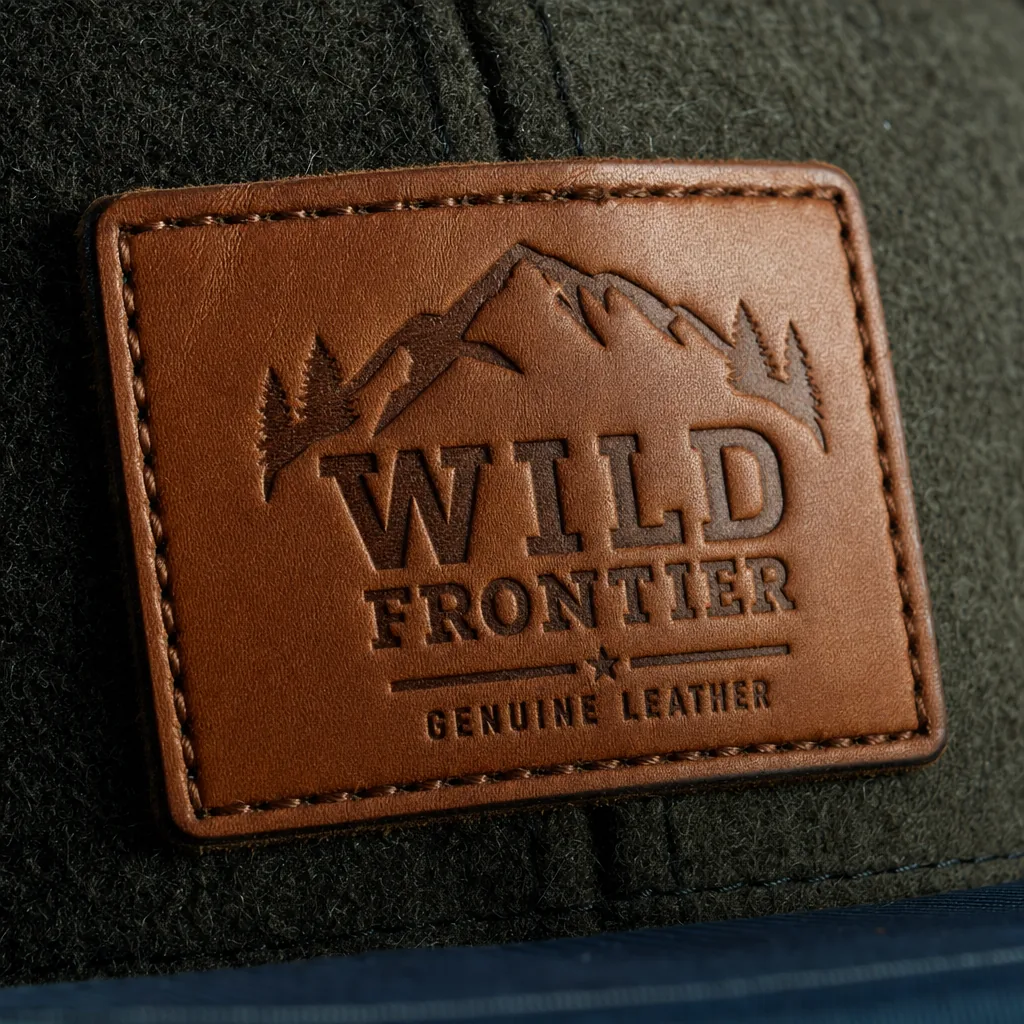
Custom Logo Hats: When to Use It, Costs, and What to Ask Your Factory - 2026 Buyer's Guide - 2026 Buyer's Guide is one of the most-asked questions we receive from international buyers, and for good reason. With dozens of factories competing for your order and an alphabet soup of technical terms in every supplier quote, even experienced importers can feel lost. This guide consolidates what we have learned producing custom hats for clients in 40+ countries.
Custom Embroidered Patches
Embroidered patches earn their place on custom logo hats when the logo needs a badge look, broader visual fill, or reuse across multiple cap bodies without re-digitizing every front panel. The patch base is typically 180-250 gsm polyester twill for clean stitch definition or 1.5-2.0 mm acrylic felt when you want a heavier, vintage hand. Most factories run them on Tajima, Barudan, or ZSK heads with 120D polyester thread because it holds color better in UV exposure than rayon and survives cap washing more consistently. Border selection is not cosmetic; it drives both shape tolerance and cost. Merrow borders need about 3 mm edge allowance and work best on circles, shields, and simple ovals. If the art has sharp corners, interior cutouts, or irregular outlines, satin edge, laser-cut, or die-cut is the right call. As a rule, embroidered patches start losing clarity when text drops below 3 mm cap height or negative space falls under about 0.8 mm. At that point, woven patches, printed twill, or molded TPU badges reproduce detail more reliably.
Attachment is where patch programs usually go wrong. Heat seal by itself is acceptable on flat goods, but on curved crowns it fails after carton compression, summer transit, and repeated flexing at the front panel. On structured 6-panel baseball caps, perimeter stitching is the safe method, especially when the patch crosses the center seam or sits over buckram. Pre-sewn application usually gives better positional control on assembled caps, while post-sewn application often sits flatter on unstructured 5-panels and camp caps because the panel can be opened and sewn with less distortion. A 63 x 63 mm embroidered patch in China typically costs $0.28-$0.65 at 1,000 pieces, with cap attachment adding $0.12-$0.30 depending on crown shape, seam interference, and needle access. If the patch is outsourced instead of made in-house, add 5-10 days and expect more lot-to-lot color drift.
A usable RFQ for patch-based custom logo hats needs more than artwork. Specify finished patch size in millimeters, border type, base fabric, backing, thread composition, placement measured from visor seam or crown center, and whether the patch is applied before or after cap assembly. For color, call out Pantone Solid Coated or Pantone TCX explicitly; embroidery thread will not match paper standards perfectly, so demanding Delta-E under 2.0 is usually fantasy. In production, under 3.5 against an approved standard is realistic on dark and mid tones, while fluorescents and heathers often drift further. Inspection should be on finished caps under AQL 2.5, not on loose patches alone. The defects that matter at packing are uneven merrow width, exposed twill from low stitch coverage, puckering from excessive top-thread tension, laser scorch on cut edges, skipped stitches at sharp points, and patch placement wandering off the center front seam. Our standard practice is to approve both a loose patch sample and a sewn-cap sample, because curvature and buckram change how a patch actually reads on the shelf.
Custom Hat with Patch
Patch programs succeed or fail at the interface between patch construction and crown geometry, not at the artwork file. For custom logo hats, the four patch types worth quoting are merrowed embroidered, laser-cut satin-stitch embroidered, woven, and molded PVC. Embroidered patches are still the safest default on structured 6-panel cotton twill and trucker caps because they hide small sewing-tension variation and stay legible from roughly 2-3 meters. Woven patches outperform embroidery when copy drops below about 4 mm cap height, when the logo has fine negative space, or when you need cleaner edge definition without high stitch density. PVC works for bold outdoor or moto branding, but it adds thickness and can look clumsy on soft crowns.
Size and attachment need to be locked against the exact cap profile before sampling. A 70 x 50 mm merrow patch that sits flat on a buckram-backed front panel can edge-lift on an unstructured dad cap after packing compression, especially if the crown has been enzyme washed and softened. “Embroidered patch” is not a usable RFQ spec; buyers should define finished size, border style, base fabric, backing, thickness, and attachment method. The claim-heavy shortcut is glue-only application. A perimeter stitch usually adds $0.12-$0.28 per cap, but it survives wash testing, summer container heat, and master-carton pressure better on brushed twill, chino, and lightweight polyester. For 300 pieces, a realistic FOB range is $2.20-$3.40 for cotton twill custom logo hats with a 1-color embroidered patch; PVC patch versions typically run $2.80-$4.50 FOB plus an $80-$180 mold charge. If color accuracy matters, specify Pantone TCX or Pantone Solid references and set Delta-E under 2.0 for thread and under 1.5 for PVC.
Inspection should focus on the patch-to-cap seam, because that is where bulk failures show up. The repeat problems are crooked placement, front-panel puckering, uneven satin border density, edge lifting after carton compression, and thread show-through on light patch grounds. AQL 2.5 is standard for mass production, but placement tolerance should be tighter than general workmanship: once patch skew exceeds about 3 mm off centerline on a structured front, the defect is obvious at retail. Measure center-seam offset, top-button distance, patch width, and left-right angle deviation during inline and final inspection, and if the patch is heat-applied before assembly, run a peel test after 24 hours and again after 60 C conditioning. Our standard practice is to compare one direct-embroidered sample against one patch sample under retail lighting before bulk approval, because patches are strong for badge-style logos and cross-fabric consistency but usually the wrong choice for ultralight running caps or very price-sensitive programs above 5,000 units.
Custom Patch for Hat
Use a patch when the logo is too fine, too layered, or too fragile for direct embroidery on a curved crown. On custom logo hats, embroidery starts losing fidelity when copy falls below roughly 4 mm cap height, strokes drop under 0.6 mm, or the art relies on tonal fades that would require excessive thread changes and jump trims. The practical patch options are embroidered with merrow border, laser-cut satin-stitch patch, woven patch, printed twill patch, and molded PVC or TPU badge. Woven patches hold small type and fine outlines best because detail comes from weave density rather than satin columns; embroidered patches win on bolder marks because they give loft, edge definition, and better perceived value at retail. PVC and TPU are more specialized: strong for fishing, workwear, and outdoor SKUs, but they add stiffness and can distort a low-profile unstructured crown if the badge is oversized.
Most patch failures are not art problems; they are application problems. A 75 x 50 mm badge can look perfect as a loose sample, then tunnel, pucker, or bridge over the center seam once it is sewn onto a soft brushed-cotton dad cap. The same patch usually sits clean on a buckram-backed 6-panel cotton twill or acrylic-wool crown because panel stiffness controls the surface. Production typically runs on Tajima, Barudan, or ZSK heads for embroidered patches, then moves to laser cutting or die cutting, backing lamination, and attachment by edge stitch, box stitch, or heat seal plus stitch. Our standard practice is to approve the patch on the actual cap body, not flat on the table, because crown curvature, seam bulk, and front-panel reinforcement decide whether the patch will wear cleanly after packing and transit.
Write the patch spec like a control document. Lock size in millimeters, base fabric weight in gsm, border type, backing, attachment method, and placement tolerance; for front placement, ±2 mm is a realistic maximum if you want consistent shelves. Call out color by Pantone C or Pantone TCX and set Delta-E below 1.5 for brand-critical shades. If thread is involved, 120D polyester is the safe default for UV, crocking, and wash resistance; rayon gives better sheen but is less forgiving in outdoor use. In 2026 China pricing, the ex-factory add-on over a basic cotton twill cap is typically $0.18-$0.45 for embroidered patch, $0.22-$0.50 for woven, $0.15-$0.35 for printed twill, and $0.45-$0.90 for PVC, usually starting to make sense at 144 pcs per colorway and getting cleaner at 300-500 pcs. At inspection, I would run AQL 2.5 and specifically check corner lift after 24-hour recovery, glue bleed, exposed ground twill, off-center placement, and merrow edges colliding with the sweatband seam.
Custom Patch Hat
A custom patch hat is a two-stage build, not direct embroidery with extra labor, and that changes both failure points and cost. The patch is made first—woven damask, embroidered twill, molded TPU, PVC, felt appliqué, or PU leather—then attached by lockstitch, heat press, or both. For custom logo hats with fine typography, woven patches usually read cleaner once letter height drops below 2.5 to 3.0 mm; embroidery starts filling counters and softening corners unless the digitizing is exceptional. Lock the patch spec before sampling in actual millimeters: finished size, border type, ground material, backing, attachment method, and placement tolerance. If those points stay vague, the line will default to the fastest process, not the cleanest retail result. On a structured 6-panel cap, a front patch larger than about 65 x 45 mm often bridges the center seam and tents over the buckram unless the crown angle, seam bulk, and patch stiffness are matched properly. The patch specification should be tighter than the cap specification because most visual complaints come from the badge, not the shell. Ask for Pantone references by substrate—Pantone TCX for textile grounds, Pantone C or approved thread-card matching for embroidery yarn—and confirm thread denier, border width, and adhesive performance if heat bonding is used. For PU or leatherette patches, 0.8 to 1.2 mm thickness is the workable range; above that, edge memory, puckering, and skipped stitches become common during sewing. Also confirm whether the patch is applied pre-assembly or post-assembly. Pre-sewn front panels usually center better and feed cleaner under a single-needle machine, while side and back patches are safer after crown assembly. At CrownsForge, we do not approve a patch from the table alone; a loose patch can look perfect flat and still distort once it is pulled over a curved crown or pressed onto a foam-front trucker.
MOQ and pricing on patch styles are driven less by the cap shell than by whether the patch source is in-house or subcontracted. For stock cotton twill or poly-cotton shells, a workable MOQ is usually 100 to 144 pieces per colorway, but the patch itself may carry a separate minimum of 200 to 500 units, especially for woven labels, molded PVC, TPU, or debossed faux leather. In 2026, a brushed cotton twill cap with a standard embroidered patch typically lands around $2.20 to $3.80 FOB China at 300 pieces. Premium A-frame snapbacks, wool-blend caps, or truckers with multilayer embroidery, TPU, or leather-look patches usually run $4.80 to $8.50 FOB. A basic patch adder can be only $0.18 to $0.60, but woven, molded, or layered constructions often push past $1.20. If a quote prices patch application nearly the same as direct front embroidery, somebody is usually saving money on patch density, shell fabric weight, or attachment labor. Lead time needs more scrutiny than on simpler custom logo hats because you are managing two production calendars. Patch sampling is normally 7 to 10 days, then another 5 to 7 days for cap assembly after approval; bulk is commonly 18 to 30 days with stock materials, longer if patch molds or custom-dyed grounds are involved. Inspection should add patch-specific points to the standard cap checklist: placement within plus or minus 2 mm from centerline and visor seam, no edge lift after carton compression, no heat-press bubbling, no loose lockstitch, and no seam puckering under thick badges. Under D65 light, color should stay within Delta-E 1.5 to 2.0 from the approved standard where the material allows it. Run final inspection at AQL 2.5. Detached edges, upside-down patches, cracked TPU, or mixed patch versions in one lot are major defects; wrong logo artwork is critical every time.
Custom Patch Hats
Patch selection is not a trim detail; it changes the manufacturing route, risk profile, and unit cost of custom logo hats. A merrowed embroidered badge, a laser-cut woven patch, and a 1.0 to 1.4 mm genuine leather patch do not share the same machinery, backing, or attachment method, so quoting them as if they are interchangeable is how buyers get bad samples and surprise upcharges. For small text and fine outlines, woven patches built with 50D to 75D yarn generally outperform direct embroidery because you can hold cleaner counters and strokes below 3 mm. For heritage or outdoor programs, debossed leather, suede, wool felt, and molded TPU/PVC are common, but each adds different failure points: leather shows needle marks, felt can fuzz on raw edges, and PVC needs careful temperature control to avoid warping. Construction order matters just as much as patch type. On flat front panels, patch-first and cap-second usually gives better placement and less puckering because the operator is sewing on a flat piece before buckram and seam bulk are introduced. Finished-cap attachment is fine on structured 6-panels and truckers where the crown stays stable, but unstructured dad caps are where weak process control shows immediately. If a factory cannot hold placement within +/-2 mm from center and keep top edge level, the cap looks crooked on shelf. I would also avoid heat-bond-only attachment for anything except low-cost promotional runs; carton compression and container heat above 50 degrees C will cause edge lift on brushed cotton twill, washed chino, and polyester mesh sooner than most buyers expect.
A proper RFQ for patch hats needs millimeter dimensions, edge finish, backing, attachment method, cap fabric, and placement tolerance. If you leave out any of those, the line will default to the fastest process, not the cleanest one. Specify whether the patch is merrowed, satin stitch, folded edge, or raw laser-cut; whether backing is plain nonwoven, heat-seal, hook-and-loop, or sew-on; and whether attachment happens before panel assembly or on the finished crown. For color-critical custom logo hats, provide Pantone TCX for textile references and Pantone Solid Coated for printed TPU/PVC artwork. Delta-E under 2.0 is realistic on dyed patch ground fabrics, but not across every embroidery thread lot, especially when the factory is mixing rayon and polyester thread systems. Cost is usually driven more by the patch than by the cap body. In China, a standard woven patch typically adds about $0.22 to $0.55 FOB per hat, embroidered patches $0.30 to $0.75, molded PVC or TPU $0.45 to $1.10, and genuine leather $0.85 to $1.80 depending on thickness, laser yield, and edge paint or deboss work. MOQ is commonly 144 to 300 pieces per colorway for woven or embroidered programs, then 300 to 500 for leather or molded patches because setup waste is higher. Our standard practice is to approve both a patch strike-off and a finished-cap sample, then inspect to AQL 2.5 with special attention on defects factories miss under speed: off-center placement, stitch-line puckering over buckram, edge lifting, adhesive bleed, merrow fray, crown distortion, and pressure marking after carton compression.
Hat Patch Custom
Patch hats blow up budgets when buyers treat the patch as a decoration instead of a separate component with its own tooling, yield loss, and QC. For custom logo hats, quote four patch types separately: embroidered twill, woven damask, PVC, and leather or PU. Embroidered twill is the most forgiving on curved front panels because a 0.8-1.2 mm satin border hides edge variance and keeps shape after cap forming. Woven damask is the right call when copy drops below 4 mm letter height or line weight goes under 0.35 mm; at that point even a well-digitized Tajima or Barudan file starts closing counters and thickening strokes. PVC works on truckers, fishing caps, and performance styles, but the mold fee is usually US$80-US$200 and only makes sense once you are past roughly 500-1,000 pieces. Leather reads premium, but color consistency is less controlled unless you lock a Pantone reference and accept a Delta-E tolerance around 1.5-2.0 on coated PU rather than expecting exact textile shade matching.
For 2026 China FOB, a basic 6-panel chino twill cap with a 57 x 57 mm stitched embroidered patch typically lands at US$2.10-US$3.40 at 300-500 units. Move to woven patch, add custom seam tape, branded buckle, or moisture-wicking sweatband, and you are closer to US$2.90-US$4.60. PVC or leather patch programs usually end up around US$3.80-US$6.50 depending on mold charge, edge finish, and hardware. Attachment method matters as much as patch material: merrow borders are durable but too bulky for 5-panel campers, unstructured dad caps, or 120-160 gsm nylon shells; laser-cut or heat-cut edges with satin stitch sit cleaner on low-profile silhouettes. Our standard practice is to require a 24-hour cure check, manual peel test, and crown-form test on a 58 cm block before approving heat-applied patches, because boards lie and curved panels expose tunneling fast. To avoid bad quotes, specify patch size in mm, placement tolerance of ±2 mm, border type, backing, stitch count or weave density, Pantone TCX references, and whether application is pre-sew or post-sew. Hold finished caps to AQL 2.5 major / 4.0 minor, and make sure any sedex-audit-cap-supplier-guide.html">BSCI 2.0 or Sedex SMETA 4-Pillar claim also covers the patch subcontractor.
Working with CrownsForge for custom logo hats programs
Most custom logo hats fail before bulk sewing starts: the artwork is approved on a flat mockup, then collapses on a curved front panel, center seam, or soft crown. The fix is a strict two-gate development process. First, a digital strike-off in 24 to 48 hours to test embroidery digitizing, woven label artwork, or patch geometry. Second, a physical proto 5 to 7 working days after the BOM is frozen, using the actual shell fabric, buckram, closure, and sweatband. On a standard 6-panel cap in 260 to 280 gsm cotton twill with direct embroidery, sample cost is typically $35 to $75. Add molded TPU, faux leather applique, laser-cut felt, or chenille and that rises to $60 to $120 because you are paying for dies, laser programs, and manual placement trials. MOQ should also be stated honestly: 144 pieces per colorway is workable for straightforward embroidery, while patch-heavy styles usually start at 300 because the patch line has separate setup and yield economics. That sample process only works if the factory freezes the variables that actually affect logo presentation. Changing from an unstructured dad cap to a hard-buckram front, or swapping a micro hook-and-loop closure to a brass tuck strap after approval, sounds minor on paper but it changes crown tension, stitch registration, and the way the logo sits at eye level. CrownsForge’s standard practice is to lock visor curve, crown height, front-panel construction, sweatband composition, and closure type before the pre-production sample is signed. If the logo has copy under 4 mm cap height, satin columns below 0.8 mm, or excessive fill on a coarse twill, ask for a production-feasible decoration revision instead of forcing the first render. A sample that looks good on one cap is not enough; the factory should confirm how the same file behaves at 300, 1,000, and 3,000 pieces on the same material lot and machine setup.
Decoration capability is where factories either earn their keep or create expensive rework. On direct embroidery, Tajima, Barudan, and ZSK multi-heads are all capable, but the result depends on disciplined digitizing, proper backing, and realistic artwork. On chino twill, brushed cotton, and 600D polyester, fill densities around 0.38 to 0.42 mm usually run clean, while tiny lettering and fine outlines are better converted to woven or merrowed patches before production starts. Patch programs need to be engineered from the crown outward, not dropped onto a stock cap after the fact. TPU and silicone hold up better than faux leather in sweat-heavy golf and teamwear use; faux leather needs tightly controlled heat-press temperature and dwell time or it will halo, shrink, or emboss the fabric grain underneath. If front seam height, buckram thickness, or foam density is wrong, the patch will tent even when the prototype photo looks acceptable. Compliance and order control matter just as much as decoration. For retail, licensed, or large promotional runs, ask for current BSCI 2.0 or Sedex SMETA 4-Pillar reports, a written QA plan, and final random inspection to AQL 2.5. Dyed cotton and polyester should be checked to Pantone TCX references under D65 lighting, with Delta-E tolerance agreed before bulk cutting; mixed-material styles are where color drift shows up fastest because shell fabric, patch substrate, top button, and closure tab age differently under heat and humidity. A competent workflow is simple: tech pack review, BOM confirmation, pre-production sample approval, in-line inspection, final inspection, carton drop test, then booking under FOB Ningbo or Shanghai, or DDP if landed costing is needed. For most custom logo hats, ex-factory pricing in 2026 typically lands between $3.20 and $8.50 per piece, and any factory worth using should be able to break that number down by fabric, decoration, labor minutes, packaging, and defect risk before bulk starts.
Frequently Asked Questions
What file format should I send for my logo?
Vector files (AI, EPS, PDF) are ideal. High-resolution PNG or JPG at 300 dpi on transparent background works as a fallback. Provide Pantone color references for accurate reproduction.
Can I order a sample before bulk production?
Yes. We strongly recommend approving a pre-production sample before mass production. Samples are charged at 35 to 60 USD each plus express shipping, fully refundable against confirmed bulk orders over 500 pieces.
What is the minimum order quantity (MOQ) for custom hats?
Our standard MOQ is 100 pieces per design and color, with sampling available from 1 piece. For complex multi-color logos or premium fabric upgrades, the MOQ can be lowered with a small per-piece surcharge.
How long does production take?
Sampling takes 7 to 12 days. Bulk production runs 20 to 30 days depending on quantity, fabric availability and decoration complexity. Inspection and packing adds another 3 to 5 days before shipment.
What logo decoration techniques do you offer?
3D puff embroidery, flat embroidery, woven patch, leather patch, PVC patch, screen printing, sublimation, applique and laser etching, all in-house with no subcontracting.
How does ordering custom embroidered logo hat work?
When evaluating custom embroidered logo hat, the key considerations are construction quality, decoration capability, MOQ flexibility and lead time. Cover everything buyers ask about custom embroidered patches: how it's manufactured, what specs to request from a factory, typical MOQ and pricing, common quality issues to inspect for, and how this ties back to the broader custom logo hats sourcing decision. Cover everything buyers ask about custom hat with patch: how it's manufactured, what specs to request from a…
How does ordering custom hat leather patch work?
When evaluating custom hat leather patch, the key considerations are construction quality, decoration capability, MOQ flexibility and lead time. Cover everything buyers ask about custom hat with patch: how it's manufactured, what specs to request from a factory, typical MOQ and pricing, common quality issues to inspect for, and how this ties back to the broader custom logo hats sourcing decision. Cover everything buyers ask about custom patch for hat: how it's manufactured, what specs to request from a factory,…
How does ordering custom embroidered baseball hats work?
When evaluating custom embroidered baseball hats, the key considerations are construction quality, decoration capability, MOQ flexibility and lead time. Cover everything buyers ask about custom embroidered patches: how it's manufactured, what specs to request from a factory, typical MOQ and pricing, common quality issues to inspect for, and how this ties back to the broader custom logo hats sourcing decision. Cover everything buyers ask about custom hat with patch: how it's manufactured, what specs to request from a…
What's the MOQ for custom embroidered patches no minimum?
When evaluating custom embroidered patches no minimum, the key considerations are construction quality, decoration capability, MOQ flexibility and lead time. Cover everything buyers ask about custom embroidered patches: how it's manufactured, what specs to request from a factory, typical MOQ and pricing, common quality issues to inspect for, and how this ties back to the broader custom logo hats sourcing decision. Cover everything buyers ask about custom hat with patch: how it's manufactured, what specs to request from a…
Ready to start your custom hat project?
Send us your tech-pack, sketch or even just an inspiration photo. We will respond with a detailed quotation and digital mock-up within 24 hours.
Request a free quoteRelated guides
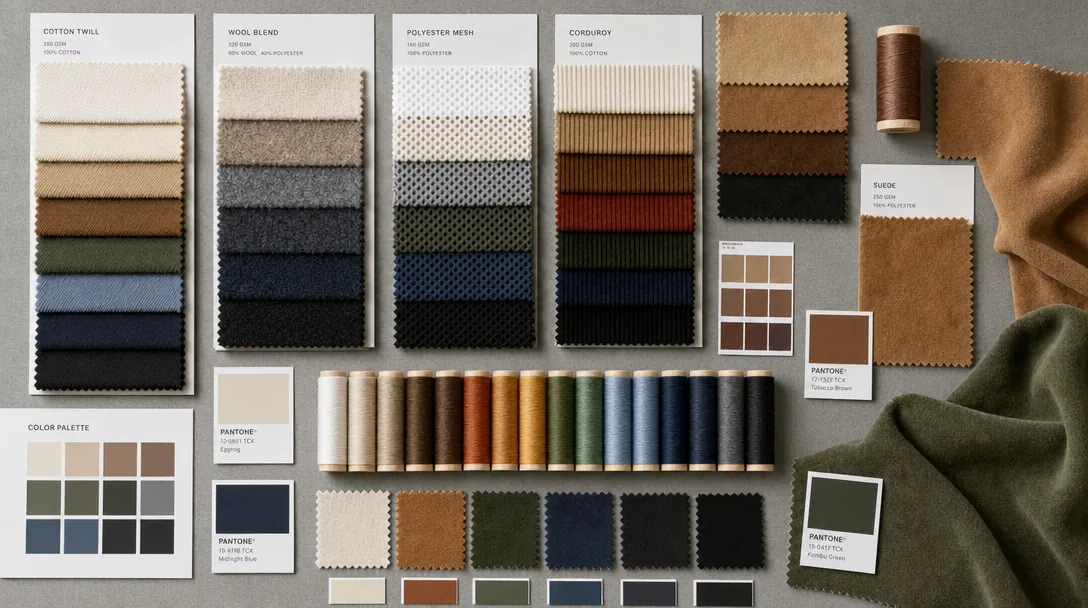
Bucket Hat Corduroy Decoration QC Checklist for Custom Hat Buyers - Cost & MOQ Breakdown (2026 Update)
Read article →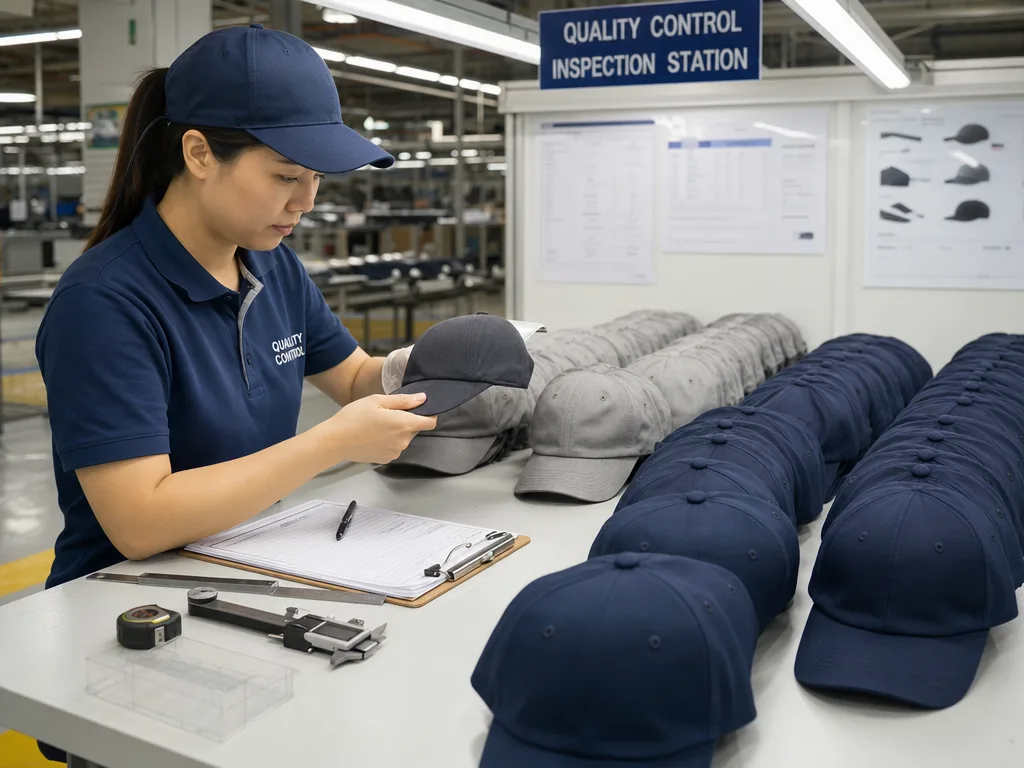
BSCI vs Sedex vs WRAP vs WCA: Compliance Audit Standards Compared - Supplier Checklist - Supplier Checklist - Cost & MOQ Breakdown
Read article →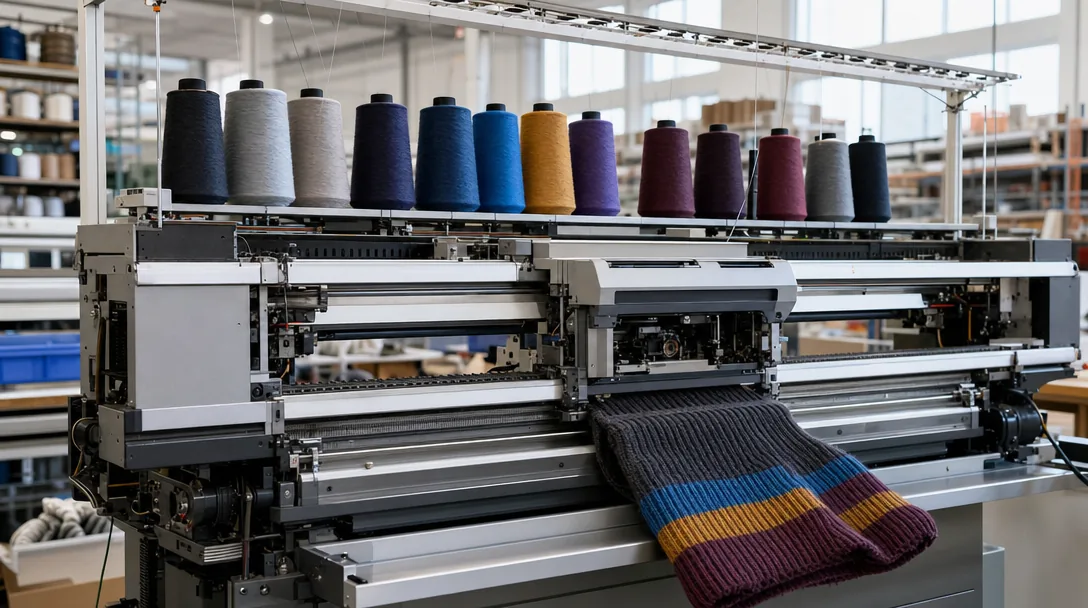
Winter Beanie & Knit Cap Manufacturing: The Complete Wholesale Guide - Cost & MOQ Breakdown
Read article →Sourcing custom hats does not have to be complicated. With the right manufacturing partner, clear specifications and a small upfront investment in sampling, you can launch a retail-quality product in 30 to 45 days.