
Custom Hat Patch: When to Use It, Costs, and What to Ask Your Factory - Cost & MOQ Breakdown - 2026 Buyer's Guide
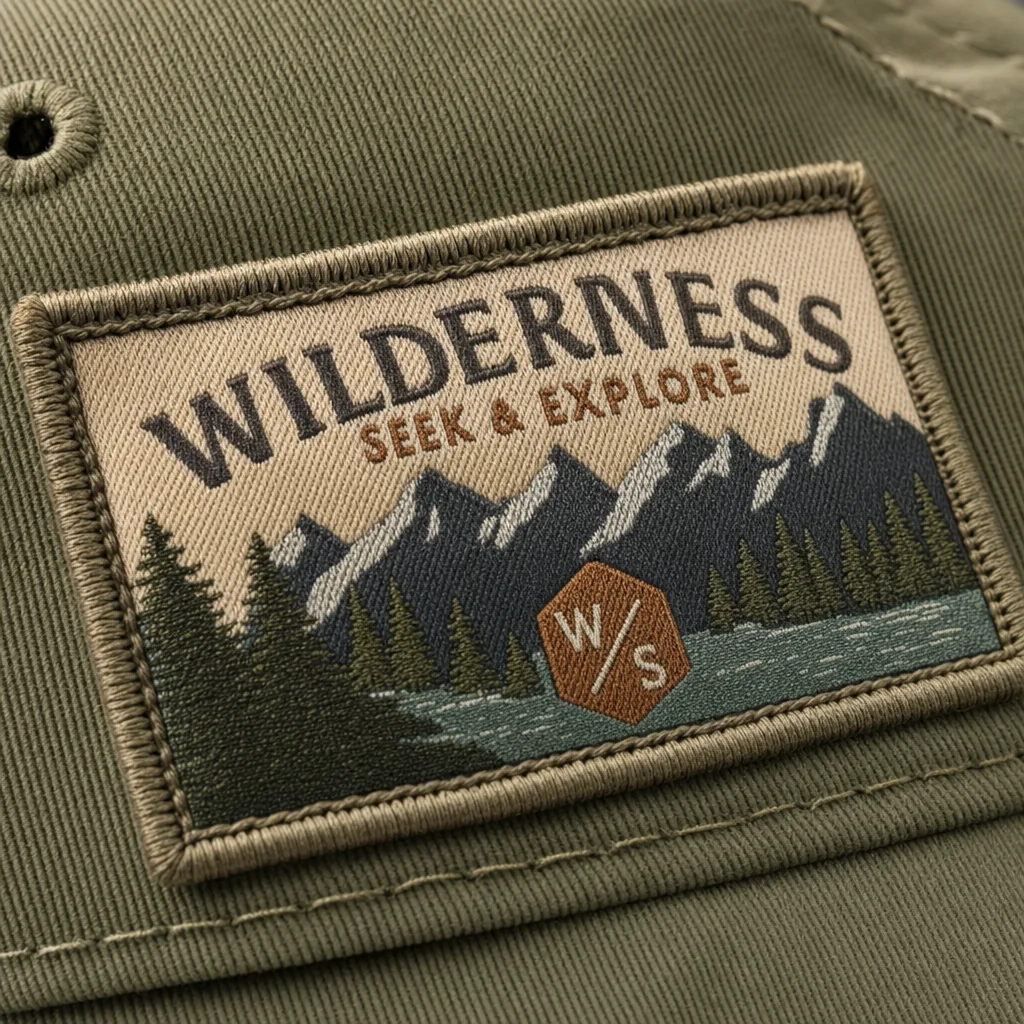
Custom Hat Patch: When to Use It, Costs, and What to Ask Your Factory - Cost & MOQ Breakdown - 2026 Buyer's Guide is one of the most-asked questions we receive from international buyers, and for good reason. With dozens of factories competing for your order and an alphabet soup of technical terms in every supplier quote, even experienced importers can feel lost. This guide consolidates what we have learned producing custom hats for clients in 40+ countries.
Custom Logo Hats
For custom logo hats, the make-or-break choice is usually the decoration method, not whether the cap is a dad hat or a structured snapback. A custom hat patch is the better tool when the artwork includes micro text below 3 mm cap height, distressed effects, negative space, or licensed colors that need to stay within roughly Delta-E 2.0-2.5 against approved Pantone TCX or coated references. Direct embroidery still performs best on bold fills, raised satin columns, and simple outlines, but once line weight drops under about 1.0 mm, thread spread and pull compensation start softening the artwork. Woven damask patches using 50D-75D yarn can hold far cleaner definition than standard 120D polyester embroidery thread, while printed twill patches are often the only practical route for gradient-heavy art or faux vintage cracking effects. The production sequence is where many factories quietly lose consistency. For front-center placement on a 6-panel cap, the patch should be applied with the body still open or only partially closed; attaching after full sewing makes it harder to keep the patch square to the center seam and usually increases skew on curved crowns. On better lines, patch placement is held within +/-1.5 mm from crown center and visor seam, and perimeter stitch density is controlled so the cap does not pucker after blocking. PVC patches also need the right Shore A hardness and adhesive film, or the edges curl after heat pressing; leatherette and genuine leather need clean die-cut or laser-cut finishing, otherwise you will see dark burn marks, edge fuzz, or early peeling in wear tests. On Tajima or Barudan lines, that difference shows up immediately in scrap rate and rework hours.
If you are sourcing a custom hat patch program, send a full tech pack instead of only an AI or PDF logo file. The spec should lock the cap body first: profile, crown height, panel construction, shell fabric such as 260 gsm brushed chino twill or 450 gsm wool blend, buckram requirement, visor curve, closure type, eyelet finish, sweatband material, and top button construction. Then define the patch precisely in millimeters: finished size, border type, backing, stitch color, attachment method, and reference placement measured from both button center and brim seam. Patch construction matters just as much as cap construction, so call out woven density, merrow versus heat-cut edge, satin edge width, TPU or PVC thickness, leather grain, adhesive grade, and any test requirement for crocking, colorfastness, or hydrolysis resistance. Cost and MOQ are driven more by the patch process than by the hat shell. At 300 pieces, a 260 gsm chino twill dad cap with a woven or embroidered patch typically runs about FOB China $2.20-$3.60, while a wool-blend snapback with a larger front patch is more often $3.40-$5.80 depending on fabric yield and stitch count. PVC and genuine leather usually need 300-500 units because mold, die, and hide utilization add setup cost; PVC mold charges are commonly $80-$180, and leather die charges often land around $50-$120. Our standard practice is to inspect patch attachment under AQL 2.5, with specific checkpoints for edge lift after heat application, perimeter needle damage, SPI inconsistency, visor deformation from overpressing, and logo rotation after final shaping. Ask for a pre-production sample, final carton drop test records, and a 48-hour rub or wear test on one production lot before releasing the balance.
Custom Embroidered Patches
Embroidered patches are the safest custom hat patch when you need texture and abrasion resistance without punching 8,000-18,000 stitches directly into a crown panel. On structured 6-panels, 5-panel nylon campers, and foam truckers, direct embroidery often causes tunneling, puckering, or profile collapse; a separate patch avoids most of that. In production, patches are usually run on Tajima, Barudan, or ZSK multi-head machines with 75D or 108D rayon, or 120D polyester when colorfastness matters more than sheen. Border choice changes both look and yield: merrow works on simple shapes over roughly 3 mm border width, satin borders suit tighter outlines, and hot-knife or laser cut is better for sharp corners and odd silhouettes. If your tech pack just says “embroidered badge,” you are inviting quote drift. A 55 x 28 mm twill patch at 60%-70% coverage is a different product from a 90 x 50 mm full-fill patch, and the larger one can cost 30%-40% more while sitting poorly on a curved front panel.
The cost drivers buyers miss are stitch density, base fabric, and attachment method. Specify finished size in mm, twill or felt type, fabric weight, border width, coverage level, backing, and whether the patch is edge-sewn, perimeter-tacked, or fully satin-stitched onto the cap. For twill, 180-240 gsm is the normal range; lighter than that and you start seeing edge instability after cutting, heavier than that and the patch can feel stiff on low-profile crowns. If the ground fabric is dyed, lock color against Pantone TCX or Pantone Coated and agree a Delta-E tolerance before bulk, otherwise your “navy” patch base and “navy” cap body will land visibly different under retail lighting. On attached patches, MOQ usually follows the hat order, typically 144-300 pcs per colorway. In China, a 2.5-3.5 inch embroidered custom hat patch usually adds about $0.18-$0.65 FOB per cap; metallic thread, laser cutting, 3D foam, or split colorways often push that to $0.80-$1.10.
Inspection should target the predictable failure points, not vague comments like “looks premium.” The defects that actually cause claims are uneven merrow width, loose thread tails on the back, skipped stitches, bobbin show-through, laser scorching on twill, and shape distortion after attachment to a curved panel. Small text is where factories routinely overpromise: below about 4 mm letter height, counters begin to close and satin columns muddy unless the digitizing has proper underlay, pull compensation, and sensible pathing. Placement tolerance on finished caps should be held to about +/-3 mm, and finished goods should be inspected at AQL 2.5 because a clean patch can still be ruined by crooked application or seam-side skew. Use embroidered patches when the artwork has 2-8 solid colors, moderate line weight, and benefits from raised thread; they are a poor choice for gradients, halftones, photo detail, or copy under roughly 1.2 mm stroke width. Our standard practice is to push those jobs toward woven, sublimated, or molded TPU patches before sampling instead of burning time on revisions that will never bulk well.
Custom Hat with Patch
A custom hat patch is a separate component with its own tolerances, setup charges, and failure points; treating it like a simple decoration add-on is how approvals go sideways. The cap body might be 100% cotton chino twill at 260-280 gsm, brushed canvas around 320 gsm, or 600D polyester, while the patch is produced on a different line entirely: Tajima or Barudan embroidery heads, woven label looms, PVC molds, leather dies, or a sublimation table. That matters because a 65 x 45 mm patch with a 2.5 mm merrow border that sits perfectly on a buckram-backed trucker can ride high, pucker, or curl on an unstructured 6-panel dad cap after blocking. For any custom hat patch program, the tech pack should lock five things in writing: finished patch size in mm, border construction, attachment method, crown structure, and placement tolerance. If you leave attachment open, many factories will default to the fastest route—usually heat press or a light sew-down—and the bulk finish will drift from the approved sample. Method selection should follow logo detail, fabric hand, and target retail. Embroidered patches are durable and forgiving, but copy below roughly 2.0 mm letter height will close up unless the digitizing is cleaned for stitch direction, underlay, and fill density; on a 5,000-8,000 stitch patch, bad digitizing is usually more visible than cheap thread. Woven patches resolve small type and fine outlines better, often trimming $0.12-$0.28 per cap versus dense embroidery at scale, though they can look flat unless you specify yarn denier and edge finish. PVC and TPU patches give the cleanest Pantone callouts, but you need a color reference—Pantone coated or TCX depending on the material—and a Delta-E target under 1.5 if repeat orders matter. I would not approve artwork alone. Require one strike-off of the patch by itself, then a sewn or pressed pre-production sample on the actual cap style, because edge lift, stitch bite, and front-panel distortion only show up on the assembled unit.
MOQ and cost are usually driven more by patch setup than by the hat shell. A basic custom hat patch on a standard 6-panel cotton twill baseball cap normally lands at 144-300 pcs per colorway if the patch is embroidered or woven, because digitizing or loom setup is manageable and the attachment step is straightforward. PVC, TPU, genuine leather, and debossed suede patches are less flexible; 300-500 pcs is a more realistic MOQ once you factor in mold cost, die charges, resin batching, and material waste. For 2026 sourcing, a practical FOB China range for a chino twill cap with a sewn embroidered patch is about $2.10-$3.40 at 300 pcs, assuming a 5,000-8,000 stitch patch. Woven patch versions can be a few dimes lower, while leather, TPU, or molded PVC typically add $0.35-$0.90 per cap depending on thickness, finish, and whether the patch is stitched, heat-applied, or both. The margin leak is usually hidden setup and vague QC language, not the visible unit price. Typical one-time charges are $25-$60 for embroidery digitizing, $40-$90 for woven patch setup, $120-$250 for a PVC mold, and $80-$180 for a die used on debossed leather or PU. Our standard practice is to break the quote into three lines—base cap, patch, and attachment—because that immediately shows whether the upcharge sits in material, machine time, or sewing labor. On inspection, generic AQL wording is too loose for patch work. Write AQL 2.5 major / 4.0 minor and add patch-specific limits: placement skew over 3 mm, unreadable text against approved artwork, merrow inconsistency, laser-cut edge scorching, adhesive bleed, peeling after 24-hour recovery from heat application, and front-panel warping from over-pressing. Also require the PP sample to come from the same machine family and attachment process as bulk; a hand-made sales sample proves almost nothing.
Custom Patch for Hat
The right custom hat patch is a build decision, not decoration added at the end. On real cap lines, embroidered and woven patches are still the safest options for curved fronts because they tolerate crown shape better than PVC or thick PU. Woven patches hold detail once text drops below roughly 3.5 to 4.0 mm cap height; the finer yarn and tighter weave keep counters open where embroidery starts to fill in. Embroidered patches work better for bold logos, satin borders, and tactile depth, especially on structured 6-panels, truckers, and mid-profile snapbacks. PVC, molded rubber, and heavy faux leather can look sharp on approval photos but often create corner lift on low-profile dad hats and unstructured crowns, especially after carton compression and ocean transit. If a factory cannot state whether attachment is single-needle stitch-down, merrow, zigzag, heat-seal, or glue-plus-sew, that is a process risk, not a small omission. Glue-only application on a custom hat patch is unreliable in container conditions; once temperatures push past about 45 to 50°C, edge lift, adhesive bleed, and panel glazing become common rejects.
Your spec sheet needs to control the patch as tightly as the cap body. Lock finished size in mm, border construction, substrate, backing, stitch count or weave density, total thickness, and placement tolerance from center seam and button; for front patches, I would not leave centering looser than +/-2 mm on fashion or licensed programs. Define the panel fabric before sampling, because a 65 x 45 mm patch that sits flat on a polyester foam trucker front can pucker badly on a 220 gsm brushed cotton unstructured cap. For color, use Pantone Solid Coated for ink and Pantone TCX for dyed textiles, and if the order is premium, specify a Delta-E tolerance instead of asking for a “close match.” In QC, the failure points are predictable: tilted placement, dirty laser-cut edges, stitch grin, tunneling, glue bleed, and patch distortion after sewing. AQL 2.5 is acceptable for promotional volume, but any shelf-driven retail account should run a tighter visual standard on front-logo appearance because even 3 mm of tilt reads cheap from a few feet away.
MOQ and cost for a custom hat patch program are driven by both the patch process and the hat shell. In Zhejiang, sewn embroidered or woven patch caps usually start at 100 to 300 pcs per colorway on stock bodies; below 100 pcs is possible, but the unit price jumps because digitizing, laser-cut setup, sampling, and line changeover are spread over too few units. A basic cotton twill baseball cap with a small center-front embroidered patch typically runs about $2.20 to $3.80 FOB China at 300 to 500 pcs; woven patch versions are more often $2.40 to $4.20. PVC usually adds $0.35 to $0.90 depending on mold depth, colors, and thickness, while genuine leather adds roughly $0.50 to $1.50 and needs tighter sorting for scar marks, uneven burn, and stitch-hole cracking. Setup costs are small but real: embroidery digitizing is often $15 to $40, woven patch sampling $30 to $80, PVC molds $80 to $200, and deboss molds $60 to $150. Our standard practice is to treat the patch lot and sewing lot as linked components, so buyers should confirm spare patch ratio, SKU pooling rules, and who pays rework if placement defects exceed tolerance at final inspection.
Custom Patch Hat
A custom hat patch fails or succeeds at the attachment stage, not in the artwork PDF. Buyers often approve a clean patch strike-off, then get bulk caps with bubbling, edge lift, or visibly crooked placement because the patch type was never matched to the crown shape. Woven polyester patches made on 50D to 75D yarn are usually the best choice for small copy, with usable detail down to roughly 1.2 to 1.5 mm line height if the file is vector-clean. If the design has gradients, tonal shading, or negative spaces under 2 mm, direct embroidery is the wrong process; use woven, sublimated twill, molded PVC, or TPU. For school, sports, and promo programs, merrow-edge embroidered patches still outperform laser-cut flat patches on curved 6-panel fronts because the raised border hides minor placement drift and sits cleaner over buckram. The spec sheet should control the physical build in millimeters, not just approve the logo. Call out patch size, border construction, backing, stitch count or weave density, Pantone TCX references, and center-front placement tolerance; +/-2 mm is standard, while anything beyond that starts to read crooked at retail. A 60 x 90 mm patch behaves very differently on a structured chino twill cap versus an unstructured dad hat, so panel shape and patch dimensions must be approved together. Our standard practice is patch-only strike-off first, then assembled sample, then bulk inspection at AQL 2.5 with explicit checks for tilt over 3 degrees, glue squeeze-out, merrow unraveling, loose lockstitch, and edge curl from over-dense fills. Sewn attachment is still the safest route on brushed cotton twill, canvas, and corduroy; heat-bonded patches on DWR-coated polyester regularly fail after sweat, UV, and repeated flex unless the adhesive has been tested.
Cost is driven more by patch process and attachment labor than by the cap shell. On stock blanks, a custom hat patch order can start around 144 to 300 pieces per colorway, but fully custom bodies with branded taping, woven labels, custom closures, and matching trims usually need 300 to 500 pieces per style-color to price correctly. Current China FOB ranges are fairly predictable: a 100% cotton chino twill baseball cap with a sewn embroidered patch is typically $2.20 to $3.40 at 300 pieces; woven patch versions run $2.40 to $3.80; molded PVC usually lands at $3.10 to $4.80; and genuine leather patch hats are more often $3.60 to $6.50 depending on hide grade, deboss depth, burnish quality, and whether edges are painted or turned. Patch-only setup fees are separate from cap sampling, so budget roughly $25 to $80 for digitizing, loom setup, or mold cost, plus $35 to $90 for the assembled prototype. The hidden costs show up on the line. Side placement on corduroy, foam trucker fronts, or heavily curved crowns slows operators and pushes attachment labor up; hook-and-loop panels usually add about $0.45 to $1.10 per cap before the patch itself. If the factory is sewing patches with Tajima, Barudan, or ZSK embroidery heads feeding pre-made blanks, expect overage for alignment loss and replacement of damaged fronts, especially on white or pastel fabrics where needle marks show. Ask whether quoted pricing includes polybagging, size stickers, barcode labels, silica gel, and carton drop-test standards, because retail-ready packing adds another $0.12 to $0.35 per cap and is often excluded from the first quote. If you are buying for licensed sports or chain retail, also confirm color tolerance up front; a reasonable target is Delta-E under 1.5 on patch ground and border, not just a vague match to art.
Custom Patch Hats
A custom hat patch is the right choice when embroidery can’t hold the artwork or when the material itself is part of the brand story. I move away from direct embroidery when copy drops under about 4 mm cap height, when the logo has 6+ clean color breaks, or when the buyer wants leather grain, molded PVC relief, felt loft, suede handfeel, or the crisp face of a woven label. Patch work is a separate production stream with its own setup, color approval, and QC before it ever touches the cap. Application timing matters more than many buyers realize: a front patch above roughly 65 x 45 mm should usually be sewn onto the flat front panel before crown assembly, especially on structured 6-panel caps with buckram, because post-sew attachment tends to bridge the curve and create puckering at the corners. For fine lettering, woven beats embroidery almost every time; dense fill and satin stitches on Tajima, Barudan, or ZSK heads start closing up under that threshold, while 50D-75D woven yarns keep small serifs and outlines cleaner.
If you are sourcing a custom hat patch program, send a usable spec sheet, not just vector art. The minimum spec should include finished size in mm, material, backing, edge finish, attachment method, Pantone reference, acceptable Delta-E tolerance, placement point, and placement tolerance. For front-center patches, I would hold placement at +/-2 mm horizontally and +/-3 mm vertically; anything looser looks cheap on shelf. Sewing is still the safest attachment for retail quality. Heat-press adhesive saves labor but often causes glossing, strike-through, or corner lift on brushed cotton twill, 600D polyester, and lightweight nylon under about 140 gsm. Cost is straightforward if you ask the right questions: at 300 pcs, a basic 6-panel brushed cotton twill cap with a sewn embroidered patch is typically around $2.20-$3.40 FOB China; woven patch usually adds $0.12-$0.25, genuine leather $0.40-$0.90, and hook-and-loop $0.35-$0.80 per cap depending on grade and stitch area. Setup is where budgets get missed: embroidery digitizing is commonly $25-$60, woven setup $40-$100, and PVC mold tooling $80-$180, with 300-500 pcs MOQ on molded PVC to amortize the mold.
Most failures on custom patch hats are predictable and preventable: skewed placement, edge fray, puckering, adhesive bleed, shade drift between patch lots, and lifted corners after transit. A competent factory should inspect the patch as a separate component before cap assembly, because once a defective lot is sewn onto finished hats, rework cost jumps fast and replacement often means scrapping good shells. On embroidered and woven patches, check that the merrow or satin border is fully locked with no thread tails, exposed base cloth, or loose trim points. On leather, PU, and microfiber suede, let samples rest 24 hours after pressing and look for corner memory, press-box marks, and tunneling on the front panel; recycled polyester and lighter crown fabrics show these defects quickly unless the panel is properly reinforced. I would approve pre-production sample, top-of-production, and final inspection to AQL 2.5, and if patch making is subcontracted, confirm whether that vendor is covered under sedex-audit-cap-supplier-guide.html">BSCI 2.0 or Sedex SMETA 4-Pillar rather than assuming the cap factory’s audit extends to the patch supplier.
Working with CrownsForge for custom hat patch programs
A workable custom hat patch program starts by freezing the patch construction before sampling, not by RFQ-ing six patch types and hoping the factory sorts it out. If the art is vector-clean or delivered as a layered .AI/.PDF and the patch stays under roughly 70 x 50 mm, a realistic development path is 5 to 7 business days for artwork cleanup, one strike-off, and one fit sample on the actual cap body. Embroidered and woven patches move fastest because there is no tooling gate; PVC, TPU, molded rubber, and debossed leather usually add 2 to 4 working days for die or mold approval, Shore hardness confirmation, and attachment testing on a curved crown. The biggest schedule mistake I see is approving a flat patch swatch without checking distortion on a low-profile dad cap, foam trucker, or unstructured 5-panel. MOQ is driven as much by the hat shell as by the patch itself. On stock 6-panel cotton twill, brushed chino, or trucker mesh bodies, 48 to 100 pieces is workable when the patch is sewn down, heat-applied, or fixed with hook-and-loop. Once you move into custom crown patterns, dyed-to-match Pantone TCX trims, recycled 600D polyester, melton wool blends, or 10-wale corduroy, efficiency usually does not make sense below 144 to 300 pieces because fabric loss, cutting setup, and trim matching start to dominate the cost. Our standard practice is to lock patch size, edge finish, backing, and placement tolerance before quoting, because changing from a merrowed embroidered patch to a laser-cut TPU badge midstream can alter both MOQ and the sewing route.
Low-volume pricing on a custom hat patch order is where buyers usually get surprised. A first run at 100 to 300 pieces typically lands around $3.20 to $6.80 FOB China, depending on crown profile, shell fabric, closure, and whether the patch is embroidered, woven, molded PVC, debossed leather, or TPU with adhesive film. That spread is real: small orders absorb digitizing, die charges, strike-off waste, and slower line speed because operators are swapping guides, needle setups, and patch jigs more often. On Tajima or Barudan multi-head lines, embroidered patches remain the safest default for baseball caps and truckers; 40 wt polyester thread with a merrow border or clean laser-cut edge gives the most stable result under abrasion and repeated handling. Woven patches outperform embroidery when text drops below about 1.0 mm stroke width or the artwork has dense streetwear detail. Control matters more than patch style. The approval flow should be fixed: tech pack review, art cleanup, material confirmation, patch strike-off, fit sample, pre-production sample, then bulk release. Color should be checked under D65 lighting against Pantone with an agreed Delta-E tolerance, especially when the patch ground and cap fabric are supposed to read as the same shade. For compliance, buyers should ask for current BSCI 2.0 or Sedex SMETA 4-Pillar reports and REACH or CPSIA support when PVC, PU, inks, or metal trims are involved. AQL 2.5 final inspection is the minimum sensible standard for a custom hat patch program, with checkpoints for patch placement tolerance, edge lift, stitch density, needle damage, visor shape, and carton assortment. If a factory cannot state its remake threshold or shipment hold point under FOB or DDP, the risk is not the patch; it is the process wrapped around it.
Frequently Asked Questions
What file format should I send for my logo?
Vector files (AI, EPS, PDF) are ideal. High-resolution PNG or JPG at 300 dpi on transparent background works as a fallback. Provide Pantone color references for accurate reproduction.
Can I order a sample before bulk production?
Yes. We strongly recommend approving a pre-production sample before mass production. Samples are charged at 35 to 60 USD each plus express shipping, fully refundable against confirmed bulk orders over 500 pieces.
What is the minimum order quantity (MOQ) for custom hats?
Our standard MOQ is 100 pieces per design and color, with sampling available from 1 piece. For complex multi-color logos or premium fabric upgrades, the MOQ can be lowered with a small per-piece surcharge.
How long does production take?
Sampling takes 7 to 12 days. Bulk production runs 20 to 30 days depending on quantity, fabric availability and decoration complexity. Inspection and packing adds another 3 to 5 days before shipment.
What logo decoration techniques do you offer?
3D puff embroidery, flat embroidery, woven patch, leather patch, PVC patch, screen printing, sublimation, applique and laser etching, all in-house with no subcontracting.
How does ordering custom leather patch trucker hat work?
When evaluating custom leather patch trucker hat, the key considerations are construction quality, decoration capability, MOQ flexibility and lead time. Cover everything buyers ask about custom logo hats: how it's manufactured, what specs to request from a factory, typical MOQ and pricing, common quality issues to inspect for, and how this ties back to the broader custom hat patch sourcing decision. Cover everything buyers ask about custom embroidered patches: how it's manufactured, what specs to request from a factory,…
What's the MOQ for custom leather patch hats no minimum?
When evaluating custom leather patch hats no minimum, the key considerations are construction quality, decoration capability, MOQ flexibility and lead time. Cover everything buyers ask about custom logo hats: how it's manufactured, what specs to request from a factory, typical MOQ and pricing, common quality issues to inspect for, and how this ties back to the broader custom hat patch sourcing decision. Cover everything buyers ask about custom patch hats: how it's manufactured, what specs to request from a factory, typical MOQ…
How does ordering custom embroidered trucker hats work?
When evaluating custom embroidered trucker hats, the key considerations are construction quality, decoration capability, MOQ flexibility and lead time. Cover everything buyers ask about custom logo hats: how it's manufactured, what specs to request from a factory, typical MOQ and pricing, common quality issues to inspect for, and how this ties back to the broader custom hat patch sourcing decision. Cover everything buyers ask about custom embroidered patches: how it's manufactured, what specs to request from a factory,…
How does ordering custom baseball hats with logo work?
When evaluating custom baseball hats with logo, the key considerations are construction quality, decoration capability, MOQ flexibility and lead time. Cover everything buyers ask about custom logo hats: how it's manufactured, what specs to request from a factory, typical MOQ and pricing, common quality issues to inspect for, and how this ties back to the broader custom hat patch sourcing decision. Cover everything buyers ask about custom patch hats: how it's manufactured, what specs to request from a factory, typical MOQ…
Ready to start your custom hat project?
Send us your tech-pack, sketch or even just an inspiration photo. We will respond with a detailed quotation and digital mock-up within 24 hours.
Request a free quoteRelated guides
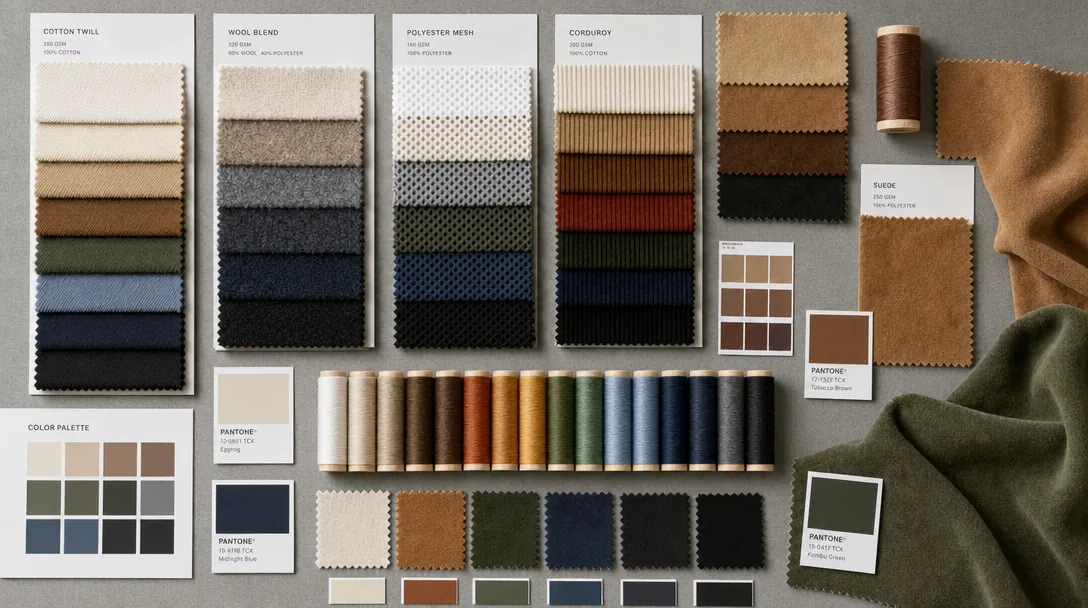
Bucket Hat Corduroy Decoration QC Checklist for Custom Hat Buyers - Cost & MOQ Breakdown (2026 Update)
Read article →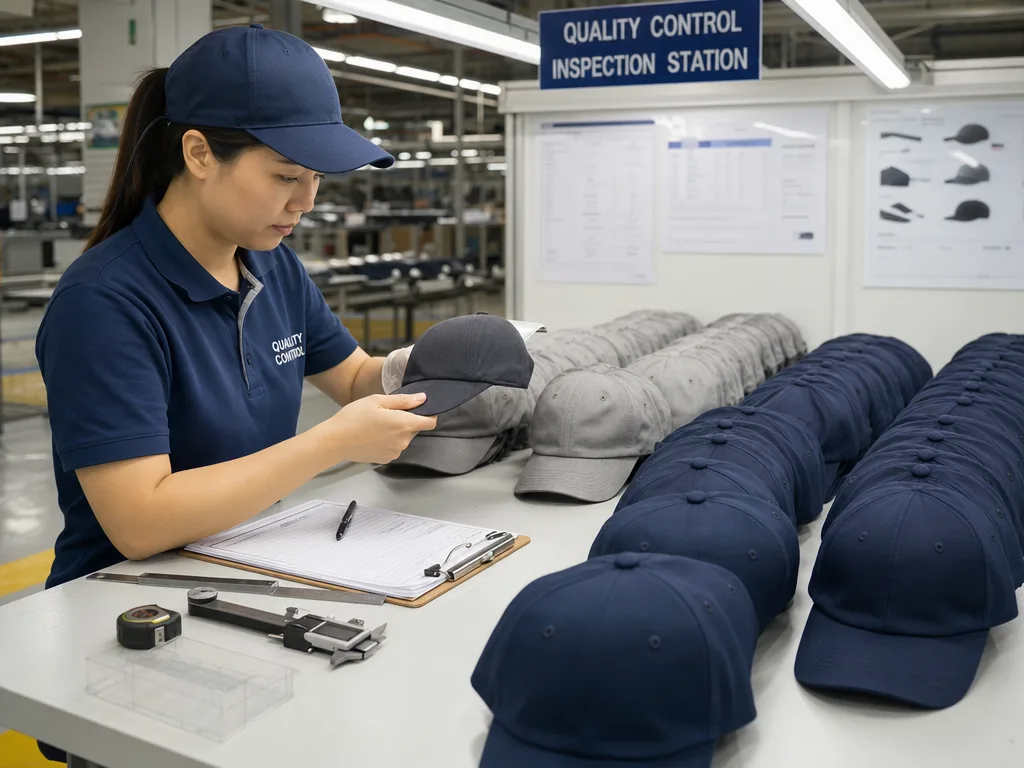
BSCI vs Sedex vs WRAP vs WCA: Compliance Audit Standards Compared - Supplier Checklist - Supplier Checklist - Cost & MOQ Breakdown
Read article →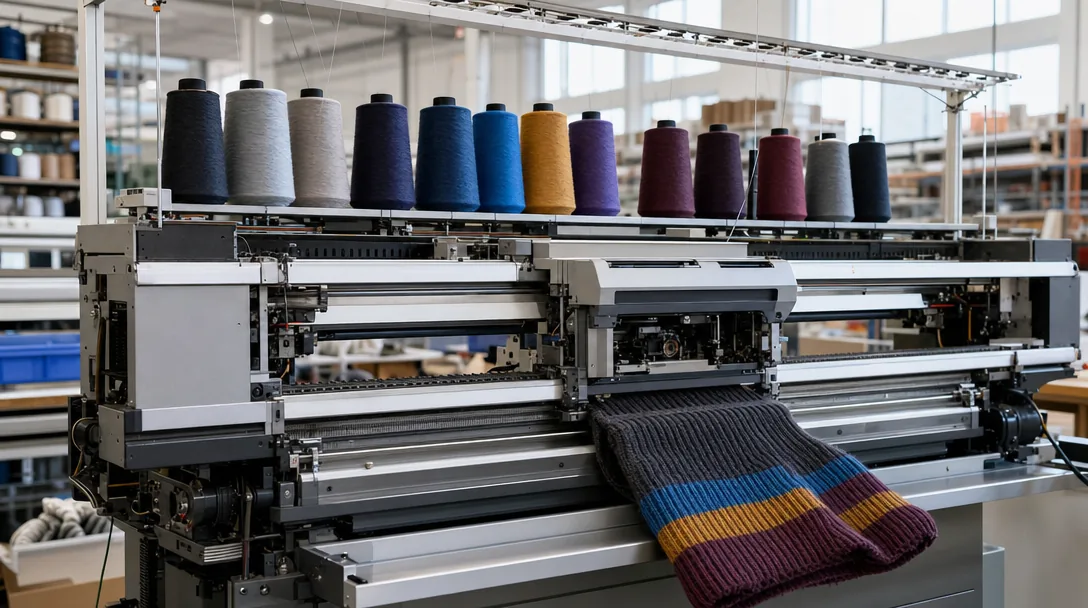
Winter Beanie & Knit Cap Manufacturing: The Complete Wholesale Guide - Cost & MOQ Breakdown
Read article →Sourcing custom hats does not have to be complicated. With the right manufacturing partner, clear specifications and a small upfront investment in sampling, you can launch a retail-quality product in 30 to 45 days.