
Corduroy Hat Vintage Reorder Planning Guide for Custom Hat Buyers
Corduroy Hat Vintage Reorder Planning Guide for Custom Hat Buyers is one of the most-asked questions we receive from international buyers, and for good reason. With dozens of factories competing for your order and an alphabet soup of technical terms in every supplier quote, even experienced importers can feel lost. This guide consolidates what we have learned producing custom hats for clients in 40+ countries.
Why corduroy hat vintage reorder planning guide needs a separate sourcing plan
Cost, lead time, and compliance move together on corduroy reorders. Stock corduroy may keep sampling to 7–10 days and bulk production to 25–35 days, but custom-dyed cotton corduroy usually adds 12–18 days before cutting. If the buyer asks for an organic cotton hat, GOTS or OCS chain-of-custody paperwork must be confirmed before quotation, not after PO, because certified corduroy mills are fewer and often require 300–500 kg minimum dye lots. Embroidery also costs more to stabilize on corduroy pile: a Tajima, Barudan, or ZSK head can run clean lettering, but small serif fonts under 5 mm may need extra underlay and slower speeds around 650–750 spm. For inspection, use AQL 2.5 for major defects, but add corduroy-specific checkpoints: nap direction, crushed pile, shade bands, brim symmetry after washing, and metal trim corrosion after a 24-hour humidity test. sedex-audit-cap-supplier-guide.html">BSCI 2.0 or Sedex SMETA 4-Pillar audits should be matched to the buyer’s retailer requirements before deposit.
Factory capability checks before quoting
A serious factory capability check starts with decoration limits, not price. For a corduroy hat vintage reorder planning guide, I would ask for actual embroidery samples on the same wale corduroy, because 8-wale cotton corduroy behaves very differently from 14-wale polyester-cotton corduroy under a Tajima or Barudan head. Dense satin columns over 4.5 mm tend to sink between ribs unless the digitizer adds proper underlay and uses 75/11 or 80/12 needles with cutaway backing. If the design needs a chenille patch, woven label, felt applique, or genuine leather badge, confirm the factory can show edge finishing, heat-press temperature records, and pull-test results. A cheap merrowed patch can look acceptable on a flat twill cap but twist badly on a bucket hat corduroy crown if the operator does not pre-shape the panel before stitching.
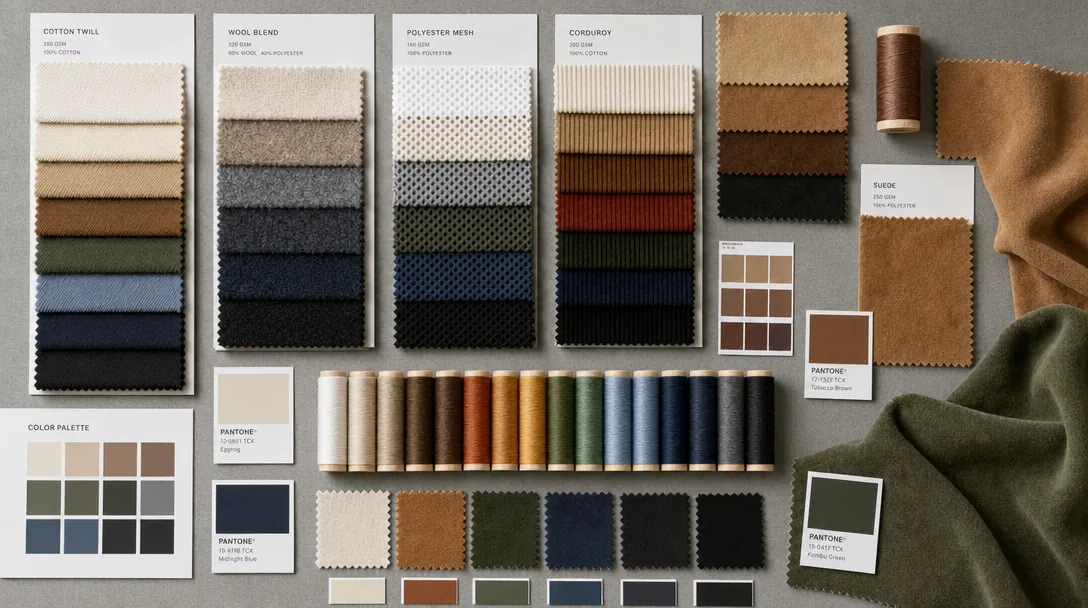
Fabric and construction checks decide whether a reorder matches the first shipment. For corduroy hat vintage programs, buyers should lock the fabric spec by wale count, gsm, fiber content, and shade tolerance, not by photos. A corduroy hat brown sample should be approved against Pantone TCX or a physical swatch with Delta-E under 1.5 for repeat orders, especially if the mill is piece-dyeing cotton. If the line includes an organic cotton hat claim, require GOTS or OCS transaction certificates, not just a hangtag. Panel construction also matters: a 6-panel unstructured cap needs different fusing and seam allowance than a corduroy bucket hat, where brim top-stitching density, crown height, and bias direction control final shape. For closures, verify capability across antique brass buckle, self-fabric strap, plastic snap, rope detail, elastic back, and fitted sizing before quoting.
The sample room should prove it can make production-real samples, not showroom toys. At CrownsForge, our standard practice is to sample with production fabric, production thread, and the intended machine setup, then record thread colors, stitch count, SPI, seam tape, sweatband gsm, and brim material in the tech pack. Ask how many sample revisions are included, whether they can deliver counter samples in 7–10 days, and whether the same pattern maker will manage bulk grading. Audit readiness is another filter: BSCI 2.0, Sedex SMETA 4-Pillar, valid social insurance records, needle-control logs, and AQL 2.5 inspection experience tell you whether the factory can handle licensed or retailer orders. Communication checks are simple but revealing: send a spec sheet with three deliberate ambiguities and see if merchandisers ask precise questions before issuing the quote.
MOQ, pricing and sample approval
MOQ should be planned by fabric color, not just by total hat count. For corduroy hat vintage programs, a realistic factory MOQ is 300 pieces per style/color when using stocked 8-wale or 11-wale cotton corduroy, and 600–1,000 pieces if you want custom-dyed fabric, enzyme wash, or a specific corduroy hat brown matched to Pantone TCX. Small runs look cheap on paper but carry heavier fixed costs: embroidery digitizing usually runs US$35–80 per logo, woven label setup US$45–90, metal buckle mold or custom snap US$120–250, and printed inner tape screens around US$40 per color. A 300-piece embroidered 6-panel corduroy cap typically lands around US$4.20–6.80 FOB Ningbo/Shanghai depending on panel structure, lining, closure, and stitch count; a bucket hat corduroy style with full lining and brim topstitching is often US$5.20–8.50 because cutting yield is worse and sewing time is longer.
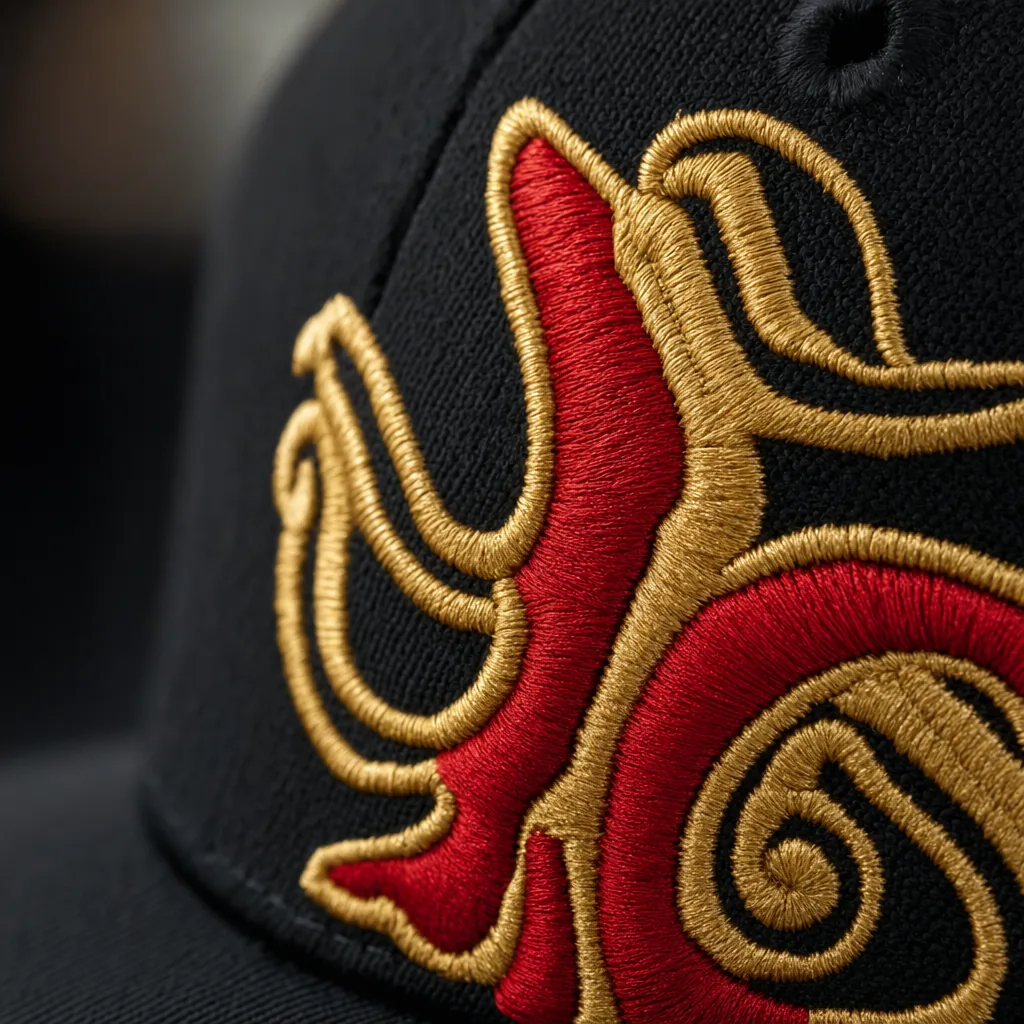
Sample approval is where buyers either save the reorder or poison it. For PPS, I want the buyer to approve fabric handfeel, wale direction, crown height, brim curve, embroidery registration, inside taping, trims, and packaging in one controlled package, not through scattered WhatsApp photos. Pantone matching on corduroy is tricky because the pile reflects light differently across the nap; we normally judge under D65 and TL84 light boxes and accept Delta-E under 1.5 for solid dyed fabric, but washed vintage effects need an approved shade band instead of a single rigid number. Embroidery on corduroy also needs more underlay than twill because stitches sink into the ribs. On Tajima, Barudan, or ZSK heads, a 3D puff logo that works at 5,500 stitches on cotton twill may need 6,800–7,500 stitches plus a knockdown stitch on 11-wale corduroy to keep the edge clean.
Lead time expectations should be tied to approval discipline. A blank lab dip takes 5–7 days, a first proto 7–10 days after artwork and tech pack, and PPS approval usually needs another 5–8 days if the buyer requests one round of corrections. Bulk production for 300–1,000 pieces is commonly 25–35 days after PPS and deposit; custom-dyed corduroy, organic cotton hat fabric with transaction certificate paperwork, or washed corduroy bucket hat styles can push that to 40–55 days. Packaging should be locked before PPS: individual polybag, recycled PE bag, hangtag, UPC sticker, carton size, and crush protection all affect packing labor and freight cube. This corduroy hat vintage reorder planning guide should also include AQL 2.5 final inspection timing, because reorders fail when buyers assume the second PO will automatically match the first without keeping the approved PPS, trims, thread codes, and packing standard on file.
Quality inspection and shipping risk
Shipping risk is mostly documentation discipline. Carton markings should show PO number, style code, color, size ratio, carton number, gross/net weight, dimensions, and country of origin; I also like a large side mark for mixed-SKU DDP shipments because 3PL receivers do not read tiny factory labels. For FOB Ningbo or Shanghai, the buyer controls forwarder timing and usually saves money above 50 cartons, but DDP is safer for small streetwear drops where customs entry, duty, and last-mile delivery mistakes cost more than freight. A practical corduroy hat vintage reorder planning guide should include the approved sample photo, fabric mill lot, Pantone TCX reference, embroidery DST file, thread color codes, carton packing method, barcode template, and last inspection report. At CrownsForge, we keep these reorder documents with production photos because memory is not a quality system, especially when the reorder happens six months later and the original merchandiser has moved accounts.
Buyer checklist for the next RFQ
A firm RFQ starts with a locked spec sheet, not a mood board. For a corduroy hat vintage reorder planning guide, I tell buyers to send the previous PO, approved sample photos, and the exact construction details: 5-panel, 6-panel, bucket hat corduroy, unstructured dad cap, visor length in cm, crown height, sweatband type, closure, eyelets, and seam tape color. For fabric, specify wale count and weight, not just “corduroy.” A common vintage cap uses 8-wale or 11-wale cotton corduroy around 260–320 gsm; a corduroy bucket hat may need slightly softer hand-feel so the brim does not look stiff. If color matters, give Pantone TCX references and accept a realistic lab-dip tolerance, usually Delta-E under 1.5 for dark shades and under 2.0 for washed colors. “Corduroy hat brown” is not a color standard; send the actual approved hat or a cut swatch if repeat accuracy matters.
Artwork files must be production-ready before pricing embroidery, woven labels, or patches. Send vector logos in AI, EPS, or PDF, plus stitch files if you already approved them; otherwise include flat artwork with size in millimeters, thread color references, and placement from seam or brim edge. On Tajima, Barudan, or ZSK heads, a small front logo under 55 mm wide may run 4,000–7,000 stitches, while a dense chain-stitch or 3D puff design can double the cost and increase sampling risk on corduroy ribs. For labels, specify damask vs. taffeta, fold type, edge color, and whether the label is sewn into the sweatband, side seam, or back strap. If the order involves an organic cotton hat claim, include the required certification path early: GOTS, OCS blended, transaction certificate requirement, hangtag wording, and whether the buyer needs scope certificate copies for compliance.
The quote package should also define quantity breaks, packing, inspection, and shipping terms. Ask for pricing at practical tiers such as 144, 300, 600, 1,200, and 3,000 pcs per color, because fabric dye lots and embroidery setup costs behave very differently at each level. State whether you need FOB Ningbo/Shanghai, EXW Yiwu, or DDP to a U.S. warehouse, and include carton mark requirements, polybag rules, UPC stickers, and master carton limits such as under 15 kg or 60 x 45 x 45 cm. Our standard practice at CrownsForge is to quote after checking whether the fabric is stock corduroy or piece-dyed, because a stock corduroy hat vintage reorder can sample in 7–10 days, while custom dyed fabric often adds 18–25 days. For QC expectations, note AQL 2.5 for major defects, AQL 4.0 for minor defects, and any audit requirement such as BSCI 2.0 or Sedex SMETA 4-Pillar before the factory commits capacity.
Working with CrownsForge
Reorder planning for a corduroy hat vintage program starts with locking the physical standard, not just the tech pack. For a washed 8-wale or 14-wale cotton corduroy, shade drift is the first risk: a corduroy hat brown approved in Pantone 19-1116 TCX can move 1.0–1.8 Delta-E after garment wash if the mill changes dyestuff or finishing temperature. Our standard practice at CrownsForge is to keep a signed golden sample, bulk fabric swatch, embroidery strike-off, trim card, and carton label proof together under one reorder file number. For repeat orders, we compare pile direction, hand feel, shrinkage after steam blocking, and crown height against that file before cutting bulk. A useful corduroy hat vintage reorder planning guide should also separate replenishment SKUs by fabric lot, because mixing old and new corduroy panels in the same size run can show visible nap difference under retail lighting.
Sampling and decoration have to be planned earlier than many buyers expect, especially when the cap uses dense front embroidery or a soft vintage structure. Tajima and Barudan heads can run clean satin columns on corduroy, but small serif lettering below 4.5 mm often sinks into the wale unless we add underlay, increase stitch density to about 0.42–0.48 mm, or switch to felt applique or chain stitch on ZSK. For a bucket hat corduroy or corduroy bucket hat, panel curvature changes logo registration, so we normally approve decoration on the actual cut panel, not on flat scrap fabric. A 2-piece sample flow is practical: first fit-and-fabric sample, then pre-production sample with final wash, button, eyelet, sweatband, woven label, and polybag warning print. If the buyer wants an organic cotton hat claim, the reorder file should include GOTS or OCS transaction certificates, not only the supplier’s invoice description.
QC and export coordination are where a reorder either stays profitable or quietly loses margin. For corduroy hat vintage repeat runs, we usually apply inline inspection at 20–30% sewing completion, then final inspection under AQL 2.5 major / 4.0 minor, checking shade grouping, brim symmetry, embroidery puckering, loose threads, needle damage, carton assortment, and metal detector records when required by licensees. A typical 1,000–3,000 piece reorder takes 7–10 days for fabric confirmation, 3–5 days for decoration approval, 12–18 days for bulk sewing, and 4–7 days for packing and inspection, assuming trims are not re-developed. FOB Ningbo or Shanghai is cleaner for experienced importers; DDP works better for streetwear brands, but they should budget roughly $0.55–$1.20 per cap for ocean consolidation to the U.S. West Coast, more for air replenishment. This is the practical backbone of a corduroy hat vintage reorder planning guide: freeze standards, control shade lots, inspect before packing, and book freight before the sales spike hits.
Frequently Asked Questions
What logo decoration techniques do you offer?
3D puff embroidery, flat embroidery, woven patch, leather patch, PVC patch, screen printing, sublimation, applique and laser etching, all in-house with no subcontracting.
How long does production take?
Sampling takes 7 to 12 days. Bulk production runs 20 to 30 days depending on quantity, fabric availability and decoration complexity. Inspection and packing adds another 3 to 5 days before shipment.
Can I order a sample before bulk production?
Yes. We strongly recommend approving a pre-production sample before mass production. Samples are charged at 35 to 60 USD each plus express shipping, fully refundable against confirmed bulk orders over 500 pieces.
What is the minimum order quantity (MOQ) for custom hats?
Our standard MOQ is 100 pieces per design and color, with sampling available from 1 piece. For complex multi-color logos or premium fabric upgrades, the MOQ can be lowered with a small per-piece surcharge.
Which shipping methods do you support?
We support FOB, CIF and DDP shipping. Air express for samples and small orders, sea LCL for 100 to 500 pieces, sea FCL for 5,000+ pieces. Door-to-door DDP available for US, EU, UK, Canada and Australia.
What should buyers know about organic cotton bucket hat?
When evaluating organic cotton bucket hat, the key considerations are construction quality, decoration capability, MOQ flexibility and lead time. Explain the buyer intent behind corduroy hat vintage reorder planning guide, when it differs from generic hat sourcing, and what decisions affect cost, lead time and compliance. Describe how CrownsForge manages corduroy hat vintage reorder planning guide programs with sampling, decoration, QC and export coordination.
What should buyers know about brown corduroy bucket hat?
When evaluating brown corduroy bucket hat, the key considerations are construction quality, decoration capability, MOQ flexibility and lead time. Explain the buyer intent behind corduroy hat vintage reorder planning guide, when it differs from generic hat sourcing, and what decisions affect cost, lead time and compliance. Describe how CrownsForge manages corduroy hat vintage reorder planning guide programs with sampling, decoration, QC and export coordination.
What should buyers know about bucket hat men nike?
When evaluating bucket hat men nike, the key considerations are construction quality, decoration capability, MOQ flexibility and lead time. Explain the buyer intent behind corduroy hat vintage reorder planning guide, when it differs from generic hat sourcing, and what decisions affect cost, lead time and compliance. Describe how CrownsForge manages corduroy hat vintage reorder planning guide programs with sampling, decoration, QC and export coordination.
What should buyers know about vintage bucket hat mens?
When evaluating vintage bucket hat mens, the key considerations are construction quality, decoration capability, MOQ flexibility and lead time. Explain the buyer intent behind corduroy hat vintage reorder planning guide, when it differs from generic hat sourcing, and what decisions affect cost, lead time and compliance. Describe how CrownsForge manages corduroy hat vintage reorder planning guide programs with sampling, decoration, QC and export coordination.
Need a low-MOQ test order?
We help emerging brands launch with as few as 100 pieces. Premium fabric, in-house embroidery, retail-ready packaging.
Start a small orderRelated guides
Custom Logo Hats: When to Use It, Costs, and What to Ask Your Factory
Read article →
Golf Hats For Men Sample Approval Process for Custom Hat Buyers
Read article →Hat With Patch Supplier Audit Checklist for Custom Hat Buyers
Read article →If you are ready to take the next step on corduroy hat vintage reorder planning guide for custom hat buyers, our team can put a tailored quotation and digital mock-up in your inbox within 24 hours. Send the inquiry form on our contact page or message us directly on WhatsApp.