
Compliance Documentation Checklist for First Hat Import to US/EU - Supplier Checklist
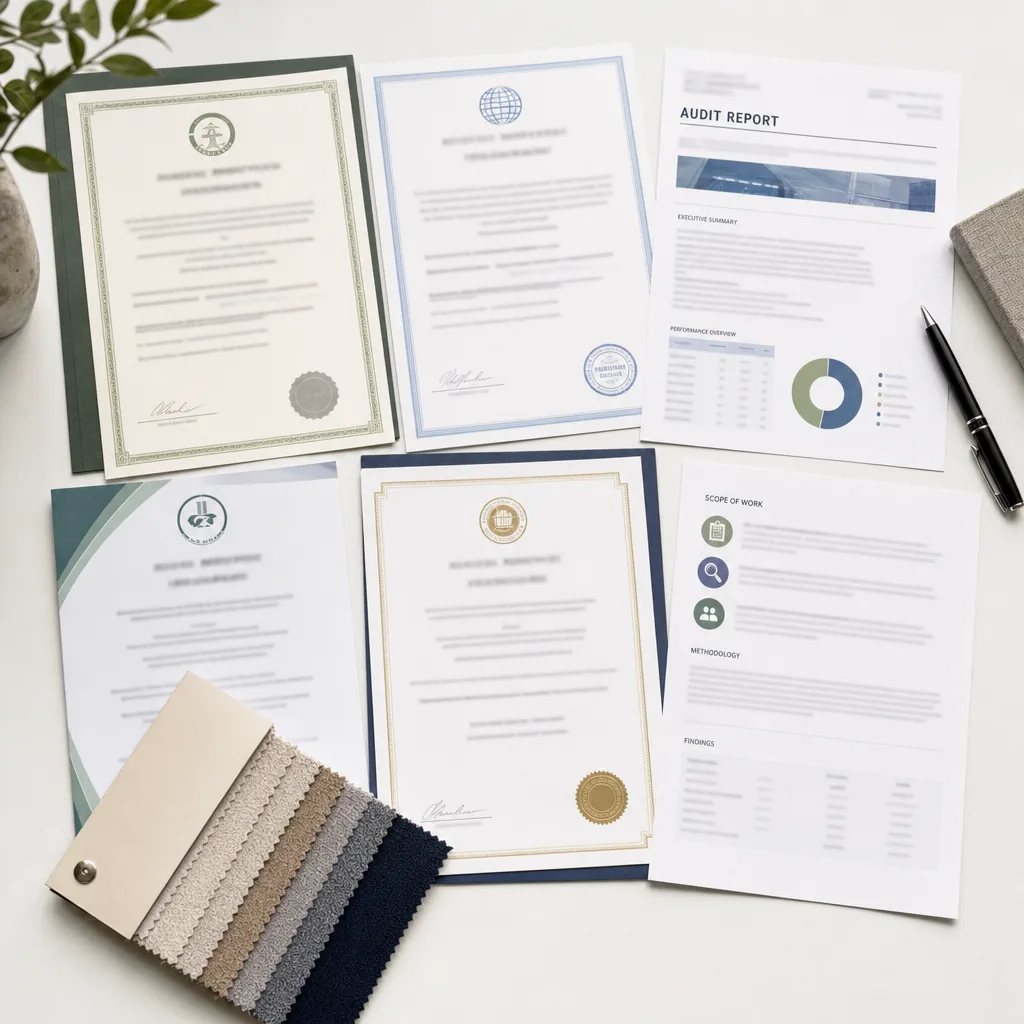
For brand owners, wholesalers and procurement teams entering the custom headwear category, compliance documentation checklist for first hat import to us/eu - supplier checklist is one of the highest-leverage decisions you will make. Get it right and your unit economics, retail story and reorder cycle all improve. Get it wrong and you carry the cost for years.
The 7 documents every hat import shipment needs
Most hat shipments get delayed on the two documents customs reads first: the commercial invoice and packing list. Treat them as clearance documents, not accounting paperwork. For import documentation hats, the invoice should match the broker’s importer record exactly and show seller, consignee, Incoterm 2020 with named place, payment currency, 6-digit HS code at minimum, country of origin, unit price, and total line value. The product description needs to be classification-ready, for example: “100% cotton 6-panel baseball caps, adult size, flat embroidery on front panel.” Descriptions like “caps,” “headwear,” or “fashion hat” are lazy and invite document queries because CBP and EU customs officers cannot classify fiber content, construction, or intended use from those words alone. The packing list does a different job: it must reconcile the file to the cargo physically on hand. That means total cartons, units per carton, net and gross weight in kg, carton dimensions in cm, and carton marks exactly as printed on the master cases. A competent supplier also adds PO number, style number, color breakdown by carton, and total piece count by style so an exam station can verify the load in minutes instead of holding it for a longer count check.
The transport document is the next non-negotiable item: bill of lading for ocean freight, air waybill for air cargo. Release problems usually start with small mismatches, not dramatic errors, so check shipper name, consignee name, package count, and freight term line by line before departure. If origin support is required, add a certificate of origin, but do not confuse it with country-of-origin marking compliance; “Made in China” still needs to appear correctly on the cap, inner labels where applicable, or carton packaging based on the product and market rules. The remaining documents depend on destination and terms. U.S. children’s hats often need CPSIA support files, including third-party lab reports for total lead, phthalates, and small-parts assessment if trims create a risk for under-12 products. EU buyers usually ask for a REACH declaration and test support covering azo dyes, SVHCs above 0.1% w/w, and nickel release on buckles, eyelets, or metal logo plates. If the shipment moves under CIF or CIP, include the insurance certificate, typically covered at 110% of invoice value under Institute Cargo Clauses. Miss one count, one value, or one consignee detail, and a routine entry can turn into exam fees, demurrage, and storage charges in the $150 to $500 range before anyone even opens the cartons.
Commercial invoice — what customs checks
Customs uses the commercial invoice as the primary control document for valuation, origin, and tariff classification, so vague wording is where first-time hat imports get flagged. A sales invoice is not enough. For import documentation hats, the invoice should show the seller’s and buyer’s full legal names, registered addresses, tax ID or company registration number where required, invoice number and issue date, PO number, payment term, Incoterm 2020 term such as FOB Ningbo or DDP Hamburg, settlement currency, country of origin, and a line-by-line description that a broker can classify without calling for clarification. “Caps” is too broad. A usable description looks more like: “6-panel woven baseball cap, 100% cotton twill shell, curved PE visor, plastic snapback closure, front 3D embroidery, adult size.” That level of detail matters because customs compares the invoice against the packing list, carton marks, and sometimes the physical sample; mismatched style codes, fiber content, or quantities are enough to trigger a document hold or request for amendment.
The first scrutiny points are classification and declared value. In the US, headwear classification can turn on woven versus knit construction, fiber content, peak or no peak, and whether the cap is sized for adults or children; in the EU, the same logic applies under CN codes, with origin and material composition checked against the factory spec and labeling. Copying an old HS code from another supplier is how entries get corrected and duty gets reassessed. Declared value also has to be commercially credible. If a structured brushed-cotton cap with 8,000 to 12,000 stitches of flat embroidery is invoiced at USD 0.85 each, while normal FOB pricing is closer to USD 2.20-4.50 depending on fabric weight, closure type, embroidery count, and inner packing, that number will attract attention. The invoice also needs to reconcile to the payment trail: if goods are invoiced at USD 18,540 but the bank record shows USD 16,900 plus separate sample fees, mold charges, or prepaid freight, those allocations should be documented before shipment. Fixing a bad invoice after arrival often costs more in storage, demurrage, or customs exam fees than the paperwork was meant to save.
Packing list — granularity that prevents inspections
Customs does not care whether your packing list looks pretty; they care whether one carton can be identified without opening three others. For hat shipments, carton-level detail is the baseline: every carton number, style code, color, size, units per carton, net weight, gross weight, and master carton dimensions should be shown line by line, ideally in both cm and inches if the consignee is in the U.S. If carton `CTN 12/48` contains 48 pcs of style `CF-2418-BLK`, OSFM, and `CTN 13/48` contains 36 pcs of `CF-1982-NVY`, Youth, those are separate entries, not a single rolled-up style total. Good import documentation hats also includes style subtotals and shipment totals so the broker can reconcile the packing list against the commercial invoice, booking, and outer carton marks in minutes. Vague descriptions like `caps` or `assorted hats`, missing weights, or unexplained mixed cartons are exactly the kind of sloppiness that turns a routine entry into a secondary review.
Alignment across documents prevents holds more reliably than any template. The carton mark, PO, invoice, and packing list must match character for character on style code, color, and carton sequence; `CF-2418-BLK` is not the same as `2418 BLACK` once the customs broker files the entry. A workable outer label should show PO number, style code, color, carton count such as `CTN 12/48`, country of origin, and outer dimensions; for mixed orders of 500 to 2,000 pcs, even a one-carton variance or a 1.5 to 2.0 kg weight mismatch is enough to trigger questions. In the U.S., that can mean US$150 to US$400 in exam, warehouse, and handling charges plus 3 to 7 calendar days lost; in the EU, inconsistencies around fiber content or COO wording can slow clearance just as fast. Use precise product descriptions at style level — `100% cotton twill baseball cap`, `100% acrylic knitted beanie`, `100% polyester mesh trucker cap` — and keep fiber content wording identical across packing list and invoice. The practical standard is simple: a broker or 3PL receiver should be able to trace any carton from label to packing list to invoice in under two minutes.
Certificate of origin — when it lowers your duty
For China-made caps, a Certificate of Origin usually proves origin; it does not, by itself, lower duty. On U.S. entries, CBP assesses duty from the HTSUS line, shell fiber content, construction, and declared origin. A brushed cotton 6-panel baseball cap, a polyester mesh trucker, and an acrylic rib-knit beanie can all sit under different tariff treatments, but none gets a preferential rate just because a supplier attaches a generic China CO. China is not covered by any routine U.S. preference program for standard headwear, and the old Form A/GSP advice still copied in sourcing blogs is dead wrong for current imports. In practical terms, your import documentation hats checklist should treat the CO as supporting evidence for origin claims, Section 301 exposure, and record consistency—not as a duty-saving tool. If a supplier promises “lower customs duty” for ordinary China-origin hats without naming a valid FTA, a substantial-transformation basis, or a bonded-processing structure, assume they are guessing, not advising. The document still matters because customs officers use it to compare every other paper in the file. A CCPIT-issued or chamber-certified Certificate of Origin should match the commercial invoice on exporter legal name, consignee, invoice number, SKU description, carton count, gross and net weight, and at least the 6-digit HS heading. Small discrepancies cause real friction: one carton short, a different factory address, or an invoice number with one missing character is enough to trigger a broker query, document hold, or origin clarification. For EU imports, the same CO is often retained even where no preferential duty applies, because retailer compliance teams want traceability back to the cut-and-sew site, embroidery subcontractor, and final packing address. A clean certificate supports the file; it does not cure wrong origin marking, transshipment risk, or a mismatch between the invoice seller and the actual manufacturing factory.
CPSIA test report (US imports for children)
For children’s caps entering the US, CPSIA belongs in the core import documentation hats packet, not in a separate “compliance later” folder. If the cap is designed or primarily intended for children 12 and under, the US importer must issue a Children’s Product Certificate based on passing results from a CPSC-accepted third-party lab such as SGS, Intertek, Bureau Veritas, or TÜV Rheinland. For headwear, the baseline test scope usually covers total lead in accessible substrates under CPSIA Section 101, lead in surface coatings under 16 CFR 1303, and phthalates under CPSIA Section 108 if the style uses PVC prints, soft PVC patches, silicone badges, plastic snap closures, or heat-transfer films. Any cap with detachable trims also needs a hard look at small-parts risk under 16 CFR 1501, especially decorative buttons, pom details, eyelets, studs, or rivets that can fail tension, torque, compression, or pull testing. US Customs does not catch every weak file, but major retailers, marketplaces, and product-liability insurers routinely reject children’s goods with incomplete CPSIA support.
The lab report and the CPC are different documents, and mixing them up is one of the most common first-import mistakes. The lab issues the report; the importer issues the CPC and lists the product description, applicable citations, manufacturer or private-label seller, manufacture date and location, test date and place, and the contact holding the compliance records. In practice, you should separate materially different SKUs whenever you change the shell fabric, sweatband fiber content, closure material, print chemistry, patch compound, or metal hardware, because those changes can alter the chemical and mechanical test matrix. A straightforward children’s cap often tests at about $250 to $450 per SKU, but the cost climbs quickly once you add TPU appliqués, reflective transfers, mixed plastics, or plated buckles. Tracking labels are the other frequent miss: CPSIA requires marks on both product and packaging that trace back to a production lot, so the cleanest setup is a woven sweatband label plus a polybag or carton code tied to inline inspection records, final AQL 2.5 reports, and packing lists.
REACH SVHC declaration (EU imports)
For EU-bound caps, the REACH SVHC declaration should be built from the actual bill of materials before shipment, not issued as generic compliance paper after production. The key legal trigger is 0.1% w/w per article for substances on the current ECHA Candidate List, so each discrete hat component has to be considered on its own merits: PVC or TPU patches, PU back straps, silicone heat transfers, metal buckles, sweatband foam, screen-print inks, and zipper pullers on earflap caps. An OEKO-TEX Standard 100 certificate is only screening support; it does not replace a component-specific supplier declaration when the scope does not cover the finished hat. A common failure is attaching a valid certificate for 260 gsm cotton twill while ignoring an added faux-leather strap, molded rubber badge, or printed undervisor. In EU import documentation hats files, that gap is exactly what gets flagged during retailer compliance review or a customs-side document check tied to market surveillance.
The working file should reconcile line by line at component level: REACH SVHC declaration on supplier letterhead, a BOM matching the style spec, and supporting material records that align with the commercial invoice and packing list. If the cap uses 108x58 cotton twill, 210D polyester lining, PE visor board, a 20 mm antique-brass buckle, and 120D/2 polyester embroidery thread run on Tajima or Barudan heads, the same descriptions should appear consistently across the set. High-risk inputs need separate scrutiny, especially PU coatings, flock print, water-repellent finishes, transfer prints, soft-touch rubber trims, and printed labels, because that is where phthalates, SCCPs, lead compounds, or dimethyl fumarate issues usually surface. For first-time EU buyers, a traceable file with BOM linkage is far more defensible than a one-page blanket statement. If the shipment also targets France, add AGEC data such as fiber composition, recycled-content basis, country of manufacture, and required sorting information, since many import documentation hats packages fail not on chemistry, but on incomplete downstream disclosure.
Customs broker handoff: who does what
The customs broker owns the destination-side entry, not the factory and not automatically the freight forwarder. For a first shipment, the buyer should appoint a licensed customs broker in the U.S. or an EU customs representative before cargo departs, then hand over the full import documentation hats package: commercial invoice, packing list, bill of lading or air waybill, arrival notice if issued, product details, shipper/consignee data, and the factory MID code for U.S. entries. In practice, the broker files the customs entry through ABI in the U.S. or the relevant CDS-style clearance platform used in the destination market, assigns HS codes, checks valuation, calculates duty, and tells the importer exactly what taxes, fees, and broker disbursements must be paid before release.
The mistake I see most often is buyers assuming their forwarder is also doing clearance. Sometimes one company offers both services, but the functions are different and the handoff fails when nobody confirms scope in writing. A forwarder books space, issues shipping documents, and moves cargo; the broker handles admissibility, data filing, and customs communication. For a clean first hat import checklist, confirm three points before vessel cut-off: who is filing entry, who is advancing duty/VAT, and who will contact the importer if CBP or EU customs questions fiber content, country of origin, or declared value. If the broker does not receive the customs documentation cap file at least 3 to 5 days before arrival for air, or 5 to 7 days for ocean, clearance delays are very likely.
For U.S. entries, the broker typically uses the commercial invoice hat shipment details, factory MID, importer number or EIN, and carton-level packing data to prepare entry and estimate duty based on the cap construction and material split. For EU import compliance hats, the broker or representative also checks whether the invoice language, EORI details, Incoterms, and origin declaration are usable for the destination member state, because small clerical errors can trigger storage and amendment charges of EUR 35 to EUR 120 per correction. At CrownsForge, our standard practice is to send the document set in PDF and editable Excel format so the broker can copy data directly instead of retyping style numbers, quantities, and net weights. That reduces mismatch risk on US import documents hats, especially when a shipment contains mixed panels, multiple PO lines, or split cartons.
Frequently Asked Questions
Which shipping methods do you support?
We support FOB, CIF and DDP shipping. Air express for samples and small orders, sea LCL for 100 to 500 pieces, sea FCL for 5,000+ pieces. Door-to-door DDP available for US, EU, UK, Canada and Australia.
Do you support sustainability certifications?
Yes. We work with GOTS organic cotton, GRS-certified recycled polyester, OEKO-TEX Standard 100 fabrics, and are BSCI and Sedex audited. Certification documentation can be provided per order.
Can I order a sample before bulk production?
Yes. We strongly recommend approving a pre-production sample before mass production. Samples are charged at 35 to 60 USD each plus express shipping, fully refundable against confirmed bulk orders over 500 pieces.
How long does production take?
Sampling takes 7 to 12 days. Bulk production runs 20 to 30 days depending on quantity, fabric availability and decoration complexity. Inspection and packing adds another 3 to 5 days before shipment.
What logo decoration techniques do you offer?
3D puff embroidery, flat embroidery, woven patch, leather patch, PVC patch, screen printing, sublimation, applique and laser etching, all in-house with no subcontracting.
What should buyers know about cotton twill army cap kangol?
When evaluating cotton twill army cap kangol, the key considerations are construction quality, decoration capability, MOQ flexibility and lead time. Per-carton breakdown: SKU, size, color, quantity per carton, gross weight, net weight, carton dimensions. The more granular the packing list, the lower the chance customs randomly inspects (saves you fees and 3-7 days hold time). Always send packing list with cap labels matching factory order. Any cap intended for children 12 and under needs: Children's Product Certificate…
How does ordering custom made trucker hat work?
When evaluating custom made trucker hat, the key considerations are construction quality, decoration capability, MOQ flexibility and lead time. Commercial invoice (CI), packing list, bill of lading (B/L) or air waybill (AWB), certificate of origin (CO or Form A), compliance test reports (CPSIA/REACH as applicable), insurance certificate (for CIF/CIP terms), customs entry summary (filed by your broker). These appear on every shipment regardless of size. Buyer, seller, INCOTERM, HTS classification, country of origin,…
What should buyers know about kangol bucket hat mens?
When evaluating kangol bucket hat mens, the key considerations are construction quality, decoration capability, MOQ flexibility and lead time. Commercial invoice (CI), packing list, bill of lading (B/L) or air waybill (AWB), certificate of origin (CO or Form A), compliance test reports (CPSIA/REACH as applicable), insurance certificate (for CIF/CIP terms), customs entry summary (filed by your broker). These appear on every shipment regardless of size. Buyer, seller, INCOTERM, HTS classification, country of origin,…
How does ordering baseball cap custom made work?
When evaluating baseball cap custom made, the key considerations are construction quality, decoration capability, MOQ flexibility and lead time. Per-carton breakdown: SKU, size, color, quantity per carton, gross weight, net weight, carton dimensions. The more granular the packing list, the lower the chance customs randomly inspects (saves you fees and 3-7 days hold time). Always send packing list with cap labels matching factory order. Any cap intended for children 12 and under needs: Children's Product Certificate…
Ready to start your custom hat project?
Send us your tech-pack, sketch or even just an inspiration photo. We will respond with a detailed quotation and digital mock-up within 24 hours.
Request a free quoteRelated guides
Custom Embroidered Patches: When to Use It, Costs, and What to Ask Your Factory (2026 Update)
Read article →
10 Questions to Ask a Cap Manufacturer on Your First Call - Supplier Checklist
Read article →
Fisherman Beanie Wholesale Custom: A 2026 B2B Sourcing Guide
Read article →Sourcing custom hats does not have to be complicated. With the right manufacturing partner, clear specifications and a small upfront investment in sampling, you can launch a retail-quality product in 30 to 45 days.