
Cap Packaging Options: Retail-Ready, Hangtag, Polybag & Custom Boxes - Cost & MOQ Breakdown
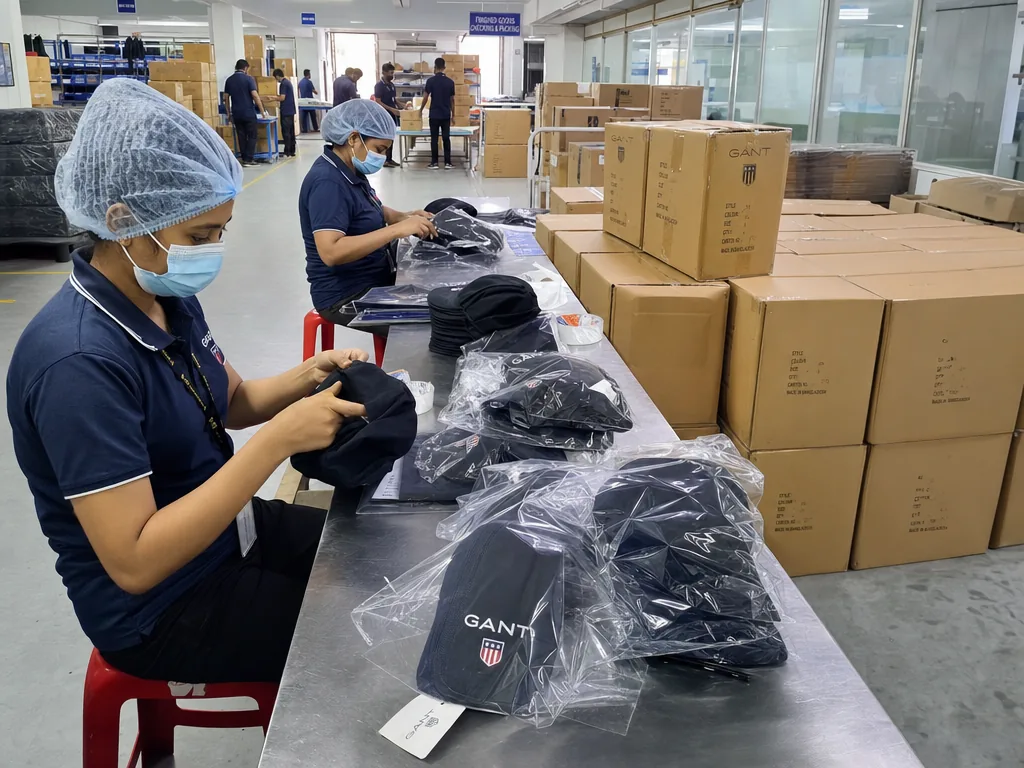
For brand owners, wholesalers and procurement teams entering the custom headwear category, cap packaging options: retail-ready, hangtag, polybag & custom boxes - cost & moq breakdown is one of the highest-leverage decisions you will make. Get it right and your unit economics, retail story and reorder cycle all improve. Get it wrong and you carry the cost for years.
Why packaging is part of the product
Cap packaging sets price expectation before anyone checks stitch count, sweatband hand feel, or whether the 3D logo was run cleanly on Tajima or Barudan heads. On a mid-tier retail cap, weak packaging telegraphs cost cutting immediately: a 250 gsm tag that softens in humid transit, a loose elastic loop that twists on shelf, or a polybag with muddy black coverage and barcode glare under LED store lighting. For most retail-ready programs, the practical floor is a 350 gsm SBS belly band or header card, a 300 to 400 gsm C1S hangtag, UPC placement that scans on first pass, and printed colors held within Delta-E 2.0 to the approved Pantone reference. Miss one of those points and the same hat can drop from looking like a $28 retail SKU to a $6 promo piece, even if the embroidery density, seam tape, and top-button alignment are all correct.
The bigger mistake is treating cap packaging as decoration instead of product engineering. A structured A-frame trucker with hard buckram, a 2.8 mm pre-curve visor, and raised front panel memory cannot be packed like an unstructured washed dad cap without paying for it in deformation, bill scuffing, and returns. A plain self-seal polybag usually runs $0.03 to $0.05 per piece; a printed bag with suffocation warning, size mark, vent hole, and one-color logo is more like $0.06 to $0.12 depending on MOQ and ink coverage. Add a crown support insert, tissue wrap, or carton partition and cost rises again, but it is still cheaper than a single avoidable return or chargeback. Our standard practice is to spec outer cartons by compression and transit risk, not appearance alone: 5-ply corrugate at 32 ECT for domestic parcel, tighter E-flute or B-flute shippers for e-commerce, silica gel when ocean freight humidity is a concern, and pack-out tested against AQL 2.5 final inspection so shape retention is verified before loading.
Hangtags — material, print, attachment
Hangtags are usually the cheapest visible upgrade in cap packaging, but buyers get into trouble when the tag stock does not match the hat’s price tier. For promo caps, school teams, and basic corporate orders, 250-300 gsm C1S art card is still the safest spec because 6 pt legal copy, EAN/UPC barcodes, and care symbols hold cleanly in offset, and Pantone spot colors stay tighter than on porous uncoated board. At 3,000 pieces, a standard 55 x 90 mm tag with one punch hole generally lands around $0.03-$0.06 each depending on print colors, varnish, and whether the hole gets a metal eyelet. Once you step into streetwear or licensed retail, 350 gsm recycled board, FSC-certified kraft, or gray-back chipboard gives a better handfeel, but the tradeoff is real: uncoated fibers drink ink, large solid areas mottle, and keeping Delta-E under 2.0 across the full run is harder on dark olive, washed black, and warm beige palettes. For higher-end retail cap packaging, I would rather use a thicker board with face-side matte or soft-touch lamination only; full double-side lamination often looks neat on the swatch but raises the risk of edge cracking around the drill hole after die cutting and carton compression in transit.
Print and attachment should be specified as one system, not two separate decisions. Above roughly 1,000-1,500 tags per SKU, offset on a Heidelberg or Komori press is usually more economical and more consistent than digital for 4C process builds, Pantone spot colors, reverse-side care copy, and barcode readability. Digital is fine for salesman samples, influencer mailers, or fragmented SKU runs, but the unit cost climbs quickly and metallic toner still does not substitute for hot foil. If you add foil stamping, blind emboss, deboss, or spot UV, remember that each finish adds another converting pass after printing and die cutting; the finish itself may be cheap on a 5,000-piece run, but a foil die or emboss plate still commonly costs $35-$80 per design before setup waste. Attachment is where good cap packaging often fails inspection: premium caps should be tagged through the sweatband label, rear buckle opening, or snapback hole with a 1.0-1.5 mm waxed cotton string, elastic loop, or fine polyester cord. Tagging through a front crown panel is a factory shortcut that can distort structured buckram, bruise embroidery, or leave a visible hole on brushed cotton twill. On trucker caps, a kimble through mesh can cause stress whitening or a tear line if the operator catches the wrong cell, so tag position, barcode placement, polybag warning, and carton marks should all be locked on the sealed sample before bulk packing starts.
Polybag options
Standard LDPE remains the cheapest cap packaging for bulk shipments, but the bag spec needs to fit the cap shape, not just the unit price target. For most baseball caps and truckers, 0.04-0.06 mm film is the workable range; below 0.04 mm the bag wrinkles fast and punctures around the visor edge, while above 0.06 mm you pay more freight and resin cost with little gain in protection. Common finished sizes are 12 x 10 inch for lower-profile caps, 13 x 11 inch for standard structured six-panels, and 14 x 12 inch for flat bills with hard buckram, rope trims, or dense 3D embroidery that should not be squeezed under master-carton compression. At 5,000 pieces, plain clear LDPE usually lands around $0.018-$0.035 per bag depending on gauge and resin market swings. Clear film also exposes every factory flaw, so thread tails, sweatband lint, oil spots, and removable chalk marks need to be cleaned before packing or the cap packaging makes the product look worse, not better.
Frosted PE or CPE is the practical step up when the buyer wants cap packaging that feels more intentional without paying for a folding box. A matte 0.05-0.07 mm film hides abrasion, fingerprints, and carton dust better than glossy clear LDPE, which matters for black, navy, and pigment-dyed crowns that show every rub mark. Self-adhesive frosted bags usually run $0.045-$0.08 each, while zipper bags are more often $0.09-$0.18 depending on size, zipper track quality, vent hole, and print coverage. One-color flexo printing becomes commercially sensible around 3,000-5,000 pieces and typically adds $0.01-$0.03 per bag plus a plate cost of about $50-$120. In our standard practice, zipper bags only make sense if the closure survives compression and drop testing; cheap tracks split open long before a structured cap is damaged, especially on high-profile six-panel styles with raised embroidery.
Compostable bags are where buyers make the most specification mistakes in cap packaging because the sustainability claim sounds simple, but the performance variables are not. Most commercial options are PLA/PBAT blends, sometimes with starch content, and any serious quote should reference EN 13432 or ASTM D6400 instead of vague "biodegradable" language. These films are less forgiving on heat-seal window, humidity exposure, and storage age than conventional polyethylene, so they are risky for long warehouse cycles or export routes that move through hot, wet ports. Realistic MOQs are usually 5,000-10,000 pieces, with plain bags commonly at $0.08-$0.16 each before heavy ink coverage. For structured truckers or caps packed for retail distribution, I would want seal-strength data, tear testing, and carton drop validation before approval; if the bag fails in transit, the hats still have to pass incoming inspection at AQL 2.5, and a compromised bag usually means dust, visor scuffing, or bent crown panels.
Sticker, sticker pack and dust-bag options
Brim stickers are cheap, but they are where cap packaging looks sloppy fastest. Buyers spot crooked placement, bubbling, and glue residue before they look at the embroidery. We usually spec brim stickers at 38 to 45 mm diameter in silver foil paper, clear BOPP, or matte white PP, with CMYK only for simple graphics and a spot Pantone when brand color has to stay inside a tight Delta-E target. On a curved visor, placement should hold within +/-2 mm of the centerline and keep a fixed offset from the edge binding; if operators place by eye, the retail face drifts batch to batch and the shelf presentation looks uneven. At 3,000 units and up, real factory cost is typically US$0.03 to US$0.08 per cap, with hot foil, embossing, or holographic laminate pushing the top end. Adhesive choice matters more than most buyers expect. Removable acrylic works on standard cotton twill, polyester twill, and brushed canvas, but pigment-washed visors, suede microfiber, peach-finish fabric, and low-surface-energy coatings need a 24 to 72 hour dwell test because poor adhesive can leave ghosting or pull fibers when removed. We also check whether the sticker crosses visor embroidery, seam breaks, or sandwich piping, since any raised surface increases edge lift during transit. If the sticker is intended to come off at point of sale, residue tolerance should be written into the packing standard and checked during inline QC, not left to the printer’s stock assumption. Our standard practice is to treat sticker alignment and clean removal as AQL 2.5 visual points because this detail directly affects perceived cap packaging quality.
Sticker packs are more practical than pre-applied labels when one cap body serves multiple SKUs, countries, or licensed programs. Instead of locking every unit into one permanent brim sticker, the factory can supply a kiss-cut sheet with size dots, UPC or EAN labels, barcode labels, promo decals, and carton ID seals so the importer applies the final combination after allocation. A typical spec is 250 to 300 gsm C2S with gloss or matte lamination, die-cut registration marks, and a mix of permanent and removable adhesives when the same sheet includes both functional labels and decorative decals. MOQ is normally 500 to 1,000 sheets, and the effective cost usually lands at US$0.04 to US$0.12 per cap depending on label count, foil coverage, varnish, and die-line waste. Dust bags sit in a different cost tier and only make sense when the cap value supports extra handling. Common specs are 30 x 35 cm bags in 70D to 210D polyester, 8 to 10 oz cotton canvas, or spunbond nonwoven, usually with a drawcord closure and either a one-color screen print or a woven side-seam label. For suede caps, wool blends, or heavy 3D embroidery, a 190T polyester lining reduces abrasion in sea freight and warehouse re-packing. Dark bags also need crocking checks before they touch white mesh, light sweatbands, or cream undervisors. In China production, MOQ is usually 300 to 500 pieces and cost runs about US$0.45 to US$1.20 each, so dust-bag cap packaging fits limited drops, licensed product, and rigid-box sets far better than everyday team caps packed in printed polybags.
Shipping cartons
Shipping cartons decide whether caps arrive saleable or crushed, and the pack count matters more than most buyers assume. For most structured baseball caps and trucker styles, the standard export setup is 25, 50, or 100 pieces per master carton, chosen by crown height, visor curve, and whether the front panel has buckram. A 5-panel foam trucker packed 100 per carton can cube out efficiently, but a high-profile 6-panel fitted with heavy embroidery often performs better at 50 pieces to avoid brim deformation and sidewall pressure during ocean transit. Typical outer carton specs are 5-layer corrugated board in the 200 to 275 lb burst range, with carton weights kept under roughly 15 to 18 kg for easier warehouse handling and lower claim risk. If a buyer is building cap packaging for both e-commerce and wholesale, we usually separate inner retail units from export masters instead of forcing one carton format to do both jobs poorly.
Carton printing is usually treated as a small detail, but it directly affects receiving speed and mis-pick rates at destination warehouses. Standard one-color black flexo print on two sides is the cheapest option, typically adding only about $0.06 to $0.15 per carton depending on size and run length, and it should include PO number, style code, color, quantity, carton number, country of origin, and gross/net weight. Once buyers ask for branded marks, scannable SSCC labels, or layout alignment with retail ready hat packaging systems, costs rise because the printer slotting and plate setup are no longer generic. For programs that also use a custom hat hangtag, polybag printing, or branded shipping box hats for direct-to-consumer fulfillment, carton markings need to match the SKU logic exactly; otherwise the warehouse spends labor re-labeling what should have been controlled at origin.
FSC stock is worth specifying if the caps are headed to licensed retail, sustainability-sensitive corporate programs, or EU markets where documentation gets checked instead of just claimed on a sell sheet. In practice, that means the paper content for the corrugated board is sourced under FSC chain-of-custody and the carton printer can issue the correct claim language on invoices and packing records. Buyers should not assume every brown carton from China qualifies; plenty of suppliers buy mixed board from local converters with no auditable paper trail. At CrownsForge, standard practice is to lock FSC carton requirements before sampling because changing board source after PP approval can shift shade, stiffness, and even compression strength. MOQ for plain export cartons is usually just tied to the cap order itself, but custom-size or FSC-certified printed cartons may require converter minimums around 300 to 1,000 pieces per size, especially if the same program also includes custom trucker hat printing and multiple pack assortments.
Sustainable packaging upgrades
The most credible sustainability upgrade in cap packaging is usually the polybag, not the box, because that is where buyers can remove virgin resin without risking a full spec rewrite. In practice, the workable options are 30-50 micron PLA/PBAT industrial-compostable film or 50%-100% post-consumer recycled PE; anything marketed as home-compostable is still risky on a 25-40 day ocean lane, especially when container humidity spikes and master cartons are floor-loaded. If retail compliance matters, specify barcode readability, suffocation warning text, vent holes, and either a clear scan window or frost-finish recycled film with 1-color flexo print. The cost delta is not huge, but it is real: typically $0.015-$0.06 per cap above virgin LDPE, with film converters usually asking for 3,000-5,000 pieces per SKU.
Where sustainable cap packaging fails is sealing and transit performance, not the sustainability claim on the invoice. Compostable blends run in a narrower sealing window than standard PE, and recycled PE can vary enough by batch that weak side seals show up first around vent holes or the suffocation-warning panel. I would not approve mass production without a pilot run on the actual packing line using the finished cap shape, brim curve, woven labels, size sticker, and final carton packout. A film that passes a flat tensile test can still split after abrasion from buckram crowns and sandwich brims during trucking and ocean transit. Paper upgrades are more convincing on the buyer-facing side: a 350-400 gsm FSC-certified recycled kraft hangtag with soy ink and cotton or rPET string usually costs $0.08-$0.18 at 2,000-5,000 units, while recycled mailers should be specified by board grade, not eco language—E-flute or B-flute at 32 ECT for single-cap e-commerce, and closer to 200 lb test for heavier multi-cap DDP parcels. Our standard practice is to judge these upgrades by AQL 2.5 packout results, carton drop testing, and whether the brim still holds shape after full-case stacking, not by how green the artwork sounds.
Frequently Asked Questions
What logo decoration techniques do you offer?
3D puff embroidery, flat embroidery, woven patch, leather patch, PVC patch, screen printing, sublimation, applique and laser etching, all in-house with no subcontracting.
Do you support sustainability certifications?
Yes. We work with GOTS organic cotton, GRS-certified recycled polyester, OEKO-TEX Standard 100 fabrics, and are BSCI and Sedex audited. Certification documentation can be provided per order.
What is the minimum order quantity (MOQ) for custom hats?
Our standard MOQ is 100 pieces per design and color, with sampling available from 1 piece. For complex multi-color logos or premium fabric upgrades, the MOQ can be lowered with a small per-piece surcharge.
How long does production take?
Sampling takes 7 to 12 days. Bulk production runs 20 to 30 days depending on quantity, fabric availability and decoration complexity. Inspection and packing adds another 3 to 5 days before shipment.
Can I order a sample before bulk production?
Yes. We strongly recommend approving a pre-production sample before mass production. Samples are charged at 35 to 60 USD each plus express shipping, fully refundable against confirmed bulk orders over 500 pieces.
How does ordering custom made trucker hat work?
When evaluating custom made trucker hat, the key considerations are construction quality, decoration capability, MOQ flexibility and lead time. First retail impression, unboxing experience, e-commerce protection. Coated paper, kraft, recycled board; offset vs digital print; gold-foil and embossing.
How does ordering baseball cap embroidered custom work?
When evaluating baseball cap embroidered custom, the key considerations are construction quality, decoration capability, MOQ flexibility and lead time. First retail impression, unboxing experience, e-commerce protection. Coated paper, kraft, recycled board; offset vs digital print; gold-foil and embossing.
How does ordering custom embroidered trucker hats work?
When evaluating custom embroidered trucker hats, the key considerations are construction quality, decoration capability, MOQ flexibility and lead time. First retail impression, unboxing experience, e-commerce protection. Coated paper, kraft, recycled board; offset vs digital print; gold-foil and embossing.
How does ordering custom made hats for men work?
When evaluating custom made hats for men, the key considerations are construction quality, decoration capability, MOQ flexibility and lead time. First retail impression, unboxing experience, e-commerce protection. Coated paper, kraft, recycled board; offset vs digital print; gold-foil and embossing.
What is cap packaging?
Controlled atmosphere packaging (CAP) is defined as a method where a specific gas or mixture of gases is established within a package after removing air, and this gas composition is maintained throughout the package's shelf life.
How do you package a cap?
Whatever your packing looks. Like. I promise you it will all fit. And then you put over here and then fill in as needed.
What does cap stand for in food packaging?
However, with CAP ( controlled atmosphere packaging ), you can make alterations to the storage conditions of the packaging during its lifespan. This involves adding oxygen absorbers or nitrogen to achieve the optimal gas composition to extend shelf life.
Ready to start your custom hat project?
Send us your tech-pack, sketch or even just an inspiration photo. We will respond with a detailed quotation and digital mock-up within 24 hours.
Request a free quoteRelated guides
Acrylic Beanie: Properties, Costs and How to Spec It Right
Read article →
Custom Hat Design: The 2026 Sourcing & Manufacturing Playbook
Read article →
Bucket Hat Corduroy Retail Packaging Guide for Custom Hat Buyers
Read article →We hope this guide demystifies cap packaging options: retail-ready, hangtag, polybag & custom boxes - cost & moq breakdown and helps you move forward with confidence. If you have questions specific to your project, our English-speaking sales engineers are one message away.