
Cap Defect Catalog: 32 Production Issues to Inspect For - Supplier Checklist
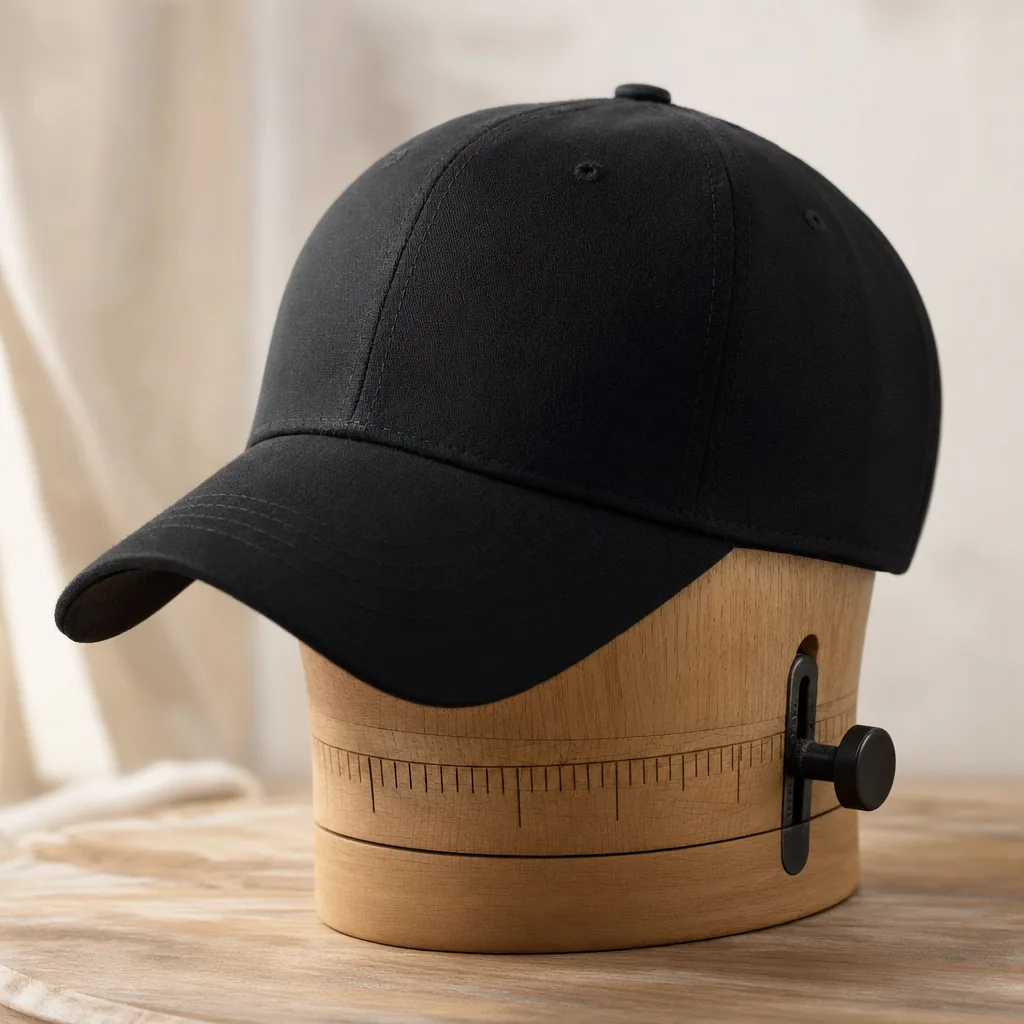
Cap Defect Catalog: 32 Production Issues to Inspect For - Supplier Checklist is one of the most-asked questions we receive from international buyers, and for good reason. With dozens of factories competing for your order and an alphabet soup of technical terms in every supplier quote, even experienced importers can feel lost. This guide consolidates what we have learned producing custom hats for clients in 40+ countries.
How to read this catalog
Read the catalog the way a serious QC team inspects a bulk cap order: by component, then by defect severity. The 32 checkpoints follow a real factory path—front panel, side and back panels, visor, sweatband, closure, embroidery, labels, then packing—because that is how you separate a crown-shape failure from a sewing defect or trim mismatch instead of hiding everything under “poor workmanship.” Severity should also be fixed before inspection starts, not argued over at random. Most cap orders are checked under ANSI/ASQ Z1.4, General Inspection Level II, with critical defects at zero acceptance, major defects commonly at AQL 2.5, and minor defects at AQL 4.0 unless the PO tightens them. In practical terms, critical means unsafe or unusable: broken needles left in product, mold, contamination, or construction that materially differs from the sealed PP sample. Major means the cap will likely be rejected at retail—panel skew, visor collapse, missed bartacks, broken topstitching, or embroidery registration drifting more than 2.0 mm. Minor means appearance faults with limited commercial impact, such as removable chalk marks, short thread tails under 3 mm, or shade variation still within the approved Delta-E tolerance, often 1.0-1.5 against the lab dip or Pantone TCX reference.
Most disputes over cap production defects start before bulk sewing, not during final inspection. The factory may be judging against a pre-production sample, while the buyer is looking at a retouched PDF or an outdated tech pack, and neither side aligned the actual standard for Pantone TCX color, points of measure, logo size, stitch count, visor curve, or carton spec. That is why the approval package has to be locked before bulk cutting: sealed PP sample, BOM, construction details, measurement tolerances—typically ±0.25 inch on crown height or opening depending on the style—and packing method. On the floor, the first 10 to 20 pieces off line should be checked against that standard, then checked again mid-run and at packing. Use this catalog as a working checklist tied to process stations: fabric inspection for gsm, coating streaks, bowing, and colorfastness; cutting for panel symmetry and notch accuracy; sewing for SPI, seam allowance, puckering, and back-tack security; embroidery on Tajima, Barudan, or ZSK heads for density, pull compensation, and outline registration; finishing for loose threads, needle control, label placement, and carton count. When repeat failures are logged by category, root cause gets clearer fast—bad fusing temperature, unstable brim board humidity, weak crown pattern, or no in-line measurement control.
Panel and crown defects (8 categories)
Panel and crown defects are the first place I look because they tell you whether the sewing floor is controlling tension, fabric lot segregation, and marker accuracy. Stitch puckering on front or side panels usually comes from unbalanced top and bobbin tension, overfeeding lightweight twill, or fusing that shrank after heat press; on a 240 gsm brushed cotton twill cap, even 2 to 3 mm of rippling along a seam is visible at arm’s length and should be logged on the cap inspection checklist. Fabric weave irregularity is just as serious on premium programs: slubs, reed marks, broken yarns, or density variation in canvas and poly-cotton twill create shadow lines that buyers often mistake for dye faults. In any AQL 2.5 defect catalog, these are not cosmetic trivia; they are common cap manufacturing problems that usually trace back to incoming fabric control, not sewing skill.
Color shading between supposedly identical panels is one of the costliest hat quality issues because it often survives inline inspection and only shows up under daylight or D65 light box review. If front panels are cut from one dye lot and side panels from another, the Delta-E can drift enough that black looks charcoal on one side and jet on the other, especially on peach-finished cotton, heather wool blends, and recycled polyester. Our standard practice is to bundle cut parts by roll number and approve shade bands against Pantone TCX under controlled lighting before sewing. Panel misalignment at the crown seam is a separate fault and usually more embarrassing: if the notches are off or the operator stretches one panel during joining, the seam line walks, the top button sits off-center, and embroidery on adjacent panels no longer reads straight. Anything beyond roughly 3 mm mismatch at the crown peak is easy for an end customer to spot.
Eyelet defects look minor until you audit a full carton. Loose eyelet stitching usually means the machine skipped because the hole edge was not cleanly punched, the thread tension was too low, or the operator ran too fast through multilayer seams on structured crowns. Eyelet color mismatch happens when thread cones are substituted without shade approval; navy thread against a black crown or optical white against an ecru panel will fail any serious hat factory QC defects review. Missing or undersized ventilation holes are even more basic and should never leave a competent line, yet they do when pre-punched panels are mixed with unpunched replacements or when die wear reduces the hole diameter below spec. On most baseball caps, the ventilation hole should be uniform across all six panels, and if one hole is missing or visibly smaller, I would record it as a clear case of cap production defects rather than a negotiable cosmetic variance.
Brim defects (5 categories)
Brim defects are easy to miss in a fast inline audit, but they trigger buyer complaints faster than almost any crown issue because the shape reads immediately on-head. The first checkpoint on any cap inspection checklist should be brim curve tolerance: if the finished arc deviates more than ±2 mm from the approved sample or technical drawing, the cap will sit differently across a run and look like mixed lots at retail. I’ve seen this happen when operators swap brim molds between 58 cm and 60 cm size sets, or when steam-setting time drifts by even 6 to 8 seconds. On structured baseball caps, measure three points across the visor using a fixed jig, not by hand, and record batch variation by carton. In a practical AQL 2.5 defect catalog, a visibly flat, over-curved, or asymmetric brim is usually a major defect when the PO specifies a uniform profile.
Stiffness inconsistency is the next failure point, and it usually comes from insert material variation rather than sewing alone. If one batch uses 1.8 mm PE board and another slips to 1.5 mm recycled board, the hand feel changes immediately even when the shell fabric and stitch count look correct. For sports and promo caps, buyers normally expect brim flex within a narrow range across the lot; otherwise the front profile collapses unevenly after packing. Our standard practice is to compare at least 10 pieces per lot by manual bend test and by checking insert spec on incoming materials, because this is one of the most common cap manufacturing problems that survives final packing. These hat quality issues often travel together with loose or skipped brim stitching, especially around the outer edge where needle heating, thread tension imbalance, or poor folder alignment on thick sandwich brims can cause intermittent misses.
Undervisor defects deserve their own line item because they are obvious the moment a customer flips the cap. Color mismatch happens when the approved Pantone TCX is matched on the crown fabric but not on the undervisor twill or suede, or when dye lot Delta-E drifts beyond about 1.0 to 1.5 against the standard under D65 lighting. Printed undervisors add another risk: misregistration between layers, especially on camo, logo repeats, or edge-to-edge graphics, often comes from unstable heat transfer positioning or screen alignment drift after 300 to 500 pieces. A 2 mm graphic shift at center front may already be commercially rejectable if the artwork is symmetrical. When inspecting hat factory QC defects, also open the brim edge and watch for skipped topstitching, floating thread ends, or loose SPI around the tip; these are classic cap production defects that weaken the visor seam and make the brim look cheap even if the rest of the hat passes.
Embroidery defects (6 categories)
Embroidery defects downgrade a cap faster than almost any other issue because the customer sees them from 1 to 2 meters away, before they notice seam tolerance or sweatband finish. Start with color accuracy and registration, because those two failures usually trigger the first rejection. Thread shade should be checked against the buyer’s approved Pantone TCX standard or physical thread card under D65 lighting, not under warm factory tubes that flatten reds and shift navies. With Madeira, Gunold, or Isacord lots, even a small dye-lot change can show on white, red, and black-outline logos, so the sewn strike-off needs to stay within a practical Delta-E of about 2.0 on critical branding. Misregistration is the next obvious defect: borders that overlap by more than 1.0 mm or leave gaps exposing the shell fabric are not acceptable on retail caps. On Tajima or Barudan cap frames, that usually traces back to weak hoop tension, unstable framing, poor pull compensation, or a stitch sequence that fights the fabric grain instead of controlling it.
Coverage and distortion defects are usually created in digitizing, then multiplied across the whole run at machine speed. When a satin column is too wide and not split correctly, or a fill is opened too aggressively for the shell and backing, you get grin-through, visible underlay, broken columns, and uneven top coverage. This is common on 240 to 280 gsm brushed cotton twill, washed chino, and low-profile unstructured crowns, where panel movement is higher and the embroidery field is less stable. A usable file will set fill density around 0.35 to 0.45 mm spacing with 40 wt polyester thread, then match underlay to the substrate—edge run, center walk, or zigzag—rather than applying one recipe to every cap style. In any supplier checklist for cap production defects, loose top thread, bobbin show-through, puckering, and logos placed 4 to 6 mm off center should be treated as major defects under AQL 2.5. Placement should be measured from the panel centerline and checked for squareness against the visor line, while jump-thread trimming, reverse-side thread nests, and bobbin tails should still be rejected at final inspection if visible in normal QC viewing conditions.
Patch defects (4 categories)
Patch defects get rejected faster than most cap production defects because buyers read them at arm’s length, not under a light box. Placement is the first control point. On a standard adult 6-panel cap, if the patch centerline shifts more than 3 mm off the crown button-to-visor axis, the front already looks crooked; on youth caps, 2 mm is usually enough to trigger claims. Height from visor seam to patch should hold within ±2 mm across the lot, and the top edge should stay level to the front panel seam with no visible tilt. This should be checked with a placement jig or laser guide, not by operator eye, especially on short runs under 500 pcs where freehand placement causes most failures. Under AQL 2.5, an off-center or tilted front patch is a major defect because the cap is visually unsellable even if the stitch quality is clean. On the floor, the root causes are predictable: worn positioning templates, heat-press pallets with poor registration, and inconsistent loading pressure from operator to operator. Glue bleed is the next fast reject, especially on heat-applied woven, TPU, faux leather, and printed patches. When adhesive film flows beyond the edge during pressing at roughly 145-160°C with 10-14 seconds dwell, it leaves a glossy halo that stands out badly on brushed cotton twill, peach-finish microfiber, suede-touch polyester, and other low-nap grounds. Inspect under 5000K cool white light, then dry-rub the perimeter for tack, edge shine, and darkened fabric. If residue remains or the ground cloth is visibly stained, treat it as a major appearance defect, not a cleanup issue. Raw-cut PU and genuine leather patches create a separate failure mode: if the edge is not sealed, edge-painted, or fold-turned, it will feather, crack, or start lifting after only a few wears. That is no longer just cosmetic; it becomes a durability claim tied directly to poor patch construction.
Border fraying and PVC color mismatch are the other two patch categories that belong on any serious supplier checklist because both are preventable before bulk sewing starts. Woven patch borders usually fail when the merrow is undersized, the die-cut perimeter is not heat-sealed cleanly, or the topstitch runs too close to the edge with uneven density, often below 6-7 SPI on curves. Carton friction then opens the yarns, especially on detailed woven logos forced into 75D-100D yarn where the artwork is already pushing the material limit. I see this when a design that should stay embroidered gets converted to woven to save only $0.03-$0.08 per piece; the unit saving disappears once border yarns start opening at final inspection. If fray is visible before packing, classify it as a major defect, because transit abrasion and consumer wear will only accelerate the failure. PVC patches fail differently: attachment can be clean, molding can be sharp, and the cap still fails because the color is off. For soft PVC, a practical tolerance is Delta-E 2.0-2.5 against the approved Pantone reference under D65 lighting; beyond that, black reads charcoal, red shifts orange, and beige skin tones go muddy fast. Physical sealed standards matter here. Phone photos and chat app screenshots are useless for approval because auto white balance hides color error. Our standard practice is to compare each incoming patch lot against the approved swatch before sewing, not after attachment, because once the wrong PVC badge is stitched or heat-fixed onto finished caps, rework cost usually exceeds the original patch value. Color mismatch on a front patch is a major cap production defects issue because the branding is wrong in the most visible area of the product.
Sweatband defects (3 categories)
Loose sweatband attachment is a major cap production defect because it fails in wear, not just at final packing. The problem shows up as rolling at the forehead, overlap separation at the back, or the band dropping below the seam tape after a few hours on head. On the sewing line, the usual causes are poor upper/lower thread balance, missed lockstitches at the overlap, inconsistent seam bite into the crown, or operators pushing a curved band too aggressively through a single-needle post-bed machine. The attachment seam should hold a consistent 7-9 SPI with clean back-tacking at the join, no skipped stitches, and no raw edge exposure. On structured caps, if the top edge of the sweatband sits more than 2-3 mm lower on one side, the wearer feels that ridge immediately, especially on heavier 320-380 gsm twill shells where internal bulk is less forgiving. Inspection has to be physical, not visual. A light table will not catch seam slippage or twist under tension, so I want a 10-piece pull check per colorway and size run, including the overlap area and both side panels. Inspectors should check for seam grin, torque, overlap opening, and uneven capture into the seam tape, then compare left-right height variance around the inside circumference. If the band can be rolled back by hand with minimal force, or if the overlap opens after a few controlled pulls, it should not pass as cosmetic. At CrownsForge, standard practice is to classify sweatband attachment failure as major under AQL 2.5 because comfort loss and return risk are immediate once the cap is worn.
Material mismatch and size variation are separate sweatband defects, but buyers often miss both because they inspect only the exterior. Material substitution is usually a trim-control failure: the BOM calls for 180 gsm brushed cotton jersey, microfiber terry, or a moisture-wicking 88/12 polyester-spandex knit, then bulk arrives in a cheaper 140 gsm polyester band with a slick hand feel and lower absorbency. The savings are trivial—typically $0.03-$0.08 per cap—but the defect is real because moisture management, hand feel, and fiber-content labeling no longer match the approved sample. For licensed, team, or retail programs, that is not just a quality issue; it can become a compliance issue if the declared fiber content on the care label is no longer accurate. Size inconsistency usually comes from inaccurate trim cutting, poor notch control, or uneven stretch during attachment. On adult caps, a relaxed sweatband variance of 5-8 mm is enough to create puckering, forehead rolling, or a finished opening that runs roughly half a size tight once stitched into the crown. QC should measure relaxed band length against spec before sewing, then verify finished head opening across top, middle, and bottom cartons rather than relying on pre-shipment samples only. A practical control point is to compare at least 10 finished caps per size set and flag any internal circumference outside tolerance or any visible waviness at the join. Under AQL 2.5, both material mismatch and size inconsistency should be logged as major cap production defects when fit, wear comfort, or approved trim specification is affected.
Closure defects (3 categories)
Back closures drive a disproportionate share of wear complaints because they are the only trim the customer adjusts every time the cap goes on. I split closure inspection into three categories: snapbacks, strap-and-buckle systems, and hook-and-loop. On snapbacks, the pass/fail point is full engagement across all 7 to 8 holes, not just one mid-range position. Inspectors should cycle each closure at least 10 times and watch for incomplete locking, cracked male posts, ovalized female sockets, molding flash on the stud head, short-shot parts, and whitening stress marks at the post base. Most snap sets are injection-molded PP or HDPE; cheap resin or poor mold maintenance shows up fast as brittle posts and weak retention. These are textbook cap production defects, and they should be screened at incoming trim inspection before the snap is sewn into a finished cap that otherwise passes embroidery and sewing checks. Color consistency is equally unforgiving at the back opening because retail lighting hits that area directly. For black, navy, stone, and contrast-color programs, the snap tab, back strap, sweatband-facing panel, and any exposed underbrim edge should be checked against the approved Pantone TCX standard. On visible closure components, a Delta-E below 1.5 is a practical target; once mixed-material matching between dyed cotton twill and molded plastic drifts toward 2.0, buyers start seeing it immediately under 4000K to 5000K store lighting. Strapback defects are usually structural before they become obvious: weak box-X stitching, shallow seam allowance under 3 mm, skipped bartacks, uneven strap width, buckle burrs, and plating abrasion on zinc-alloy hardware. In my experience, buckle scratches often start before sewing because hardware was shipped loose in bulk cartons instead of individually bagged by lot.
Hook-and-loop closures fail differently because the defect is often hidden when operators press the tapes together right after sewing. Final QC should separate the hook and loop completely, remove lint and loose thread, then check alignment, usable overlap length, edge stitching, and peel strength by hand across the full adjustment range. A good baseline is at least 50 mm of clean engagement on adult caps; anything much narrower starts losing hold after repeated wear. Common faults are skewed tape placement, one side sewn under tension so it recoils, skipped edge stitches, and hook material that is too aggressive for brushed cotton twill, peach-finish cotton, or low-pile suede surfaces, where it grabs surrounding fabric and leaves the closure looking damaged after first use. Defect grading needs to be explicit in the inspection standard, not argued over at final audit. Under AQL 2.5, a snap that will not lock, a detached strap return, or a hook-and-loop closure that cannot hold its set position is a major defect because function is compromised. Light plating scuff, minor burr-free surface abrasion, or small color drift may stay minor unless the PO defines closure appearance as a critical approval point. Our standard practice is to document closure checks by type, because failure modes are different: snapbacks fail in resin and molding quality, strapbacks fail in stitch construction and hardware handling, and hook-and-loop fails in tape positioning and material selection. That distinction matters because closure-related cap production defects can push an otherwise acceptable lot into rework in a single audit.
Packaging defects (3 categories)
Packaging is where good caps get downgraded by paperwork-level mistakes. I break these cap production defects into three buckets: unit packing, retail trims, and outer-carton identification. Unit packing starts with the polybag spec, and most structured baseball caps travel safely in 0.03-0.05 mm LDPE or OPP with two vent holes, straight side seals, and a flap that actually holds after 24 hours under compression. If the seal splits, the flap adhesive lifts, or the bag is missing the suffocation warning, recycle symbol, or resin code required by the buyer’s packaging manual, that is a compliance failure, not a cosmetic one. Once bags open in transit, dust pickup and visor scuffing show immediately on brushed cotton twill, peach-finish microfiber, and dark melton wool blends. This is why cheap packaging faults become expensive rework after cartons are taped, palletized, and booked under FOB terms.
Retail trims fail in two ways: they break ticketing compliance and they physically damage the cap. A missing hangtag is usually a major defect when barcode ticketing is on the PO, but bad attachment is nearly as costly. Swift tacks punched through the front panel can leave permanent holes; tagging through the sweatband seam, eyelet, buckram area, or dense 3D embroidery can distort the crown or snag yarn on softer fabrics. Sticker control should be just as tight. If a size or price sticker is more than 5 mm off center on the visor, placed on the crown, or covering logo embroidery, buyers treat it as careless handling and retail staff lose scan speed. The third category is carton labeling: shipping marks must match the packing list line for line, including PO number, style code, color, size run, quantity, carton sequence, N.W./G.W., carton dimensions, and country of origin. Under AQL 2.5, one unreadable barcode or wrong carton mark can justify a hold because Amazon FBA, 3PL intake, and customs all depend on traceability. Our standard practice is to scan-check 300 dpi thermal labels and do a dry-rub test before sealing cartons, because low-contrast inkjet marks smear fast in humid Zhejiang warehouses.
Frequently Asked Questions
What logo decoration techniques do you offer?
3D puff embroidery, flat embroidery, woven patch, leather patch, PVC patch, screen printing, sublimation, applique and laser etching, all in-house with no subcontracting.
Can I order a sample before bulk production?
Yes. We strongly recommend approving a pre-production sample before mass production. Samples are charged at 35 to 60 USD each plus express shipping, fully refundable against confirmed bulk orders over 500 pieces.
Do you support sustainability certifications?
Yes. We work with GOTS organic cotton, GRS-certified recycled polyester, OEKO-TEX Standard 100 fabrics, and are BSCI and Sedex audited. Certification documentation can be provided per order.
How long does production take?
Sampling takes 7 to 12 days. Bulk production runs 20 to 30 days depending on quantity, fabric availability and decoration complexity. Inspection and packing adds another 3 to 5 days before shipment.
What file format should I send for my logo?
Vector files (AI, EPS, PDF) are ideal. High-resolution PNG or JPG at 300 dpi on transparent background works as a fallback. Provide Pantone color references for accurate reproduction.
What should buyers know about cotton twill army cap kangol?
When evaluating cotton twill army cap kangol, the key considerations are construction quality, decoration capability, MOQ flexibility and lead time. Sweatband attachment loose, sweatband fabric mismatch (cotton requested but polyester delivered), sweatband size inconsistency (varies cap-to-cap within batch). The 32 defect categories below group by area of the cap (panel, brim, embroidery, etc.) and severity (critical, major, minor under AQL 2.5). Critical defects mean reject. Major defects must remain under the AQL 2.5…
How does ordering baseball cap embroidered custom work?
When evaluating baseball cap embroidered custom, the key considerations are construction quality, decoration capability, MOQ flexibility and lead time. The 32 defect categories below group by area of the cap (panel, brim, embroidery, etc.) and severity (critical, major, minor under AQL 2.5). Critical defects mean reject. Major defects must remain under the AQL 2.5 sample limit. Minor defects are tolerated within wider limits. Stitch puckering on panels, fabric weave irregularity, color shading between panels of supposedly…
How does ordering custom embroidered trucker hat work?
When evaluating custom embroidered trucker hat, the key considerations are construction quality, decoration capability, MOQ flexibility and lead time. The 32 defect categories below group by area of the cap (panel, brim, embroidery, etc.) and severity (critical, major, minor under AQL 2.5). Critical defects mean reject. Major defects must remain under the AQL 2.5 sample limit. Minor defects are tolerated within wider limits. Stitch puckering on panels, fabric weave irregularity, color shading between panels of supposedly…
What should buyers know about kangol bucket hat mens?
When evaluating kangol bucket hat mens, the key considerations are construction quality, decoration capability, MOQ flexibility and lead time. The 32 defect categories below group by area of the cap (panel, brim, embroidery, etc.) and severity (critical, major, minor under AQL 2.5). Critical defects mean reject. Major defects must remain under the AQL 2.5 sample limit. Minor defects are tolerated within wider limits. Stitch puckering on panels, fabric weave irregularity, color shading between panels of supposedly…
What are the defects of plastic bottle caps?
Types of bottle caps defects that can be detected damages (chips, cracks, scratches); deformations (pinches, bents, dents, warping, buckling, roundness loss); missing parts (absence of caps, absence of tamper rings);
What are production defects?
A production defect is any deviation in a manufactured part from its defined specification — dimensional, functional, visual or material. The definition sounds simple; in practice, most disagreements in a quality meeting come from confusing four related terms that are not the same thing.
What are common manufacturing defects?
Manufacturing defects arise during the production process, where an otherwise safe product is rendered dangerous due to errors or irregularities in its manufacturing. This might include issues such as substandard materials, improper assembly, or other deviations from the intended design.
Need a low-MOQ test order?
We help emerging brands launch with as few as 100 pieces. Premium fabric, in-house embroidery, retail-ready packaging.
Start a small orderRelated guides
Embroidery Thread Libraries: Madeira, Isacord and What Your Cap Factory Uses
Read article →
Custom Golf Hats: A Manufacturer's Guide to Performance Headwear (2026 Update)
Read article →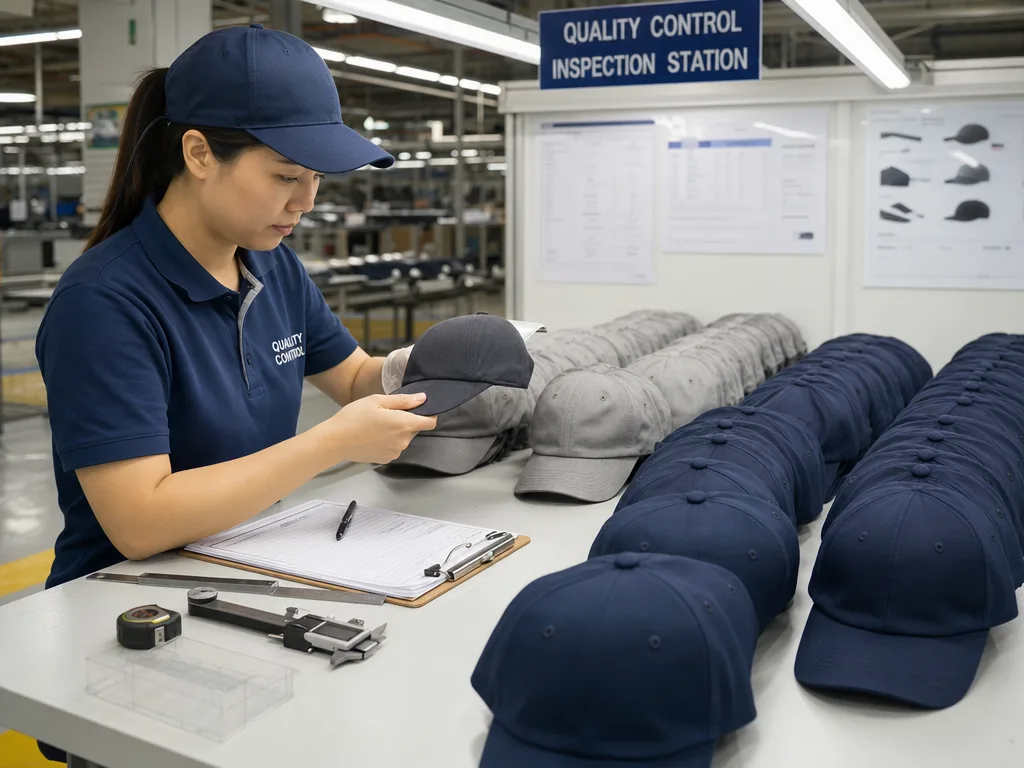
Hat Fabric Shade Control in Bulk Orders: Buyer Checklist
Read article →If you are ready to take the next step on cap defect catalog: 32 production issues to inspect for - supplier checklist, our team can put a tailored quotation and digital mock-up in your inbox within 24 hours. Send the inquiry form on our contact page or message us directly on WhatsApp.