
BSCI vs Sedex vs WRAP vs WCA: Compliance Audit Standards Compared - Supplier Checklist - Supplier Checklist
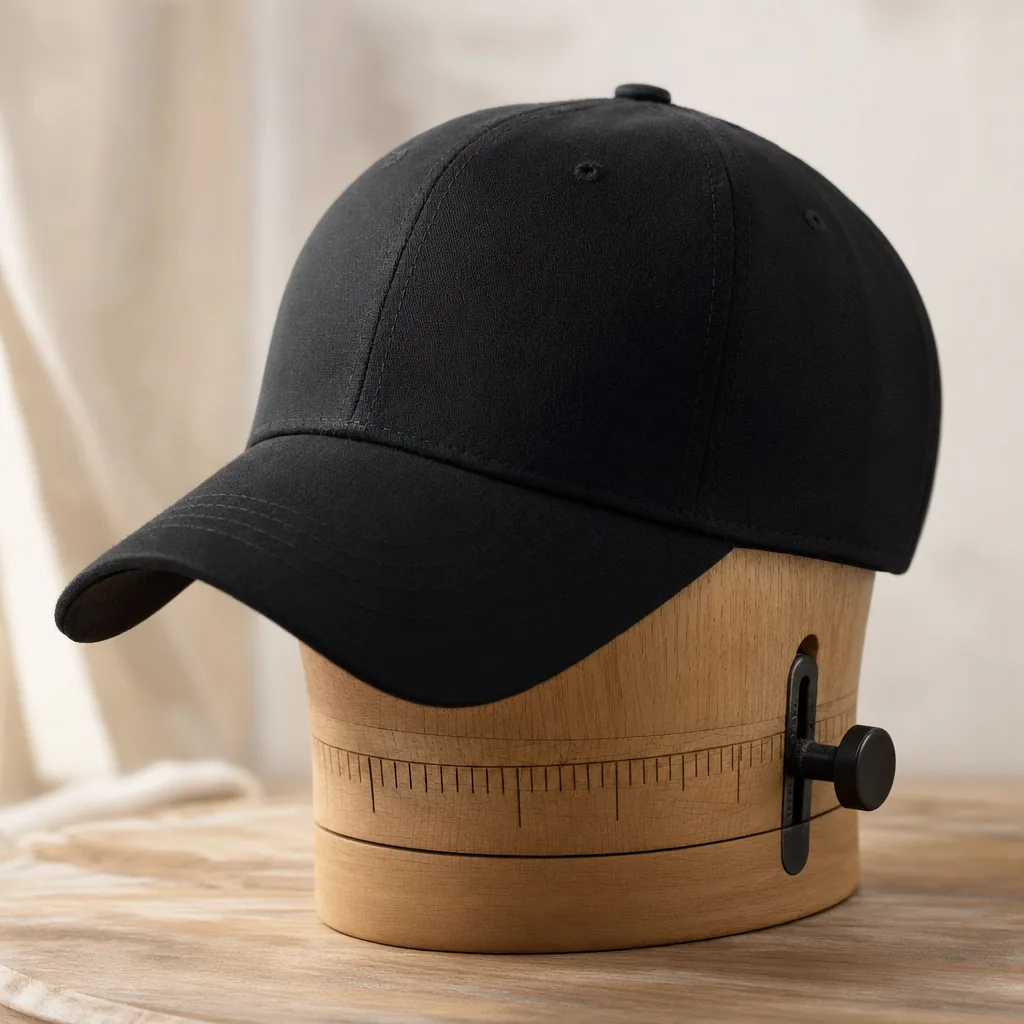
For brand owners, wholesalers and procurement teams entering the custom headwear category, bsci vs sedex vs wrap vs wca: compliance audit standards compared - supplier checklist - supplier checklist is one of the highest-leverage decisions you will make. Get it right and your unit economics, retail story and reorder cycle all improve. Get it wrong and you carry the cost for years.
The four audits hat factories actually hold
sedex-audit-cap-supplier-guide.html">BSCI 2.0, now under amfori, is the audit most European buyers ask for when they want one social-compliance report instead of a custom code of conduct. It covers freedom of association, no forced labor, no child labor, wages, working hours, health and safety, and management systems, then closes with a corrective action plan tracked to closure. Sedex SMETA 4-Pillar is wider on paper because it adds environment and business ethics to the standard labor-and-safety stack, so the document set is heavier and the on-site interview list is longer. In the BSCI vs Sedex SMETA decision, the real driver is usually buyer infrastructure: EU retailers often standardize on BSCI, while UK brands and multi-buyer sourcing teams prefer SMETA because the report lives inside the Sedex platform and can be shared across customers without rebooking the audit.
WRAP sits in a different lane. It is common in licensed apparel, uniforms, and branded merchandise because licensors like a certificate they can recognize quickly, and the standard is explicit about forced labor, child labor, harassment, compensation, disciplinary practices, and fire safety. WCA usually shows up downstream of Walmart or Walmart-adjacent supply chains, where the audit mix leans harder on factory systems, product integrity, security, and process control. The practical difference is commercial, not cosmetic. WRAP is built for garment and license programs; WCA is built for a retail compliance stack with tighter vendor oversight and more frequent document checks.
For a hat factory in China, the real test is whether the site can hold the standard week after week, not whether the badge sounds strict. Payroll has to reconcile to attendance, overtime must stay inside the legal cap, minimum wage and social insurance records must match local law, emergency exits must stay clear, extinguishers need current inspection tags, and evacuation drills need dated records. Our standard practice is to keep work instructions, payroll, attendance, corrective actions, and training logs aligned before the auditor arrives, because most findings come from bad records, not dramatic abuse. When buyers compare BSCI vs Sedex SMETA, WRAP, and WCA, the first question should be simple: can the factory pass now and still pass after the next production cycle, when the paperwork has to match the floor again?
BSCI 2.0 scope and audit process
BSCI 2.0 is broad on paper, but the audit pressure lands on a narrow set of factory controls: working hours, payroll accuracy, employment contracts, age verification, fire safety, chemical storage, dormitory conditions, and grievance handling. In a hat factory, that means the auditor is not impressed by a policy binder; they want clock-in records, payroll ledgers that reconcile to attendance, signed contracts in the personnel file, and worker interviews that match the paperwork. If a machinist is paid base wage plus overtime, the time sheet, payslip, bank transfer, and production record need to align within the same pay period. BSCI vs Sedex SMETA often comes down to emphasis: BSCI is usually more code-driven and corrective-action focused, while SMETA can feel heavier on multi-pillar evidence and disclosure. Either way, the auditor is cross-checking live control, not reading polished PDFs.
A typical BSCI audit takes 1 to 2 days for a single site, longer if there are dormitories, multiple production blocks, or separate embroidery, printing, and trimming lines. The report is generally treated as valid for 12 months, so timing matters when a buyer needs approval before peak season or a new program launch. The findings that usually hurt are control failures, not headline abuse: missing age documents for piece-rate workers, incomplete wage ledgers, unlabeled chemical containers near heat-transfer or cleaning stations, blocked fire exits, or evacuation drills that exist only on paper. Auditors will also sample records backward across several months, so a clean audit day does not rescue weak monthly payroll practice. If the factory cannot show consistent evidence from the last 12 months, the gap shows up quickly in the report and in the corrective-action plan.
European retail buyers still use BSCI as a common reference point because it gives procurement teams a familiar risk language across suppliers in China, Turkey, and Eastern Europe. For a supplier checklist, the first files to prepare are payroll registers, attendance records, age documents, fire drill logs, chemical inventory, grievance log, and dormitory rules, because those are usually reviewed before the auditor leaves the reception area. Our standard practice is to reconcile time records to wage payments before the audit window opens, then verify that the floor conditions match the file set. That is the real test: not whether the factory can assemble a neat audit folder, but whether it can demonstrate stable control over routine operations month after month.
Sedex SMETA 4-Pillar scope and process
SMETA 4-Pillar is the format most buyers mean when they ask for a Sedex audit. The four modules are Labor Standards, Health and Safety, Environment, and Business Ethics, but the labor side usually eats the most time because auditors sample working hours, payroll, age verification, disciplinary records, and grievance handling against actual production records. In a BSCI vs Sedex SMETA comparison, the key difference is that SMETA is not a simple pass/fail scorecard; it checks whether the site can show control of risk across each pillar with traceable evidence. In a hat factory, that means timecards, piece-rate calculations, wage slips, machine guarding on embroidery and cutting lines, lockable chemical storage, fire exits, and policy acknowledgments all have to line up with what the auditor sees on the floor.
A normal SMETA 4-Pillar visit usually runs 2 to 3 audit days, depending on headcount, dormitory use, subcontracting, and whether prior corrective actions need verification. Most buyers treat the report as valid for 12 months, so this is an annual maintenance requirement, not a one-time certificate. Approved firms such as SGS, Bureau Veritas, Intertek, QIMA, and TÜV can perform the audit, but the outcome still turns on record quality and whether managers can explain the system without improvising. The practical checklist is blunt: timecards, payroll ledgers, EHS logs, training attendance, and CAPA tracking need to reconcile before the auditor arrives, because an orderly system is easier to defend than a polished presentation.
The audit usually starts with an opening meeting and document review, then moves to worker interviews, a full factory walk-through, and sample checks of contracts, wage slips, accident logs, training files, and environmental permits where applicable. On a China hat factory floor, that commonly covers embroidery rooms, QC tables, packaging lines, warehouse aisles, and chemical points, because most findings come from control gaps rather than policy language. Compared with WRAP vs WCA audit paths, SMETA is usually the broader retailer-led benchmark, while WCA can be narrower depending on the buyer’s checklist. CrownsForge’s standard practice is to treat SMETA as an operating-system check, not a paperwork drill, because the findings usually come from mismatches between documents and day-to-day production control.
WRAP scope and process
WRAP is narrower and more operational than many buyers expect. It is built on 12 principles covering legal compliance, forced labor, child labor, freedom of association, non-discrimination, harassment prevention, compensation, working hours, health and safety, environment, customs/security, and management systems. In a China hat factory, that means the auditor is checking payroll registers, timecards, age verification, disciplinary records, machine guarding, dormitory conditions, and fire exits on the floor, not just a policy binder. The visit is usually 1 to 2 days, so document readiness matters: if wage sheets, overtime approvals, and personnel files do not reconcile, the findings appear fast. Buyers comparing BSCI vs Sedex SMETA often choose WRAP when they need a certificate with a fixed scope and a straightforward site audit for licensed products.
WRAP audits are conducted by approved third-party firms such as Intertek, Bureau Veritas, and TUV SUD, and the result is graded rather than treated as a simple pass/fail. Silver is generally valid for 1 year, Gold for 2 years, and Platinum for 3 years, so renewal planning becomes part of compliance scheduling. That matters in hat production because seasonal labor, temporary workers, and outsourced embroidery or packing can distort headcount records, wage calculations, and training logs right before re-audit. Compared with a WRAP vs WCA decision, WRAP is usually the cleaner choice when the buyer is in licensed sports, entertainment, or promotional merchandise and wants a recognizable factory certificate instead of a broad corrective-action program.
In practice, WRAP works best when HR and production records are already disciplined, because the evidence trail has to be immediate and internally consistent. If the factory cannot prove fair compensation, overtime control, age verification, grievance handling, and emergency readiness with objective records, the auditor will not accept verbal explanations. The main difference from BSCI vs Sedex SMETA is that WRAP is usually easier to package for licensors and brand approval teams, while SMETA is broader and more buyer-led, with heavier emphasis on root-cause remediation and follow-up closure. For embroidery, cut-and-sew, washing, and packing subcontractors, the factory should align subcontractor declarations, wage data, and site rules before the audit window; otherwise the findings tend to cluster around traceability and labor control at the same time, which is harder to close quickly than a simple document gap.
WCA scope and process
WCA, or Walmart Conformance Audit, is not a reusable social compliance report for multiple buyers. It is Walmart’s own supplier audit program, mapped to its code of conduct and audit protocol, so the scope is narrower than a broad retail checklist but more exacting on evidence. The same core topics show up as in SMETA or BSCI: wages, working hours, hiring age, fire safety, dormitory conditions, grievance channels, and freedom of association. The difference is that WCA is judged against Walmart’s document logic, not just the floor condition on audit day. A factory can pass a visual walk-through and still fail if payroll, time records, and headcount do not tie out line by line. That is why BSCI vs Sedex SMETA is a useful reference point: WCA is less of a general ethics score and more of a buyer-specific reconciliation test.
WCA audits are usually performed by Walmart-approved third-party firms and rely on sampling, not broad impressions. A typical audit pulls 3 to 12 months of payroll, attendance cards or biometric records, wage deductions, social insurance payments, injury logs, fire drill evidence, and dorm occupancy records, then cross-checks those against worker interviews and the site walk. The common failure points are overtime calculation, temporary labor control, subcontracting, and dorm records, especially when peak season pushes the factory beyond normal staffing. Most reports are treated as valid for 12 months, but many buyers require a current report at onboarding or before booking. In a hat factory, the practical fix is monthly discipline: keep embroidery department overtime, piece-rate math, and dorm headcounts aligned to the same dates and IDs, so the file holds together when the auditor samples it.
What overlap exists and what differs
The real overlap is bigger than most buyers assume. In practice, BSCI, Sedex SMETA, WRAP, and WCA all test the same control points: verified age records, payroll and piece-rate accuracy, time-and-attendance, overtime authorization, fire protection, chemical segregation, grievance channels, subcontracting approvals, and whether the factory can reconcile records across HR, production, and finance. On a disciplined site, I’d call the common ground about 70% to 80%. If the factory can produce clean clock-in data, signed wage slips, dormitory logs, evacuation drill records, and CAPA closure evidence, it is usually close to passing the next standard with limited rework. The underlying evidence set is mostly the same; only the template and the sampling pressure change.
The BSCI vs Sedex SMETA comparison usually turns on emphasis, not labor theory. BSCI is built around continuous improvement and management-system discipline, so auditors look closely at policies, worker interviews, root-cause analysis, and whether findings are tracked to closure. SMETA is broader in buyer use: the 2-Pillar version covers labor, health and safety, and environment, while the 4-Pillar version adds business ethics, including anti-bribery and corruption controls. WRAP is more apparel-focused and tends to be stricter on factory governance, shift records, and wage-hour consistency across production runs. A site with weak overtime pre-approval, sloppy payroll exports, or inconsistent dorm checks may scrape through one scheme and fail another once the evidence trail is pulled apart. The standard is not “do you have a policy,” but “does the policy match the records for 12 months.”
WCA is the most retailer-specific and usually the least forgiving when documentary proof is thin. Walmart wants evidence that holds up month by month: hour exceptions, dorm conditions, wage records, disciplinary actions, emergency drills, and CAPA closure history. That is why the difference between a general ethical audit and a buyer-mandated audit matters operationally. A factory that keeps one compliance file with payroll, timekeeping, training, subcontracting approvals, and corrective-action logs can usually move through BSCI, Sedex SMETA, and WRAP with minor remediation, but WCA exposes whether the system is embedded or just staged for inspection week. In a factory setting, the gap is usually not missing paperwork; it is inconsistent source data, especially when HR, production, and finance are all keeping their own versions of the truth.
What the audit doesn't tell you
The core mistake in a BSCI vs Sedex SMETA comparison is treating the audit report as proof of execution. It is not. BSCI 2.0 and SMETA 4-Pillar are labor and social-compliance checks: working hours, payroll records, fire exits, age verification, grievance channels, dormitory conditions, and, if the auditor is thorough, subcontracting control and chemical handling. Useful? Absolutely. Predictive of product quality? Only at the margins. A factory can clear an ethical audit and still miss a Pantone TCX by Delta-E 2.0, lose embroidery registration on a Tajima or Barudan head, or fail a 300 gsm fleece wash test. The report tells you whether the management system exists on paper and in basic practice. It does not tell you whether the sample room can keep a 28-panel structured crown symmetrical, or repeat that result on the third reorder without shade drift.
The same limitation shows up in WRAP vs WCA. Those certificates indicate a supplier can survive an inspection day and keep enough process discipline to look organized under review, but they do not tell you how the line behaves under load. Real buying decisions still need sample-matching records, inline inspection logs, trim approval history, and delivery performance by purchase order. I have seen audited factories misread crown height by 10 mm, swap a visor board spec without notice, or treat a buyer’s vague comment as an approval. If a supplier cannot quote reject rate, sample lead time, thread-breakage rate on dense satin embroidery, or how shade approval is controlled under D65 lighting, the audit is being used as a shield for weak production control. Compliance is the floor, not the ceiling.
The practical test is to pair the audit with live evidence. Ask for three recent POs, six months of on-time delivery, the owner of corrective action when bulk production drifts out of spec, and actual numbers for rework rate, size tolerance, and packing verification before carton close. Press for the details that reveal discipline: how often they run incoming fabric AQL 2.5 checks, what needle count they use on dense embroidery, how they isolate holds in the warehouse, and who signs off a color approval mismatch over Delta-E 1.5. A strong supplier answers in numbers, not slogans. That is the part BSCI vs Sedex SMETA does not give you. It can reduce legal and ethical risk, but it does not replace evidence that the factory can cut, sew, embroider, inspect, and ship the same cap ten times without drifting off spec.
Frequently Asked Questions
What logo decoration techniques do you offer?
3D puff embroidery, flat embroidery, woven patch, leather patch, PVC patch, screen printing, sublimation, applique and laser etching, all in-house with no subcontracting.
Which shipping methods do you support?
We support FOB, CIF and DDP shipping. Air express for samples and small orders, sea LCL for 100 to 500 pieces, sea FCL for 5,000+ pieces. Door-to-door DDP available for US, EU, UK, Canada and Australia.
Do you support sustainability certifications?
Yes. We work with GOTS organic cotton, GRS-certified recycled polyester, OEKO-TEX Standard 100 fabrics, and are BSCI and Sedex audited. Certification documentation can be provided per order.
What file format should I send for my logo?
Vector files (AI, EPS, PDF) are ideal. High-resolution PNG or JPG at 300 dpi on transparent background works as a fallback. Provide Pantone color references for accurate reproduction.
How long does production take?
Sampling takes 7 to 12 days. Bulk production runs 20 to 30 days depending on quantity, fabric availability and decoration complexity. Inspection and packing adds another 3 to 5 days before shipment.
How does ordering custom embroidered trucker hat work?
When evaluating custom embroidered trucker hat, the key considerations are construction quality, decoration capability, MOQ flexibility and lead time. BSCI 2.0 (Business Social Compliance Initiative by amfori) — European retailer favorite. Sedex SMETA 4-Pillar (Social, Health & Safety, Environment, Business Ethics) — used by UK and increasingly global retailers. WRAP (Worldwide Responsible Accredited Production) — US retailer favorite for licensed merchandise. WCA (Walmart Conformance Audit) — required by Walmart and…
How does ordering custom bucket hat embroidery work?
When evaluating custom bucket hat embroidery, the key considerations are construction quality, decoration capability, MOQ flexibility and lead time. BSCI 2.0 (Business Social Compliance Initiative by amfori) — European retailer favorite. Sedex SMETA 4-Pillar (Social, Health & Safety, Environment, Business Ethics) — used by UK and increasingly global retailers. WRAP (Worldwide Responsible Accredited Production) — US retailer favorite for licensed merchandise. WCA (Walmart Conformance Audit) — required by Walmart and…
What should buyers know about bucket hat men nike?
When evaluating bucket hat men nike, the key considerations are construction quality, decoration capability, MOQ flexibility and lead time. BSCI 2.0 (Business Social Compliance Initiative by amfori) — European retailer favorite. Sedex SMETA 4-Pillar (Social, Health & Safety, Environment, Business Ethics) — used by UK and increasingly global retailers. WRAP (Worldwide Responsible Accredited Production) — US retailer favorite for licensed merchandise. WCA (Walmart Conformance Audit) — required by Walmart and…
How does ordering custom made hats for men work?
When evaluating custom made hats for men, the key considerations are construction quality, decoration capability, MOQ flexibility and lead time. BSCI 2.0 (Business Social Compliance Initiative by amfori) — European retailer favorite. Sedex SMETA 4-Pillar (Social, Health & Safety, Environment, Business Ethics) — used by UK and increasingly global retailers. WRAP (Worldwide Responsible Accredited Production) — US retailer favorite for licensed merchandise. WCA (Walmart Conformance Audit) — required by Walmart and…
What is the difference between BSCI and Sedex?
BSCI audits follow a fixed framework, whereas SEDEX supports multiple audit types, including BSCI itself. BSCI membership is required for suppliers, while SEDEX enables transparency by sharing audits with multiple buyers.
Is BSCI recognized globally?
The BSCI certification is recognized globally and demonstrates a company's commitment to responsible sourcing and ethical business practices. It helps companies ensure that their supply chains meet internationally recognized social standards and supports the protection of workers' rights and welfare.
Are Sedex and Smeta the same?
SMETA audits are carried out by auditors from Sedex's named independent, third-party Affiliate Audit Companies (AACs). Sedex owns and evolves the SMETA methodology, oversees its usage and drives SMETA auditing consistency through our Audit Quality Programme.
Are Smeta and BSCI the same?
Differences in Focus and Outcomes BSCI audits primarily focus on issues such as compliance with the law, freedom of association, collective bargaining, prohibition of discrimination, compensation, and working hours. SMETA audits, therefore, fall under the category of social responsibility inspections.
Is the BSCI certification legit?
The BSCI certification is recognized globally and demonstrates a company's commitment to responsible sourcing and ethical business practices. It helps companies ensure that their supply chains meet internationally recognized social standards and supports the protection of workers' rights and welfare.
Need a low-MOQ test order?
We help emerging brands launch with as few as 100 pieces. Premium fabric, in-house embroidery, retail-ready packaging.
Start a small orderRelated guides
Custom Made Trucker Hat: The 2026 Sourcing & Manufacturing Playbook (2026 Update) (2026 Update) - 2026 Buyer's Guide
Read article →
Performance & Athletic Caps: Moisture-Wicking, UPF and Buyer Specs (2026 Update) - 2026 Buyer's Guide
Read article →
Corduroy Hat Men's: Properties, Costs and How to Spec It Right (2026 Update)
Read article →If you are ready to take the next step on bsci vs sedex vs wrap vs wca: compliance audit standards compared - supplier checklist - supplier checklist, our team can put a tailored quotation and digital mock-up in your inbox within 24 hours. Send the inquiry form on our contact page or message us directly on WhatsApp.