
BSCI vs Sedex vs WRAP vs WCA: Compliance Audit Standards Compared (2026 Update) (2026 Update) - Cost & MOQ Breakdown
Every week, our sales team answers detailed questions about bsci vs sedex vs wrap vs wca: compliance audit standards compared (2026 update) (2026 update) - cost & moq breakdown. We wrote this guide so that wholesalers, streetwear brands, corporate buyers and promotional resellers can compare options with full information, and avoid the traps that show up only after production has started.
The four audits hat factories actually hold
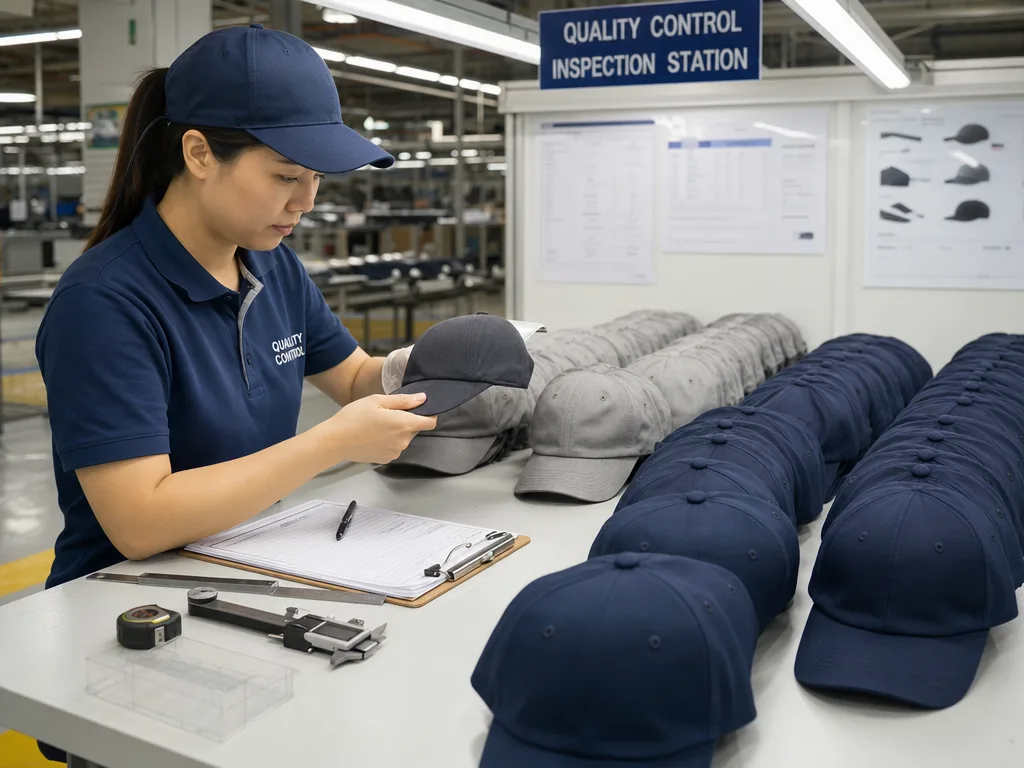
These four audits are not interchangeable badges, and treating them that way is how sourcing teams waste weeks in onboarding. sedex-audit-cap-supplier-guide.html">BSCI 2.0 is the common ask from EU retailers that buy through amfori; Sedex SMETA 4-Pillar is the format many UK supermarkets, importers, and multi-brand groups can read fastest; WRAP still shows up in U.S. licensed apparel and promotional programs; WCA is usually a retailer gate, especially where Walmart-style vendor compliance is involved. In a China hat factory, the document pack overlaps more than buyers expect: 12 months of payroll and attendance records, age verification, labor contracts, dormitory rosters, fire drill logs, machine guarding checks, first-aid training, and proof that subcontracting is declared instead of hidden. The practical difference in BSCI vs Sedex SMETA is buyer acceptance and audit scope, not a different production model.
On the floor, BSCI auditors usually push hardest on working hours, overtime premiums, freedom of association, and management systems under the amfori Code of Conduct. SMETA 4-Pillar adds explicit checks on environment and business ethics, so the same embroidery line running Tajima, Barudan, or ZSK heads can pass wage review and still fail on unlabeled chemical containers, missing SDS sheets, weak spill control, or sloppy anti-bribery records in purchasing. The evidence trail matters more than the slogan: swipe-card attendance versus wage slips, dormitory occupancy versus headcount, evacuation route width, lux levels in inspection areas, machine maintenance logs, and CAP closure records from the last audit. If the worker interviews are coached, auditors will spot it fast by cross-checking answers against time records and supervisor statements.
WRAP and WCA shift the conversation from broad social compliance to channel access. WRAP is still common when a U.S. brand, collegiate licensee, or entertainment merch program wants a standalone certification with clear rules on forced labor, child labor, harassment, customs compliance, and environmental practices; WCA is more often a retailer-specific approval with tighter attention on wage calculation, hours, benefits, health and safety, and record integrity. In cap manufacturing, that means very concrete checks: needle-control logs in sewing and embroidery, emergency-lighting runtime, locked-exit prevention, compressor guarding, electrical load labels, and whether temporary workers are paid and documented the same way as permanent operators. For a small to mid-size Zhejiang hat factory, the first audit typically costs about USD 900 to 2,200 depending on headcount, mandays, and dormitory scope. Remediation is the expensive part: wiring upgrades, photo-luminescent exit signs, guard rails, interlocks, overtime recalculation, and social insurance cleanup can run USD 3,000 to 15,000 before the factory is stable enough for a follow-up.
BSCI 2.0 scope and audit process
BSCI 2.0 is a full factory systems audit, not a box-ticking visit. The scope maps to amfori’s 13 performance areas, and the auditor spends most of the day on evidence: payroll ledgers, timekeeping exports, employment contracts, ID and age verification, overtime approvals, disciplinary files, grievance logs, and dormitory registers if housing is on site. In a hat factory, that also means machine guarding on embroidery heads, needle controls, fire exits, chemical segregation for inks, adhesives, and spray finishes, plus any subcontracted embroidery, washing, or packing that touches the order. A tidy workshop does not offset missing records. If attendance data does not reconcile to payroll, or overtime patterns exceed local law, the finding lands fast even when the production floor looks orderly.
BSCI vs Sedex SMETA is usually a buyer-choice decision, but the audit mechanics are different enough to matter. BSCI audits are conducted by amfori-approved audit firms and normally take 1 to 2 days on site, depending on headcount, shift pattern, dormitory use, and how many production blocks have to be walked. The report is usually treated as current for 12 months by European retail buyers, so they expect the corrective action plan and closure evidence to stay live through the season. The auditor will sample HR files against payroll, test whether overtime is voluntary and within legal limits, and verify that previous nonconformities were closed with objective evidence, not just a signed promise. This is where factories lose time: weak file control, not the floor walk.
For procurement teams comparing supplier compliance audit standards, the real difference is how much discipline the program forces into document control and labor-system maturity. BSCI tends to be a gate for larger European accounts, while WRAP vs WCA comes up more often in U.S.-facing sourcing, where buyer recognition and program fit can matter as much as the framework itself. Our standard practice is to assemble the BSCI file set before booking: 12 months of wage and attendance data, shift rosters, fire drill logs, SDS sheets, machine-maintenance records, subcontractor declarations, and training sign-offs. That preparation is usually cheaper than a failed first audit plus a re-audit, which can add roughly USD 300 to 800 and push shipment timing back 1 to 3 weeks. Expect follow-up checks if labor hours spike, a new wash line is added, or production is moved offsite.
Sedex SMETA 4-Pillar scope and process
When buyers ask about BSCI vs Sedex SMETA, they usually mean SMETA 4-Pillar, not the older 2-Pillar format. The scope is broader in ways that matter on a cap factory floor: labor standards, health and safety, environment, and business ethics are all tested in one audit trail. In practical terms, the auditor will trace payroll against attendance, piece-rate sheets, labor contracts, ID and age-verification files, and social insurance records, then walk the site for machine guarding, needle-control logs, fire exits, chemical segregation, spill containment, and electrical loading. On the environmental side, they do not expect a dyehouse-level review from a cut-and-sew hat factory, but they will still check waste classification, hazardous chemical labeling under GHS, wastewater arrangements if washing or printing is subcontracted, and permits for waste collection. If wage, hours, and age-verification records break down, the fourth pillar will not rescue the report; most serious findings in China still start with excessive overtime, missing evidence, or payroll inconsistencies.
A SMETA 4-Pillar audit is typically a 2- to 3-auditor-day exercise for a 100- to 250-worker factory, especially if the site includes embroidery, sewing, finishing, warehouse, canteen, and dormitory functions. One day is rarely enough if the auditor properly samples multiple departments and interviews workers off-line, then reconciles attendance data to payroll month by month. Sedex itself is the data platform, not the audit firm; the on-site work is usually done by APSCA-affiliated firms such as SGS, Intertek, Bureau Veritas, QIMA, or TÜV Rheinland under the SMETA methodology. Expect document requests to go well beyond a polished policy manual: Chinese payroll ledgers, time records, labor contracts, disciplinary procedures, grievance logs, fire drill records, EHS training matrices, social insurance payment receipts, and anti-bribery controls are standard. Our standard practice is to budget roughly USD 1,500 to 3,000 for the initial audit in East China, with extra cost for travel, dormitory scope, corrective-action verification, or a second day if records are incomplete. Most buyers treat the report as current for 12 months, so in BSCI vs Sedex SMETA comparisons, SMETA 4-Pillar is usually the more document-dense option and the faster way to expose weak environmental and ethics controls alongside labor compliance.
WRAP scope and process
WRAP is narrower than many sourcing teams assume, but it is more operational than a desktop code-of-conduct review because it audits against 12 fixed principles with a certificate outcome. In a cap factory, the auditor will test legal working hours, wage calculation, social insurance enrollment, age verification, disciplinary records, fire safety, chemical handling, wastewater controls, and customs compliance under C-TPAT-style security expectations. A first-time WRAP visit at a 150- to 300-worker site is usually 1.5 to 2 audit days, not counting pre-audit document upload. Expect payroll and attendance sampling for the prior 12 months, private interviews with roughly 10 to 20 workers across cutting, sewing, embroidery, finishing, and packing, plus checks on dormitories and canteens if they are factory-managed. The common failures are not abstract ethics issues; they are double-booked time records, overtime above local caps, missing machine-guard inspection logs, expired fire-drill records, and incomplete PPE issuance registers for embroidery, eyelet, and pressing stations.
The process is certificate-led, which is why WRAP often gets pulled into buyer qualification after the BSCI vs Sedex SMETA discussion has already happened. The audit must be conducted by a WRAP-accredited monitor such as Intertek, Bureau Veritas, or TÜV Rheinland, then reviewed by WRAP for certification. The tiers matter commercially: Platinum is valid for 2 years but is typically available only after a strong compliance history and no material findings, Gold is 1 year, and Silver is 6 months when corrective actions are still being monitored. In practice, licensors and sports-rights holders like WRAP because the pass/fail logic is clearer than a long narrative report. Budget realistically: a straightforward first audit for a single Yiwu or Dongguan hat facility usually lands around USD 3,000 to 6,000, with re-audits or follow-up verification adding another USD 800 to 2,000. At CrownsForge, the expensive part is rarely the auditor day rate; it is the internal cleanup of payroll, social insurance, EHS files, and subcontractor controls before the monitor arrives.
WCA scope and process
WCA, or Walmart Conformance Audit, is not a broad social compliance check. It is Walmart’s own supplier protocol, with a tighter evidentiary bar than most first-time buyers expect: payroll registers, timecards, piece-rate calculations, overtime approval, fire safety, chemical storage, dormitory conditions if applicable, and management systems are tested against Walmart’s code. In a China hat factory, the common failure points are easy to spot on the floor: punch-card drift versus actual line attendance, sewing-line piece-rate math that does not reconcile to payroll, blocked egress near Tajima or Barudan embroidery cells, missing needle and pulley guarding, and subcontractor work that was never formally declared. A site can pass BSCI vs Sedex SMETA and still fail WCA if the records do not tie out cleanly day by day. The audit is less about policy language than proof of control: consistent timekeeping, traceable corrective actions, and documents that match what workers and supervisors say happened.
WCA has to be issued by a Walmart-approved audit firm, not a generic third-party social compliance body, and the usual validity window is 12 months. That short cycle matters for seasonal hat programs because the factory has to stay audit-ready all year, not just during the week before the visit. Procurement teams often compare WRAP vs WCA because the overlap is real, but the logic is different: WRAP focuses on garment production discipline, while WCA is a retailer-specific supplier test with stricter documentation habits around attendance, wages, safety logs, training, and subcontractor control. In practice, it behaves like a management-system audit disguised as a compliance review. If monthly records are not updated, the factory spends renewal time reconstructing evidence instead of shipping orders.
In China, a realistic WCA cost range is about USD 900 to 1,800 for a small single-site hat factory and USD 2,000 to 3,500 for a larger plant with multiple production lines, a warehouse, or outsourced finishing. Travel, interpreter time, and worker interview count move the price quickly; inland factories usually land at the top of the range. A pre-audit is usually worth paying for because fixing attendance records, safety labels, and corrective-action evidence after a failed visit often adds another USD 300 to 800 in consultant and admin time, plus schedule slippage. For buyers comparing BSCI vs Sedex SMETA with WCA, the practical difference is simple: the certificate matters less than whether payroll, attendance, safety, and subcontracting records stay consistent enough to survive a Walmart-specific audit every 12 months.
What overlap exists and what differs
Most buyers overstate the gap between BSCI, Sedex SMETA, WRAP, and WCA. In a real factory audit, roughly 70% to 80% of the evidence base is the same: no child labor or forced labor, legal wages, controlled working hours, PPE issuance, fire protection, emergency exits, disciplinary policy, grievance channels, and clean recordkeeping. If a hat factory already keeps payroll, attendance, ID/age verification, dormitory logs, and evacuation drill records, it is already covering the core of all four schemes. The real differences are not moral philosophy; they are proof standards. One auditor may accept a neat file with payroll, timecards, and headcount reconciliation, while another will reject the same file if the dates do not line up or the CAPA closure trail is weak. That is why BSCI vs Sedex SMETA is usually a reporting and buyer-acceptance issue, not a manufacturing capability issue.
WRAP vs WCA is where the separation becomes more visible. WRAP is a labor-and-safety program focused on legal employment, health and safety, environmental compliance, and customs/security controls, while WCA tends to drill harder into Walmart-style operational discipline: working hours, wage reconciliation, dormitory conditions, and retention of source records. A WCA auditor will usually press on timesheet consistency, punch-card logic, overtime premiums, and whether piece-rate or hourly payroll can be reconciled without gaps. Sedex SMETA 4-Pillar goes wider than labor-only audits because it adds environment and business ethics, so a factory can pass labor controls and still fail on chemical storage, wastewater handling, bribery policy, or environmental permits. In practice, the weak point is rarely sewing, cutting, or embroidery; it is whether HR, EHS, and dorm management can prove control with dated, matching records.
The practical answer is to run one compliance system to the strictest buyer standard and keep it live every month, not rebuilt the week before the audit. That means wage ledgers, timecards, age checks, fire drill logs, PPE sign-out sheets, chemical inventories, dormitory inspection forms, and CAPA closure records all need the same dates, headcount, and employee IDs. Our standard practice is to align files to the harshest requested scheme, because rewriting documentation for each buyer burns more time than maintaining one clean control set. For procurement teams, a supplier holding BSCI, Sedex SMETA, WRAP, or WCA is not just “more certified”; it is usually faster to onboard, easier to approve in annual review, and less likely to trigger repeat findings on the same root cause. The real difference is audit language, auditor emphasis, and buyer policy, not whether the factory knows how to run a compliant floor.
What the audit doesn't tell you
A BSCI vs Sedex SMETA comparison only tells you whether a supplier cleared a social compliance screen; it does not tell you whether the factory can actually make your product to spec. These audits cover working hours, wages, child labor, grievance handling, fire safety, and record keeping. They do not certify that a hat factory in China can hold Pantone TCX color within Delta-E 2.0, keep embroidery registration tight on a 3,000-piece run, or hit a 45-day ex-factory schedule without slipping 7 to 10 days. I have seen factories with current BSCI 2.0 or Sedex SMETA 4-Pillar reports still miss basic execution on carton marks, packing counts, trim consistency, or reply discipline. The audit says the plant passed a labor and ethics review. It says nothing about whether the line can run cleanly at scale.
The gap is usually process control, not paperwork. A factory can present a polished policy binder and still have unstable thread sourcing, weak inline QA, and poor production planning when repeat orders land back-to-back. In headwear, the common failure mode is simple: the audit passes, then bulk arrives with crown height drift, visor curve variation, stitch density swings, or logo placement off by 3 to 5 mm because nobody locked the machine settings and approval limits before production. On Tajima, Barudan, or ZSK embroidery heads, the real question is whether the operator can hold trim quality, density, and registration across the full lot, not whether the site can answer an auditor’s checklist. Social compliance is necessary, but it is not a capability test.
Treat compliance as one gate and then demand production proof. For hats and apparel, ask for on-time delivery history by order size, defect data against AQL 2.5, buyer references from the last 12 months, and sample-to-bulk comparison photos with timestamps. If a supplier claims WRAP or WCA strength, look for documented corrective actions, not just a certificate date. The only useful test is repeatability: can the factory quote accurately, communicate within 24 hours, and hit the same spec on a second and third order without drift. That is the part BSCI vs Sedex SMETA never tells you, and it is the part that decides whether your order lands as approved bulk or as a costly rework job.
Frequently Asked Questions
What logo decoration techniques do you offer?
3D puff embroidery, flat embroidery, woven patch, leather patch, PVC patch, screen printing, sublimation, applique and laser etching, all in-house with no subcontracting.
Can I order a sample before bulk production?
Yes. We strongly recommend approving a pre-production sample before mass production. Samples are charged at 35 to 60 USD each plus express shipping, fully refundable against confirmed bulk orders over 500 pieces.
What is the minimum order quantity (MOQ) for custom hats?
Our standard MOQ is 100 pieces per design and color, with sampling available from 1 piece. For complex multi-color logos or premium fabric upgrades, the MOQ can be lowered with a small per-piece surcharge.
How long does production take?
Sampling takes 7 to 12 days. Bulk production runs 20 to 30 days depending on quantity, fabric availability and decoration complexity. Inspection and packing adds another 3 to 5 days before shipment.
What file format should I send for my logo?
Vector files (AI, EPS, PDF) are ideal. High-resolution PNG or JPG at 300 dpi on transparent background works as a fallback. Provide Pantone color references for accurate reproduction.
How does ordering custom embroidered trucker hat work?
When evaluating custom embroidered trucker hat, the key considerations are construction quality, decoration capability, MOQ flexibility and lead time. BSCI 2.0 (Business Social Compliance Initiative by amfori) — European retailer favorite. Sedex SMETA 4-Pillar (Social, Health & Safety, Environment, Business Ethics) — used by UK and increasingly global retailers. WRAP (Worldwide Responsible Accredited Production) — US retailer favorite for licensed merchandise. WCA (Walmart Conformance Audit) — required by Walmart and…
How does ordering custom bucket hat embroidery work?
When evaluating custom bucket hat embroidery, the key considerations are construction quality, decoration capability, MOQ flexibility and lead time. BSCI 2.0 (Business Social Compliance Initiative by amfori) — European retailer favorite. Sedex SMETA 4-Pillar (Social, Health & Safety, Environment, Business Ethics) — used by UK and increasingly global retailers. WRAP (Worldwide Responsible Accredited Production) — US retailer favorite for licensed merchandise. WCA (Walmart Conformance Audit) — required by Walmart and…
What should buyers know about bucket hat men nike?
When evaluating bucket hat men nike, the key considerations are construction quality, decoration capability, MOQ flexibility and lead time. BSCI 2.0 (Business Social Compliance Initiative by amfori) — European retailer favorite. Sedex SMETA 4-Pillar (Social, Health & Safety, Environment, Business Ethics) — used by UK and increasingly global retailers. WRAP (Worldwide Responsible Accredited Production) — US retailer favorite for licensed merchandise. WCA (Walmart Conformance Audit) — required by Walmart and…
How does ordering custom made hats for men work?
When evaluating custom made hats for men, the key considerations are construction quality, decoration capability, MOQ flexibility and lead time. BSCI 2.0 (Business Social Compliance Initiative by amfori) — European retailer favorite. Sedex SMETA 4-Pillar (Social, Health & Safety, Environment, Business Ethics) — used by UK and increasingly global retailers. WRAP (Worldwide Responsible Accredited Production) — US retailer favorite for licensed merchandise. WCA (Walmart Conformance Audit) — required by Walmart and…
What is the difference between BSCI and Sedex?
BSCI audits follow a fixed framework, whereas SEDEX supports multiple audit types, including BSCI itself. BSCI membership is required for suppliers, while SEDEX enables transparency by sharing audits with multiple buyers.
Is BSCI recognized globally?
The BSCI certification is recognized globally and demonstrates a company's commitment to responsible sourcing and ethical business practices. It helps companies ensure that their supply chains meet internationally recognized social standards and supports the protection of workers' rights and welfare.
Are Sedex and Smeta the same?
SMETA audits are carried out by auditors from Sedex's named independent, third-party Affiliate Audit Companies (AACs). Sedex owns and evolves the SMETA methodology, oversees its usage and drives SMETA auditing consistency through our Audit Quality Programme.
Are Smeta and BSCI the same?
Differences in Focus and Outcomes BSCI audits primarily focus on issues such as compliance with the law, freedom of association, collective bargaining, prohibition of discrimination, compensation, and working hours. SMETA audits, therefore, fall under the category of social responsibility inspections.
Is the BSCI certification legit?
The BSCI certification is recognized globally and demonstrates a company's commitment to responsible sourcing and ethical business practices. It helps companies ensure that their supply chains meet internationally recognized social standards and supports the protection of workers' rights and welfare.
Looking for a reliable hat manufacturer in China?
CrownsForge has produced custom hats for 800+ brands across 40 countries. From 100-piece launches to 100,000-piece retail programs, we deliver on time and on spec.
Get in touchRelated guides
BSCI vs Sedex vs WRAP vs WCA: Compliance Audit Standards Compared (2026 Update) - 2026 Buyer's Guide
Read article →
Sustainable Cap Packaging: Options, Costs and Retail-Buyer Demands - 2026 Buyer's Guide
Read article →Bucket Hat Corduroy Fabric And Trim Spec Guide for Custom Hat Buyers
Read article →Sourcing custom hats does not have to be complicated. With the right manufacturing partner, clear specifications and a small upfront investment in sampling, you can launch a retail-quality product in 30 to 45 days.