
BSCI vs Sedex vs WRAP vs WCA: Compliance Audit Standards Compared (2026 Update) (2026 Update) - 2026 Buyer's Guide
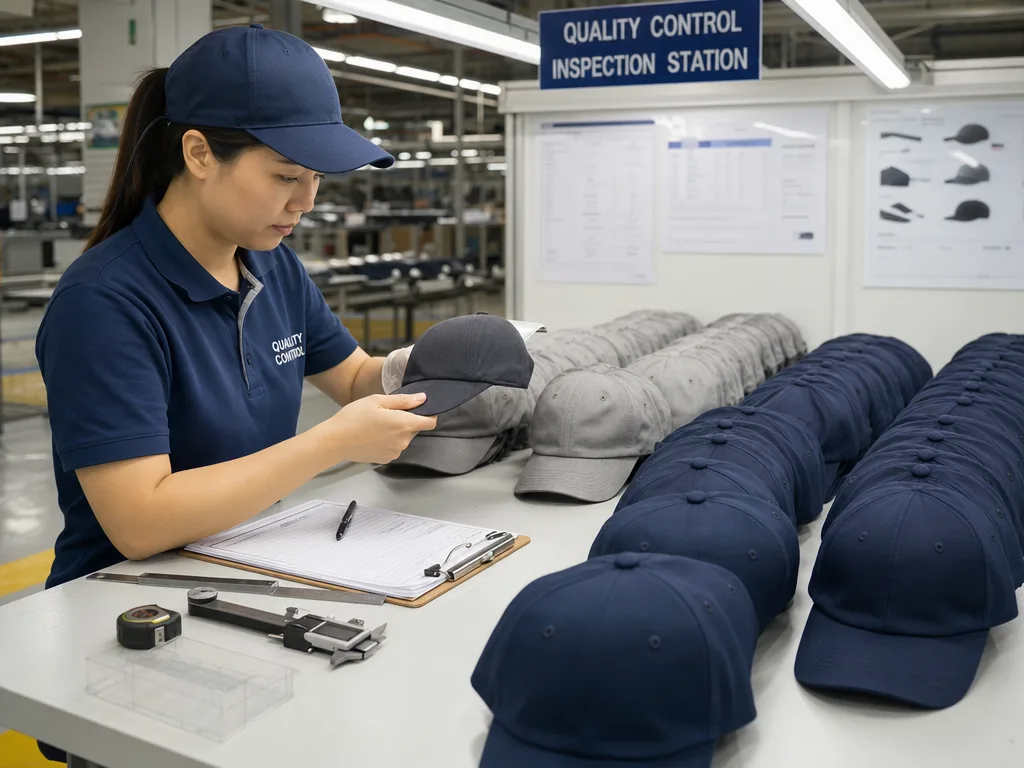
Every week, our sales team answers detailed questions about bsci vs sedex vs wrap vs wca: compliance audit standards compared (2026 update) (2026 update) - 2026 buyer's guide. We wrote this guide so that wholesalers, streetwear brands, corporate buyers and promotional resellers can compare options with full information, and avoid the traps that show up only after production has started.
The four audits hat factories actually hold
The audit logo on a factory profile matters only if it matches the buyer’s vendor manual. In headwear, the four reports that actually unlock POs are sedex-audit-cap-supplier-guide.html">BSCI 2.0, Sedex SMETA 4-Pillar, WRAP, and WCA, and they are not substitutes. If you are weighing BSCI vs Sedex SMETA, the real distinction is commercial acceptance, not audit difficulty. BSCI is still the default ask from many EU importers, discount retailers, and private-label programs; Sedex SMETA 4-Pillar shows up more often with UK retailers, supermarket groups, and sourcing offices that want site data visible inside the Sedex platform. Both cover legal wages, working hours, contracts, grievance channels, fire safety, dormitories where applicable, and management systems, but a factory can clear one and still fail vendor approval if the customer names the other explicitly. On the floor, auditors go far beyond a tidy policy binder. They usually sample 12 months of payroll, attendance, social insurance, leave, disciplinary records, and training logs, then reconcile those records against worker interviews and production reality. In a cap factory, that means checking needle-control logs in the embroidery room, compressor inspection records, SDS labeling for inks and spot-cleaning solvents, machine guarding on eyelet and cutting equipment, and subcontract declarations for washing, printing, or finishing. Audit fees typically run about $1,500 to $3,500 depending on headcount, country, and firm, but the real cost is delay: a major finding on excessive overtime, blocked exits, or weak payroll traceability can hold shipment approval for 30 to 90 days while corrective actions are verified.
WRAP and WCA sit in different buying channels, and that distinction matters more than any abstract debate about which standard is “stricter.” WRAP is the credential U.S. apparel, licensed-goods, and sports-merchandise teams recognize fastest because legal and brand-protection departments already know the format. For caps tied to collegiate marks, league licenses, or entertainment IP, WRAP often functions as an early screen before a PO is even drafted. WCA is less universal in the market but can be more mandatory in practice: if the order is tied directly to Walmart or a supplier already operating inside Walmart’s compliance system, a valid WCA report can move from preferred to non-negotiable. That is why buyers should map audits to customers, not treat them as generic ethical badges. The common procurement mistake is assuming one clean social audit covers every account. It does not. A good BSCI or Sedex SMETA report will not satisfy a U.S. licensed program that names WRAP in the onboarding packet, and WCA alone will not give a UK retailer the Sedex visibility it expects. Our standard practice is to maintain audit files monthly rather than rebuild them in panic mode a week before the visit: payroll reconciliations, fire-drill records, PPE issuance, age-document checks, first-aid inspections, and corrective-action closure evidence should already be current. Most audits take one to three days on site depending on workforce size, but the result usually turns on document triangulation—whether timecards, wage sheets, worker testimony, and line conditions all tell the same story under AQL-level scrutiny.
BSCI 2.0 scope and audit process
BSCI 2.0 is difficult to stage-manage because auditors test whether records, production reality, and worker testimony line up; a tidy sewing line means very little if payroll math collapses under sampling. In a cap factory, the fastest credibility check is triangulation: attendance logs against payroll, payroll against line output, and labor contracts against actual overtime during peak shipment months, usually August through October for holiday retail. The amfori Code of Conduct covers 13 performance areas, but the findings that matter most in headwear are usually plain and measurable: overtime above local legal caps, underpaid weekday or weekend premiums, incomplete social insurance enrollment, blocked exits near trimming tables, and weak young-worker controls where interns or dispatch labor are used. Auditors commonly sample 12 rolling months of wage sheets, time records, bank remittance proofs, social insurance receipts, ID copies for age verification, disciplinary logs, grievance records, machine guarding checks, fire drill reports, and dormitory files if housing is provided. Chemical control gets more attention now than many suppliers expect, especially where spot-cleaning solvent, screen-print ink, heat-transfer adhesive, or washing chemicals are on site; missing SDS files, secondary containment, GHS labels, eyewash stations, or training sign-offs can trigger non-conformities quickly.
The audit process is structured, but not soft. A BSCI 2.0 audit is conducted by an amfori-approved audit firm and usually runs 1.5 to 3 auditor-days depending on headcount, dormitories, canteens, and whether embroidery, washing, printing, or packing is subcontracted. The sequence is typically opening meeting, document review, floor inspection, confidential worker interviews, management interviews, and a closing meeting where findings are graded and entered into a corrective action plan. In practice, the weak points in hat manufacturing are not abstract policy gaps; they are operational mismatches such as piece-rate earnings that do not convert cleanly to legal hourly minimums, unsigned handbook acknowledgments, missing leave records for temporary workers, or no evidence that needle control and broken-needle logs are actually maintained around sewing and embroidery lines. In a real BSCI vs Sedex SMETA evaluation, the practical distinction is that BSCI is more tightly linked to amfori’s methodology, rating logic, and CAP follow-up discipline. That is why many EU retailers treat BSCI as a supplier-entry gate, while Sedex SMETA often functions more as a broadly accepted social compliance snapshot across mixed buyer bases.
Sedex SMETA 4-Pillar scope and process
If a buyer says they need “Sedex,” they usually mean a Sedex platform record backed by a SMETA 4-Pillar audit, not a membership certificate. That distinction matters in any BSCI vs Sedex SMETA comparison because 4-Pillar goes beyond labor and fire safety into Environment and Business Ethics. Auditors do not stop at payroll, contracts, and extinguishers; they also check chemical inventory against SDS files, secondary containment in ink and solvent storage, waste-transfer manifests, discharge permits where local law requires them, anti-bribery training logs, gift and hospitality policies, and controls over unauthorized subcontracting. On a hat factory floor, that scope reaches very practical points: embroidery backing and cleaning agents stored without labels, blocked aisles between Tajima or Barudan heads, missing guards on eyelet setters, incomplete needle-control logs, and dorm occupancy exceeding the local fire-code ratio rather than the factory’s internal SOP.
SMETA 4-Pillar is also more forensic than many buyers expect. Auditors triangulate 12 months of attendance, payroll, piece-rate output, and peak-season overtime to test whether management records match worker testimony. A 150- to 300-worker cap factory normally takes 2 to 3 auditor-days; add dormitories, separate warehouse buildings, or a headcount above 300, and the schedule often stretches to 3.5 to 4 days. Firms such as SGS, Intertek, Bureau Veritas, TÜV Rheinland, and QIMA usually start with document review, then walk cutting, sewing, embroidery, finishing, warehouse, chemical room, canteen, and dorm areas before conducting confidential interviews away from line leaders. Our standard practice is to reconcile timecards, pay slips, social insurance records, and production reports line by line, because a 0.5-day discrepancy in rest-day records or a mismatch between output and overtime can escalate from a minor finding to a major non-conformity. In most programs the report remains current for 12 months, but retailers often require a fresh audit after a relocation, ownership change, failed CAP closure, or a rapid seasonal hiring spike.
WRAP scope and process
WRAP is narrower than many buyers expect and more forensic on live factory conditions than on policy binders. Its 12 Principles cover legal compliance, wages and benefits, hours, discrimination, health and safety, freedom of association, environment, customs compliance, and security, but the auditor does not stop at document review. In a cap plant, they will walk the full route from fabric warehouse and cutting tables to Tajima or Barudan embroidery heads, heat-transfer presses, eyelet punching, brim shaping, hand finishing, and export carton sealing. They test whether records survive contact with the shop floor: blocked fire exits, missing needle-control logs, unlabeled solvent bottles, expired extinguisher tags, dormitory restrictions, or piece-rate calculations that pull net wages below the local statutory minimum once attendance bonuses and unpaid waiting time are stripped out. That makes WRAP common in licensed headwear, collegiate programs, and artist merchandise, where the brand cares as much about shipment integrity and floor discipline as about social compliance language. In BSCI vs Sedex SMETA discussions, WRAP usually sits in a different lane: less management-system oriented, more facility-control driven, and more closely tied to licensor and security expectations.
The process looks simple on paper but gets evidence-heavy fast. A first-time WRAP audit at a small or mid-size cap factory is usually 1-2 auditor-days, but add dormitories, canteens, washing, screen printing, or separate buildings and the scope expands quickly. Approved firms such as Intertek, Bureau Veritas, SGS, and CTI will typically sample 12 months of payroll, attendance, labor contracts, age-verification files, social insurance records, disciplinary logs, grievance channels, injury reports, fire drill records, machine guarding, lockout practice, chemical SDS files, and shipment controls aligned with C-TPAT-type security protocols. On the hat floor, recurring findings are overtime spikes before FOB vessel cutoff, aisles narrowed by WIP cartons near cap presses, poor PPE compliance at heat-transfer stations running 160-170°C, and weak broken-needle or blade segregation in trimming. Certification level also matters commercially: Platinum is generally valid for 2 years, Gold for 12 months, and Silver is issued only when non-critical findings still require corrective action. Our standard practice is to reconcile line output, punch data, and wage records before any audit, because experienced WRAP auditors can spot fabricated attendance or impossible efficiency numbers within the first hour.
WCA scope and process
WCA is a retailer-gated audit, not a portable social-compliance credential. If a hat factory needs Walmart or Sam’s Club business, a current WCA in Walmart’s system matters more than whether the same site already passed BSCI 2.0 or a Sedex SMETA 4-Pillar audit. That is the operational distinction buyers often miss in a BSCI vs Sedex SMETA review: BSCI and SMETA are broadly recognized across retailers, while WCA has real value mainly inside Walmart’s supplier-approval workflow. The audit is usually conducted by Walmart-approved firms such as Intertek, SGS, TÜV Rheinland, or Bureau Veritas, and the scope is narrower than many buyers assume but stricter in application. Auditors go line by line through wages and working hours, minimum-age controls, labor contracts, social insurance, dormitories where applicable, health and safety, environmental management, and basic systems for corrective action. On the factory floor, the work is standard social-audit fieldwork but with less room for interpretation. Auditors review payroll registers, timecards, ID files, disciplinary records, leave data, and environmental permits; then they cross-check management statements against confidential worker interviews and physical conditions in cutting, sewing, embroidery, finishing, packing, warehouse, canteen, and dorm areas. In cap manufacturing, they will not stop at paperwork if the site runs Tajima, Barudan, or ZSK embroidery heads, eyelet presses, steam-ironing stations, or washing lines. They will check machine guarding, chemical labels in Chinese, SDS availability, spill-control setup, emergency lighting lux levels, exit access, and whether fire extinguishers and hydrants are inspected on schedule.
The process feels closer to Sedex SMETA 4-Pillar than many sourcing teams expect, but the acceptance threshold is tighter because Walmart decides commercial usability, not the factory and not the audit firm. A typical audit samples at least 3 months of attendance and payroll records, reconciles piece-rate calculations to wage slips, checks overtime approvals against legal limits, verifies juvenile-worker controls where applicable, and tests whether production peaks were covered by compliant staffing rather than hidden off-the-clock hours. For a China cap factory, recurring nonconformities are usually mundane but costly: blocked aisles around embroidery banks, missing broken-needle logs, no lockout/tagout on snap or eyelet presses, ungrounded irons, unlabeled thinner or screen-print chemicals, expired first-aid supplies, and PPE issuance records that do not match actual washing or distress operations. Validity is commonly 12 months, but the calendar matters less than the severity of findings. Red-flag issues such as child labor indicators, forced-labor risk, falsified payroll, double books, locked exits, or coached interviews can make a fresh report commercially useless even before expiry. In practice, a mid-size cap factory with 150 to 300 workers usually budgets about US$1,200 to US$2,500 for the audit itself, with follow-up costs landing elsewhere: fire-door upgrades at US$80 to US$150 each, extinguisher replacement at roughly US$25 to US$40 per unit, chemical cabinets at US$150+, and payroll-system cleanup consuming far more management time than buyers expect. That is why WCA should be treated as a customer-access requirement, not as a substitute for a broader BSCI vs Sedex SMETA compliance strategy.
What overlap exists and what differs
The useful answer in BSCI vs Sedex SMETA is that the shop-floor checklist overlaps heavily, but the audit architecture and evidentiary burden are not the same. In a cap factory, about 75% of the control points are shared: legal minimum-age checks against PRC ID cards, signed labor contracts, 12 months of payroll and attendance, overtime premiums, social insurance enrollment, fire-drill logs, evacuation maps, machine guarding on eyelet presses and brim-cutting machines, SDS files for spot cleaners and screen-print chemicals, and dormitory sanitation. A factory that can reconcile attendance records to payroll, piece-rate sheets, and bank transfer vouchers will usually survive either protocol. Most serious findings are not philosophical gaps; they are document integrity failures. Typical examples are missing monthly extinguisher inspection tags, handwritten attendance corrections without supervisor sign-off, unsigned employee handbook receipts, or undeclared subcontract embroidery on a 12-head Tajima, Barudan, or ZSK line at an unapproved site. Those issues trigger far more CAPs than headline topics like child labor because auditors spend their time testing traceability, not listening to management promises.
The differences show up in scoring, scope, and how hard the auditor tests management systems under pressure. Sedex SMETA 4-Pillar adds business ethics and environmental modules, so buyers may ask for anti-bribery policy training records, waste-transfer manifests, generator maintenance logs, chemical inventory lists, and evidence that wastewater or sludge disposal went through a licensed contractor. BSCI 2.0, built around the amfori Code of Conduct, is usually stricter on root-cause analysis, worker interview consistency, and whether corrective actions are embedded into procedure rather than staged for audit week. Our standard practice is to prepare the same payroll and H&S backbone for both, then build protocol-specific files on top. WRAP often reads more cleanly to U.S. licensees because its 12 principles are straightforward, while WCA is typically the harshest on numerical reconciliation: dormitory density by square meter, canteen cleaning frequency, and monthly working-hour trends checked against wages at 150%, 200%, and 300% pay rates where statutory rules apply. If an embroidery unit ran 68 hours a week in peak season but payroll only shows base time, WCA will usually flag it immediately; another standard may still issue a major nonconformity, but the tolerance for weak math is generally lower under WCA.
What the audit doesn't tell you
A passed social audit does not tell you whether a hat factory can execute your spec in bulk. That is the main mistake buyers make in any BSCI vs Sedex SMETA comparison: treating a labor-compliance audit like a capability audit. BSCI 2.0 and Sedex SMETA 4-Pillar are designed to check wages, working hours, grievance channels, fire safety, dormitories, and management systems. They do not test whether a factory can keep a Pantone TCX body color within Delta-E 1.0 to 1.5 across dye lots, hold crown height and visor width within ±3 mm, or run consistent 3 mm satin columns and 0.8 mm underlay on Tajima, Barudan, or ZSK embroidery heads without frequent thread breaks. I have seen factories with acceptable CAP closure rates still ship caps with front logos drifting 2 to 4 mm off center, mismatched top buttons, and visor curves that varied enough to fail retail presentation. The bigger gap is process discipline. A clean audit report will not show whether purchasing quietly substituted a 21x21/108x58 cotton twill with a lighter 180 gsm twill, whether PE-coated buckram was downgraded and changed front-panel stiffness, or whether carton assortments were mixed because the packing line had no final barcode scan. None of the major standards measure sample-to-bulk conversion, embroidery digitizing quality, first-pass PPS approval rate, or OTIF performance. For headwear, those are the failure points that generate claims, chargebacks, and costly rework. Audit status should be treated as a sourcing threshold, not proof of execution.
If you want to know what the audit misses, ask for records that are difficult to manufacture after the fact. Start with the last 12 months of OTIF by month, repeat-order defect rate, and final inspection results under AQL 2.5, broken down by critical, major, and minor defects. Then ask for inline QC evidence: shade-band approvals by dye lot, measurement tolerance sheets, needle-control logs, line-end defect boards, and rework reports showing actual defect codes such as skewed embroidery, seam puckering, raw-edge fray, or sweatband contamination. A factory that cannot pull these within 24 hours usually does not have disciplined production control, no matter how polished its BSCI vs Sedex SMETA paperwork looks. Buyer references are only useful if they are category-specific. A streetwear brand, sports licensee, or promotional headwear importer will tell you more than a generic softlines customer because the technical failure modes are different. Ask whether the factory turned sample revisions in 24 to 48 hours, matched the approved PPS without silent trim substitutions, and held ex-factory dates during peak weeks before Lunar New Year. I would also review the latest corrective action plan from the most recent BSCI 2.0 or Sedex SMETA 4-Pillar audit; the finding matters less than whether closure was completed with objective evidence in 30, 60, or 90 days. Audits are useful for screening baseline legal and ethical risk. They are weak tools for judging technical competence, planning accuracy, and shipment consistency on the factory floor.
Frequently Asked Questions
What logo decoration techniques do you offer?
3D puff embroidery, flat embroidery, woven patch, leather patch, PVC patch, screen printing, sublimation, applique and laser etching, all in-house with no subcontracting.
Can I order a sample before bulk production?
Yes. We strongly recommend approving a pre-production sample before mass production. Samples are charged at 35 to 60 USD each plus express shipping, fully refundable against confirmed bulk orders over 500 pieces.
What is the minimum order quantity (MOQ) for custom hats?
Our standard MOQ is 100 pieces per design and color, with sampling available from 1 piece. For complex multi-color logos or premium fabric upgrades, the MOQ can be lowered with a small per-piece surcharge.
How long does production take?
Sampling takes 7 to 12 days. Bulk production runs 20 to 30 days depending on quantity, fabric availability and decoration complexity. Inspection and packing adds another 3 to 5 days before shipment.
What file format should I send for my logo?
Vector files (AI, EPS, PDF) are ideal. High-resolution PNG or JPG at 300 dpi on transparent background works as a fallback. Provide Pantone color references for accurate reproduction.
How does ordering custom embroidered trucker hat work?
When evaluating custom embroidered trucker hat, the key considerations are construction quality, decoration capability, MOQ flexibility and lead time. BSCI 2.0 (Business Social Compliance Initiative by amfori) — European retailer favorite. Sedex SMETA 4-Pillar (Social, Health & Safety, Environment, Business Ethics) — used by UK and increasingly global retailers. WRAP (Worldwide Responsible Accredited Production) — US retailer favorite for licensed merchandise. WCA (Walmart Conformance Audit) — required by Walmart and…
How does ordering custom bucket hat embroidery work?
When evaluating custom bucket hat embroidery, the key considerations are construction quality, decoration capability, MOQ flexibility and lead time. BSCI 2.0 (Business Social Compliance Initiative by amfori) — European retailer favorite. Sedex SMETA 4-Pillar (Social, Health & Safety, Environment, Business Ethics) — used by UK and increasingly global retailers. WRAP (Worldwide Responsible Accredited Production) — US retailer favorite for licensed merchandise. WCA (Walmart Conformance Audit) — required by Walmart and…
What should buyers know about bucket hat men nike?
When evaluating bucket hat men nike, the key considerations are construction quality, decoration capability, MOQ flexibility and lead time. BSCI 2.0 (Business Social Compliance Initiative by amfori) — European retailer favorite. Sedex SMETA 4-Pillar (Social, Health & Safety, Environment, Business Ethics) — used by UK and increasingly global retailers. WRAP (Worldwide Responsible Accredited Production) — US retailer favorite for licensed merchandise. WCA (Walmart Conformance Audit) — required by Walmart and…
How does ordering custom made hats for men work?
When evaluating custom made hats for men, the key considerations are construction quality, decoration capability, MOQ flexibility and lead time. BSCI 2.0 (Business Social Compliance Initiative by amfori) — European retailer favorite. Sedex SMETA 4-Pillar (Social, Health & Safety, Environment, Business Ethics) — used by UK and increasingly global retailers. WRAP (Worldwide Responsible Accredited Production) — US retailer favorite for licensed merchandise. WCA (Walmart Conformance Audit) — required by Walmart and…
What is the difference between BSCI and Sedex?
BSCI audits follow a fixed framework, whereas SEDEX supports multiple audit types, including BSCI itself. BSCI membership is required for suppliers, while SEDEX enables transparency by sharing audits with multiple buyers.
Is BSCI recognized globally?
The BSCI certification is recognized globally and demonstrates a company's commitment to responsible sourcing and ethical business practices. It helps companies ensure that their supply chains meet internationally recognized social standards and supports the protection of workers' rights and welfare.
Are Sedex and Smeta the same?
SMETA audits are carried out by auditors from Sedex's named independent, third-party Affiliate Audit Companies (AACs). Sedex owns and evolves the SMETA methodology, oversees its usage and drives SMETA auditing consistency through our Audit Quality Programme.
Are Smeta and BSCI the same?
Differences in Focus and Outcomes BSCI audits primarily focus on issues such as compliance with the law, freedom of association, collective bargaining, prohibition of discrimination, compensation, and working hours. SMETA audits, therefore, fall under the category of social responsibility inspections.
Is the BSCI certification legit?
The BSCI certification is recognized globally and demonstrates a company's commitment to responsible sourcing and ethical business practices. It helps companies ensure that their supply chains meet internationally recognized social standards and supports the protection of workers' rights and welfare.
Is Smeta the same as Sedex?
SMETA audits are carried out by auditors from Sedex's named independent, third-party Affiliate Audit Companies (AACs). Sedex owns and evolves the SMETA methodology, oversees its usage and drives SMETA auditing consistency through our Audit Quality Programme.
Looking for a reliable hat manufacturer in China?
CrownsForge has produced custom hats for 800+ brands across 40 countries. From 100-piece launches to 100,000-piece retail programs, we deliver on time and on spec.
Get in touchRelated guides
BSCI vs Sedex vs WRAP vs WCA: Compliance Audit Standards Compared (2026 Update) - 2026 Buyer's Guide
Read article →
Sustainable Cap Packaging: Options, Costs and Retail-Buyer Demands - 2026 Buyer's Guide
Read article →Bucket Hat Corduroy Fabric And Trim Spec Guide for Custom Hat Buyers
Read article →Sourcing custom hats does not have to be complicated. With the right manufacturing partner, clear specifications and a small upfront investment in sampling, you can launch a retail-quality product in 30 to 45 days.