
BSCI vs Sedex vs WRAP vs WCA: Compliance Audit Standards Compared - 2026 Buyer's Guide - 2026 Buyer's Guide

Every week, our sales team answers detailed questions about bsci vs sedex vs wrap vs wca: compliance audit standards compared - 2026 buyer's guide - 2026 buyer's guide. We wrote this guide so that wholesalers, streetwear brands, corporate buyers and promotional resellers can compare options with full information, and avoid the traps that show up only after production has started.
The four audits hat factories actually hold
Export-oriented hat factories usually carry four social-compliance audits that buyers actually recognize: amfori sedex-audit-cap-supplier-guide.html">BSCI 2.0, Sedex SMETA 4-Pillar, WRAP, and WCA. In the BSCI vs Sedex SMETA decision, the practical difference is not ideology; it is who accepts the report, how CAPs are tracked, and how much site detail the buyer expects to see. BSCI 2.0 is still the default ask from many EU importers because it leans heavily on management systems: working-hours controls, payroll reconciliation, grievance mechanisms, disciplinary procedures, and closure of corrective actions against the amfori rating model. Sedex SMETA 4-Pillar is more common with UK retailers and multinational sourcing offices because one audit package covers Labor Standards, Health and Safety, Environment, and Business Ethics, then uploads into the Sedex platform for easier vendor onboarding. On a cap factory floor, auditors are not checking abstractions. They sample payroll against attendance records, verify minimum wage and overtime calculations under local law, inspect juvenile-worker protections, and trace whether subcontracting is declared. They also look at machine-level controls: finger guards and needle policies on Juki and Brother sewing stations, maintenance and broken-needle logs on Tajima, Barudan, or ZSK embroidery heads, chemical segregation for cleaners, inks, and adhesives, SDS availability, eyewash access, and dormitory compliance if housing is provided. A valid report does not mean the factory runs clean every day, but a strong BSCI or SMETA result usually correlates with tighter documentation discipline and fewer surprises during customer onboarding.
WRAP and WCA matter, but they serve narrower channels and buyers should stop treating them as generic substitutes for BSCI or SMETA. WRAP is still common in US licensed headwear programs—sports, collegiate, entertainment, and promotional supply chains—because brand compliance teams already know the protocol and can move approvals faster. WCA is much more channel-specific. It matters when production sits inside Walmart’s compliance ecosystem, either directly or through nominated vendors, and it tends to expose documentation gaps quickly because record consistency is reviewed line by line rather than accepted at face value. In practice that means attendance logs, payroll, age documents, and subcontractor declarations all need to reconcile down to individual operators. The expensive mistake is choosing the wrong audit for the customer and then paying for a duplicate visit 3 to 6 months later. A social audit for a medium-size sewing and embroidery site in China typically costs about $800 to $2,500 depending on headcount, dormitory scope, and whether the protocol is announced or semi-announced. Buyers should also remember that certificate status and floor discipline are not the same thing. I have seen audit-passed factories fail basic controls with blocked egress routes, expired extinguisher tags, unlabeled secondary chemical containers, or locked electrical panels. Our standard practice at CrownsForge is to match the audit to the sales channel first, then verify the report date, closure status, and whether the factory’s current scope actually covers sewing, embroidery, packing, and any approved subcontract processes.
BSCI 2.0 scope and audit process
BSCI 2.0 usually breaks factories on evidence control, not on the easy-to-hide housekeeping items. The amfori BSCI Code of Conduct covers 13 performance areas, and in cap production the repeat findings are predictable: payroll that does not reconcile to raw attendance logs, peak-season overtime above local limits, unsigned labor contracts, missing social insurance records, blocked aisles between cutting, trimming, and packing, and weak chemical management for plastisol inks, spot cleaners, hot-melt brim adhesive, and embroidery backing chemicals. Auditors do not accept a tidy document room at face value. They sample personnel files, verify hiring dates against attendance and wage records, check age documents for juvenile-worker controls, and compare grievance-policy paperwork with worker interviews conducted off the line. If operators cannot explain how to raise a complaint, the system is not functioning no matter how clean the noticeboard looks. The reason buyers should care is that BSCI 2.0 is a management-system audit with teeth, not a visual checklist. A factory can have clean toilets and still score poorly if corrective actions are overdue, training records are backfilled, or PPE issuance cannot be traced by department. On a real hat floor, auditors look for whether SDS files match the actual chemicals in use, whether evacuation maps reflect the current layout after machine moves, and whether incident logs show root-cause closure instead of generic comments like “retrained staff.” Our standard practice is to tie CAP ownership to named supervisors with dated evidence, because once the auditor starts triangulating documents against interviews and floor observations, weak internal control shows up fast.
The audit is normally scheduled at roughly 1.0 to 2.5 auditor-days depending on headcount, number of shifts, and whether the site includes dormitories, canteens, warehouses, or approved subcontract processes. Only amfori-recognized audit firms can issue the report, and competent teams do more than review payroll summaries: they match wage sheets to raw punch data, compare declared overtime with output volume and shipment peaks, test machine-maintenance logs against operator safety training, and review chemical inventories against current SDS in Chinese plus worker-facing instructions. On embroidery lines running Tajima, Barudan, or ZSK multi-head machines, they typically check needle-guard condition, electrical-panel labeling, compressed-air hose management, lockout-tagout practice during maintenance, emergency-exit width, illumination at exits, and fire-drill records with attendance signatures. In BSCI vs Sedex SMETA comparisons, the practical distinction is less about slogans and more about protocol and corrective-action discipline. BSCI is deeply embedded in EU retail sourcing and tends to push harder on formal CAP closure, evidence traceability, and re-audit follow-up when majors remain open. A report is generally usable for 12 months, but zero-tolerance issues such as child labor, forced labor indicators, or deliberate record falsification can trigger immediate escalation and faster verification. Buyers should also remember that a “pass” is the wrong lens: what matters is the rating level, the age of the report, whether the scope covered dormitories and subcontracting, and how many findings sit open beyond the agreed deadline.
Sedex SMETA 4-Pillar scope and process
Most retailer RFQs that say “Sedex approved” are really asking for a current SMETA 4-Pillar report, not the lighter 2-Pillar format. In a practical BSCI vs Sedex SMETA comparison, the biggest difference is not the logo on the RFQ but the evidence burden: SMETA 4-Pillar adds Environment and Business Ethics to Labor Standards and Health & Safety, so the audit moves well beyond payroll and fire exits. On a hat factory floor, auditors usually sample 12 months of payroll, attendance, hiring files, ID and age-verification records, labor contracts, social insurance, leave records, grievance logs, disciplinary actions, and piece-rate calculations, then reconcile those against line output in cutting, sewing, embroidery, finishing, and packing. If the embroidery room runs 20 Tajima or Barudan heads on two shifts, the overtime declaration has to make sense against actual production capacity; weak factories get exposed quickly when timecards, machine loading, and shipment volume do not line up. The site inspection is equally detailed. Auditors check blocked exits, extinguisher inspections, machine guarding, needle-control logs, compressor and electrical-room housekeeping, emergency lighting lux levels, first-aid inventory, PPE issuance, evacuation maps, and drill records with witness signatures. The environmental pillar becomes document-heavy the moment a plant does heat-transfer printing, washing, or solvent-based gluing: SDS registers, chemical segregation, secondary containment, hazardous-waste labeling, disposal manifests, wastewater transfer records, and spill-response training all come into scope. Business Ethics is not theoretical either; auditors may test anti-bribery policy roll-out, whistleblowing channels, gift registers, and whether subcontracting is disclosed instead of hidden behind a trading company address.
For a 150- to 300-worker cap plant with sewing, embroidery, QC, and warehouse functions under one roof, SMETA 4-Pillar usually takes 2 to 3 auditor days, and dormitories or high-risk processes can push that higher. Firms such as SGS, Intertek, Bureau Veritas, TÜV Rheinland, and QIMA follow a similar flow: opening meeting, document review, site tour, confidential worker interviews, management interviews, and a closing meeting where findings are graded and entered into the report. In practice, the strongest auditors do not stop at policy review. They cross-check payroll against attendance, compare declared overtime to order peaks, verify social insurance contributions, review contractor lists, and test whether prior corrective actions were actually closed with objective evidence rather than staged photos. The important point for buyers is that SMETA is an audit methodology and report format, not a product certification. The report is uploaded to the Sedex platform and many buyers expect renewal every 12 months, though higher-risk sites may be reviewed more frequently. That makes SMETA useful for comparing factories across China, Vietnam, and Bangladesh on a common framework, but comparability is only as good as the integrity of the underlying records. Our standard practice is to treat a SMETA 4-Pillar audit like an operational stress test: if payroll math, subcontracting disclosure, chemical control, and worker interviews hold up under sampling, the factory is probably disciplined day to day; if they only look clean on audit week, experienced buyers will spot it fast.
WRAP scope and process
WRAP is narrower than many buyers think and more binary in outcome. It audits against 12 principles—legal compliance, forced labor, child labor, harassment or abuse, compensation and benefits, hours of work, discrimination, health and safety, freedom of association, environment, customs compliance, and security—but the key distinction is that WRAP ends in a certification decision, not just a corrective action plan. In a China cap factory, that means auditors test whether records can support certifiable compliance over time, not whether management can explain a gap away in an interview. They will usually reconcile at least 12 months of payroll, timecards, labor contracts, age-verification files, social insurance records, disciplinary logs, dormitory registers if housing is provided, fire drill logs, EHS training sign-in sheets, SDS registers, chemical secondary containment, and machine guarding on Tajima, Barudan, and ZSK embroidery heads, eyelet presses, brim-forming stations, and steam finishing tables. In the broader BSCI vs Sedex SMETA discussion, WRAP is less about data sharing on a buyer platform and more about issuing a certificate that licensors and legal teams can actually file against vendor approval.
The onsite portion is often only 1 to 2 audit days for a medium factory, but most failures are created months earlier in the records. WRAP-accredited firms such as Intertek, Bureau Veritas, and CTI will sample payroll-to-attendance reconciliation, review peak-season overtime against local legal limits, interview line workers off the floor, inspect locked exits and aisle widths, and verify whether needle-control, first-aid, and extinguisher inspection logs are current. In hat manufacturing, the common nonconformities are painfully ordinary: 90-plus-hour workweeks during sports replenishment, wage sheets that do not match raw attendance exports, unlabeled spot-cleaning solvents, blocked finished-goods staging near carton sealing, and missing machine maintenance records on press equipment. Our standard practice is to pre-audit one rolling year of wage and hour data because a single bad month in Q3 can drag an otherwise clean facility into Silver or prevent certification entirely.
The tier matters because it tells you how mature the factory's compliance system really is, not just whether it survived one audit window. WRAP Platinum is generally valid for 2 years and is reserved for facilities with a strong compliance history; Gold is typically valid for 1 year; Silver is commonly valid for 6 months when the site has remediable gaps but not enough stability for a longer certificate. That structure is why WRAP appears so often in licensed sports, university merchandise, and music merch programs: the buyer or licensor wants a recognized certificate with clear validity dates, not a CAP that may still be open three months later. Compared with BSCI vs Sedex SMETA, WRAP sits in a different lane. BSCI and Sedex SMETA are usually better for buyer-led monitoring, shared visibility, and follow-up CAP management, while WRAP is better when the customer requires a certifiable status with formal renewal discipline and limited tolerance for unresolved findings.
WCA scope and process
WCA is not a generic social-compliance badge; it is Walmart’s supplier-gating audit, and that buyer-specific recognition is the first thing procurement teams miss when they compare standards. If a cap factory ships directly to Walmart, Sam’s Club, or a nominated vendor in that chain, a valid Walmart Conformance Audit is usually non-negotiable and commonly remains current for 12 months. The checklist overlaps heavily with the same risk areas that drive any BSCI vs Sedex SMETA evaluation—working hours, payroll and overtime premiums, minimum-age controls, dormitory management, fire safety, canteen hygiene, environmental health and safety, and grievance handling—but WCA is judged against Walmart’s own protocol and scoring logic, not a broader member platform. On the factory floor, that means polished policies carry very little weight if the evidence trail breaks between attendance, piece-rate output, wage registers, labor contracts, social-insurance records, and worker testimony. The process is document-dense and inspection-heavy, closer to a SMETA-style verification than a light certification review. For a small to mid-size hat plant, auditors often spend a full day on site, sample the previous 12 months of payroll and time records, review leave and disciplinary files, and conduct private interviews across cutting, sewing, embroidery, finishing, packing, maintenance, and dorm supervision. They also walk needle-control points, chemical storage, compressors, boilers, electrical panels, evacuation routes, and finished-goods warehouses, then cross-check physical conditions against local law and Walmart protocol. In cap production, repeat findings are usually practical failures: blocked aisles around Tajima or Barudan heads, missing monthly emergency-light discharge tests, inadequate guarding on eyelet or snap-button presses, and overtime miscalculations during peak runs before MLB-style or promotional deadlines.
WCA’s biggest limitation is portability. A clean result may unlock Walmart-linked business, but it does not automatically satisfy a European customer asking for amfori BSCI 2.0 or a U.K. retailer requiring Sedex SMETA 4-Pillar. That is why BSCI vs Sedex SMETA remains a live buying question even when WCA is already in place: the overlap in checklist content is real, but buyer acceptance is not interchangeable. In practice, WCA is strongest when the end customer wants Walmart’s own risk framework; SMETA and WRAP generally travel better across mixed portfolios that include licensed sportswear, private-label apparel, and promotional headwear. The useful procurement question is not which audit is “harder,” but which report your customer will accept without commissioning a second audit and a second corrective-action cycle. Cost and timing are straightforward, but factories still underestimate the remediation burden. In East China, a single-site WCA for one legal entity typically lands around USD 1,200 to 2,500 through an approved audit firm, with higher fees if the scope includes dormitories, off-site warehouses, multiple buildings, or a follow-up verification. The corrective action plan needs hard evidence, not promises: revised wage sheets showing statutory overtime premium, timestamped fire-drill logs, extinguisher and alarm inspection records, machine-guard photos, and updated young-worker registers for employees aged 16 to 18. Our standard practice is to reconcile attendance, payroll, and output data monthly and run line-side EHS checks before peak season; factories that treat WCA as a one-time event usually pass once, then slide backward long before renewal.
What overlap exists and what differs
The real answer in BSCI vs Sedex SMETA is that most of the factory-floor checklist is the same, and buyers should not expect four completely different worlds. In a competent cap factory, roughly 75% of audit points overlap across amfori BSCI 2.0, Sedex SMETA 4-Pillar, WRAP, and WCA: payroll against attendance, age-verification controls, unrestricted fire exits, machine guarding, PPE issuance, chemical storage, first-aid staffing, grievance channels, and subcontractor transparency. Auditors still walk the same embroidery hall, usually checking Tajima, Barudan, or ZSK heads for needle-control logs, broken-needle records, compressor certificates, blocked aisles, exposed wiring, and panel clearance. If the factory already maintains reconciled wage sheets, signed time records, monthly extinguisher inspections, evacuation drills at least every 6 to 12 months, and current SDS files for screen-print ink, spot remover, thinner, and embroidery lubricants, a second audit usually confirms the same operating reality rather than discovering a brand-new category of abuse.
The separation comes from methodology, scoring, and evidence depth. Sedex SMETA 4-Pillar extends beyond labor and health-and-safety into environmental management and business ethics, while BSCI 2.0 pushes harder on management systems, responsible recruitment, and documented continuous improvement across its performance areas. WCA is often stricter on wage traceability, rest-day proof, dormitory administration, and peak-season exceptions; WRAP tends to be more linear if the records are internally consistent. That means a factory can be operationally compliant and still take findings because attendance edits are not countersigned, dispatch-worker contracts are split between HR and production, or overtime approvals tied to pre-FOB packing are missing. In our standard practice, remediation after passing one major protocol is usually procedural, not structural: digitizing 12 to 24 months of payroll archives, adding secondary containment for chemicals, posting lockout-tagout instructions, replacing failed emergency lights, or recalibrating noise and air-quality monitoring. Those corrections often cost about $1,500 to $4,000, but an overdue CAP can still burn 30 to 45 days and hold shipment approval.
What the audit doesn't tell you
The costliest mistake in BSCI vs Sedex SMETA is assuming a clean social audit says anything meaningful about cap-making control under bulk pressure. It does not. BSCI 2.0 and Sedex SMETA 4-Pillar are built to assess labor, wages, hours, health and safety, and management systems; they do not test whether a factory can keep a 0.5 mm satin border clean on a 6,000-stitch front logo, hold visor sandwich alignment within 1.5 mm, or keep crown panels from torquing after steam shaping. I have seen audited factories with acceptable findings still ship bulk with shade deviation above Delta-E 1.5 against the approved Pantone TCX standard, substitute 300D polyester where the tech pack called for 600D, or lose thread luster consistency when the approved sample sewn on a single-head machine moved to a 12-head Tajima or Barudan line. A certificate keeps a supplier eligible for review; it does not prove process discipline, digitizing quality, operator skill, or tolerance control.
The same gap shows up in quality data and delivery reliability. Social audits do not tell you the true inline defect rate, embroidery first-pass yield, or whether final inspection genuinely closes at AQL 2.5 instead of being cleaned up by end-line sorting. They do not verify calibrated tapes at cutting, needle-change logs, shrinkage allowances for washed cotton, or documented tolerances for crown height, closure placement, sweatband width, and eyelet spacing. A compliant factory can still be running 6% to 8% rework, approving pre-production samples that do not match bulk, and shipping caps with puckering around eyelets or top buttons off-center by 2 mm. Delivery is just as underexposed: WRAP and WCA will not tell you whether the mill booking was made before deposit, whether one merchandiser is juggling six accounts, or whether there is backup capacity when a ZSK or Tajima head drops a motor in peak season. The practical fix is to use the audit as a gate, then ask for the last 12 months of on-time ex-factory rate, AQL 2.5 final pass rate, rework percentage, sample-to-bulk comparison records, and one recent export file set; in my experience at CrownsForge, those documents predict execution far better than any audit score alone.
Frequently Asked Questions
What logo decoration techniques do you offer?
3D puff embroidery, flat embroidery, woven patch, leather patch, PVC patch, screen printing, sublimation, applique and laser etching, all in-house with no subcontracting.
What file format should I send for my logo?
Vector files (AI, EPS, PDF) are ideal. High-resolution PNG or JPG at 300 dpi on transparent background works as a fallback. Provide Pantone color references for accurate reproduction.
How long does production take?
Sampling takes 7 to 12 days. Bulk production runs 20 to 30 days depending on quantity, fabric availability and decoration complexity. Inspection and packing adds another 3 to 5 days before shipment.
Do you support sustainability certifications?
Yes. We work with GOTS organic cotton, GRS-certified recycled polyester, OEKO-TEX Standard 100 fabrics, and are BSCI and Sedex audited. Certification documentation can be provided per order.
Which shipping methods do you support?
We support FOB, CIF and DDP shipping. Air express for samples and small orders, sea LCL for 100 to 500 pieces, sea FCL for 5,000+ pieces. Door-to-door DDP available for US, EU, UK, Canada and Australia.
How does ordering custom embroidered trucker hat work?
When evaluating custom embroidered trucker hat, the key considerations are construction quality, decoration capability, MOQ flexibility and lead time. BSCI 2.0 (Business Social Compliance Initiative by amfori) — European retailer favorite. Sedex SMETA 4-Pillar (Social, Health & Safety, Environment, Business Ethics) — used by UK and increasingly global retailers. WRAP (Worldwide Responsible Accredited Production) — US retailer favorite for licensed merchandise. WCA (Walmart Conformance Audit) — required by Walmart and…
How does ordering custom bucket hat embroidery work?
When evaluating custom bucket hat embroidery, the key considerations are construction quality, decoration capability, MOQ flexibility and lead time. BSCI 2.0 (Business Social Compliance Initiative by amfori) — European retailer favorite. Sedex SMETA 4-Pillar (Social, Health & Safety, Environment, Business Ethics) — used by UK and increasingly global retailers. WRAP (Worldwide Responsible Accredited Production) — US retailer favorite for licensed merchandise. WCA (Walmart Conformance Audit) — required by Walmart and…
What should buyers know about bucket hat men nike?
When evaluating bucket hat men nike, the key considerations are construction quality, decoration capability, MOQ flexibility and lead time. BSCI 2.0 (Business Social Compliance Initiative by amfori) — European retailer favorite. Sedex SMETA 4-Pillar (Social, Health & Safety, Environment, Business Ethics) — used by UK and increasingly global retailers. WRAP (Worldwide Responsible Accredited Production) — US retailer favorite for licensed merchandise. WCA (Walmart Conformance Audit) — required by Walmart and…
How does ordering custom made hats for men work?
When evaluating custom made hats for men, the key considerations are construction quality, decoration capability, MOQ flexibility and lead time. BSCI 2.0 (Business Social Compliance Initiative by amfori) — European retailer favorite. Sedex SMETA 4-Pillar (Social, Health & Safety, Environment, Business Ethics) — used by UK and increasingly global retailers. WRAP (Worldwide Responsible Accredited Production) — US retailer favorite for licensed merchandise. WCA (Walmart Conformance Audit) — required by Walmart and…
What is the difference between BSCI and Sedex?
BSCI audits follow a fixed framework, whereas SEDEX supports multiple audit types, including BSCI itself. BSCI membership is required for suppliers, while SEDEX enables transparency by sharing audits with multiple buyers.
Is BSCI recognized globally?
The BSCI certification is recognized globally and demonstrates a company's commitment to responsible sourcing and ethical business practices. It helps companies ensure that their supply chains meet internationally recognized social standards and supports the protection of workers' rights and welfare.
Are Sedex and Smeta the same?
SMETA audits are carried out by auditors from Sedex's named independent, third-party Affiliate Audit Companies (AACs). Sedex owns and evolves the SMETA methodology, oversees its usage and drives SMETA auditing consistency through our Audit Quality Programme.
Are Smeta and BSCI the same?
Differences in Focus and Outcomes BSCI audits primarily focus on issues such as compliance with the law, freedom of association, collective bargaining, prohibition of discrimination, compensation, and working hours. SMETA audits, therefore, fall under the category of social responsibility inspections.
Is the BSCI certification legit?
The BSCI certification is recognized globally and demonstrates a company's commitment to responsible sourcing and ethical business practices. It helps companies ensure that their supply chains meet internationally recognized social standards and supports the protection of workers' rights and welfare.
Ready to start your custom hat project?
Send us your tech-pack, sketch or even just an inspiration photo. We will respond with a detailed quotation and digital mock-up within 24 hours.
Request a free quoteRelated guides

Camouflage Bucket Hat: Properties, Costs and How to Spec It Right
Read article →
Custom Made Trucker Hat: The 2026 Sourcing & Manufacturing Playbook (2026 Update) - Supplier Checklist
Read article →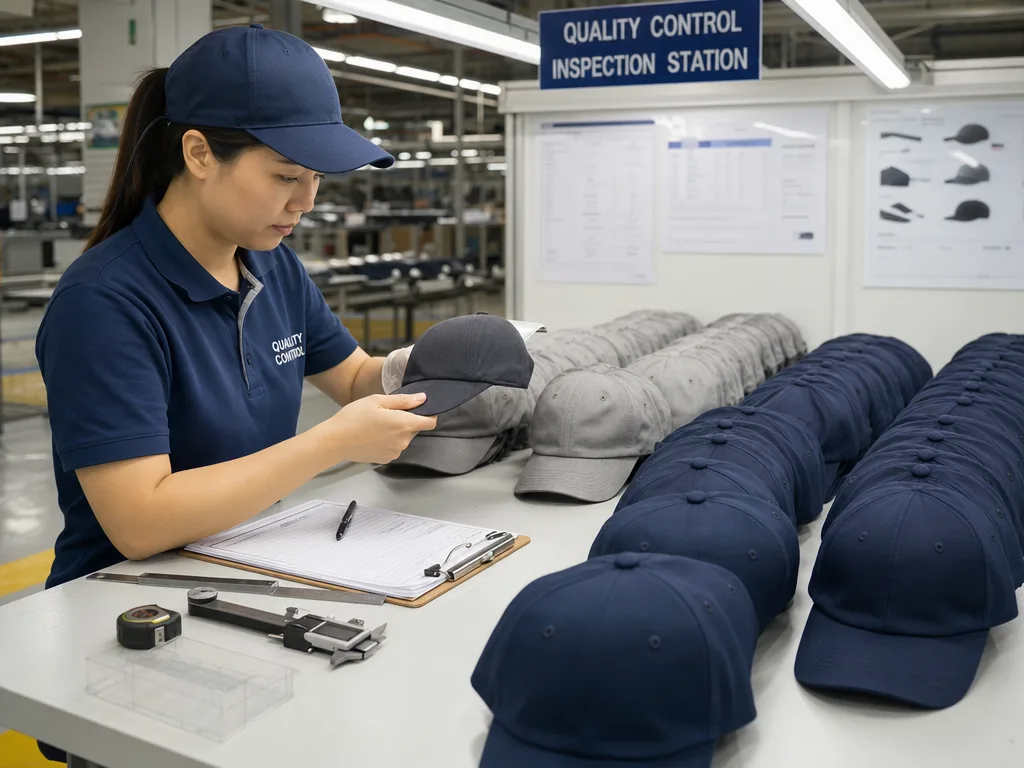
BSCI vs Sedex vs WRAP vs WCA: Compliance Audit Standards Compared (2026 Update) (2026 Update) (2026 Update)
Read article →Sourcing custom hats does not have to be complicated. With the right manufacturing partner, clear specifications and a small upfront investment in sampling, you can launch a retail-quality product in 30 to 45 days.