
Trucker Hat Mesh Panel QC: Defects Buyers Should Catch Early
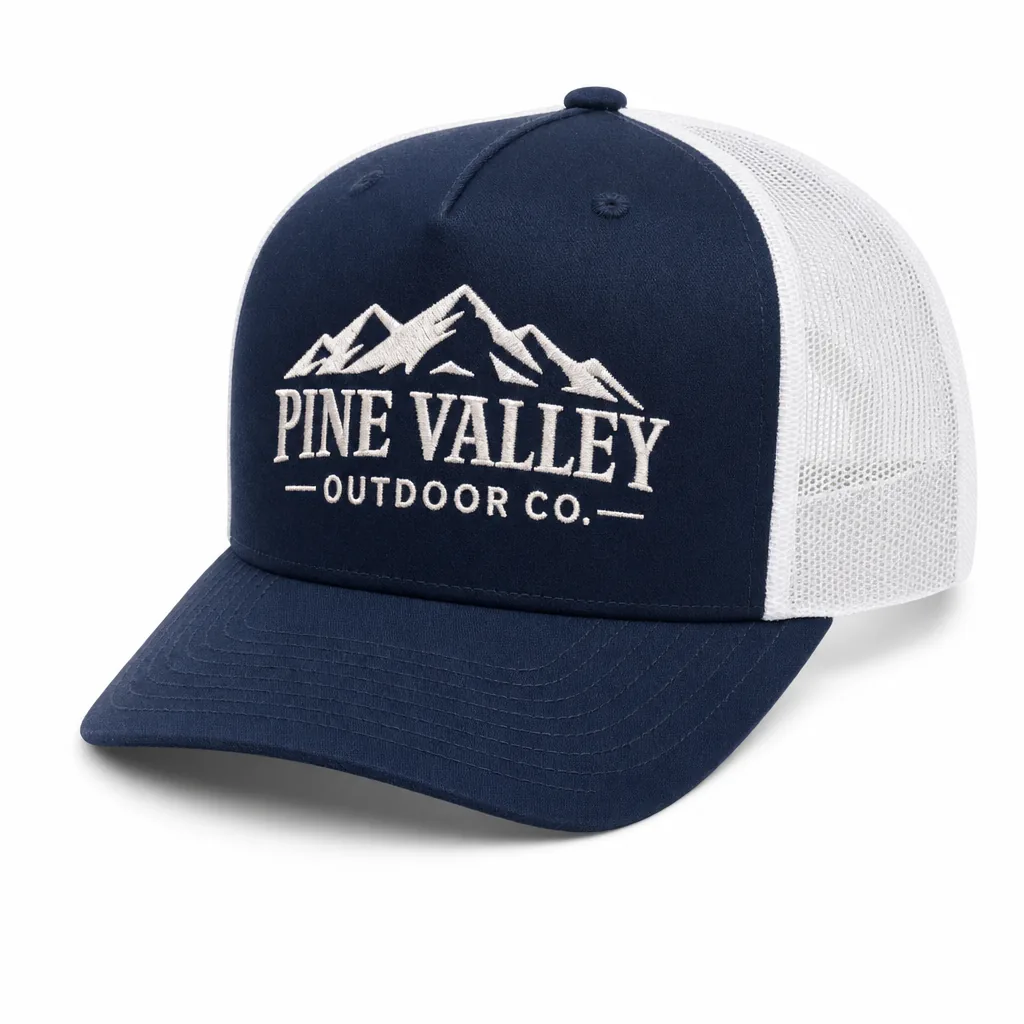
Trucker Hat Mesh Panel QC: Defects Buyers Should Catch Early is one of the most-asked questions we receive from international buyers, and for good reason. With dozens of factories competing for your order and an alphabet soup of technical terms in every supplier quote, even experienced importers can feel lost. This guide consolidates what we have learned producing custom hats for clients in 40+ countries.
What trucker hat mesh panel qc means in real production
Trucker hat mesh panel QC is not a visual check of “does it look okay under warehouse lights.” In a real RFQ, it means verifying the mesh spec, panel cut accuracy, stitching behavior, and how the foam-front body and mesh interact before you approve samples. For a custom cap factory, the first thing to lock down is the mesh construction: polyester mesh vs. nylon mesh, hole size, yarn denier, and whether the finish is heat-set or soft-washed. On a custom mesh trucker cap, cheap mesh often distorts after sewing because the edge binding and crown curvature pull it out of square. That shows up later as waviness at the side and back panels, puckering at the seam, or a crown that won’t sit evenly on a headform.
Before sampling, a buyer should ask the custom hat manufacturer for actual panel specs, not just a photo. I want mesh GSM, thread count or denier, panel tolerance, seam allowance, and whether the front foam is 3 mm or 5 mm PU foam with a tricot backing. If the mesh is too open, you lose shape retention; if it is too dense, breathability drops and the cap feels hot. The headwear factory china side should also confirm the sewing machine setup: overlock gauge, stitch length, needle size, and whether the operator uses a binder or raw-edge fold on the inner seams. These details matter because mesh frays differently from twill, and a private label hat supplier that ignores them usually ends up with inconsistent side panel symmetry and loose seam tension.
For trucker hat mesh panel qc, the sample should be checked on a block and on a human head, because some defects only appear under stretch. Measure left-right panel height, back opening alignment, crown roundness, and the distance from the seam to the edge binding; I usually expect variation within 2-3 mm on a well-run line. Also inspect for skipped stitches, broken mesh filaments, seam grin, needle burns, and color mismatch against Pantone TCX if the mesh is dyed. At CrownsForge, our standard practice is to reject any sample that shows edge curl or panel skew before embroidery, because once a patch or 3D embroidery is added, the defect is harder to correct and more expensive to rework.
Specs to request before a quote
For trucker hat mesh panel qc, the quote is only useful if the buyer locks down the panel spec first. I want the front crown height, side mesh height, panel count, and seam allowances written in millimeters, not “standard.” A common 6-panel custom mesh trucker cap uses 165–175 mm front height, 95–105 mm side height, and 1/4 in. topstitch allowance, but the real control point is panel symmetry: left/right mesh pieces should match within ±1.5 mm, and the crown opening should not drift more than 2 mm across the batch. If the factory cannot state the exact mesh construction — usually polyester tricot or nylon mesh at 75–120 gsm with 1.5–2.5 mm apertures — they are not ready to quote accurately as a custom cap factory. Buyers should also request the stitch map and binding method, because heat distortion and puckering show up fast on low-density mesh.
Material declaration matters just as much as dimensions. A capable private label hat supplier should identify shell fabric by composition, yarn count, and finish: for example, 100% cotton twill at 260–280 gsm for the front, polyester mesh at 110 gsm for the back, and matching thread ticket size, usually Tex 27 or Tex 40 depending on the stitch density. For decoration, ask for the digitized embroidery file format before sampling — DST, EMB, or PES — plus the sew-out density, underlay, and expected pull compensation. On a logo-heavy custom mesh trucker cap, I want the factory to state whether they will use Tajima, Barudan, or ZSK heads, because needle tension and cap driver setup affect mesh distortion more than buyers expect. If Pantone TCX or Delta-E targets matter, put them in writing before the first price is issued; otherwise you will get a “close enough” sample and pay twice to correct it.
Carton and inspection requirements should be part of the quote, not an afterthought. A serious headwear factory china will specify inner polybag thickness, hat sizing insert, carton dimensions, gross weight target, and stacking limit so the crown does not crush in transit; for 24-piece or 48-piece cartons, I usually see 58 x 42 x 32 cm or similar, depending on brim shape and packaging method. Ask for an AQL level in the PO terms — AQL 2.5 for major defects and 4.0 for minor defects is common for promotional headwear — and require the factory to provide pre-production photos, inline QC checkpoints, and final inspection records with defect counts by category. For trucker hat mesh panel qc, the evidence should include measured panel dimensions, seam photos under zoom, one full sample after wash or steam recovery, and carton drop-test or compression-test results if the order is for export retail rather than giveaways.
Factory risks and quality checks
The biggest trucker hat mesh panel qc failures are boringly physical: distorted hex mesh, uneven tension at the side seams, crushed front foam after packing, and color mismatch between mesh rolls from different dye lots. On a real line, I check whether the mesh recovers after compression, whether the crown side panels are symmetric, and whether the front panel seam allowance is consistent within 1.5 to 2.0 mm. If the mesh is 100% polyester and claimed at 140 gsm equivalent panel weight, we also check for snagging, heat distortion near the seam tape, and thread bite at the topstitch. A custom hat manufacturer that skips these basics usually discovers the problem only after cartons are sealed, when the hat no longer holds shape under retail display lighting.
A proper approval path starts before bulk cutting. The pre-production sample should confirm mesh openness, crown height, visor curve, stitch density, and logo placement under the actual blank and trim combination, not just on a paper spec. At a custom cap factory, I want a sealed gold sample, a signed spec sheet with Pantone TCX references, and a measured tolerance table for crown circumference, panel height, and front-to-back symmetry. For a private label hat supplier, that sample is also the only chance to catch weak matching between mesh, sweatband, and closure hardware. If the buyer approves from photos only, the first bulk run often reveals a different hand feel, a softer front panel, or a 1/4-inch shift in the mesh seam that ruins the silhouette of a custom mesh trucker cap.
To prevent rework and late shipment, we run in-line checks at start-up, mid-batch, and final pack, using AQL 2.5 for major defects and a stricter internal visual standard for seam alignment and panel distortion. A headwear factory china should block any lot where the mesh feed tension drifts or where the embroidery backing puckers the front panel, because those defects compound fast across a 5,000- to 20,000-piece order. The cleanest fix is to hold the first 50 to 100 pcs, measure them against the approved sample, and only then release bulk production. At CrownsForge, that discipline usually saves 2 to 4 days of rework and avoids air-freight upgrades caused by late QC surprises, which can add $0.45 to $1.20 per hat in avoidable cost when a shipment has to be rescued at the end.
MOQ, lead time, and cost drivers
MOQ changes the math immediately because mesh-panel caps are labor-heavy at the front end and cheap only when the line is already set up. A custom hat manufacturer will usually quote 500 to 1,000 pcs per colorway for a standard custom mesh trucker cap, but the real cost break is whether you are paying one-time setup on embroidery digitizing, woven labels, and logo patch tooling. If you split orders into 3 or 4 colorways, your unit price can jump 8% to 18% just from lost efficiency and extra changeovers. In trucker hat mesh panel qc, the expensive failures are not usually the mesh itself; it is mismatched foam fronts, crooked seams, and off-spec crown depth that force rework or downgrade the whole carton.
Lead time depends on trim availability more than sewing speed. A private label hat supplier can source basic polyester mesh and cotton twill in 10 to 14 days, but custom taping, branded sweatbands, and specialty snaps can add another 7 to 12 days if the factory has to open new material lots. In a headwear factory China buyers often underestimate the hidden labor in pre-production checks: color approval against Pantone TCX, stitch-density review on the embroidery machine, and in-line inspection at the side and back panels before the bill is attached. On a normal cap order, those steps add roughly 6 to 12 minutes of labor per dozen finished pieces, which sounds small until you are running 20,000 units.
Packaging and testing are the other cost drivers people ignore until they get hit by chargebacks. A custom cap factory that does carton-in-bag, barcode stickers, silica gel, and polybag warnings can add $0.12 to $0.35 per unit before freight. If your buyer wants compression packing for container efficiency, you may save cubic meters but risk creasing the foam front and deforming the mesh panel, which then shows up in trucker hat mesh panel qc as dented crowns and uneven peak lines. Basic AQL 2.5 inspection is standard for many orders, but if you require pull tests, color fastness, and carton drop tests, expect both longer lead time and higher labor overhead. Freight is the final swing factor: a 5,000-piece order can look cheap at FOB Ningbo and still land badly under DDP once airfreight, duty, and last-mile fees are included.
How CrownsForge manages this order type
CrownsForge treats trucker hat mesh panel qc as a sample-stage problem first, not a warehouse problem later. For a custom mesh trucker cap, we lock the spec before bulk: front crown height, mesh denier, mesh hole size, foam thickness, crown curve, stitch count, and color targets against Pantone TCX with a measured Delta-E limit. Our standard pre-production packet includes swatches, BOM, panel map, stitch diagram, and approved placement artwork, so the buyer is not guessing what “similar” means. If the order needs structured headwear production, we also confirm whether the back mesh should be soft, stiff, or heat-set, because that changes drape and ventilation a lot more than most buyers expect.
For the actual run, our quality control starts at incoming fabric and netting, then moves to cutting, sewing, and final assembly. Mesh defects we reject early are uneven hole size, run lines, crushed panels from bad stacking, oil marks, and stretch distortion near the seam allowance. On a cap line, a 1 mm sewing drift on the side panel can make the front crown twist after washing, so we inspect panel symmetry, seam security, and topstitch balance under AQL 2.5 rather than relying on visual “looks fine” calls. As a custom hat manufacturer, we also keep one signed golden sample per colorway and size run, which prevents arguments later when production is split across different shifts or embroidery heads.
Buyer communication matters as much as the sewing. A private label hat supplier should send photo proof at three gates: lab dip or color approval, first-article sample, and pre-packout inspection, with defects tagged by lot number and station. CrownsForge keeps reorder records by SKU, mesh lot, thread spec, and trim supplier, so if a buyer repeats a successful style six months later, we can match the prior run instead of re-quoting from scratch like a new job. That is normal discipline for any serious headwear factory China operation, and it is what lets a custom cap factory keep repeat orders stable when lead time, fabric availability, or export paperwork changes.
Frequently Asked Questions
What file format should I send for my logo?
Vector files (AI, EPS, PDF) are ideal. High-resolution PNG or JPG at 300 dpi on transparent background works as a fallback. Provide Pantone color references for accurate reproduction.
Which shipping methods do you support?
We support FOB, CIF and DDP shipping. Air express for samples and small orders, sea LCL for 100 to 500 pieces, sea FCL for 5,000+ pieces. Door-to-door DDP available for US, EU, UK, Canada and Australia.
What logo decoration techniques do you offer?
3D puff embroidery, flat embroidery, woven patch, leather patch, PVC patch, screen printing, sublimation, applique and laser etching, all in-house with no subcontracting.
How long does production take?
Sampling takes 7 to 12 days. Bulk production runs 20 to 30 days depending on quantity, fabric availability and decoration complexity. Inspection and packing adds another 3 to 5 days before shipment.
Do you support sustainability certifications?
Yes. We work with GOTS organic cotton, GRS-certified recycled polyester, OEKO-TEX Standard 100 fabrics, and are BSCI and Sedex audited. Certification documentation can be provided per order.
How does ordering custom hat trucker work?
When evaluating custom hat trucker, the key considerations are construction quality, decoration capability, MOQ flexibility and lead time. Explain trucker hat mesh panel qc in the context of a custom headwear RFQ, with the production details a buyer should verify before sampling. Cover dimensions, materials, tolerances, decoration files, carton requirements, AQL level, and the evidence a capable factory should provide.
How does ordering performance mesh running cap custom work?
When evaluating performance mesh running cap custom, the key considerations are construction quality, decoration capability, MOQ flexibility and lead time. Explain trucker hat mesh panel qc in the context of a custom headwear RFQ, with the production details a buyer should verify before sampling. Cover dimensions, materials, tolerances, decoration files, carton requirements, AQL level, and the evidence a capable factory should provide.
How does ordering foam front trucker hat custom work?
When evaluating foam front trucker hat custom, the key considerations are construction quality, decoration capability, MOQ flexibility and lead time. Explain trucker hat mesh panel qc in the context of a custom headwear RFQ, with the production details a buyer should verify before sampling. Cover dimensions, materials, tolerances, decoration files, carton requirements, AQL level, and the evidence a capable factory should provide.
How does ordering 7 panel baseball cap custom work?
When evaluating 7 panel baseball cap custom, the key considerations are construction quality, decoration capability, MOQ flexibility and lead time. Explain trucker hat mesh panel qc in the context of a custom headwear RFQ, with the production details a buyer should verify before sampling. Cover dimensions, materials, tolerances, decoration files, carton requirements, AQL level, and the evidence a capable factory should provide.
Ready to start your custom hat project?
Send us your tech-pack, sketch or even just an inspiration photo. We will respond with a detailed quotation and digital mock-up within 24 hours.
Request a free quoteRelated guides
Hat Sizing & Fit for International Markets: US, EU, UK, JP Standards
Read article →
5 Panel Trucker Hat: A 2026 B2B Sourcing Guide
Read article →
BSCI vs Sedex SMETA: Which Audit Does Your Cap Supplier Actually Need?
Read article →We hope this guide demystifies trucker hat mesh panel qc: defects buyers should catch early and helps you move forward with confidence. If you have questions specific to your project, our English-speaking sales engineers are one message away.