
Shipping Custom Hats from China: FOB, EXW, DDP & Incoterms Decoded - 2026 Buyer's Guide
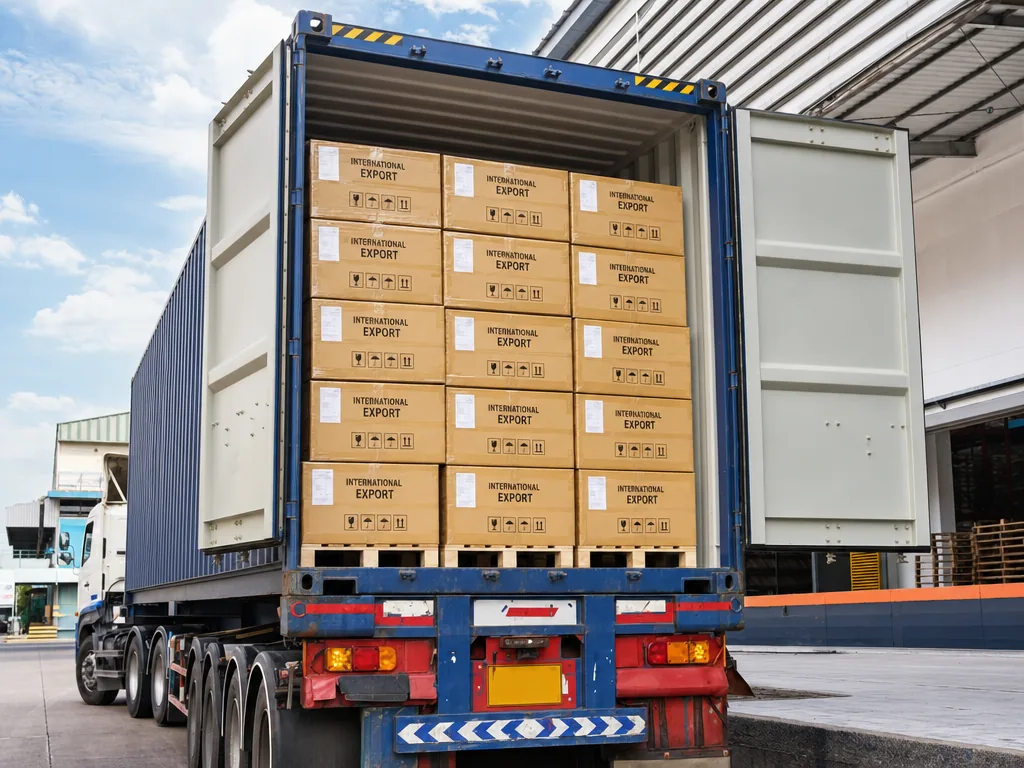
Shipping Custom Hats from China: FOB, EXW, DDP & Incoterms Decoded - 2026 Buyer's Guide is one of the most-asked questions we receive from international buyers, and for good reason. With dozens of factories competing for your order and an alphabet soup of technical terms in every supplier quote, even experienced importers can feel lost. This guide consolidates what we have learned producing custom hats for clients in 40+ countries.
Why Incoterms confuse new importers
Most first-time importers misread Incoterms as pricing labels when they are really scope definitions. In hat shipping from China, the gap between EXW Yiwu and FOB Ningbo is not theoretical; it is a stack of origin charges that beginners simply do not see on the first quote. For a small LCL shipment of 8 to 20 cartons, factory pickup, export declaration, port handling, CFS receiving, documentation, and terminal fees commonly add $350 to $900 before the cargo even sails. On a run of 300 to 800 custom caps, that missing cost can shift landed price by $0.60 to $1.20 per piece, enough to wipe out the margin on a promo order. Buyers fixate on a $2.48 EXW cap versus a $2.86 FOB cap and miss that they are not comparing the same job. Unless the quote names the exact Incoterm, port, carton count, and destination assumptions, the cheaper number is often just the less complete number.
The second trap is that Incoterms split cost and risk, but they do not guarantee compliant execution. Under Incoterms 2020, EXW leaves the buyer responsible from the factory gate, while FOB requires the seller to clear export and load on board at the named port. DDP sounds easiest, but that is where bad operators hide the most risk: underdeclared customs value, the wrong HTS classification for headwear, or duty estimates based on generic rates instead of actual fiber content and construction. A brushed cotton twill baseball cap, a 600D polyester structured cap, and a wool-blend 5-panel do not always clear under the same duty logic, and EU imports add VAT on top of customs value plus freight. Our standard practice is to quote line by line: cartons, CBM, gross weight, named port, ACI/AMS or ISF assumptions, customs bond, duty-tax basis, and final-mile terms. If those items are vague, budget drift and compliance problems are not possibilities; they are the default outcome.
EXW — factory floor pickup
EXW is the wrong default for most buyers doing hat shipping from China because the price advantage is usually smaller than the operational risk. Under Incoterms 2020, the factory’s obligation ends when packed cartons are made available at the named pickup point, typically the finished-goods warehouse, not the port and not the container yard. After that, the buyer controls truck dispatch, loading, export declaration, terminal handling, main carriage, and final delivery. The practical problem is export clearance: a non-Chinese buyer normally cannot lodge customs in its own name, so the forwarder must use a licensed Chinese exporter-of-record. That extra layer is where EXW shipments get stuck, especially when the booking number is late, the invoice value does not match the packing list, or the HS code is too broad. For caps, customs often needs a correct split under Chapter 65 by construction and material, not a lazy blanket code copied from an old shipment. The delay cost is real and it compounds fast on headwear because cartons are bulky relative to value. Miss a CY cutoff by one day and the cargo can roll to the next vessel, with CFS storage or warehouse handling commonly running RMB 200 to 500 per shipment per day, plus truck re-booking, document amendment, and occasional pallet rework charges. EXW only makes sense when the buyer is already consolidating several suppliers through Ningbo, Shanghai, Shenzhen, or Dongguan and has a disciplined origin team checking carton marks, cube, and loading sequence. In that setup, a consolidator can merge hats, woven labels, hangtags, and PDQ cartons into one LCL or FCL plan and sometimes shave 3% to 7% off origin cost because local charges are managed centrally instead of hidden across supplier quotations.
The comparison that matters is not EXW versus FOB on a unit quote; it is total landed origin cost after all local services are added back. If a factory offers EXW at $2.85 per cap and FOB Ningbo at $3.02, that $0.17 gap can disappear quickly once you add pickup trucking, export customs entry, documentation, warehouse receiving, palletization if required by the forwarder, and terminal fees. On a 5,000-piece order packed 24 caps per carton, a simple same-province truck move might be RMB 600 to 1,200, while export docs and customs handling can add another RMB 350 to 800 depending on the forwarder and port. Buyers also forget that headwear cartons often get flagged for re-measurement when dimensions on the booking do not match actual packed cube, which can trigger chargeable weight corrections on air shipments or CFS amendments on LCL. Claims handling is another weak point under EXW because the transfer of risk happens early and the evidence chain usually gets messy. If cartons arrive with crushed peaks, moisture staining, or mixed SKUs after pickup, the factory blames the trucker, the trucker blames the warehouse, and the warehouse points to the packing list. Our standard practice is to treat EXW as a specialist term for buyers who already run origin SOPs: pre-alert 24 hours before pickup, photo records of pallet condition, carton dimension tolerances within plus or minus 1 cm, and a final document pack checked against the booking before cargo leaves the gate. Without that discipline, FOB is usually the cleaner and cheaper decision in real-world custom cap programs.
FOB — most common for B2B
FOB is the cleanest handoff for experienced importers because the seller owns the messy China-side work and the buyer takes control only after the cargo is on board. Under Incoterms 2020, risk does not transfer at the factory gate or when cartons reach the terminal; it transfers once the goods are loaded on the vessel. For Yiwu hat factories, the named port is usually Ningbo-Zhoushan or Shanghai. Trucking from Yiwu is typically 280 to 300 km to Ningbo, about 4 to 6 hours in normal traffic, and 6 to 8 hours to Shanghai. A proper FOB price for custom caps should include export cartons, inland trucking, China terminal handling charges, export customs declaration, and standard export documents such as commercial invoice, packing list, and booking-aligned shipping marks. In practical hat shipping from China, that line matters when you are moving 8,000 structured snapbacks packed 24 pcs per carton: a rolled booking, missed CY cut-off, or customs hold can leave the cargo sitting in a port warehouse for days, and the liability position is very different before versus after loading.
FOB is usually only a small step up from EXW, but it strips out the part foreign buyers routinely misjudge: export execution in China. On caps, the gap is often $0.05 to $0.12 per piece, depending on order volume, port, and whether the shipment moves LCL or FCL. A 5,000-piece order of 280 gsm brushed cotton dad caps or 300 gsm acrylic beanies often measures around 8 to 12 CBM, enough for a nominated forwarder to compare LCL options instead of accepting a bundled factory freight rate. The real advantage is document control. Seller and forwarder should lock carton count, SKU ratio, gross and net weight, HS code, and consignee data before SI and VGM deadlines; one mismatch can trigger amendment fees of $35 to $100 per bill, storage, or a rollover to the next sailing. Our standard practice is to hold FOB release until final packing matrix, carton marks, and AQL 2.5 inspection results are confirmed, because once the cargo is on board, the importer owns the ocean freight risk and any paperwork sloppiness starts costing real money fast.
FOB is not forgiving if the buyer’s logistics process is weak. If the forwarder misses AMS or ISF timing, files the wrong carton data, or books against an unrealistic cargo-ready date, the savings over DDP disappear in rebooking charges, destination exams, and dead time. That is why factory-side discipline still matters even when freight is buyer-controlled. For mixed-SKU cap orders, require a carton-by-carton packing matrix, barcode verification, outer-carton drop testing, and pallet instructions in writing before handover. If the customer is supplying retailer routing guides, those details must match the final export documents exactly. On embellished styles, especially 3D embroidery run on Tajima or Barudan heads, I also want final needle control records and trim accountability closed before FOB shipment. Good FOB hat shipping from China works because responsibility is divided clearly, not because the process is simpler. The importer gets carrier control and transparency on destination charges, but only if the factory, forwarder, and buyer are all working from the same data set.
CIF / CFR — supplier handles sea freight
CFR and CIF look clean on paper, but for hat shipping from China they usually shift cost to destination instead of reducing total landed cost. Under Incoterms 2020, CFR covers ocean freight to the named port; CIF adds marine insurance, typically only minimum cover for that same port movement. Neither term includes import customs clearance, duty, VAT/GST, U.S. ISF filing, EU ENS, terminal handling, delivery order fees, CFS devanning, exam fees, or final drayage and trucking. In cap programs, that omission is expensive because many Zhejiang suppliers quote CIF Los Angeles or CFR Hamburg through NVOCC consolidators with an attractive base rate, then the consignee inherits a stack of destination charges they never budgeted. A real example: 58 cartons of structured snapbacks, roughly 0.92 CBM and 510 kg gross, showed only a US$380 freight advantage on CIF versus FOB Ningbo, but destination THC, D/O, CFS handling, AMS, and port security added US$780 before release. That is common on LCL hat shipments, where the ocean line item looks cheap because the margin is buried in destination paperwork and handling.
The bigger problem is control. With CFR or CIF, the supplier chooses the booking, carrier or co-loader, and routing, so a quoted Ningbo–Los Angeles move can end up transshipping via Busan or Singapore at 32 to 40 days instead of a direct 18 to 24. For hats packed 24 to 36 pieces per carton, extra dwell time in a damp container raises real quality risk: visor warp, buckram softening, sweatband mildew, oxidation on metal eyelets, and embroidery staining from condensation. Ask for the exact POL/POD, vessel string, CY/CY versus CFS/CFS terms, free-time at destination, and who pays if customs exam or demurrage hits. Insurance under CIF is also widely misunderstood. Most sellers buy Institute Cargo Clauses (C) at 110% of invoice value, which is narrow cover and often weak on carton crush, pilferage, or moisture-related damage unless the event meets specific claim triggers. Our standard practice is to tell buyers to treat CIF/CFR as convenience terms, not budgeting terms: get the draft B/L, insurance certificate, and a line-by-line destination charge sheet before balance payment, or assume the apparent saving will disappear after arrival.
DDP — door-to-door including duty
DDP makes sense when the shipment is too small or too urgent to justify your own broker, bond, and delivery setup. On hats, that cutoff comes earlier than many buyers expect because caps move on cube before they move on kilos. A structured 6-panel baseball cap packed with a brim shaper can sit in a 60 x 45 x 45 cm master carton; by IATA airfreight rules, that carton rates at about 24.3 kg chargeable weight even if the gross weight is only 14-16 kg. In practical hat shipping from China, I usually steer buyers toward air DDP for samples, launch runs, and replenishment lots under roughly 15 cartons or 150-180 kg chargeable weight. The point is not headline savings. DDP is usually 3%-8% more expensive than a tightly managed FOB move once you add broker entry, customs bond, duty advancement, and local drayage or final-mile delivery. The real value is cost certainty and fewer failure points. Under Incoterms 2020, DDP puts pickup in Yiwu, export customs, linehaul, import entry, duty and tax handling, and delivery to the warehouse or 3PL under one accountable party. That matters when procurement needs one landed number instead of five separate invoices and three vendors blaming each other. For a realistic benchmark, 300 embroidered cotton twill caps moving air DDP to the US typically land in 6-9 days at around $2.30-$3.90 per cap, depending on fuel surcharge, peak-season space, and carton density. Add retail boxes, oversized brim guards, or low packing efficiency and the delivered cost jumps fast, because airlines bill on chargeable weight, not unit count.
The weak point is that many DDP quotes are black boxes with margin buried in the freight. If the supplier cannot state the HS code, declared customs value basis, importer of record arrangement, and whether duty, VAT/GST, and advancement fees are included, treat the quote as incomplete. Most caps fall under HS Chapter 65, but the exact classification shifts with shell material and construction: cotton twill baseball caps, recycled polyester performance caps, and wool-blend melton snapbacks do not always clear under the same assumptions. In the EU, EORI registration, indirect representation, and VAT deferral can materially change landed cost; in the US, even a small duty-rate difference becomes meaningful once a shipment scales beyond samples. A casual WhatsApp answer is not documentation. Serious buyers should insist on a line-item split: EXW value, origin charges, air or sea freight, duty, tax, customs clearance, and final-mile delivery. Our standard practice is to lock any DDP quote to carton dimensions, packing ratio, net and gross weight, declared value per piece, and fiber composition, then hold that data against the commercial invoice and packing list before cargo leaves the factory. That is the only way to compare DDP against FOB honestly. I have seen buyers think DDP was overpriced when the real gap came from mismatched packing density or an unrealistically low declared value in the FOB model. For small and mid-volume orders, clean compliance is usually cheaper than a customs hold, reclassification, or post-entry duty correction.
Duty rates for caps by destination
For U.S. imports, duty on caps is decided by HTS classification, not by whatever the supplier typed as “cap” on the invoice. Customs looks at construction and essential character: a structured 6-panel baseball cap, knit beanie, bucket hat, and sun visor do not clear under the same logic. Most custom baseball caps made from cotton twill or polyester brush fabric are entered somewhere under HTS 6505, where MFN duty is often around 7.5% ad valorem, but some headwear lines carry a compound rate with a cents-per-kilogram component layered on top. China-origin merchandise can also trigger an additional Section 301 duty of 7.5% if no current exclusion applies. On a $4.20 FOB snapback, that alone can push duty to about $0.63 per piece before MPF at 0.3464% of entered value, ocean HMF at 0.125%, customs bond, and broker entry fees. For anyone budgeting hat shipping from China, the practical move is to have your customs broker confirm HTS, country-of-origin marking, and invoice language before cargo books out of Ningbo or Shanghai.
In the EU and UK, the tariff is only half the story; bad paperwork usually costs more in delays than the duty itself. EU customs classifies headwear under CN/TARIC based on composition, construction, and whether the peak is stiffened, then calculates import VAT on the customs value plus duty and freight, not just the unit price. A vague line like “custom cap” is asking for a hold. The invoice should read like a usable customs description: “100% cotton twill cap, 270 gsm, stiffened peak, 6 embroidered eyelets, woven patch, metal buckle closure.” The UK applies its own UK Global Tariff and import VAT, and on courier shipments the disbursement fee can be more painful than the duty line for low-value orders. Canada and Australia are more straightforward on paper, but small mistakes still get expensive fast. Canada commonly assesses MFN duty in the mid-teens on textile headwear, then adds GST or HST by province, so a low-cost promotional cap can land with a surprisingly high per-unit tax burden. Australia is typically about 5% duty on many textile cap classifications plus 10% GST, though importer status and shipment method still affect the final landed cost. At CrownsForge, we do not quote DDP blindly; we confirm importer of record, exact SKU build, fiber content, visor board, closure hardware, and decoration method first, because one wrong tariff code can erase margin across the whole program.
Freight forwarder selection
Your forwarder affects landed cost long before the cargo hits the port. In hat shipping from China, the biggest leakage usually comes from poor volume control and weak origin planning, not the base ocean rate. Caps are low-density freight: a typical 6-panel brushed cotton twill cap packed 144 pieces per master carton often runs about 60 x 45 x 58 cm, or 0.157 CBM. Add just 3 cm of unnecessary height and each carton jumps to roughly 0.165 CBM. Across 400 cartons, that is more than 3 extra CBM billed for air, LCL, or warehouse handling brackets. On current China-US LCL lanes, that can easily add $180 to $450 in base freight, then more in CFS, destination deconsolidation, and last-mile charges. A competent origin forwarder should challenge carton specs, ask whether the consignee permits floor-loaded cartons, and decide between palletization, slip sheets, or loose loading based on receiving rules instead of warehouse convenience. I judge forwarders by whether they can run the first 72 hours without creating avoidable exceptions. They should know who files VGM, the AMS submission window, and that ISF 10+2 must be filed at least 24 hours before vessel loading for US imports. They should also propose the correct HS code family for headgear rather than treating caps like generic apparel accessories. Ask for a sample pre-alert showing commercial invoice, packing list, carton count, gross and net weight, booked CBM versus remeasured CBM, and a line-by-line origin charge sheet covering THC, CFS, trucking, customs declaration, documentation, and export filing. If they cannot explain why billed volume differs from booked volume, expect vague local fees after cutoff. Our standard practice is to lock ex-factory date, cargo-ready date, CY or CFS cutoff, and ETD in writing before truck dispatch, with timestamped photos of shipping marks and sealed cartons.
Claims handling is where weak forwarders get exposed. Hats rarely arrive as total losses, but they do show up crushed, damp, short-shipped, or rolled to the next vessel during Q3 peak and the three to four weeks before Lunar New Year. The pattern is usually the same: too many handoffs and no usable exception trail from factory to trucker, trucker to CFS, and CFS to terminal. Under FOB, risk transfers once the goods are on board; under EXW, the buyer controls and therefore owns far more of the origin-side failure points. A serious forwarder documents every transfer with receiving reports, carton counts, gate-in records, and dated photos, plus weighbridge tickets when there is a discrepancy between declared and actual gross weight. If they need a week to build a shortage or damage file, they are already too slow. Push process before the first booking, not after the problem. Confirm who buys cargo insurance, whether the cover is ICC(A) all-risk or narrower ICC(C), what deductible applies, and who is the claimant under EXW, FOB, or DDP. For DDP, verify whether the forwarder or its destination partner is acting as importer of record; that changes duty liability, customs valuation exposure, and your recourse if taxes are underdeclared. I prefer forwarders who give you named contacts for origin operations, customs brokerage, destination handling, and finance on day one, with response SLAs under 24 hours and claim-file issuance within 3 to 5 working days. In hat shipping from China, that discipline is usually worth more than saving $60 per CBM on a quote and then losing seven days to a rolled booking or an undocumented carton shortage.
Frequently Asked Questions
How long does production take?
Sampling takes 7 to 12 days. Bulk production runs 20 to 30 days depending on quantity, fabric availability and decoration complexity. Inspection and packing adds another 3 to 5 days before shipment.
Can I order a sample before bulk production?
Yes. We strongly recommend approving a pre-production sample before mass production. Samples are charged at 35 to 60 USD each plus express shipping, fully refundable against confirmed bulk orders over 500 pieces.
What is the minimum order quantity (MOQ) for custom hats?
Our standard MOQ is 100 pieces per design and color, with sampling available from 1 piece. For complex multi-color logos or premium fabric upgrades, the MOQ can be lowered with a small per-piece surcharge.
Do you support sustainability certifications?
Yes. We work with GOTS organic cotton, GRS-certified recycled polyester, OEKO-TEX Standard 100 fabrics, and are BSCI and Sedex audited. Certification documentation can be provided per order.
What logo decoration techniques do you offer?
3D puff embroidery, flat embroidery, woven patch, leather patch, PVC patch, screen printing, sublimation, applique and laser etching, all in-house with no subcontracting.
How does ordering custom embroidered trucker hat work?
When evaluating custom embroidered trucker hat, the key considerations are construction quality, decoration capability, MOQ flexibility and lead time. Misalignment between supplier price quotes leads to budget surprises. When this rare term makes sense (large multi-supplier consolidation).
How does ordering custom patch trucker hats work?
When evaluating custom patch trucker hats, the key considerations are construction quality, decoration capability, MOQ flexibility and lead time. Misalignment between supplier price quotes leads to budget surprises. When this rare term makes sense (large multi-supplier consolidation).
What's the MOQ for custom embroidered trucker hats no minimum?
When evaluating custom embroidered trucker hats no minimum, the key considerations are construction quality, decoration capability, MOQ flexibility and lead time. Misalignment between supplier price quotes leads to budget surprises. When this rare term makes sense (large multi-supplier consolidation).
How does ordering custom leather patch trucker hat work?
When evaluating custom leather patch trucker hat, the key considerations are construction quality, decoration capability, MOQ flexibility and lead time. Misalignment between supplier price quotes leads to budget surprises. When this rare term makes sense (large multi-supplier consolidation).
Can you still ship from China to the USA?
Our strong global network and full range of cross-border shipping services make shipping from China to the United States easy for the U.S. importers.
Did the USPS suspend shipments from China?
Rule. Together the two firms probably accounted for more than 30% of all parcels shipped to the US each day under the loophole. That's according to a congressional committee report in 2023.
Are packages still shipping from China?
USPS resumes accepting packages from China, Hong Kong amid Trump trade war. The U. S. Postal Service said Wednesday that it will continue to accept international mail and packages from China and Hong Kong, reversing a Tuesday announcement that it would halt the flow of inbound parcels from the areas.
Need a low-MOQ test order?
We help emerging brands launch with as few as 100 pieces. Premium fabric, in-house embroidery, retail-ready packaging.
Start a small orderRelated guides

Blank Hats MOQ And Pricing Plan for Custom Hat Buyers
Read article →Ball Caps for Women: A 2026 Sourcing Playbook for International Buyers
Read article →
5-Panel vs 6-Panel Caps: Construction, Use Cases and Cost Compared
Read article →Sourcing custom hats does not have to be complicated. With the right manufacturing partner, clear specifications and a small upfront investment in sampling, you can launch a retail-quality product in 30 to 45 days.