
BSCI vs Sedex vs WRAP vs WCA: Compliance Audit Standards Compared (2026 Update) - Supplier Checklist
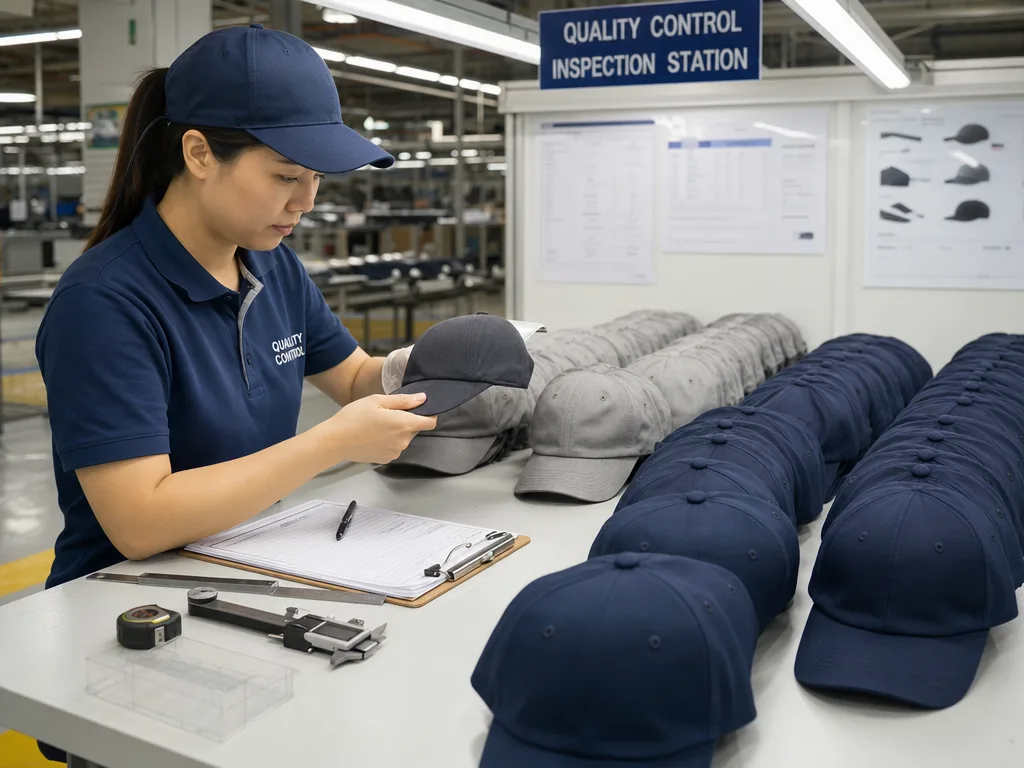
Every week, our sales team answers detailed questions about bsci vs sedex vs wrap vs wca: compliance audit standards compared (2026 update) - supplier checklist. We wrote this guide so that wholesalers, streetwear brands, corporate buyers and promotional resellers can compare options with full information, and avoid the traps that show up only after production has started.
The four audits hat factories actually hold
amfori sedex-audit-cap-supplier-guide.html">BSCI 2.0 is still the social audit European sourcing teams ask for when they want one factory report they can fold into retailer scorecards without running a fresh due-diligence exercise. It is built around 13 performance areas, with the usual pressure points being working hours, compensation, occupational health and safety, freedom of association, disciplinary practice, and management systems. In a cap factory, the auditor is not impressed by a tidy sample room; they want to see whether overtime is capped near the legal threshold, whether contracts are signed in the worker’s language, whether subcontracting is controlled, and whether payroll ties back to time records line by line. A mid-sized hat factory usually spends about $1,200 to $3,500 all-in once auditor fees, translation, prep time, and corrective-action follow-up are counted. The real cost is a failed report that forces a re-audit 30 to 60 days later.
Sedex SMETA 4-Pillar gets compared with BSCI vs Sedex SMETA so often because it keeps the labor and safety core, then adds environment and business ethics in the same file. That changes the evidence burden. A factory has to show wastewater handling, chemical storage, spill control, fire protection, anti-bribery controls, and document retention, not just clean payroll and decent dorms. In a hat plant, the weak spots are usually ordinary: missing SDS sheets for inks and adhesives, blocked electrical panels, no documented evacuation drill within 12 months, unlabeled chemical drums, and payroll records that do not reconcile to time clocks. SMETA is often accepted by UK and global retail buyers because it travels across categories, but it is less forgiving on record quality than on shop-floor cosmetics. If the paperwork is thin, the audit will find it fast.
WRAP is a different animal: it is a certification program built around 12 principles and a facility-level compliance model, not a one-time buyer audit. The useful part for hat factories is that WRAP pushes a defined management system, legal compliance, no forced labor, no child labor, fair wages and hours, worker safety, and environmental controls into a single certificate path. In practice, buyers like it when they need a factory passport that is easy to explain to U.S. resellers and promotional customers. The downside is that WRAP still asks for the same unglamorous proof: wage calculations, attendance records, age verification, accident logs, machine guarding, and fire-prevention documentation. WCA sits in the same neighborhood but is usually more buyer-specific and lighter in market recognition, so it is often used as a screening tool rather than a final proof point. For procurement, the difference is simple: WRAP is closer to a certificate, WCA is closer to a vendor audit file.
BSCI 2.0 scope and audit process
BSCI 2.0 is not a quick factory walk-through. It is amfori’s social compliance framework, and the audit typically covers 13 performance areas: fair remuneration, working hours, occupational health and safety, child labor, forced labor, disciplinary practices, freedom of association, environmental protection, and business ethics. In a China hat factory, the auditor will not stop at the sewing floor. Expect a hard cross-check of attendance cards against payroll, social insurance records, employment contracts, age-verification files, grievance logs, training sign-offs, and fire drill evidence. They will also sample physical conditions: lockout discipline, needle guards, chemical labeling, PPE use, emergency exits, and dormitory conditions if workers live onsite. The weak point is usually not production itself; it is the gap between the story management tells and the records that prove it over a 12-month cycle.
A typical BSCI audit takes 1 to 2 days, but headcount changes the scope fast. A small cut-and-sew operation with one shift may be closed out in a single day; a larger site with dorms, subcontracted embroidery, or multiple production lines usually needs two days so the auditor can interview workers privately and sample by shift. The audit is carried out by an amfori-approved third-party firm, and buyers normally treat the result as current for 12 months, which makes it a recurring control mechanism rather than a one-time certificate. In procurement terms, that matters because many European retailers and brand owners want evidence of active monitoring before onboarding, not just a promise on letterhead. The file set they expect is plain but strict: timekeeping, wage calculations, corrective-action closure, and proof that issues were closed on schedule.
For BSCI vs Sedex SMETA, the practical difference is scope framing and reporting style. BSCI is built around the amfori Code of Conduct and is common in European retail sourcing; SMETA is Sedex’s audit format and is often chosen when buyers want a broader ethical review across labor, health and safety, environment, and business ethics. The overlap is substantial, so a factory that keeps clean time records, wage ledgers, subcontracting controls, and CAPA evidence is usually close to ready for both. Where factories get exposed is in patched-together records after notice arrives: inconsistent clock-in data, missing signatures, vague job descriptions, or incomplete accident logs. In that sense, BSCI vs Sedex SMETA is less about ideology than audit discipline, and both standards punish weak documentation in the same place first.
Sedex SMETA 4-Pillar scope and process
SMETA 4-Pillar is the version most buyers mean in a BSCI vs Sedex SMETA comparison. The four pillars are Labor Standards, Health and Safety, Environment, and Business Ethics, but in practice Labor Standards produces the bulk of findings because that is where auditors spend the most time: working hours, overtime calculation, minimum-wage compliance, payroll accuracy, age verification, contracts, disciplinary records, grievance handling, and freedom of association. In a hat factory, the audit is not limited to fire extinguishers and aisle widths. Auditors reconcile attendance records against wage slips, check dormitory controls if workers live on site, verify machine guarding on sewing and embroidery equipment, review chemical storage for inks and adhesives, and trace whether written policies actually match what supervisors do on the floor. If the payroll math is wrong, the audit will usually get uncomfortable fast. The 4-Pillar format is the one larger retailers and brand licensors now ask for because it gives them a deeper supplier compliance check than the older 2-Pillar version. A standard SMETA audit usually takes 2 auditor-days for a small single-site factory and 3 to 4 days once headcount rises, there are multiple shifts, or the site includes dormitories, canteen operations, or subcontracted processes. Reports are typically expected to remain current for 12 months, so the evidence trail matters as much as the site visit itself: timecards, wage registers, EHS training logs, fire-drill records, chemical inventories, maintenance logs, and complaint files. If those records are missing, inconsistent, or recreated right before the visit, the auditor will mark it down quickly, and the finding severity can escalate from minor documentation gaps to a major nonconformance. SMETA audits are issued by Sedex-affiliated audit firms such as SGS, Bureau Veritas, Intertek, QIMA, and TÜV, but the firm name is secondary to whether the auditor follows the current SMETA protocol on site selection, private worker interviews, sampling size, and finding classification. The 4-Pillar version also puts more weight on environmental controls than a basic social audit, so waste manifests, wastewater handling if printing or washing is involved, energy data, spill response, and legal compliance records come under review. The practical difference in BSCI vs Sedex SMETA is not branding; it is how much documentary proof the buyer wants and how broadly the auditor is expected to test the site. The safest setup is a live audit file updated monthly with policies, payroll samples, age records, chemical registers, drill logs, and management notes, because assembling that package two weeks before the audit usually exposes gaps that cannot be closed in time.
WRAP scope and process
WRAP is the most rule-bound of the four because it runs on 12 fixed principles, not a loose “best effort” narrative. Those principles cover compliance with local law, child labor, forced labor, health and safety, harassment-free workplaces, freedom of association, compensation, and environmental and customs matters at the site level. In a hat factory, that is not abstract: cutting, embroidery, washing, packing, and any outsourced finishing each create separate labor and traceability exposure, and WRAP expects controls across the full production footprint, including dormitories and subcontracted work where they exist. Compared with BSCI vs Sedex SMETA, WRAP is less about polished policy language and more about whether the factory can prove the basics with documents auditors can verify on the floor: age checks, payroll, timecards, disciplinary logs, and working-hour records aligned to local law.
The audit is typically 1 to 2 days on site, depending on headcount, shifts, and how many worker interviews are needed to test payroll and overtime claims. The process is straightforward: document review, facility walk-through, confidential employee interviews, and a closing meeting, followed by a certification decision rather than a generic corrective-action memo. WRAP-approved certification bodies include Intertek, Bureau Veritas, SGS, and TÜV Rheinland, and that matters because buyers often treat the certificate as a fast pass/fail signal for licensed sports, uniform, and promotional programs. Weak evidence gets hit immediately: missing clock records, age-verification gaps, unresolved overtime above local legal limits, or payroll calculations that do not reconcile to the attendance file will usually stall approval even when the workshop looks clean and organized.
In practice, WRAP is the tighter and more certification-oriented system than WCA, which is often broader and more buyer-specific. A factory that passes WRAP still needs to manage ongoing surveillance of labor records, dorm conditions, contractor control, and complaint handling; one clean audit does not excuse sloppy month-to-month compliance. The standard is useful when the buyer wants a hard yes-or-no outcome and does not want to interpret a long CAP narrative. For suppliers comparing BSCI vs Sedex SMETA, the main distinction is that WRAP pushes harder on proof and certification status, while SMETA usually leaves more room for a management-system discussion and follow-up corrective action. In other words, WRAP rewards factories that can show tidy records, stable shifts, and disciplined subcontractor control, not just written policies that sound right on paper.
WCA scope and process
WCA, Walmart’s retailer-owned social compliance audit, is not a transferable certificate you can reuse across buyers. Its scope is broad and operational: wages and hours, child labor, forced labor, health and safety, disciplinary practices, dormitory conditions, working contracts, and document control are all checked against Walmart’s supplier protocol. In practice, the audit is buyer-driven, which matters more than country of origin. A China hat factory preparing for WCA should expect the same core evidence set it would assemble for a serious BSCI vs Sedex SMETA review: payroll registers, time-and-attendance records, age verification, overtime approvals, emergency drill logs, machine-guarding checks, and dormitory headcount records that match the floor reality.
The process is standard but strict: opening meeting, site tour, worker interviews, document sampling, closing meeting, then a report with corrective actions and deadlines. The difference is control. WCA is limited to Walmart-approved audit firms, so it works more like a retailer gate than a market-wide passport, and the validity window is typically 12 months. That short cycle exposes weak recordkeeping fast. If your payroll shows 60-hour weeks while the time cards show 72, or your fire drill log is current but the exit signage is missing on the production floor, the finding lands immediately. Factories that already prepare for BSCI or SMETA can reuse much of the same evidence, but the format, severity grading, and remediation clock still have to match Walmart’s template.
For suppliers feeding Walmart, Sam’s Club, and similar retail channels, WCA is usually a commercial requirement, not a branding exercise. The comparison with SMETA is useful only up to a point: both are social compliance audits, but acceptance is not interchangeable because Walmart controls the approved firms and the follow-up timeline. The failures that usually hurt factories are mundane and procedural, not dramatic: late punch records, missing wage signatures, inconsistent overtime authorization, unposted emergency exits, or dorm occupancy logs that do not reconcile with headcount. Our standard practice is to run WCA as a live operating control, not a once-a-year scramble, so the same payroll, H&S, and dormitory data can also support broader buyer requests without drifting between BSCI vs Sedex SMETA formats.
What overlap exists and what differs
The overlap is real and it sits in the same evidence buyers always ask for: age verification, payroll accuracy, working hours, overtime approval, freedom of association, disciplinary action, health and safety, and document control. In a normal apparel or cap factory audit, about 70% of the file set is effectively the same across BSCI 2.0, Sedex SMETA 4-Pillar, WRAP, and WCA. Auditors still want the same core records: 12 months of timecards, payroll registers, social insurance payments, overtime consent, accident logs, training sign-offs, grievance records, dormitory rules, and corrective-action tracking. If those documents reconcile line by line, the factory is usually discussing minor nonconformities and closure timing, not rebuilding the compliance system.
The differences are in scope and buyer intent, and this is where BSCI vs Sedex SMETA gets misunderstood. BSCI is an amfori social-compliance framework centered on labor conditions, hours, wages, and management systems. SMETA adds more buyer-facing flexibility: the 2-Pillar version covers labor plus health and safety, while 4-Pillar adds environment and business ethics, which means auditors may ask for waste handling, chemical storage, anti-bribery controls, and management accountability beyond the standard social file. WRAP is still heavily apparel-oriented and tends to read like a factory-operations audit, with close attention to implementation consistency on the floor, not just paperwork. WCA is Walmart’s factory compliance format, and it is usually more exacting on dormitory controls, grievance handling, wage-and-hour evidence, and the way records are presented, especially when buyers want traceable corrective actions rather than general assurances.
For a China hat factory shipping private label, teamwear, or promotional orders, the practical question is not which logo looks better on a certificate but which standard the buyer will accept without another audit cycle. A plant may hold BSCI, Sedex, WRAP, and WCA reports and still fail a specific customer review if the payroll export, attendance system, and CAPA log do not match each other. The cleanest approach is one control set across all audits: the same payroll file structure, timekeeping exports, dorm log, accident register, and CAPA tracker, updated monthly and retained for at least 12 months. That keeps the evidence consistent, reduces duplicate work, and usually shortens closure time because the discussion stays on actual conditions instead of formatting gaps, missing signatures, or mismatched dates.
What the audit doesn't tell you
WRAP vs WCA matters mainly when a retailer, licensee, or importer mandates a specific labor framework. It does not answer the operational questions that decide whether a shipment lands cleanly: can the mill hold a 280 gsm brushed cotton twill lot within spec, can the factory flag a fabric delay within 24 hours, and can it keep embroidery placement identical on the fifth reorder as it was on the first. Sustainability claims need the same skepticism. Minimum legal compliance is not the same as documented waste handling, chemical management, or traceable subcontracting under Sedex SMETA 4-Pillar or a comparable program. The useful filter is not the logo on the certificate; it is whether the plant can prove stable inputs, stable labor, and stable output across multiple production cycles.
In practice, the best buyer workflow is simple: review the audit, then ask for three current buyer references and call them. Ask whether shipments arrived on time, whether the factory honored approved samples, and whether the supplier escalated problems before the ETD moved. For CrownsForge, our standard practice is to keep those production records attached to the order file because a clean social audit and a clean shipment are different things. A factory that understands that distinction is usually easier to manage than one that treats compliance as the end of the conversation. The audit is a gate; execution is what determines whether the PO survives contact with the line.
Frequently Asked Questions
What is the minimum order quantity (MOQ) for custom hats?
Our standard MOQ is 100 pieces per design and color, with sampling available from 1 piece. For complex multi-color logos or premium fabric upgrades, the MOQ can be lowered with a small per-piece surcharge.
Which shipping methods do you support?
We support FOB, CIF and DDP shipping. Air express for samples and small orders, sea LCL for 100 to 500 pieces, sea FCL for 5,000+ pieces. Door-to-door DDP available for US, EU, UK, Canada and Australia.
Do you support sustainability certifications?
Yes. We work with GOTS organic cotton, GRS-certified recycled polyester, OEKO-TEX Standard 100 fabrics, and are BSCI and Sedex audited. Certification documentation can be provided per order.
Can I order a sample before bulk production?
Yes. We strongly recommend approving a pre-production sample before mass production. Samples are charged at 35 to 60 USD each plus express shipping, fully refundable against confirmed bulk orders over 500 pieces.
What file format should I send for my logo?
Vector files (AI, EPS, PDF) are ideal. High-resolution PNG or JPG at 300 dpi on transparent background works as a fallback. Provide Pantone color references for accurate reproduction.
How does ordering custom embroidered trucker hat work?
When evaluating custom embroidered trucker hat, the key considerations are construction quality, decoration capability, MOQ flexibility and lead time. BSCI 2.0 (Business Social Compliance Initiative by amfori) — European retailer favorite. Sedex SMETA 4-Pillar (Social, Health & Safety, Environment, Business Ethics) — used by UK and increasingly global retailers. WRAP (Worldwide Responsible Accredited Production) — US retailer favorite for licensed merchandise. WCA (Walmart Conformance Audit) — required by Walmart and…
How does ordering custom bucket hat embroidery work?
When evaluating custom bucket hat embroidery, the key considerations are construction quality, decoration capability, MOQ flexibility and lead time. BSCI 2.0 (Business Social Compliance Initiative by amfori) — European retailer favorite. Sedex SMETA 4-Pillar (Social, Health & Safety, Environment, Business Ethics) — used by UK and increasingly global retailers. WRAP (Worldwide Responsible Accredited Production) — US retailer favorite for licensed merchandise. WCA (Walmart Conformance Audit) — required by Walmart and…
What should buyers know about bucket hat men nike?
When evaluating bucket hat men nike, the key considerations are construction quality, decoration capability, MOQ flexibility and lead time. BSCI 2.0 (Business Social Compliance Initiative by amfori) — European retailer favorite. Sedex SMETA 4-Pillar (Social, Health & Safety, Environment, Business Ethics) — used by UK and increasingly global retailers. WRAP (Worldwide Responsible Accredited Production) — US retailer favorite for licensed merchandise. WCA (Walmart Conformance Audit) — required by Walmart and…
How does ordering custom made hats for men work?
When evaluating custom made hats for men, the key considerations are construction quality, decoration capability, MOQ flexibility and lead time. BSCI 2.0 (Business Social Compliance Initiative by amfori) — European retailer favorite. Sedex SMETA 4-Pillar (Social, Health & Safety, Environment, Business Ethics) — used by UK and increasingly global retailers. WRAP (Worldwide Responsible Accredited Production) — US retailer favorite for licensed merchandise. WCA (Walmart Conformance Audit) — required by Walmart and…
What is the difference between BSCI and Sedex?
BSCI audits follow a fixed framework, whereas SEDEX supports multiple audit types, including BSCI itself. BSCI membership is required for suppliers, while SEDEX enables transparency by sharing audits with multiple buyers.
Is BSCI recognized globally?
The BSCI certification is recognized globally and demonstrates a company's commitment to responsible sourcing and ethical business practices. It helps companies ensure that their supply chains meet internationally recognized social standards and supports the protection of workers' rights and welfare.
Are Sedex and Smeta the same?
SMETA audits are carried out by auditors from Sedex's named independent, third-party Affiliate Audit Companies (AACs). Sedex owns and evolves the SMETA methodology, oversees its usage and drives SMETA auditing consistency through our Audit Quality Programme.
Are Smeta and BSCI the same?
Differences in Focus and Outcomes BSCI audits primarily focus on issues such as compliance with the law, freedom of association, collective bargaining, prohibition of discrimination, compensation, and working hours. SMETA audits, therefore, fall under the category of social responsibility inspections.
Is the BSCI certification legit?
The BSCI certification is recognized globally and demonstrates a company's commitment to responsible sourcing and ethical business practices. It helps companies ensure that their supply chains meet internationally recognized social standards and supports the protection of workers' rights and welfare.
Need a low-MOQ test order?
We help emerging brands launch with as few as 100 pieces. Premium fabric, in-house embroidery, retail-ready packaging.
Start a small orderRelated guides

Camouflage Bucket Hat: Properties, Costs and How to Spec It Right (2026 Update)
Read article →
Refreshing a Hat Collection: A Repeat-Order Playbook for Established Brands
Read article →
Embroidery Hats Machine: When to Use It, Costs, and What to Ask Your Factory - Cost & MOQ Breakdown
Read article →We hope this guide demystifies bsci vs sedex vs wrap vs wca: compliance audit standards compared (2026 update) - supplier checklist and helps you move forward with confidence. If you have questions specific to your project, our English-speaking sales engineers are one message away.