
BSCI vs Sedex vs WRAP vs WCA: Compliance Audit Standards Compared - 2026 Buyer's Guide
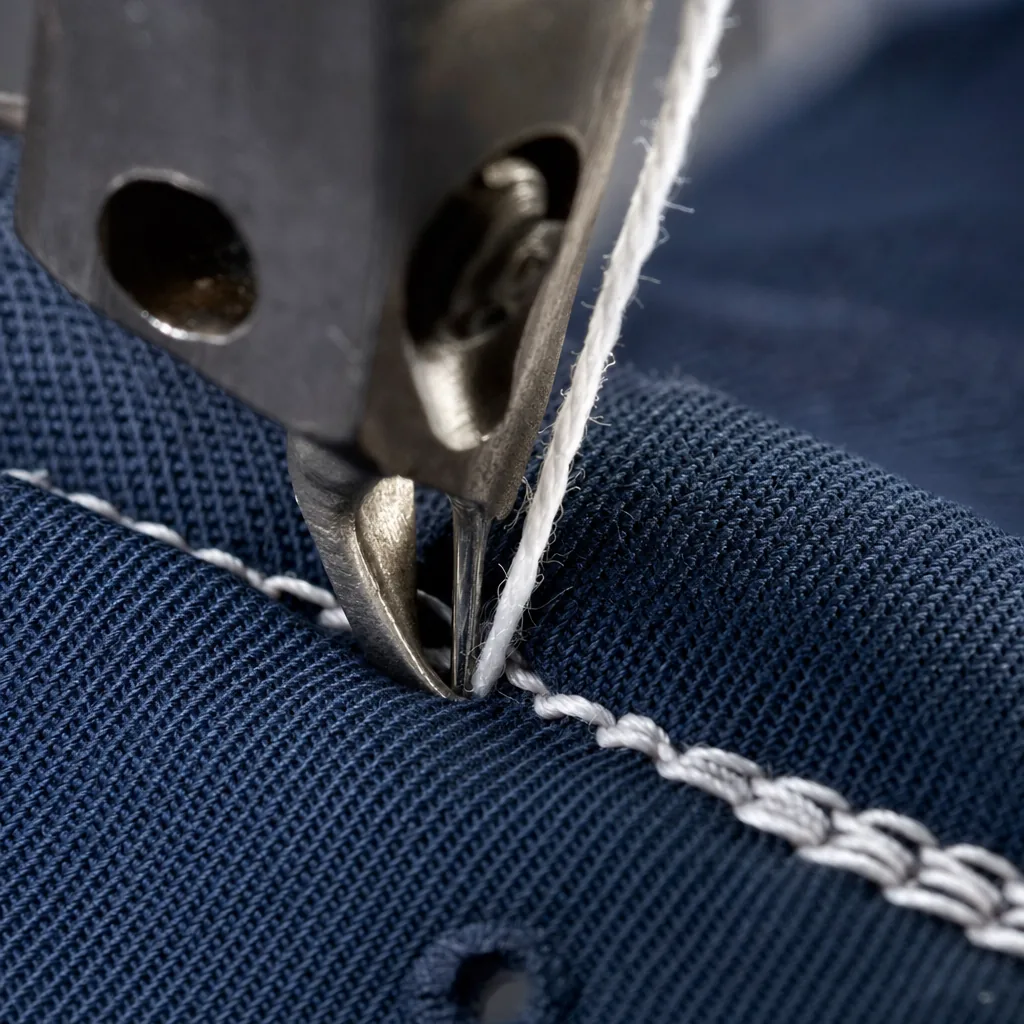
For brand owners, wholesalers and procurement teams entering the custom headwear category, bsci vs sedex vs wrap vs wca: compliance audit standards compared - 2026 buyer's guide is one of the highest-leverage decisions you will make. Get it right and your unit economics, retail story and reorder cycle all improve. Get it wrong and you carry the cost for years.
The four audits hat factories actually hold
If you source from a China hat factory, the reality is simple: most credible suppliers don’t hold all four audits, but they usually center around one or two depending on customer mix. sedex-audit-cap-supplier-guide.html">BSCI 2.0 remains the default for European buyers because it maps cleanly to amfori expectations on working hours, wages, management systems, and corrective action tracking. Sedex SMETA 4-Pillar is the audit UK buyers ask for most often, and it goes wider by checking labor standards, health and safety, environment, and business ethics in one framework. In any practical BSCI vs Sedex SMETA discussion, the real difference is not which one is “stricter” on paper, but which report your retailer will actually accept without forcing a re-audit 30 days later.
WRAP is the audit that shows up most often when a factory serves US licensed merchandise, collegiate programs, or brand owners that care about reputational risk around contract manufacturing. It is production-focused and familiar to importers placing sports caps, promotional headwear, and private-label programs into US retail. WCA, by contrast, is not a general badge to impress everyone; it is a retailer-specific gatekeeper tied closely to Walmart’s supply chain expectations. In a WRAP vs WCA audit comparison, WRAP has broader recognition across US buyers, while WCA matters most when your goods touch Walmart directly or move through a vendor already inside Walmart’s compliance system.
For a social compliance audit hat factory, these standards overlap on the basics: no child labor, no forced labor, documented payroll, legally compliant overtime, machine guarding, fire drills, dormitory controls if applicable, and traceable corrective actions. Where buyers get confused is assuming one certificate covers every customer. It usually does not. Our standard practice is to treat this as a supplier compliance audit standards issue, not a branding issue: check validity dates, audit company, grade, scope, site address, and whether subcontract processes like embroidery, washing, or packing sit inside the audited facility. That is the part most ethical audit comparison articles miss, and it matters more than the logo on the report cover.
BSCI 2.0 scope and audit process
BSCI 2.0 shows fast whether a factory runs a real labor-management system or just tidy paperwork. The amfori BSCI Code of Conduct covers 13 performance areas, but on a hat floor auditors concentrate on the failure points that actually move risk: working hours, payroll accuracy, labor contracts, age-verification controls, grievance mechanisms, fire safety, machine guarding, PPE issuance, chemical storage, and dormitory conditions where applicable. In cap production, the repeat findings are not theoretical. They are peak-season overtime on embroidery and sewing lines, undocumented temporary labor in trimming and packing, and undeclared subcontracting for washing, distressing, or special finishing. A competent auditor triangulates three things: records, worker interviews, and physical reality. They will compare swipe-card or attendance logs, piece-rate sheets, payroll registers, and social insurance records against what operators say in confidential interviews, then walk the floor to confirm headcount, workstation setup, exit access, needle controls, and whether chemical drums are labeled with current SDS in Chinese. The audit is short, evidence-heavy, and difficult to bluff. A China cap factory with fewer than 100 workers and no dormitory is often scoped at 1 auditor-day; once you add dorms, a canteen, separate embroidery and sewing workshops, or headcount above roughly 150, 1.5 to 2 auditor-days is more typical. The audit must be completed by an amfori-approved firm, and most buyers treat the report as current for 12 months if corrective actions close on schedule. Good auditors also test capacity logic. If a site with six Tajima or Barudan heads, two sewing groups, and one finishing line reports 18,000 structured six-panel caps shipped in seven days, the attendance, overtime, and payroll records need to reconcile with that output. In practical BSCI vs Sedex SMETA comparisons, this is where buyers should pay attention: the labor topics overlap heavily, but BSCI is often the preferred platform for EU retail supply chains because report access, ratings, and CAP follow-up already sit inside amfori workflows. BSCI should be treated as a baseline control, not a blanket guarantee. It is strongest at exposing whether management systems are disciplined enough to hold up under document sampling and worker interviews, especially on wages, legal hours, underage prevention, and corrective-action follow-through across probation staff, dispatch labor, and interns where local law allows those categories. It is weaker when buyers assume the same audit automatically covers every linked subcontractor, laundry, print shop, or handwork unit. It does not. If a factory outsources garment washing, screen printing, or hand distressing, those sites need their own compliance visibility. That is the practical buying lesson in BSCI vs Sedex SMETA: the technical content is similar enough that acceptance often comes down to customer ecosystem, not moral superiority. European importers such as Aldi, Lidl, and Carrefour commonly default to BSCI 2.0 because their compliance teams already benchmark findings, grades, and remediation timing there; U.K. and U.S.-leaning buyers may accept SMETA more readily if the report-sharing path is faster.
Sedex SMETA 4-Pillar scope and process
If a buyer says they need “Sedex,” clarify immediately whether they mean Sedex membership on the platform or a SMETA on-site audit; procurement teams do not treat those as interchangeable. What most retailers, grocery chains, and licensed-brand programs actually require is SMETA 4-Pillar: Labor Standards, Health and Safety, Environment, and Business Ethics. In a practical BSCI vs Sedex SMETA comparison, SMETA is usually the more evidence-driven check on factory operations. Auditors do not stop at manuals and signed policies. They cross-check payroll, attendance, production records, and worker interviews against live conditions in cutting, sewing, embroidery, finishing, and packing. In a cap factory, Labor is where findings stack up fastest: overtime above statutory limits, rest-day compliance, underage and young-worker controls, grievance channels, and whether piece-rate sewing, trimming, or embroidery still converts back to at least the local minimum wage. If the site runs Tajima or Barudan embroidery heads on 10- to 12-hour peak-season shifts, auditors will usually sample three to twelve months of payroll and attendance to see whether output pressure is being absorbed through excessive hours, agency labor, or off-book workers.
The difference between 2-Pillar and 4-Pillar is not cosmetic. SMETA 2-Pillar only covers Labor and Health and Safety, while many EU and US sourcing programs now insist on the Environment and Business Ethics pillars before approving a factory. Environment is not an ISO 14001 certification, but auditors still check the controls buyers actually care about in China headwear production: SDS files, secondary containment for inks and spot-cleaning chemicals, labeled storage, hazardous-waste segregation, permit registers, and electricity and water-consumption logs. If washing, printing, or distressing is outsourced, traceability to the subcontractor is usually sampled through purchase orders, delivery records, and processing invoices. Business Ethics is also more substantive than many factories expect; auditors often test anti-bribery training rollout, whistleblowing channels, subcontractor disclosure, and whether customs declarations, VAT invoices, and raw-material purchase records line up with operating reality. A proper SMETA 4-Pillar audit typically takes 2 to 3 auditor-days depending on headcount, dormitories, and process complexity, with reports renewed every 12 months and major CAP items commonly pushed for closure within 60 to 90 days.
WRAP scope and process
WRAP is narrower than many buyers assume, but it goes deeper than a basic walkthrough on the labor-legal controls that licensed merchandise programs actually care about. Its 12 Principles cover forced labor, child labor, harassment and abuse, compensation and benefits, hours of work, health and safety, environmental practices, customs compliance, and security. In a China cap factory, that means auditors are reconciling payroll ledgers, electronic time records, piece-rate formulas, social insurance receipts, labor contracts, and subcontracting disclosures against PRC labor law, not just checking whether fire extinguishers have current inspection tags. The usual failure point is peak-season capacity: when embroidery, sewing, or finishing spikes ahead of a league launch, overtime can drift past the statutory baseline and the paperwork stops matching the floor. On Tajima, Barudan, or ZSK embroidery lines, operator output, attendance hours, wage slips, and rest-day records need to align tightly enough that an auditor does not widen the sample and start treating the inconsistency as systemic. Compared with BSCI vs Sedex SMETA, WRAP is more certification-driven: the facility is being judged for a formal status that licensors and compliance teams can screen quickly, not just for a buyer-specific corrective action plan.
The on-site portion is usually only 1 to 2 audit days, but the real work starts weeks earlier. Most factories need 2 to 4 weeks to clean payroll files, close obvious EHS gaps, verify age documents, and reconcile attendance, wages, and production output before an approved firm such as Intertek, Bureau Veritas, or TÜV SÜD arrives. Sampling is not theoretical. In hat production, auditors commonly pull needle-control logs, chemical registers for screen print or wash processes, machine-guard checks on Brother lockstitch units and eyelet presses, dormitory records where applicable, and payslips from high-output piece-rate departments. Confidential worker interviews are usually drawn from embroidery, sewing, trimming, packing, warehouse, and sometimes security or dorm staff, which is where coached answers fall apart fast. The certification ladder also matters commercially: Silver is generally valid for 6 months, Gold for 1 year, and Platinum for 2 years, with Platinum typically requiring consecutive compliant cycles. That is why WRAP still shows up often in North American licensed sports, collegiate, and music merchandise, while the broader BSCI vs Sedex SMETA decision usually matters more when buyers want shared CAP visibility, retailer-platform alignment, or deeper multi-client audit comparability.
WCA scope and process
WCA is not a transferable CSR badge; it is Walmart’s gatekeeping audit for suppliers shipping into Walmart or Sam’s Club programs under the current Walmart Standards for Suppliers. That distinction matters because a clean BSCI 2.0 or Sedex SMETA 4-Pillar report does not substitute for WCA, and it does not reliably predict the outcome. The audit still covers familiar social-compliance ground—payroll matched to time records, personnel files, age verification, fire safety, chemical controls, management interviews, and worker interviews—but Walmart sets its own scoring logic and escalation thresholds. In a practical BSCI vs Sedex SMETA discussion, buyers often assume audit overlap means equivalence; on the factory floor, it does not. A site can score acceptably in a broader social-audit framework and still fail WCA for blocked egress routes under 1.1 meters, overtime beyond statutory limits, missing juvenile-worker protection procedures, unlabeled secondary chemical bottles, expired extinguisher inspections, or undeclared subcontract processes such as outsourced embroidery or washing.
The scope typically spans labor, health and safety, environment basics, and business integrity, but the detail level rises quickly in higher-risk production areas. In a cap factory in China, auditors do not stop at policy binders. They check needle-control logs for sewing and embroidery lines, machine guarding on Tajima or Barudan heads, compressor inspection records, panel lockout practices, dormitory conditions if applicable, canteen hygiene, and PPE issuance for heat transfer, screen print, or solvent-based cleaning. They also test whether wage calculations, peak-season attendance, and production output make sense together, especially on licensed sports orders or promotional rush programs. WCA validity is commonly 12 months, yet critical findings can trigger immediate CAPs, faster follow-up audits, or shipment restrictions depending on Walmart’s disposition. The process itself is straightforward but unforgiving: supplier registration in Walmart’s required system, booking through an approved audit firm, and an on-site visit that is often one day for a 100- to 200-worker hat plant, stretching to two days for multi-floor or multi-building operations. Our standard practice is to run a line-by-line pre-audit 30 to 45 days before the visit, because small misses are what usually kill the rating.
What overlap exists and what differs
Most of the gap buyers imagine between these programs is overstated. On the factory floor, about 70% to 80% of checkpoints overlap across amfori BSCI 2.0, Sedex SMETA 4-Pillar, WRAP, and WCA: age verification, freely chosen labor, payroll accuracy, working-hours legality, fire safety, machine guarding, chemical control, first-aid readiness, and personnel file traceability. In a cap plant, auditors still follow the same risk path through cutting, sewing, embroidery, eyelet setting, brim forming, pressing, and packing. They check blocked egress, missing emergency-light tests, exposed belt drives on older pressing equipment, broken needle records at Tajima or Barudan embroidery lines, unlabeled spot-cleaning chemicals, and whether attendance logs reconcile with piece-rate sheets, wage registers, and bank remittance records. That is why the BSCI vs Sedex SMETA comparison often gets framed too loosely: if a factory runs real controls instead of audit-day staging, the core labor and safety findings are usually similar. Where they diverge is methodology, scoring, and how deeply the auditor tests management systems. BSCI 2.0 is tougher on root-cause control: management commitment, grievance channels, responsible recruitment, working-hours governance, and corrective action closure are weighted as performance areas, not just a punch list of nonconformities. Sedex SMETA 4-Pillar is more standardized for retailer sharing, covering labor standards, health and safety, environment, and business ethics in a report format procurement teams can circulate quickly across supplier bases. WRAP usually goes harder on lawful production discipline, subcontracting disclosure, and shipment integrity, which matters for licensed sports caps, branded promotional headwear, and any order where unauthorized overruns are a commercial risk. WCA is often the most records-driven in practice; auditors commonly drill into social insurance enrollment, wage calculations by pay period, dormitory conditions, meal and rest-break logs, and whether overtime approvals actually match punch data and local legal caps such as the 36-hour monthly overtime limit still applied in much of China. A factory can look acceptable on general principles and still fail on incomplete fire-drill logs, inconsistent timecards, or missing dorm occupancy records.
What the audit doesn't tell you
A passed audit does not tell you whether a factory can hold spec across 5,000 caps. BSCI, Sedex SMETA, WRAP, and WCA are social-compliance systems; they check wages, working hours, disciplinary practices, fire safety, and management controls, not process capability on the sewing floor. I have seen factories with a current BSCI 2.0 grade or a recent Sedex SMETA 4-Pillar report still miss bulk because crown height drifted 3-4 mm between lines, visor arc changed from carton to carton, or front-panel embroidery was digitized on the fly with no stitch-density standard between 3D puff and flat fill. When buyers compare BSCI vs Sedex SMETA, they should read both as evidence of a labor-and-ethics baseline, not as proof that a cap supplier can control stitch per inch, seam allowance tolerance, panel alignment, or buckram handfeel under volume pressure. The larger blind spot is bulk-to-sample control, which is where many hat programs actually fail. A social audit will not tell you if an approved 300 gsm brushed cotton twill is quietly swapped to 280 gsm stock, whether Pantone 19-3920 TCX thread stays within Delta-E 1.5 to 2.0 under D65 light, or whether a brass-finish metal buckle has been replaced with a thinner electroplated closure that fails 24- to 48-hour salt-spray sooner than the approved trim. Audit reports also tell you nothing about OTIF performance, sample lead time, or ex-factory slip rate during peak booking weeks at Ningbo and Shanghai. The practical way to use any audit is as an entry ticket only, then verify execution with factory-level data: the latest CAP, correct audited site address, inline and final AQL 2.5 results, rework rate by line, embroidery reject percentage on Tajima or Barudan heads, and average shipment delay in days over the last 12 months.
Frequently Asked Questions
What logo decoration techniques do you offer?
3D puff embroidery, flat embroidery, woven patch, leather patch, PVC patch, screen printing, sublimation, applique and laser etching, all in-house with no subcontracting.
Which shipping methods do you support?
We support FOB, CIF and DDP shipping. Air express for samples and small orders, sea LCL for 100 to 500 pieces, sea FCL for 5,000+ pieces. Door-to-door DDP available for US, EU, UK, Canada and Australia.
Do you support sustainability certifications?
Yes. We work with GOTS organic cotton, GRS-certified recycled polyester, OEKO-TEX Standard 100 fabrics, and are BSCI and Sedex audited. Certification documentation can be provided per order.
What file format should I send for my logo?
Vector files (AI, EPS, PDF) are ideal. High-resolution PNG or JPG at 300 dpi on transparent background works as a fallback. Provide Pantone color references for accurate reproduction.
How long does production take?
Sampling takes 7 to 12 days. Bulk production runs 20 to 30 days depending on quantity, fabric availability and decoration complexity. Inspection and packing adds another 3 to 5 days before shipment.
How does ordering custom embroidered trucker hat work?
When evaluating custom embroidered trucker hat, the key considerations are construction quality, decoration capability, MOQ flexibility and lead time. BSCI 2.0 (Business Social Compliance Initiative by amfori) — European retailer favorite. Sedex SMETA 4-Pillar (Social, Health & Safety, Environment, Business Ethics) — used by UK and increasingly global retailers. WRAP (Worldwide Responsible Accredited Production) — US retailer favorite for licensed merchandise. WCA (Walmart Conformance Audit) — required by Walmart and…
How does ordering custom bucket hat embroidery work?
When evaluating custom bucket hat embroidery, the key considerations are construction quality, decoration capability, MOQ flexibility and lead time. BSCI 2.0 (Business Social Compliance Initiative by amfori) — European retailer favorite. Sedex SMETA 4-Pillar (Social, Health & Safety, Environment, Business Ethics) — used by UK and increasingly global retailers. WRAP (Worldwide Responsible Accredited Production) — US retailer favorite for licensed merchandise. WCA (Walmart Conformance Audit) — required by Walmart and…
What should buyers know about bucket hat men nike?
When evaluating bucket hat men nike, the key considerations are construction quality, decoration capability, MOQ flexibility and lead time. BSCI 2.0 (Business Social Compliance Initiative by amfori) — European retailer favorite. Sedex SMETA 4-Pillar (Social, Health & Safety, Environment, Business Ethics) — used by UK and increasingly global retailers. WRAP (Worldwide Responsible Accredited Production) — US retailer favorite for licensed merchandise. WCA (Walmart Conformance Audit) — required by Walmart and…
How does ordering custom made hats for men work?
When evaluating custom made hats for men, the key considerations are construction quality, decoration capability, MOQ flexibility and lead time. BSCI 2.0 (Business Social Compliance Initiative by amfori) — European retailer favorite. Sedex SMETA 4-Pillar (Social, Health & Safety, Environment, Business Ethics) — used by UK and increasingly global retailers. WRAP (Worldwide Responsible Accredited Production) — US retailer favorite for licensed merchandise. WCA (Walmart Conformance Audit) — required by Walmart and…
What is the difference between BSCI and Sedex?
BSCI audits follow a fixed framework, whereas SEDEX supports multiple audit types, including BSCI itself. BSCI membership is required for suppliers, while SEDEX enables transparency by sharing audits with multiple buyers.
Is BSCI recognized globally?
The BSCI certification is recognized globally and demonstrates a company's commitment to responsible sourcing and ethical business practices. It helps companies ensure that their supply chains meet internationally recognized social standards and supports the protection of workers' rights and welfare.
Are Sedex and Smeta the same?
SMETA audits are carried out by auditors from Sedex's named independent, third-party Affiliate Audit Companies (AACs). Sedex owns and evolves the SMETA methodology, oversees its usage and drives SMETA auditing consistency through our Audit Quality Programme.
Need a low-MOQ test order?
We help emerging brands launch with as few as 100 pieces. Premium fabric, in-house embroidery, retail-ready packaging.
Start a small orderRelated guides
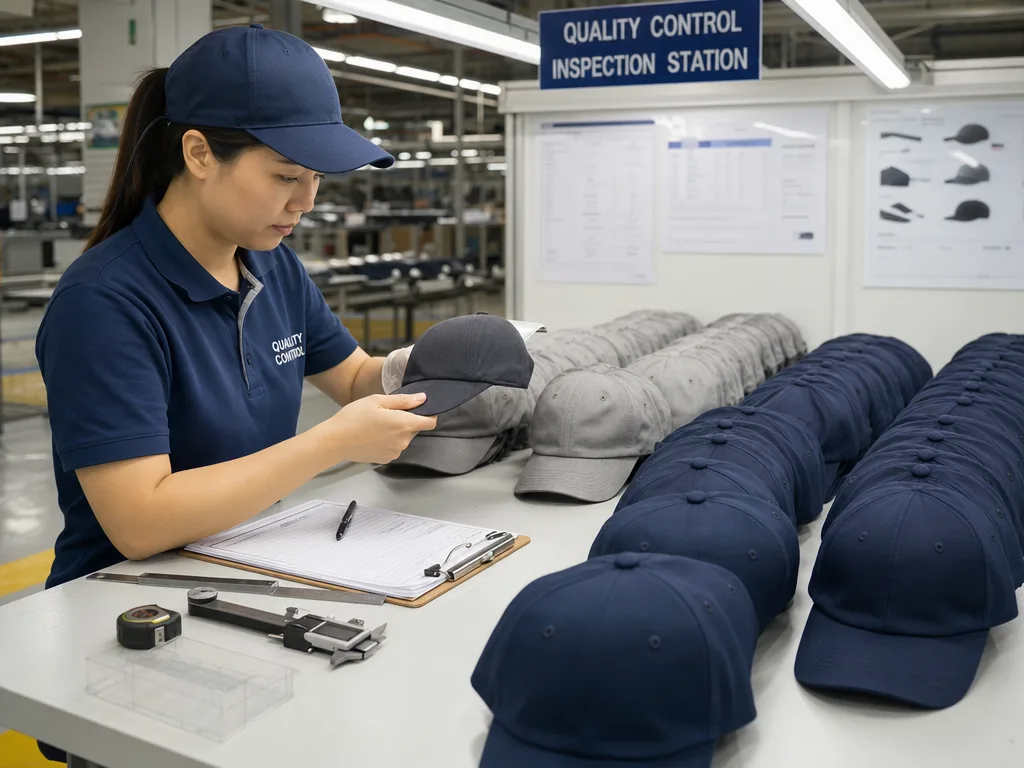
BSCI vs Sedex vs WRAP vs WCA: Compliance Audit Standards Compared (2026 Update)
Read article →
Custom Made Trucker Hat: The 2026 Sourcing & Manufacturing Playbook (2026 Update)
Read article →
Custom Wool Blend Ball Cap: A 2026 B2B Sourcing Guide
Read article →If you are ready to take the next step on bsci vs sedex vs wrap vs wca: compliance audit standards compared - 2026 buyer's guide, our team can put a tailored quotation and digital mock-up in your inbox within 24 hours. Send the inquiry form on our contact page or message us directly on WhatsApp.