
BSCI vs Sedex SMETA: Which Audit Does Your Cap Supplier Actually Need? - Supplier Checklist
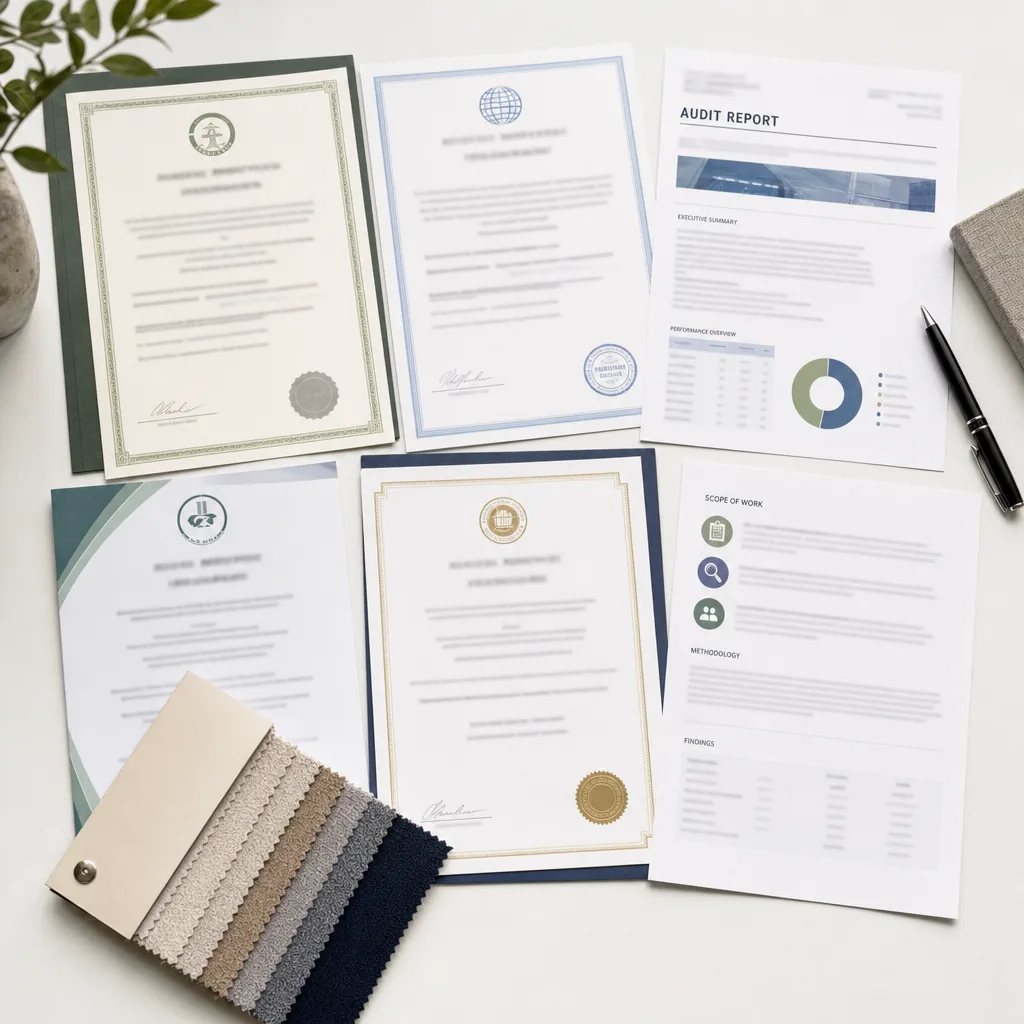
BSCI vs Sedex SMETA: Which Audit Does Your Cap Supplier Actually Need? - Supplier Checklist is one of the most-asked questions we receive from international buyers, and for good reason. With dozens of factories competing for your order and an alphabet soup of technical terms in every supplier quote, even experienced importers can feel lost. This guide consolidates what we have learned producing custom hats for clients in 40+ countries.
The four audits you'll actually be asked for
Most cap programs only ask for four social-compliance frameworks: amfori sedex-audit-cap-supplier-guide.html">BSCI 2.0, Sedex SMETA 4-Pillar, Intertek WCA, and WRAP. Which one matters depends less on factory quality than on the buyer’s onboarding system. EU private-label importers usually want an amfori platform record with the audit date, legal entity, audited address, and current rating; UK and Commonwealth accounts often ask for a Sedex SAQ plus a live SMETA report under the site’s Sedex ID; Walmart-adjacent supply chains still lean heavily on WCA; and some U.S. licensors keep WRAP in the vendor manual because Platinum, Gold, and Silver are easy for compliance teams to benchmark. Once annual volume is above roughly 20,000 to 50,000 caps, “we passed a social audit” is meaningless. Buyers want the actual report protocol, validity window, corrective action plan status, and the exact site scope. That site scope is where weak suppliers get exposed. A usable audit must cover the real production address handling cutting, sewing, embroidery on Tajima or Barudan heads, finishing, metal-trim attachment, inspection, and packing. If the report belongs to a sister company across town, or only covers a warehouse office, it will fail onboarding even if the name looks familiar. Any serious buyer should cross-check the report against the factory business license, workshop address, and subcontracting disclosure before PO release.
BSCI and SMETA are confused constantly, but they are not interchangeable in buyer portals. amfori BSCI 2.0 scores performance across areas such as fair remuneration, decent working hours, occupational health and safety, and protection of young workers, with results issued on the A-to-E scale and non-conformities tracked through CAP closure. SMETA 4-Pillar documents findings under labor standards, health and safety, environment, and business ethics in a format procurement teams in the UK, Australia, and multi-brand groups recognize immediately. A bsci hat factory can still be rejected if the customer’s workflow requires a Sedex upload, linked SAQ, and approved corrective actions; the reverse is just as common when an EU retailer mandates an amfori report number before vendor creation. WCA and WRAP appear less often in small streetwear orders, but they matter in mass retail and licensed programs. WCA reviews often get read for risk band, zero-tolerance findings, and overdue CAP items rather than marketing claims. WRAP is more certification-driven: buyers check whether the site is currently Platinum, Gold, or Silver, whether the certificate covers the active production address, and whether subcontractor controls are documented for processes like washing, printing, or overflow sewing. In practice, even a 30-day gap between expiry and renewal can block PO approval, factory loading plans, or vessel booking, so audit validity should be managed against shipment lead time, not just the calendar year.
What the auditor actually checks
The auditor starts with records, not promises. In a real BSCI 2.0 or Sedex SMETA 4-Pillar visit, the first pressure point is whether working hours, wages, and contracts line up across three separate sources: payroll, timecards, and worker interviews. If your bsci hat factory is showing 26 working days on payroll but punch data shows 31, that gap gets flagged fast. Auditors will sample at least 3 months of attendance and wage records, check overtime premiums against local law, and verify that every operator, trimmer, and packer has a signed labor contract in Chinese with clear wage terms. They also look for social insurance enrollment, leave records, and whether probation terms are legal. For a cap factory in China, forged neatness is usually a red flag; clean records matter less than records that reconcile under scrutiny.
The second layer is physical conditions: dormitories, fire safety, machine guarding, and chemicals. A sedex smeta cap supplier will typically be checked for dorm occupancy density, separate male and female areas where applicable, potable water access, hot-water availability, and whether exits are unlocked after hours. On the production floor, auditors inspect needle guards on Tajima and Barudan embroidery machines, emergency stop switches on eyelet and brim-forming equipment, PPE issuance, and first-aid box completeness. Fire compliance gets tested beyond paperwork: extinguisher inspection tags, evacuation maps, illuminated exit signs, and documented drill frequency, usually at least every 6 to 12 months depending on site policy. For any social audit hat manufacturer, chemical storage is another common failure point—spot removers, screen-printing inks, cleaning solvents, and embroidery spray adhesives should be labeled, segregated, and backed by SDS sheets, with secondary containment where needed.
The most sensitive checks are worker identity and worker voice. Any compliance audit cap factory China review will verify child-labor prevention by checking original photo IDs, personnel files, and increasingly facial-recognition or digital onboarding cross-checks to make sure borrowed IDs are not being used. Auditors compare date-of-birth data across hiring forms, medical checks, and attendance systems; one mismatch can trigger deeper sampling. They also test whether the grievance mechanism is real or decorative: complaint boxes, hotline posting, anti-retaliation policy, and interview evidence that workers know how to report wage disputes, harassment, or supervisor abuse. At CrownsForge, our standard practice is to treat this as operational control, not audit theater. If a supplier also holds a WCA audit cap supplier report, that can add useful benchmarking, but it does not replace an ethical hat manufacturer audit focused on traceable records, safe living conditions, and credible worker interviews.
Reading an audit report: red flags vs accepted-with-CAR
Read the findings table before you look at the final grade. In cap manufacturing, an audit marked acceptable with a handful of minor CARs is common; a spotless report is unusual and often means the audit scope was narrow or the site was overprepared for the visit. When I screen a bsci hat factory, I separate documentation drift from operational abuse. Low-risk gaps can be closed if they are isolated and supported by evidence within 30 to 60 days, sometimes 90 for system changes. Typical examples are an expired extinguisher inspection tag in one workshop, incomplete induction records for operators assigned to Tajima or Barudan embroidery heads, a missing replenishment entry in a first-aid cabinet, or a fire drill that happened but was not signed in the monthly register. Those are management-control failures, not proof of coercive labor. A credible CAP should list the owner by name, deadline, root cause, and closure evidence: revised SOP, retraining roster, machine-maintenance log, timestamped photos, or signed drill records. If the response says only “management will improve,” assume the closure discipline is weak.
The real red flags sit in wages, legal compliance, and life safety. Under BSCI 2.0 or Sedex SMETA 4-Pillar, blocked exits, missing needle guards or press guards, absent labor contracts, falsified timecards, underage-worker risk, or unpaid overtime premiums are not routine accepted-with-CAR findings; they point to a factory that is unsafe or deliberately noncompliant. I also want payroll, attendance, and piece-rate records to reconcile for at least the last 12 weeks, not just one clean pay period prepared for the auditor. In Zhejiang peak season, repeated 80 to 100 hour workweeks, missing social insurance for a large share of workers, or dormitory headcount that does not match payroll are bigger tells than a polished PDF full of signatures. Check whether emergency lighting tests, electrical-load logs, and dorm occupancy make sense against actual staffing. If major CARs repeat across consecutive audits, the issue is not paperwork. It is how the factory is run day to day, no matter how tidy the QC records or how carefully the embroidery floor is staged.
Audit duration and what you can verify by video
A real social-compliance audit is labor-intensive, not a half-day showroom tour. In a cap factory with roughly 150 to 300 workers, a Sedex SMETA 4-Pillar audit usually takes 2 to 3 full working days on site; if the scope includes dormitories, canteen, EHS records, wastewater permits, and subcontractor controls, it can stretch to 3.5 days. Auditors sample 12 months of payroll, timecards, labor contracts, social insurance records, disciplinary logs, fire-drill records, PPE issuance, machine guarding, chemical inventory, and SDS files, then run private worker interviews across cutting, embroidery, sewing, trimming, finishing, and packing. If a supplier calls itself a bsci hat factory but cannot state whether it holds amfori BSCI 2.0 or Sedex SMETA 2-Pillar versus 4-Pillar, that is a basic credibility failure. The overlap is real on labor and safety, but the protocol, chapter scoring, and evidence requirements are not interchangeable.
The document worth reviewing is the audit summary or CAPR status, not a salesperson saying the factory “passed.” A usable summary should show the legal entity, full production address, audit date, auditor company, announced or semi-announced status, worker headcount, peak-month sampling window, and nonconformities by chapter. For SMETA 4-Pillar, confirm the report explicitly covers Labor Standards, Health and Safety, Environment, and Business Ethics; for amfori BSCI 2.0, check the performance rating and whether any zero-tolerance or priority findings remain open. Buyers should also ask which months were sampled. In hats, overtime pressure usually spikes before Q4 promotions, sports seasons, and holiday programs, so low-season records from March or April tell you less than August to November data.
Video cannot replace an audit, but it is a fast way to test whether the site on paper is the site actually producing your caps. A 20- to 30-minute live walkthrough should be one continuous call from fabric inspection to cutting, sewing, embroidery, finishing, and finished-goods storage, with minimal camera cuts. You can verify practical markers quickly: posted evacuation maps, unobstructed fire exits, locked chemical cabinets, needle-control boards, metal-detection or broken-needle logs where applicable, carton drop-test area, 4-point fabric inspection tables, and embroidery running on Tajima, Barudan, or ZSK heads rather than being quietly outsourced. If the audit says in-house production but the video avoids embroidery, shows no WIP, or the legal entity on the report does not match the workshop signage, treat that as a serious risk of undeclared subcontracting, expired audit coverage, or the wrong factory being audited.
Cost: who pays for the audit?
Baseline social audits are normally a factory overhead, not a surcharge to sneak onto an invoice after price confirmation. A legitimate bsci hat factory should already budget for its annual or semiannual compliance cycle the same way it budgets for fire equipment checks, needle control, metal detection, and in-line QC. In Zhejiang, a BSCI 2.0 or Sedex SMETA 4-Pillar audit for a mid-size cap plant usually runs about RMB 8,000 to 18,000 per site, with the spread driven by worker headcount, dormitory scope, payroll complexity, and whether the auditor needs to review subcontracted embroidery or washing processes. If a supplier operates 150 to 300 workers across cutting, sewing, eyelet punching, embroidery, finishing, and packing, that cost is part of keeping the factory saleable to international buyers. It should already be buried in FOB pricing, not reopened after the PO is issued.
The cost only becomes negotiable when the audit is buyer-specific and not reusable across other accounts. Walmart WCA, Target FCCA, and certain licensed sports or mass-retail protocols often sit outside the supplier’s standard compliance stack, even if the factory already has a valid BSCI rating or an uploaded Sedex report. In those cases, the extra cost can realistically land at USD 600 to 1,500 once you include booking fees, document preparation, payroll reconciliation, management interviews, corrective action evidence, and a follow-up visit if the first result is weak. The practical fix is to lock down four points before sampling: exact audit protocol, who pays, report validity, and who covers any re-audit. If that language is missing, disputes start fast, especially when a failed CAP closes with a second visit that adds another RMB 5,000 to 10,000.
What changes with the 2026 UFLPA and EU CSRD
By 2026, a clean social audit from a bsci hat factory will not carry much weight with U.S. Customs if the shipment file cannot survive a UFLPA document review. The legal burden stays with the importer, so the factory has to support a traceability pack down to raw material and subcontract level: fabric mill invoices, yarn composition declarations, country-of-origin affidavits, trim supplier lists, cutting and sewing production logs, payroll by line, and carton-level shipment mapping that links PO, carton marks, packing list, and commercial invoice to the actual production batch. In cap programs, the weak point is rarely the shell fabric alone. It is usually the mixed-source components: sweatbands, PE buckram, woven labels, hook-and-loop closures, embroidery backing, and plastic snaps bought from different vendors under separate lot numbers. If a 65/35 poly-cotton twill order at 240 gsm switches mills mid-run, or a vendor substitutes buckram without approval, that gap is enough to trigger detention regardless of whether the site passed BSCI 2.0 or Sedex SMETA 4-Pillar 90 days earlier.
EU CSRD creates a different problem: buyers need auditable supplier data in a format they can disclose, not just a passing grade. Large brands selling into the EU are increasingly asking cap suppliers for the underlying audit protocol, CAP closure status, grievance mechanism evidence, working-hour controls, subcontracting declarations, and in some cases energy, wastewater, and chemical-management records tied to the audited site. A SMETA 4-Pillar report may satisfy one retailer because it covers labor, health and safety, environment, and business ethics, while another still wants amfori BSCI plus a WCA benchmark to normalize risk scoring across countries. On the factory floor, the practical standard is response speed and record discipline: buyer matrices, style-level vendor mapping, and retrieval of support files within 24 hours. At CrownsForge, that usually means keeping audit age, AQL 2.5 reports, nominated trim vendor status, and color-lot change records in one file, because the audit report is now the first document a buyer opens, not the last one they rely on.
Frequently Asked Questions
What is the minimum order quantity (MOQ) for custom hats?
Our standard MOQ is 100 pieces per design and color, with sampling available from 1 piece. For complex multi-color logos or premium fabric upgrades, the MOQ can be lowered with a small per-piece surcharge.
What logo decoration techniques do you offer?
3D puff embroidery, flat embroidery, woven patch, leather patch, PVC patch, screen printing, sublimation, applique and laser etching, all in-house with no subcontracting.
Can I order a sample before bulk production?
Yes. We strongly recommend approving a pre-production sample before mass production. Samples are charged at 35 to 60 USD each plus express shipping, fully refundable against confirmed bulk orders over 500 pieces.
What file format should I send for my logo?
Vector files (AI, EPS, PDF) are ideal. High-resolution PNG or JPG at 300 dpi on transparent background works as a fallback. Provide Pantone color references for accurate reproduction.
Which shipping methods do you support?
We support FOB, CIF and DDP shipping. Air express for samples and small orders, sea LCL for 100 to 500 pieces, sea FCL for 5,000+ pieces. Door-to-door DDP available for US, EU, UK, Canada and Australia.
What should I know about wholesale custom baseball cap?
When evaluating wholesale custom baseball cap, the key considerations are construction quality, decoration capability, MOQ flexibility and lead time. BSCI (amfori), Sedex SMETA 4-Pillar, WCA (Walmart), and WRAP. Each retailer requires a specific format. We hold all four and refresh annually. Buyers who don't ask are the ones who get surprised by retailer onboarding. Working hours, wage records, contract documentation, dormitory conditions, fire-safety drills, chemical storage, factory-floor safety equipment, child-labor…
How does ordering custom dad hat work?
When evaluating custom dad hat, the key considerations are construction quality, decoration capability, MOQ flexibility and lead time. BSCI (amfori), Sedex SMETA 4-Pillar, WCA (Walmart), and WRAP. Each retailer requires a specific format. We hold all four and refresh annually. Buyers who don't ask are the ones who get surprised by retailer onboarding. Working hours, wage records, contract documentation, dormitory conditions, fire-safety drills, chemical storage, factory-floor safety equipment, child-labor…
How does ordering custom baseball cap motorcycle helmet work?
When evaluating custom baseball cap motorcycle helmet, the key considerations are construction quality, decoration capability, MOQ flexibility and lead time. BSCI (amfori), Sedex SMETA 4-Pillar, WCA (Walmart), and WRAP. Each retailer requires a specific format. We hold all four and refresh annually. Buyers who don't ask are the ones who get surprised by retailer onboarding. Working hours, wage records, contract documentation, dormitory conditions, fire-safety drills, chemical storage, factory-floor safety equipment, child-labor…
How does ordering custom baseball hats for men work?
When evaluating custom baseball hats for men, the key considerations are construction quality, decoration capability, MOQ flexibility and lead time. BSCI (amfori), Sedex SMETA 4-Pillar, WCA (Walmart), and WRAP. Each retailer requires a specific format. We hold all four and refresh annually. Buyers who don't ask are the ones who get surprised by retailer onboarding. Working hours, wage records, contract documentation, dormitory conditions, fire-safety drills, chemical storage, factory-floor safety equipment, child-labor…
Looking for a reliable hat manufacturer in China?
CrownsForge has produced custom hats for 800+ brands across 40 countries. From 100-piece launches to 100,000-piece retail programs, we deliver on time and on spec.
Get in touchRelated guides
Custom Logo Hats: When to Use It, Costs, and What to Ask Your Factory (2026 Update)
Read article →
Mesh Caps Wholesale: Trucker Cap Manufacturing Specifications and Pricing
Read article →
Custom Hat Trucker: The 2026 Sourcing & Manufacturing Playbook - Supplier Checklist
Read article →If you are ready to take the next step on bsci vs sedex smeta: which audit does your cap supplier actually need? - supplier checklist, our team can put a tailored quotation and digital mock-up in your inbox within 24 hours. Send the inquiry form on our contact page or message us directly on WhatsApp.