
Performance & Athletic Caps: Moisture-Wicking, UPF and Buyer Specs - Supplier Checklist - 2026 Buyer's Guide - 2026 Buyer's Guide - Cost & MOQ Breakdown
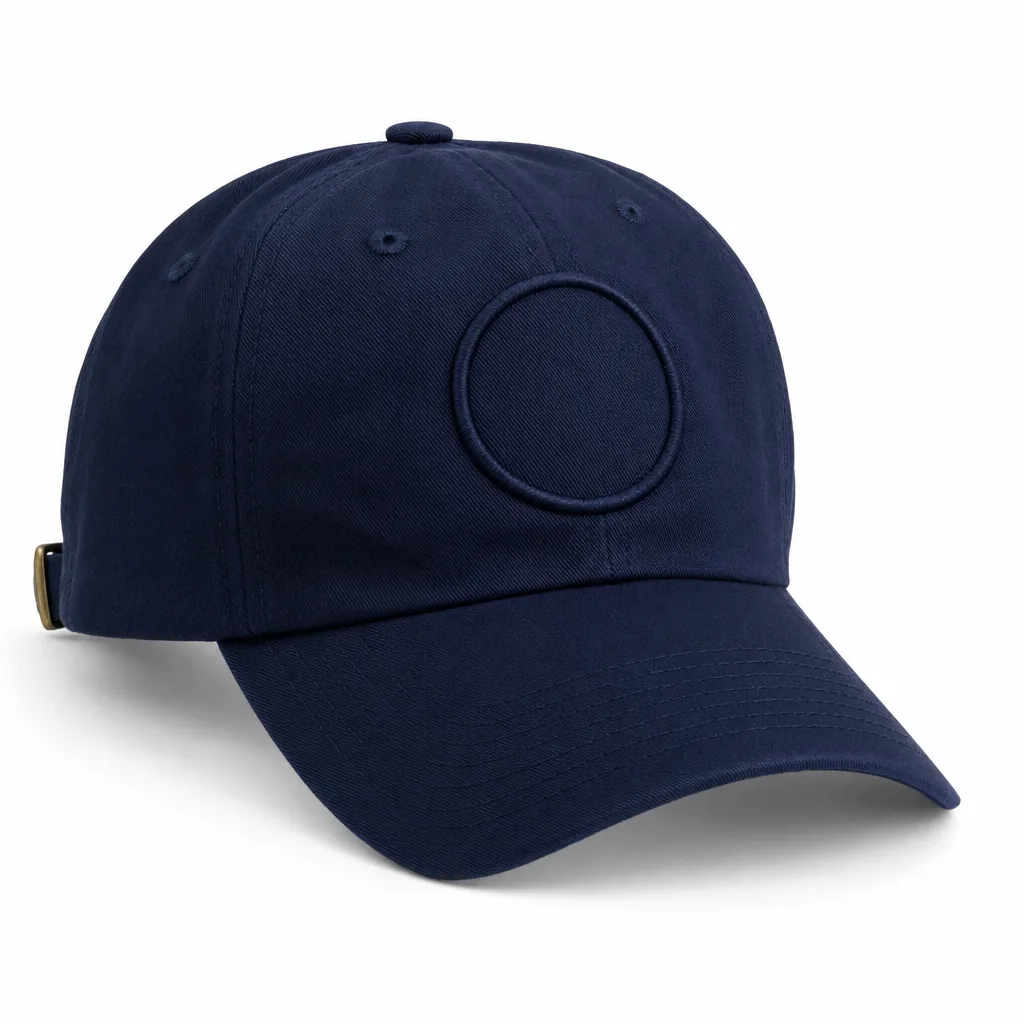
Performance & Athletic Caps: Moisture-Wicking, UPF and Buyer Specs - Supplier Checklist - 2026 Buyer's Guide - 2026 Buyer's Guide - Cost & MOQ Breakdown is one of the most-asked questions we receive from international buyers, and for good reason. With dozens of factories competing for your order and an alphabet soup of technical terms in every supplier quote, even experienced importers can feel lost. This guide consolidates what we have learned producing custom hats for clients in 40+ countries.
What makes a cap 'performance' vs 'standard'
A cap only qualifies as performance when the whole build is engineered for sweat, heat, and low carry weight; switching from cotton twill to generic polyester does not get you there. On the factory floor, the baseline is usually a 110-160 gsm polyester shell in microfiber plain weave, mini-ripstop, dobby, or mechanical-stretch woven, finished for moisture management so perspiration spreads and evaporates instead of pooling at the crown. Standard brushed cotton twill caps often finish around 95-120 grams per cap. A real running, golf, or training style should usually come in under 80 grams finished, while unstructured 5-panel silhouettes commonly land at 55-70 grams. That difference is easy to feel after 30 minutes in 30°C heat with high humidity. A capable performance cap manufacturer also cuts thermal load with laser perforation, 20D-40D mesh side panels, low-bulk seam binding, lighter PE visor boards, and reduced buckram or no buckram at all so the crown flexes instead of trapping heat like a promo cap. Sweatband construction is where many so-called athletic caps fail. Basic cotton terry absorbs sweat, holds salt, dries slowly, and gains weight during wear. A proper wicking band is usually polyester-elastane or nylon-elastane at 180-220 gsm, with recovery checked after repeated extension and colorfastness to perspiration tested so dark bands do not crock onto light crowns. Buyers should ask for finished-cap weight after decoration, not just shell gsm, because trims can wreck the spec: a PVC snap, thick 3D embroidery backing, heavy woven labels, or oversized seam tape can add 8-15 grams on their own. UPF is another hard divider if it is tested, not claimed. For golf, trail, fishing, or team training programs, specify UPF 30+ or UPF 50+ under AATCC 183 or AS/NZS 4399, and ask whether the rating comes from fabric density, filament type, shade depth, or a chemical finish that may fall after washing. In production terms, a standard cap is built to carry branding; a performance cap is built to control moisture, airflow, sun exposure, and weight at the same time.
The construction details that separate performance from standard are usually small, but they are measurable. Standard caps are built around appearance and logo area: firmer front panels, heavier sweatbands, thicker top buttons, and closures chosen for cost rather than movement. Performance caps strip out bulk wherever possible. That means seam allowances trimmed clean, binding tape kept narrow, top buttons removed for helmet compatibility, and crown panels shaped to sit close without pressure points. On better programs, side and rear vents are mapped to the hottest zones rather than added symmetrically for looks. Even the mesh matters: 20D tricot or fine-hole warp-knit behaves very differently from cheap open mesh that snags and collapses after wash. If the style is sold for running or tennis, I would also expect moisture-wicking prints or transfer logos instead of dense embroidery, because a 6,000-8,000 stitch front logo adds stiffness and heat exactly where the wearer feels it most. Verification is what keeps a performance brief from turning into generic sportswear copy. Buyers should lock tolerances early: cap weight within +/-5 grams, crown fabric shade within Delta-E 1.0-1.5 to approved Pantone TCX, and seam-pucker standards that still hold after washing or perspiration exposure. If the supplier cannot provide finished-cap weight, sweatband composition, mesh denier, visor board spec, and test references in one tech pack, the cap is probably still a standard product with athletic language attached. A disciplined performance cap manufacturer will also separate claims by end use. Training caps need fast dry-down and low mass; golf caps may prioritize UPF 50+ and cleaner structure; fishing styles often need darker underbrims to cut glare. The common rule is simple: standard caps are optimized for merchandising, while performance caps are engineered against wearer stress in real conditions.
UPF ratings: what's actually meaningful
The line that matters is not UPF 20 versus 25; it is whether the style sits in the natural UPF 25-35 range or is actually controlled and certified at UPF 50+. UPF 30 still allows about 3.3% UV transmission, while UPF 50 permits no more than 2.0%, and that last margin is where weak process control shows up. In cap production, plenty of 100% polyester performance fabrics test decently without any chemical UV finish: 75D interlock, 100D micro-twill, and tight pique at roughly 110-160 gsm often land around UPF 25-35, especially in black, navy, forest, and other deep Pantone shades. Shift the same construction into white, heather gray, or ventilated mesh zones and the result can fall hard. A competent performance cap manufacturer should tie any UPF claim to the exact fabric spec, cover factor, yarn denier, dye depth, and panel layout used in bulk, not to a generic material card or salesman’s assumption.
UPF 50+ matters when the cap is sold for sustained outdoor use and the buyer needs paperwork that will survive retailer compliance review. Ask for fabric-specific test reports to AATCC 183 or AS/NZS 4399, and check whether the report covers the raw fabric only or the finished cap configuration. On the factory floor, I have seen nominal UPF 50 fabrics lose performance once the design adds laser perforation, trucker mesh, white side panels, or aggressive crown stretch over a structured buckram front. To keep a moisture-wicking style above 50+, mills usually tighten construction, move up in gsm, switch to more opaque yarns, or apply a UV-absorbing finish; in real sourcing terms, that is commonly another $0.12-$0.35 per cap at scale, plus about $150-$300 for a named lab submission. If a supplier quotes UPF 50+ across every color and every silhouette without lot-specific paperwork, treat that as a sourcing risk.
Sweatband construction for athletic use
Athletic caps usually fail from the inside first, and the sweatband is where weak specs show up fast. A standard 100% cotton twill or brushed cotton band may feel soft at packing inspection, but after it absorbs roughly 20-30 g of sweat it stays wet, gains mass, and starts pushing moisture back onto the forehead. For real training use, the better spec is a warp-knit polyester-elastane band, typically 88/12 or 90/10 at 180-220 gsm, with a brushed skin side and a filament face that pulls moisture into the crown by capillary action. In wear trials, I have seen the same cap shell pass in golf and running use with one sweatband and fail with another. If you are qualifying a performance cap manufacturer, ask for fiber content, finished weight tolerance of ±5%, stretch recovery after 50 extension cycles, and shade approval against Pantone TCX with Delta-E not exceeding 1.5 under D65 lighting.
Material alone does not rescue bad construction. A dependable athletic sweatband is normally 32-38 mm finished width, seamed with a clean 4-thread overlock, then attached under controlled tension so it lies flat around the crown instead of roping, twisting, or shrinking the internal circumference. On cap lines, operators often over-stretch the band during sewing; once it rebounds, the cap grips the temples and creates pressure points after an hour of wear. I usually want 10-12 SPI on the attachment seam to stabilize the edge without creating a ridge against the skin, and I want the join placed away from the center back opening on adjustable styles. If the front panel uses foam, perforated EVA or low-density spacer backing behind the band improves vapor escape; otherwise condensation builds at the forehead even when the outer shell is laser-perforated polyester.
Buyers should test sweatbands with the same discipline they apply to shell fabric and UPF claims. The practical checks are vertical wicking height at 30 minutes, dry-back time under controlled airflow, colorfastness to perspiration, wash stability after 5 cycles, and seam distortion after repeated stretch. A decent polyester-elastane band should wick visibly higher than cotton and dry in roughly half the time under the same lab setup. The cost increase is usually modest: at 3,000 pcs, upgrading from basic cotton to a moisture-managed polyester-elastane sweatband typically adds US$0.12-US$0.28 per cap, depending on yarn denier, chemical finish, and whether an anti-odor treatment is applied. Silver-based or zinc pyrithione finishes need compliance review, so do not accept a vague 'anti-odor' note on the spec sheet. A supplier can hide weak interior engineering behind premium shell fabric, laser vents, or strong UPF marketing, but the wearer feels the sweatband first.
Reflective trim, vented panels, and other athletic features
Reflective detailing is one of the easiest places for an athletic cap spec to go soft. If the cap is intended for running, cycling, or early-morning team training, buyers should specify reflective heat-transfer film or woven reflective tape against a measurable retroreflection requirement, not vague language like “silver trim.” EN ISO 20471 component performance is the usual reference point, and on caps the useful placements are limited: sandwich visor edge, rear arch, closure pull tab, and selective crown seam piping. Those zones stay visible during arm swing and head movement; random decorative hits on the side panel usually do not. A capable performance cap manufacturer should also test post-wash retention, because cheap film often starts cracking on the visor curve after 20-30 home-laundry cycles, particularly on 75D-150D polyester microfiber shells with a tight bend radius. Application settings need to be locked down in the tech pack. Most reflective transfers bond cleanly at roughly 140-155°C, but overheating can gloss the fabric face, weaken the DWR top finish, and push black or navy shells beyond Delta-E 1.5 from the approved Pantone TCX standard.
Ventilation only works when fabric weight, panel geometry, and decoration method are engineered together. On a 90-120 gsm polyester-spandex running shell, laser-cut micro-perf arrays or narrow slit vents usually hold cleaner shape than large round holes, especially on unstructured five-panel builds where the fabric has very little self-support. Keep embroidery out of the vent field. A 6,000-8,000 stitch logo on Tajima or Barudan heads can distort a thin shell, create puckering around perforations, and cancel out most of the airflow gain. If a sample still needs body, a 40-60 gsm tricot backing or better seam zoning is usually a smarter fix than adding structure to a heavily cut panel. For golf, tennis, and warm-weather team programs, side or rear inserts in polyester birdseye mesh or warp-knit mesh are often the safer production choice. At about 100-140 gsm, they give better yield, fewer scorch marks and tear-point defects, and more stable logo placement at 300-500 pieces per colorway than aggressive laser cutting. If UPF claims are part of the brief, the spec sheet should identify exactly which panels are solid and which are mesh, because a crown fabric tested at UPF 50+ does not mean the finished cap provides UPF 50+ across the full silhouette.
Color and design considerations for athletic positioning
Color planning for athletic caps should be driven by use case, not mood boards. The body-color winners are still black, navy, graphite, silver gray, and clean off-white, with only two or three seasonal accents such as clay, sage, or muted cobalt layered on top. Those shades keep a technical look across training, travel, staff issue, and sponsor programs without forcing separate inventories. Decoration works best when it stays quiet: tonal silicone heat transfers, matte TPU weld patches, or low-profile 3D embroidery matched within Delta-E 1.0 to 1.5 to the shell, ideally from the same Pantone TCX family. Any capable performance cap manufacturer should flag color risk before sampling, especially on 75D to 150D polyester micro-ripstop, melange interlock, and 4-way stretch woven shells, where shade variation shows much faster under D65 daylight and 5000K stadium LED than it does on a 260 gsm cotton twill cap. The commercial upside of a tight palette is straightforward. A 1,200-piece team or event program usually runs cleaner as one core shell color with two or three logo executions, keeping practical MOQs around 144 to 300 pieces per colorway instead of scattering volume across five weak sellers. Once artwork starts fragmenting, cost climbs fast: a new welded badge mold typically adds $80 to $150, and a revised embroidery file for Tajima, Barudan, or ZSK heads usually adds $20 to $50 per version before production even starts. That is why disciplined color architecture protects margin and repeatability at the same time. It reduces dead stock, keeps reorders closer across dye lots, and makes sponsor swaps far easier without reopening the entire material and trim approval cycle.
Performance styling fails when decoration interferes with ventilation, stretch, or recovery. On moisture-wicking running and training caps, oversized front embroidery can block laser-cut vents, distort ultralight woven panels, and create a hard abrasion zone at the forehead crease. The fix is simple but often ignored: control stitch density, avoid full-panel satin fills, and size branding to the actual crown geometry instead of the AI file. On 5-panel and unstructured 6-panel builds, front logo height usually lands around 45 to 58 mm, while side logos should stay under 35 mm so the cap still packs, rebounds, and dries properly. If the cap uses bonded seams, perforated side panels, or reflective taping, artwork should be mapped around those functional zones from the first tech pack, not negotiated after the sample review. Heat management should also influence color decisions. Black always has demand, but for hot-weather golf, tennis, and endurance programs, light gray, stone, and off-white usually wear better because they absorb less radiant heat and show salt residue more cleanly than deep navy or bright optic white. White is not automatically safer; sunscreen transfer, sweat chemistry, and resin-backed logos can push visible discoloration after wash testing. In production, the practical standard is to review logo placement against seam balance and closure pull, then check post-decoration stability after sweat exposure and 20 to 30 home-laundry cycles. That process says more about long-term quality than any approval photo, because a cap that looks sharp on day one still has to hold shape, color, and surface finish through a full season.
Pricing: performance fabric costs vs standard cotton
The price gap between standard cotton and a real athletic shell is smaller than most buyers think; the expensive mistakes come from vague specs. A basic 6-panel cap in 180-220 gsm brushed cotton twill usually uses fabric costing about $1.60-$2.20 per yard, while a legitimate performance shell—75D to 150D polyester microfiber, 120-140 gsm mechanical-stretch woven, or a dobby with moisture-management finish—typically runs $2.30-$3.60 per yard. With cap consumption around 0.18-0.24 yard including cutting loss, the shell difference is only about $0.18-$0.45 per cap. Finished FOB moves more because the trim package also has to change: quick-dry sweatband, lighter seam tape, compatible back strap, and sometimes perforated panels. In practice, the total uplift versus cotton is usually $0.40-$0.80 FOB on 1,000-3,000 piece orders. If a performance cap manufacturer claims only a $0.10 premium over cotton, I assume the fabric is plain poly twill with no verified wicking finish, no mechanical stretch, and no meaningful wear-life advantage. “Poly” is not a spec; buyers should lock gsm, denier, weave, finish, and test method on the PO.
UPF needs to be priced as a separate requirement, not buried under generic “sports fabric” language. Mill-certified UPF 30+ or UPF 50+ commonly adds $0.12-$0.28 per cap at volume, depending on color, cover factor, and whether protection comes from construction alone or from a post-finish validated to AATCC 183 or AS/NZS 4399. Dark navy and black microfiber usually hit target more easily, while white or pastel golf caps often need tighter weave density or additional chemistry, which can affect hand feel and shade. On export programs, color should be approved after finishing, not before; holding Pantone TCX within Delta-E 1.5-2.0 after UV and moisture-management treatment is a realistic control point. The cheapest upgrade with the biggest wear benefit is still the sweatband: moving from cotton terry to polyester mesh or Coolmax-type knit typically adds $0.10-$0.20 per cap. Laser-cut ventilation usually adds $0.05-$0.12, reflective heat-transfer trims $0.08-$0.18, and bonded seam construction materially more. On athletic caps, engineering the fabric and trim package shifts FOB more than sewing time does.
Frequently Asked Questions
What file format should I send for my logo?
Vector files (AI, EPS, PDF) are ideal. High-resolution PNG or JPG at 300 dpi on transparent background works as a fallback. Provide Pantone color references for accurate reproduction.
How long does production take?
Sampling takes 7 to 12 days. Bulk production runs 20 to 30 days depending on quantity, fabric availability and decoration complexity. Inspection and packing adds another 3 to 5 days before shipment.
Can I order a sample before bulk production?
Yes. We strongly recommend approving a pre-production sample before mass production. Samples are charged at 35 to 60 USD each plus express shipping, fully refundable against confirmed bulk orders over 500 pieces.
What is the minimum order quantity (MOQ) for custom hats?
Our standard MOQ is 100 pieces per design and color, with sampling available from 1 piece. For complex multi-color logos or premium fabric upgrades, the MOQ can be lowered with a small per-piece surcharge.
Which shipping methods do you support?
We support FOB, CIF and DDP shipping. Air express for samples and small orders, sea LCL for 100 to 500 pieces, sea FCL for 5,000+ pieces. Door-to-door DDP available for US, EU, UK, Canada and Australia.
How does ordering baseball cap custom logo work?
When evaluating baseball cap custom logo, the key considerations are construction quality, decoration capability, MOQ flexibility and lead time. Performance polyester adds roughly $0.40-$0.80 per cap vs standard cotton. UPF treatment adds another $0.20-$0.30. Sweatband upgrade adds $0.10-$0.20. Moisture-wicking fabric (typically polyester with wicking finish), moisture-wicking sweatband (usually polyester-elastane blend), lightweight construction (under 80g), and often UPF treatment.
What should buyers know about branded bills performance hat?
When evaluating branded bills performance hat, the key considerations are construction quality, decoration capability, MOQ flexibility and lead time. UPF 30 blocks ~97% of UV. UPF 50+ blocks 98%+. Most performance polyester fabric reaches UPF 30 naturally without chemical treatment. UPF 50+ usually requires treated fabric, which adds cost. Performance polyester adds roughly $0.40-$0.80 per cap vs standard cotton. UPF treatment adds another $0.20-$0.30. Sweatband upgrade adds $0.10-$0.20.
How much does branded bills custom hat cost typically cost?
When evaluating branded bills custom hat cost, the key considerations are construction quality, decoration capability, MOQ flexibility and lead time. UPF 30 blocks ~97% of UV. UPF 50+ blocks 98%+. Most performance polyester fabric reaches UPF 30 naturally without chemical treatment. UPF 50+ usually requires treated fabric, which adds cost. Moisture-wicking fabric (typically polyester with wicking finish), moisture-wicking sweatband (usually polyester-elastane blend), lightweight construction (under 80g), and often UPF…
How does ordering custom logo bucket hat work?
When evaluating custom logo bucket hat, the key considerations are construction quality, decoration capability, MOQ flexibility and lead time. Moisture-wicking fabric (typically polyester with wicking finish), moisture-wicking sweatband (usually polyester-elastane blend), lightweight construction (under 80g), and often UPF treatment. UPF 30 blocks ~97% of UV. UPF 50+ blocks 98%+. Most performance polyester fabric reaches UPF 30 naturally without chemical treatment. UPF 50+ usually requires treated fabric, which…
What company makes caps?
New Era has over 500 different licenses in its portfolio. Since 1993, it has been the exclusive baseball cap supplier for Major League Baseball (MLB).
Ready to start your custom hat project?
Send us your tech-pack, sketch or even just an inspiration photo. We will respond with a detailed quotation and digital mock-up within 24 hours.
Request a free quoteRelated guides
Custom Made Trucker Hat: The 2026 Sourcing & Manufacturing Playbook (2026 Update) - Cost & MOQ Breakdown
Read article →
Blank Hats MOQ And Pricing Plan for Custom Hat Buyers
Read article →Ball Caps for Women: A 2026 Sourcing Playbook for International Buyers
Read article →If you are ready to take the next step on performance & athletic caps: moisture-wicking, upf and buyer specs - supplier checklist - 2026 buyer's guide - 2026 buyer's guide - cost & moq breakdown, our team can put a tailored quotation and digital mock-up in your inbox within 24 hours. Send the inquiry form on our contact page or message us directly on WhatsApp.