
Shipping Custom Hats from China: FOB, EXW, DDP & Incoterms Decoded - Cost & MOQ Breakdown
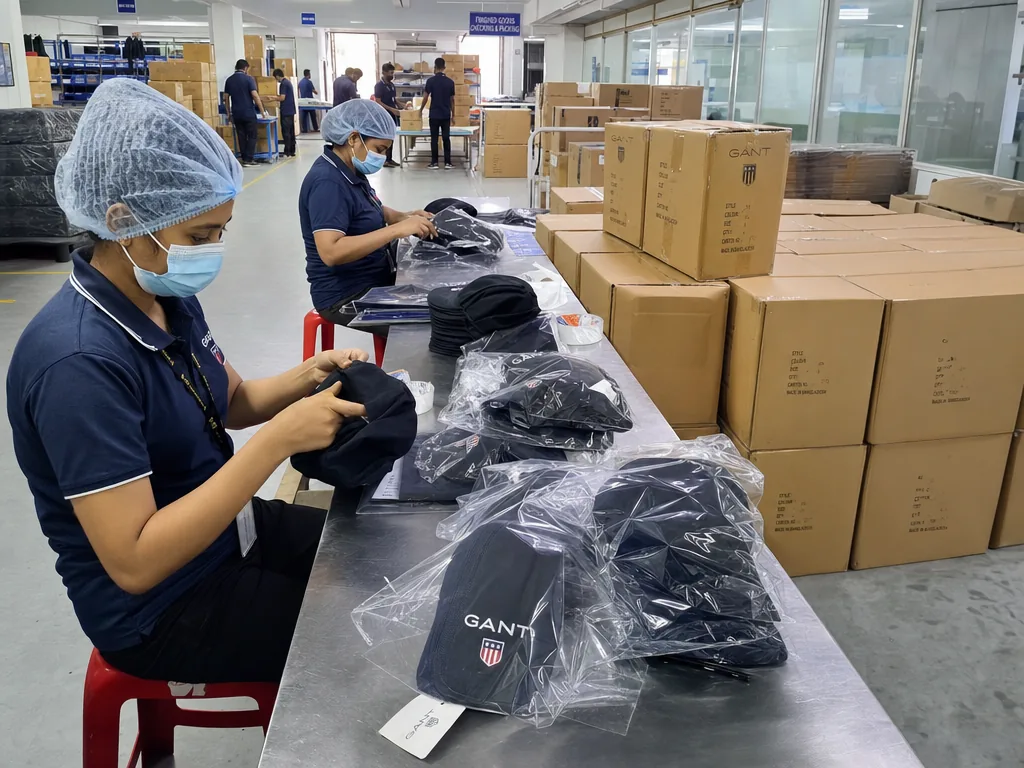
Shipping Custom Hats from China: FOB, EXW, DDP & Incoterms Decoded - Cost & MOQ Breakdown is one of the most-asked questions we receive from international buyers, and for good reason. With dozens of factories competing for your order and an alphabet soup of technical terms in every supplier quote, even experienced importers can feel lost. This guide consolidates what we have learned producing custom hats for clients in 40+ countries.
Why Incoterms confuse new importers
New importers get tripped up by Incoterms because one cap can have three valid prices that are financially miles apart. A 2,000-piece brushed cotton dad cap can legitimately quote at EXW Yiwu $2.08, FOB Ningbo $2.31, and DDP Los Angeles $3.02, with each number reflecting a different cost boundary rather than a pricing error. EXW ends at the factory door. FOB Ningbo already folds in export carton packing, trucking to port, China customs declaration, terminal handling, and loading onboard. DDP to a U.S. warehouse can also absorb ocean freight, customs clearance, duty under HS code 6505.00, Section 301 exposure where applicable, and final delivery by appointment. In hat shipping from China, buyers who compare only the unit rate usually miss the charges that actually break the budget: AMS filing, ISF bond, destination THC, chassis fees, exam holds, brokerage, and LFD storage if cartons sit too long at the terminal. The second trap is that many quotations use “FOB” or “DDP” as loose sales language instead of strict Incoterms 2020 terms. If the quote does not name the port, destination ZIP code, carton count, gross weight, net weight, CBM, validity window, and tariff assumptions, it is not precise enough to compare. Freight on a 3.8 CBM shipment can swing 10 to 20 percent in peak season, and a vague DDP offer often hides exclusions like remote-area surcharges, customs exams, or re-delivery after a missed warehouse slot. Buyers should demand a quote that states the exact named place, whether duty and VAT are included, and whether the seller is pricing against CY, CFS, or door delivery. That level of detail matters more than the headline price because it determines who pays when the shipment stops moving.
Headwear confuses people further because caps are usually billed on volume before they are billed on weight. A structured 6-panel snapback packed 144 pieces per master carton commonly lands around 0.12 to 0.14 CBM per 100 pieces, depending on crown height, visor curve, button protection, and whether the caps are nested or shipped with shape retainers. On airfreight, volumetric weight is usually calculated on a 6,000 cm3/kg divisor, so a carton that physically weighs 18 kg may rate closer to 28 kg. That is why “shipping included” is not the same as cost certainty: the rate is often driven by carton geometry, not by the fabric weight of a 280 gsm twill shell or a 600D poly back panel. That is also why DDP prices often look padded to first-time buyers. The seller is usually hedging real volatility: customs exams, destination congestion, chassis shortages, and carton inefficiency caused by embroidery bulk or curved-visor packing. A forwarder used to knitwear can miss that a high-density 3D embroidery file run on Tajima or Barudan heads changes crown stiffness and reduces nesting efficiency, which can move freight cost per cap by 8 to 15 percent on LCL shipments. CrownsForge normally separates manufacturing cost from logistics assumptions so procurement teams can see whether a price gap comes from sewing, trim, and embroidery time or from the hat shipping from China model itself. Once those cost buckets are split, Incoterms stop sounding like jargon and start functioning like a budgeting tool.
EXW — factory floor pickup
EXW only looks cheaper because the quote stops at the factory gate; operationally, it is the most unforgiving option for hat shipping from China. Once the factory stages sealed cartons at the workshop or off-site warehouse, the buyer owns export filing, truck dispatch, terminal handling, customs exams, and the entire freight claim chain. That matters more for caps than for flat-packed apparel. A structured 6-panel baseball cap with PE or buckram front support typically loads at about 0.09 to 0.12 CBM per 144-piece carton, depending on crown profile, visor curve, insert cards, and whether each dozen is inner-boxed. If a local trucker double-stacks cartons or runs them in a damp box truck without desiccants, you do not get minor cosmetic damage; you get crushed peaks, panel distortion, sweatband mildew risk, and a receiving dispute nobody wants to absorb after handoff. EXW is usually rational only when the buyer is already consolidating multiple Zhejiang or Guangdong suppliers and wants full control over carton mix, departure timing, and which SKUs make the vessel cutoff.
The biggest EXW failure point is not the ocean rate but the handoff between pickup and customs release. Many cap factories can produce cleanly but are not set up to act as exporter of record on every deal structure, so your forwarder often has to route the shipment through a licensed trading company for export declaration. In practice, that adds roughly RMB 300 to 800 for filing and documentation before drayage, warehouse receiving, pallet wrap, or CFS handling. Miss one cutoff on a 1,200-piece embroidery order split across two colorways—say Pantone 19-3952 TCX navy and 18-1664 TCX orange—and the delay can trigger RMB 150 to 300 per day in consolidation storage plus rebooking charges. Our standard practice is to treat EXW as viable only when the buyer already has SOPs for pickup appointments, carton count checks, burst-strength verification, moisture protection, and cargo insurance attaching from factory gate rather than port terminal.
MOQ is where EXW stops making commercial sense for many buyers. On a 300-piece snapback run priced around $4.20 to $6.80 per cap, the extra China-side admin can easily add $0.35 to $0.90 per unit before the shipment even reaches Ningbo or Yantian. At that scale, whatever savings you thought you gained versus FOB usually disappear into trucking, export docs, CFS fees, and avoidable coordination time. EXW becomes more defensible when volumes reach 5,000 to 20,000 units across several factories, because then you can consolidate into LCL or FCL based on real cube, delivery sequence, and destination duty planning. Buyers comparing EXW, FOB, and DDP often miss that EXW does not remove cost; it relocates origin charges from the factory quote to the forwarder’s invoice. Used correctly, it is a consolidation tool for experienced importers with disciplined logistics control, not a default incoterm for first-time custom cap sourcing.
FOB — most common for B2B
FOB is still the cleanest term for established importers because responsibility transfers at the named load port, not at the factory gate. For hat shipping from China, the wording needs to be exact: “FOB Ningbo, Incoterms 2020” or “FOB Shanghai, Incoterms 2020,” never the meaningless shortcut “FOB China.” On a cap order shipping out of Yiwu or nearby Zhejiang factories, a proper FOB price normally includes EXW goods, truck haulage to port, export customs declaration, port charges on the China side, and loading onboard the booked vessel. Once the container is on board, the buyer owns ocean freight, marine insurance if purchased, destination THC, customs clearance, duty, and inland delivery. On a 5,000-piece order of brushed cotton dad caps packed 72 pieces per export carton, FOB usually runs only $0.08 to $0.18 per cap above EXW, but that small delta removes the most failure-prone steps: missed CY cut-offs, wrong VGM submission, export filing errors, and truck delays that turn a booked ETD into a rolled shipment.
FOB also gives the buyer control where it matters most: freight procurement and charge visibility. Hats are usually cube cargo, not weight cargo. A structured snapback with a PE or HDPE visor insert, inside crown support, and heavy 3D embroidery sewn on Tajima or Barudan multi-head machines may weigh very little, yet still consume carton space fast. In practice, a 20GP usually gives about 28 to 33 CBM of usable cap loading once crush limits and stacking realities are factored in, while a 40HQ often lands closer to 60 to 68 CBM, depending on carton consistency and brim protection. That is why experienced forwarders calculate by outer carton dimensions, gross weight, and load pattern instead of MOQ alone. The common buyer mistake is assuming FOB behaves like an all-in landed price; it does not. The importer still carries ocean rate volatility, ISF timing risk for the U.S., customs exams, demurrage, and duty exposure tied to fiber content and correct HS classification. Our standard practice is to lock carton measurements, carton count, and gross/net weights before booking because even a 2 cm variance across 200 cartons can trigger remeasurement and unexpected destination charges.
CIF / CFR — supplier handles sea freight
CIF and CFR look tidy on a quote, but they are usually a weak deal for hat shipping from China because the visible ocean rate is only a fraction of the real import cost. For caps, the leakage happens at destination: THC, CFS deconsolidation, AMS or ISF support, port security, documentation, delivery order, chassis, and terminal appointment fees. A typical LCL hat shipment of 1.2 to 1.8 CBM—about 25 to 35 cartons if each carton holds 144 structured baseball caps—may show only $45 to $70 per carton in seller-booked sea freight from Ningbo or Yantian to Los Angeles/Long Beach. That number looks sharp until the consignee receives another $220 to $420 in destination charges before duty, customs entry, exam risk, or final-mile delivery. Under Incoterms 2020, CFR means the seller pays freight to the named port, but risk transfers once the cargo is on board the vessel at origin, not when it lands in the U.S. or EU. Buyers who evaluate CFR or CIF on a port-to-port quote instead of a landed-cost sheet usually underestimate the shipment by 10 to 18 percent.
CIF only adds insurance, and in practice that insurance is often too thin for the failure modes that damage cap orders. Many supplier-arranged policies are written at 110 percent of invoice value under Institute Cargo Clauses (C) or similar narrow terms, which is acceptable for major casualty but weak for carton crush, moisture ingress, mildew on cotton twill, sweatband staining, visor deformation, or damage caused by poor pallet pattern and overstacking. That matters more on higher-spec programs using 16 oz wool blends, brushed cotton twill, suede patches, or Pantone-matched trims held to Delta-E 1.5 or tighter, especially when embroidery was run on Tajima or Barudan heads and replacement lead time is 25 to 40 days. Buyers should ask for the exact clause, deductible, claims window, and survey procedure before accepting CIF, particularly during South China typhoon season. CIF or CFR still makes sense for repeat replenishment orders when the importer already has a strong customs broker and the factory’s contract rate is genuinely competitive, but once volume reaches even 3 to 5 CBM per month, FOB usually gives better control, cleaner cost benchmarking, and often cuts true landed cost by 8 to 15 percent versus supplier-controlled freight.
DDP — door-to-door including duty
DDP makes sense when the shipment is too small, too urgent, or too fragmented for your team to run customs entry, duty payment, and final-mile delivery as separate workstreams. For sample kits, influencer drops, Shopify replenishment, or roughly 300 to 1,500 caps, DDP converts a messy landed-cost stack into one number covering China export clearance, air or express freight, destination brokerage, import duty, VAT/GST where applicable, and delivery to a warehouse or 3PL. In hat shipping from China, that convenience matters because caps usually cube out before they weigh out. A standard master carton around 48 x 42 x 60 cm often holds only 100 to 150 structured snapbacks, so chargeable weight is driven by volume, not gross kilos. In practice, express DDP typically lands in 5 to 9 days door-to-door, while consolidated air DDP is more often 8 to 15 days depending on the destination gateway, customs congestion, and whether the final address is commercial, residential, or an Amazon prep center.
DDP is rarely the cheapest option; its value is predictability. A realistic benchmark is about $3.50 to $7.00 per cap for 100 pieces shipped by express DDP, versus roughly $1.20 to $2.80 per cap on a 500-piece air DDP lot if the cartons are packed efficiently and the delivery ZIP is not classified as remote. Once volume moves past about 1.5 to 2.0 cbm, FOB plus your own broker usually beats DDP on total landed cost and gives cleaner accounting by SKU, PO, or sales channel. That crossover happens fast with bulky 6-panel caps, especially when inserts, stickers, and inner retail packaging reduce carton density. At CrownsForge, we normally treat DDP as a control tool for small and mid-volume shipments, not the default answer for every order.
The real risk in DDP is not speed but compliance visibility. Under Incoterms 2020, the seller is responsible for import clearance and duty payment, yet many DDP offers still come as a flat per-kilo rate with no HS code, no declared customs value, and no breakout for brokerage, duty, tax, or last-mile charges. That is where buyers lose margin control and auditability. Ask for the declared HS code, country of origin, customs valuation basis, importer-of-record arrangement, and a written split of freight, duty, VAT/GST, and delivery fees. Caps are not automatically classified the same way: a brushed cotton twill 6-panel, a 140 denier polyester performance cap, and a wool-blend dad hat can trigger different tariff treatment depending on shell material and construction. If a DDP quote is far below market, assume someone is using under-declaration or a shaky clearance structure that will fail the moment customs, Amazon, or your finance team asks for entry documents six months later.
Duty rates for caps by destination
For most buyers, the United States is where duty math gets painful fastest because caps sit in a tariff chapter with multiple material-specific breakouts and, for China origin, an extra trade remedy on top. A standard woven baseball cap usually lands under HTS 6505, and the MFN duty is commonly around 7.5%, but China-origin goods may also face Section 301 additional duty depending on the exact subheading and current USTR exclusions. In real purchasing terms, that can push the effective import duty caps US EU comparison sharply out of line: a $4.20 FOB cap can attract roughly $0.32 in base duty before any 301 layer, then MPF and brokerage stack on top. Buyers doing hat shipping from China into the US should insist that the supplier declare shell fabric content correctly—cotton twill, polyester microfiber, wool blend, or acrylic knit—because classification errors on 6505 entries are one of the easiest ways to trigger a Customs query or post-entry correction. If your vendor also quotes FOB DDP custom hats, verify whether their DDP price includes Section 301, bond, and customs clearance, not just freight.
The EU is less dramatic than the US on trade-remedy exposure, but it is stricter on classification consistency and landed-cost planning. Caps generally fall under TARIC headings within 6505, with duty rates varying by fiber composition and whether the product is knitted, crocheted, or made up from woven panels; many commercial cap programs end up in the mid-single to low-double-digit range, often around 2.7% to 12% before import VAT. That VAT is the bigger cash-flow item in Europe: Germany charges 19%, France 20%, Italy 22%, and it is calculated on CIF value plus duty, not just ex-factory price. Under incoterms 2020 apparel terms, FOB leaves ocean freight, insurance, duty, and VAT on the buyer, while DDP usually means the seller or their freight forwarder hats partner acts through an IOR structure or local customs representative. In practice, many China wholesale hats and caps shipments to the EU move more cleanly under FOB or DAP than DDP unless the importer has already vetted the tax and compliance chain, including EORI, GPSR labeling, and fiber composition marking.
The UK, Canada, and Australia each have their own traps, and treating them as “easy English-speaking markets” is a rookie mistake. The UK Global Tariff for caps under 6505 is often comparable to EU treatment depending on construction, but 20% import VAT still bites, and the consignee needs a valid EORI plus clean commercial invoice wording. Canada commonly applies duty by tariff line and origin, with many caps in the 16% to 18% range unless a preferential trade agreement applies, then adds GST/HST by province; on a modest 1,200-piece order, that can erase any savings from shaving $0.20 off sewing cost. Australia is usually simpler on apparel customs handling, with 5% duty common for many textile headwear lines plus 10% GST, though low-value thresholds and brokerage method can change the practical outcome. Our standard practice is to quote landed scenarios side by side—EXW, FOB, and DDP—with carton count, chargeable weight, and destination duty assumptions stated line by line, because hat shipping from China only looks cheap when the tariff treatment has been modeled correctly before production starts.
Freight forwarder selection
Your origin forwarder affects margin more than the headline freight rate because most losses in hat shipping from China happen before cargo even reaches Yantian, Ningbo, or Shanghai. Caps are awkward freight: a structured 6-panel with PE buckram and a pre-curved visor can deform if cartons are over-compressed, while trucker mesh creases under bad top-load stacking. Standard export cartons for caps are often around 60 x 45 x 58 cm, roughly 0.157 CBM, and many 144-piece cartons cube out well before they approach air or ocean weight limits, often staying under 18 kg gross. That is why I expect a forwarder to verify carton count, dimensions, CBM, gross weight, and pack test limits against the booking before pickup. They also need to know whether liability starts at EXW factory pickup or FOB port handoff and catch HS and material-description mistakes before customs does. For U.S. imports, hats usually sit in Chapter 65, and a wrong declaration on shell fabric, knit versus woven construction, or fiber content can materially change duty, trigger a CF28-style query from the broker, or cause a clearance hold. A serious quote sheet should read like an operating document, not a teaser number. At minimum, it should break out origin THC, documentation, AMS or ISF for the U.S., ENS for the EU, CFS handling, palletization, relabeling, chassis, delivery appointment, and peak-season or GRI-related surcharges. A Ningbo-to-Los Angeles rate that looks $300 cheaper is worthless if it buries CFS and destination accessorials that add $450 later. For hats, the forwarder should state the rating basis up front: carton count, total CBM, gross weight, and chargeable weight assumptions, because a 0.8 CBM sample shipment by airfreight prices very differently from a 12.5 CBM LCL replenishment order. Our standard practice at CrownsForge is to reconcile the factory packing report, booking confirmation, and pre-alert before vessel cutoff; that is usually where shortages, rolled cargo risk, and carton-count mismatches surface. If a forwarder cannot produce factory gate pickup photos, warehouse receiving counts, loading images, and seal records within a few hours, they are only booking space, not managing risk.
DDP is where buyers most often trade visibility for convenience. If the forwarder cannot state in writing who acts as importer of record, which Incoterm version is being used, how duty is calculated, and whether VAT, GST, or local delivery tax is included, the quote is incomplete. In the U.S., cap duty can move sharply depending on shell material, cotton versus polyester content, knit versus woven construction, and whether the product is classified as a baseball-style cap, visor, or knit headwear. In the EU, VAT is assessed on customs value plus freight plus duty, so a small classification error on a $6,000 shipment can change landed cost by several hundred dollars. For hat shipping from China, I ask every forwarder for one recent duty worksheet, one delayed-clearance case, and one resolved cargo claim on a comparable lane before awarding business. The claims process matters because hats are damage-sensitive in ways generic freight teams underestimate. Buckram fronts absorb moisture, visor boards can warp, sweatband staining can appear after condensation, and embroidery on Tajima or Barudan runs may show abrasion if inner cartons shift during linehaul. Carrier liability usually covers only a formula based on weight or freight convention limits, nowhere near commercial invoice value, so the forwarder should explain the gap between all-risk cargo insurance and standard carrier liability without hand-waving. I want claim windows spelled out clearly; visible damage is often reportable within 3 to 7 days of delivery, depending on the carrier and destination rules. I also want written SOPs for exception handling: hold damaged pallets at destination, photograph outer cartons and inner packs, record seal condition, and preserve carton labels that tie back to the packing list. If they cannot walk through that sequence in plain English, they will not protect your margin when something goes wrong.
Frequently Asked Questions
What file format should I send for my logo?
Vector files (AI, EPS, PDF) are ideal. High-resolution PNG or JPG at 300 dpi on transparent background works as a fallback. Provide Pantone color references for accurate reproduction.
How long does production take?
Sampling takes 7 to 12 days. Bulk production runs 20 to 30 days depending on quantity, fabric availability and decoration complexity. Inspection and packing adds another 3 to 5 days before shipment.
Can I order a sample before bulk production?
Yes. We strongly recommend approving a pre-production sample before mass production. Samples are charged at 35 to 60 USD each plus express shipping, fully refundable against confirmed bulk orders over 500 pieces.
What is the minimum order quantity (MOQ) for custom hats?
Our standard MOQ is 100 pieces per design and color, with sampling available from 1 piece. For complex multi-color logos or premium fabric upgrades, the MOQ can be lowered with a small per-piece surcharge.
Which shipping methods do you support?
We support FOB, CIF and DDP shipping. Air express for samples and small orders, sea LCL for 100 to 500 pieces, sea FCL for 5,000+ pieces. Door-to-door DDP available for US, EU, UK, Canada and Australia.
How does ordering custom embroidered trucker hat work?
When evaluating custom embroidered trucker hat, the key considerations are construction quality, decoration capability, MOQ flexibility and lead time. Misalignment between supplier price quotes leads to budget surprises. When this rare term makes sense (large multi-supplier consolidation).
How does ordering custom patch trucker hats work?
When evaluating custom patch trucker hats, the key considerations are construction quality, decoration capability, MOQ flexibility and lead time. Misalignment between supplier price quotes leads to budget surprises. When this rare term makes sense (large multi-supplier consolidation).
What's the MOQ for custom embroidered trucker hats no minimum?
When evaluating custom embroidered trucker hats no minimum, the key considerations are construction quality, decoration capability, MOQ flexibility and lead time. Misalignment between supplier price quotes leads to budget surprises. When this rare term makes sense (large multi-supplier consolidation).
How does ordering custom leather patch trucker hat work?
When evaluating custom leather patch trucker hat, the key considerations are construction quality, decoration capability, MOQ flexibility and lead time. Misalignment between supplier price quotes leads to budget surprises. When this rare term makes sense (large multi-supplier consolidation).
Can you still ship from China to the USA?
Our strong global network and full range of cross-border shipping services make shipping from China to the United States easy for the U.S. importers.
Did the USPS suspend shipments from China?
Rule. Together the two firms probably accounted for more than 30% of all parcels shipped to the US each day under the loophole. That's according to a congressional committee report in 2023.
Are packages still shipping from China?
USPS resumes accepting packages from China, Hong Kong amid Trump trade war. The U. S. Postal Service said Wednesday that it will continue to accept international mail and packages from China and Hong Kong, reversing a Tuesday announcement that it would halt the flow of inbound parcels from the areas.
Ready to start your custom hat project?
Send us your tech-pack, sketch or even just an inspiration photo. We will respond with a detailed quotation and digital mock-up within 24 hours.
Request a free quoteRelated guides
Sports Team Hats: A Vertical-Specific Sourcing Guide - Cost & MOQ Breakdown
Read article →
Blank Hats MOQ And Pricing Plan for Custom Hat Buyers
Read article →Ball Caps for Women: A 2026 Sourcing Playbook for International Buyers
Read article →If you are ready to take the next step on shipping custom hats from china: fob, exw, ddp & incoterms decoded - cost & moq breakdown, our team can put a tailored quotation and digital mock-up in your inbox within 24 hours. Send the inquiry form on our contact page or message us directly on WhatsApp.