
FOB vs CIF vs DDP: Incoterms Compared for Hat Imports
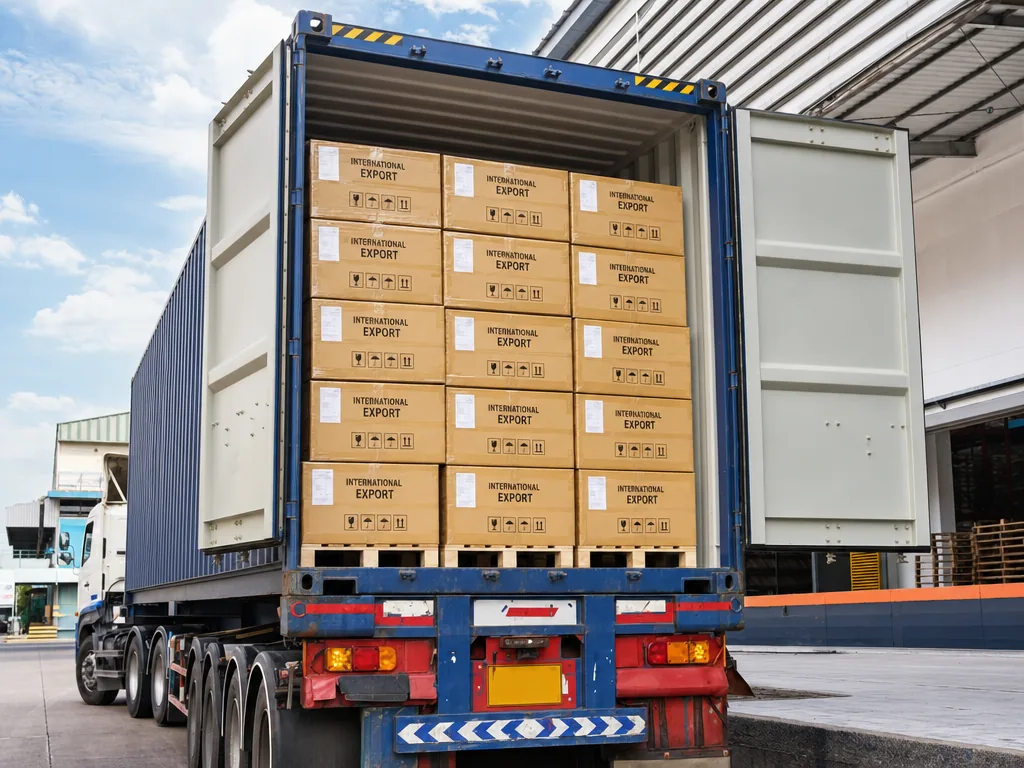
For brand owners, wholesalers and procurement teams entering the custom headwear category, fob vs cif vs ddp: incoterms compared for hat imports is one of the highest-leverage decisions you will make. Get it right and your unit economics, retail story and reorder cycle all improve. Get it wrong and you carry the cost for years.
The three Incoterms hat buyers actually use
For hat imports, the market really only talks about three Incoterms: FOB, CIF, and DDP. That is not a theory; it is how most purchase orders are written in practice because hats are low-volume, high-variety cargo and buyers want the risk split to be obvious. FOB means the supplier gets the cartons onto the vessel at the named port, then your freight forwarder takes over. CIF pushes the ocean freight and marine insurance back to the supplier, but only to the destination port. DDP goes all the way to your warehouse door with import duty, brokerage, and local delivery folded into the price. In 2020 terms, those are the incoterms for hat imports you will actually see on invoices, not the full set of 11.
FOB shipping caps is usually the cleanest setup if you already have a forwarder who can control booking, consolidation, and destination charges. It also makes pricing easier to compare because the factory quote stays tied to the ex-works-plus-port side of the deal, not some inflated landed estimate. By contrast, cif vs fob hats often looks cheaper on paper with CIF, but the supplier controls the freight and may book a slower vessel or pad the ocean leg without telling you the real line-item breakdown. CIF is fine for small buyers who do not have a logistics team, but it is a weak choice if you need transparent cost control or you are comparing multiple factories across Shenzhen, Ningbo, and Qingdao.
DDP hats from China are convenient when you want one landed number and no customs headaches, especially for first-time importers or promotional buyers shipping into the U.S. or EU. The problem is that DDP only works well if the supplier understands customs classification, duty rates, VAT/GST, and the paperwork behind incoterms 2020 hats; otherwise the quote can hide risk in the back end. For baseball caps, trucker caps, and knit beanies, the duty treatment can change with fiber content, crown construction, and HS code, so a sloppy DDP quote can turn into a surprise charge at destination. Our standard practice is to separate production cost, ocean freight, insurance, and duty assumptions line by line so the buyer can see exactly where the money goes.
FOB: how it actually works in practice
FOB is the cleanest structure for most experienced hat importers because the factory’s job ends at the port handoff, not at the destination. In practice, for fob shipping caps, we deliver the cartons to Yiwu, Ningbo, or Shenzhen, get the export booking lined up with the forwarder, and load the cargo onto the vessel under the named port of shipment. Once the goods pass the ship’s rail at origin, the buyer takes the risk and pays the ocean freight, marine insurance, destination customs clearance, import duty, VAT, and last-mile delivery. That’s why the fob vs cif vs ddp decision usually comes down to who controls freight and who wants exposure to downstream surprises.
The paperwork is straightforward, but it has to be exact. Under incoterms for hat imports, FOB normally means the seller issues a commercial invoice and packing list, and the carrier or forwarder issues the bill of lading once the container is on board. For hat shipments, I always tell buyers to confirm carton count, gross/net weight, CBM, and HS code before booking, because even a small mismatch can delay customs at destination. If you are comparing cif vs fob hats, remember CIF still puts the marine freight and insurance on the seller side, but the risk transfer point is basically the same at origin; CIF just changes who arranges the shipment and pays for it upfront.
FOB is not “safer” in every case, but it is usually more transparent for importers who already have a freight forwarder and a customs broker. Buyers get better control over vessel choice, transit time, and insurance terms, and they can compare true landed cost instead of relying on a factory’s bundled quote. In incoterms 2020 hats, the practical advantage is simple: the factory focuses on production quality and export docs, while the buyer manages logistics with people who do it every day. That separation matters when you are shipping 20,000 polyester snapbacks one month and 5,000 wool baseball caps the next, because freight rates, duty treatment, and port congestion can move faster than production schedules.
CIF: when this saves time and money
CIF is the middle ground in the fob vs cif vs ddp conversation when you want the factory to control the ocean leg but you are not ready to hand over customs and inland delivery. Under CIF, the seller books the vessel space, exports the carton load, and adds marine insurance to the destination port only. Title and risk transfer after the cargo reaches the named port, so the buyer still handles import clearance, VAT/GST, duties, and local trucking from the port onward. For incoterms for hat imports, that makes CIF useful for first-time importers who know how to buy hats but do not yet have a freight forwarder they trust in Ningbo, Shanghai, or Shenzhen. The cost premium is real. In normal seasons, CIF usually adds about 5% to 10% versus clean FOB shipping caps pricing, because the factory is bundling freight, documentation time, and a basic insurance policy. That can still save money if your alternative is a small forwarder charging weak-volume rates or adding surprise origin fees. But do not confuse CIF with a fully landed quote. With cif vs fob hats, the buyer still needs a customs broker at destination, and port charges can blow up if the vessel is rolled, the destination is congested, or your clearance paperwork is sloppy. For 2,000 to 5,000 pieces of 5-panel caps, that difference can be enough to erase the headline savings. CIF works best when you want one-stop ocean leg sourcing and simple budgeting, not when you need tight control over the freight route. Our standard practice on incoterms 2020 hats is to confirm the destination port, carton dimensions, and gross weight before quoting, because one extra centimeter in cap carton stack height can change the rate class. It is also worth remembering that CIF insurance is usually minimal coverage, not a full replacement for a commercial cargo policy. If you are buying ddp hats from china, CIF is not the same thing: DDP includes duty-paid delivery to your door, while CIF stops at the destination port and leaves the rest to you.
DDP: the buyer-friendly all-in arrangement
DDP is the easiest way to buy hats if you do not have an import team, a customs broker, or the appetite to chase paperwork across three time zones. Under DDP, the factory or its freight partner handles ocean freight, export clearance, destination customs, import duties, VAT/GST/HST, and final-mile delivery to your warehouse or 3PL. You get one landed-cost invoice instead of piecing together freight quotes, duty bills, and brokerage charges. That makes budgeting cleaner, especially for smaller runs of 3,000 to 10,000 caps where a few hundred dollars in surprise fees can wipe out margin fast. In practical terms, DDP hats from China are usually the most buyer-friendly option because the operational burden sits with the seller, not your receiving dock.
The tradeoff is price. Compared with FOB, DDP usually adds 25% to 45% to the factory price, and the spread moves with destination, tariff line, duty rate, and the current fuel surcharge environment. A shipment into the EU with 12% VAT and inland trucking can look very different from a U.S. delivery to a warehouse in Los Angeles or a Canadian shipment with HST/GST and brokerage. That is why fob vs cif vs ddp is not just a shipping term discussion; it is a landed-cost problem. In incoterms for hat imports, DDP is the least ambiguous for the buyer, but it also leaves less room to optimize duty recovery if you are VAT-registered or operating through an import entity that can reclaim taxes.
For buyers comparing cif vs fob hats and fob shipping caps, DDP makes sense when the real risk is not freight cost but import friction. If you lack an EORI, IRS/import registration, customs bond, or local broker relationship, the hidden cost of delays can be worse than paying more upfront. The one thing I would watch is that the seller must use a serious logistics partner, not a low-cost consolidator guessing at customs values; otherwise you get underdeclared invoices, held cargo, and demurrage. Under Incoterms 2020 hats, DDP should mean fully cleared and delivered, not “freight paid to port and good luck after that.”
Decision tree by order size
For under 200 pieces, the incoterm usually matters less than the carton size and the transport mode. If you are moving sample caps, team orders, or a small replenishment, air express through DHL or FedEx is usually the cleanest option because it cuts out the customs headache and gets a tracking number that actually updates. In that bracket, fob vs cif vs ddp is mostly a theoretical debate: CIF is awkward on tiny shipments, FOB shipping caps makes no practical sense if you are not consolidating freight, and DDP hats from China only helps if the supplier has a real broker and can quote landed cost without padding it. I have seen a 120-piece hat order ship by express for $180 to $320 all-in, which is often cheaper than trying to engineer a sea shipment with destination handling fees.
Between 200 and 1,000 pieces, the decision turns on whether you already have a freight forwarder and a customs broker who know incoterms for hat imports. If you do, FOB is usually the better move because you control the lane, choose the carrier, and avoid surprise destination charges that get buried in a CIF or DDP quote. If you do not have a forwarder, DDP can be the safer choice because the supplier bundles freight, duty handling, and delivery, even if the price is 8% to 15% higher than a clean FOB quote. For this size, fob vs cif vs ddp is less about ideology and more about who owns exceptions when cartons get held for inspection or the trucking appointment is missed. CIF vs FOB hats also matters here because CIF often looks cheaper on paper but leaves you exposed to destination fees in the U.S. or EU.
At 1,000 to 5,000 pieces, FOB with your own forwarder is usually the cost-efficient lane, especially if you are shipping a mix of 5-panel caps, truckers, and 6-panel dad hats on a recurring program. This is where incoterms 2020 hats should be treated as a logistics tool, not a sales feature: you want your forwarder booking space, consolidating cartons, and deciding whether a 20GP, 40HQ, or partial consolidation makes the most sense. For a typical 3,000-piece hat order, the freight delta between a supplier-managed DDP quote and your own FOB forwarder can easily run $0.40 to $1.20 per piece depending on destination and peak-season space. Above 5,000 pieces, FOB FCL through your own forwarder is the default answer almost every time. At that volume, the math is brutal: one full container, one clean customs entry, fewer handling touches, and better control over claims if carton count, packing specs, or AQL 2.5 inspection results do not line up with the booking. Our standard practice is to push customers toward FOB once the shipment is large enough to justify direct control of freight.
Hidden costs that surprise first-time importers
The biggest mistake first-time buyers make when comparing fob vs cif vs ddp is treating the unit price like the real price. It is not. On a 20-foot container, terminal handling can run roughly $80-150 at origin or destination depending on the port and carrier, and that is before you touch customs entry costs. If the shipment is not cleanly documented, you can also get hit with bond processing, especially on irregular routing or split shipments. For incoterms for hat imports, the invoice line that matters is landed cost, not the ex-factory quote. A cheap FOB number on fob shipping caps can still end up more expensive than a higher CIF quote once destination fees stack up.
In the U.S., the annoying charges are usually small individually but brutal in aggregate. Customs broker minimums often sit around $75-150 per entry, and for apparel or hats moving under multiple cartons or partials, that minimum can wipe out the margin you thought you saved. MPF is 0.3464% of customs value with a standard minimum and maximum, while HMF is 0.125% for ocean freight, so the math is not trivial on larger shipments. Warehousing is another silent killer: if your truck appointment slips, storage and demurrage start immediately. Under incoterms 2020 hats, the seller may be responsible only up to a certain point, but your buyer-side costs keep coming whether the freight is CIF vs FOB hats or a simple DDP quote.
DDP hats from china can look attractive because the seller promises a door-delivered number, but that number only works if their forwarder understands the full destination stack: customs entry, duties, brokerage, delivery appointment, and final-mile surcharges. Residential delivery, liftgate service, and appointment-based last-mile runs can add another $75-250 per shipment, sometimes more if the consignee is not a commercial warehouse with a loading dock. That is why I tell buyers to ask for a full landed-cost breakdown before comparing fob vs cif vs ddp. If the quote does not show terminal handling, brokerage minimums, MPF/HMF, and delivery type, it is not a real comparison; it is just a cheaper-looking invoice.
Frequently Asked Questions
Can I order a sample before bulk production?
Yes. We strongly recommend approving a pre-production sample before mass production. Samples are charged at 35 to 60 USD each plus express shipping, fully refundable against confirmed bulk orders over 500 pieces.
Which shipping methods do you support?
We support FOB, CIF and DDP shipping. Air express for samples and small orders, sea LCL for 100 to 500 pieces, sea FCL for 5,000+ pieces. Door-to-door DDP available for US, EU, UK, Canada and Australia.
What file format should I send for my logo?
Vector files (AI, EPS, PDF) are ideal. High-resolution PNG or JPG at 300 dpi on transparent background works as a fallback. Provide Pantone color references for accurate reproduction.
What logo decoration techniques do you offer?
3D puff embroidery, flat embroidery, woven patch, leather patch, PVC patch, screen printing, sublimation, applique and laser etching, all in-house with no subcontracting.
Do you support sustainability certifications?
Yes. We work with GOTS organic cotton, GRS-certified recycled polyester, OEKO-TEX Standard 100 fabrics, and are BSCI and Sedex audited. Certification documentation can be provided per order.
How does ordering custom new era hats work?
When evaluating custom new era hats, the key considerations are construction quality, decoration capability, MOQ flexibility and lead time. Of the 11 Incoterms 2020, only three appear in 95%+ of hat import contracts: FOB (Free On Board — supplier delivers to ship at named port), CIF (Cost Insurance Freight — supplier handles ocean leg plus insurance), and DDP (Delivered Duty Paid — supplier delivers door-to-door including all duties). Most common for buyers with their own freight forwarder. Factory delivers to…
How does ordering custom new era 59fifty fitted hats work?
When evaluating custom new era 59fifty fitted hats, the key considerations are construction quality, decoration capability, MOQ flexibility and lead time. Of the 11 Incoterms 2020, only three appear in 95%+ of hat import contracts: FOB (Free On Board — supplier delivers to ship at named port), CIF (Cost Insurance Freight — supplier handles ocean leg plus insurance), and DDP (Delivered Duty Paid — supplier delivers door-to-door including all duties). Most common for buyers with their own freight forwarder. Factory delivers to…
What should I know about new era blank hats wholesale?
When evaluating new era blank hats wholesale, the key considerations are construction quality, decoration capability, MOQ flexibility and lead time. Of the 11 Incoterms 2020, only three appear in 95%+ of hat import contracts: FOB (Free On Board — supplier delivers to ship at named port), CIF (Cost Insurance Freight — supplier handles ocean leg plus insurance), and DDP (Delivered Duty Paid — supplier delivers door-to-door including all duties). Most common for buyers with their own freight forwarder. Factory delivers to…
What should buyers know about organic cotton baseball hat?
When evaluating organic cotton baseball hat, the key considerations are construction quality, decoration capability, MOQ flexibility and lead time. Of the 11 Incoterms 2020, only three appear in 95%+ of hat import contracts: FOB (Free On Board — supplier delivers to ship at named port), CIF (Cost Insurance Freight — supplier handles ocean leg plus insurance), and DDP (Delivered Duty Paid — supplier delivers door-to-door including all duties). Most common for buyers with their own freight forwarder. Factory delivers to…
Need a low-MOQ test order?
We help emerging brands launch with as few as 100 pieces. Premium fabric, in-house embroidery, retail-ready packaging.
Start a small orderRelated guides
BSCI vs Sedex vs WRAP vs WCA: Compliance Audit Standards Compared
Read article →
Cotton Beanie: Properties, Costs and How to Spec It Right
Read article →
Custom Hats for Men: A 2026 B2B Sourcing Guide
Read article →If you are ready to take the next step on fob vs cif vs ddp: incoterms compared for hat imports, our team can put a tailored quotation and digital mock-up in your inbox within 24 hours. Send the inquiry form on our contact page or message us directly on WhatsApp.