
Cap Packaging Options: Retail-Ready, Hangtag, Polybag & Custom Boxes
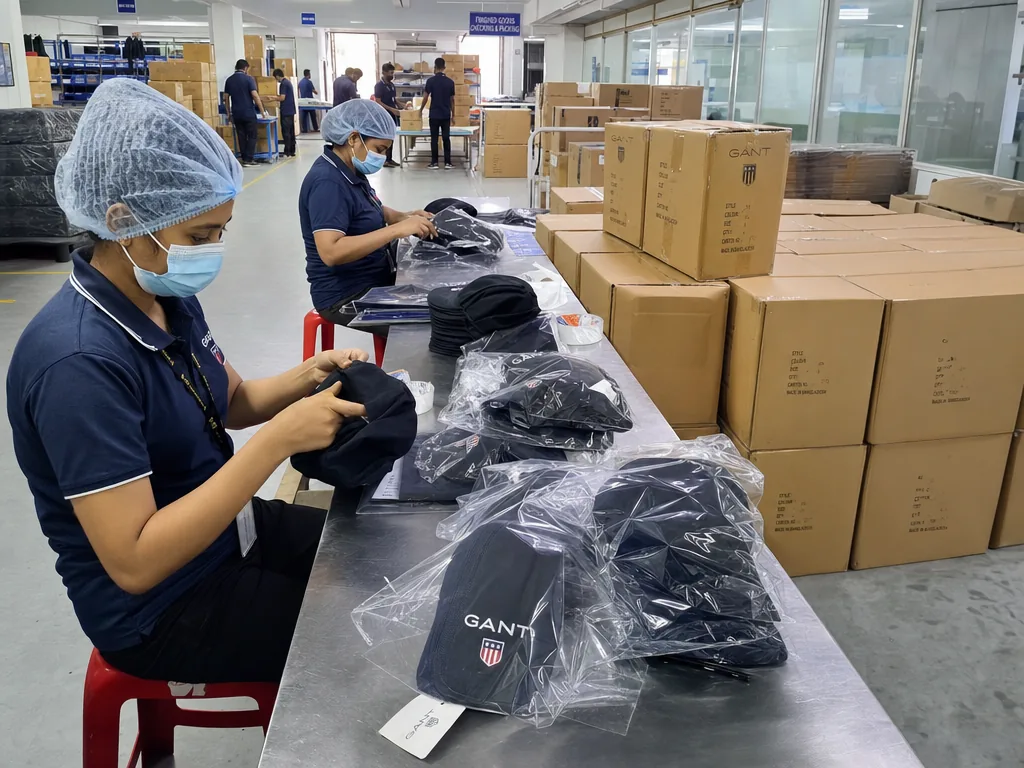
Every week, our sales team answers detailed questions about cap packaging options: retail-ready, hangtag, polybag & custom boxes. We wrote this guide so that wholesalers, streetwear brands, corporate buyers and promotional resellers can compare options with full information, and avoid the traps that show up only after production has started.
Why packaging is part of the product
Packaging is not “extra” on caps; it is part of the product the buyer actually receives. A flat 6-panel dad hat in a 0.20 mm PE polybag and a structured trucker in a kraft mailer send two completely different messages before the customer even touches the crown. For retail-ready hat packaging, the first job is visual control: keep panels clean, keep the brim from warping, and stop dust, oil, and carton rub from ruining the shelf presentation. On the factory floor, we see that a good pack-out spec reduces handling damage more than almost any coating or finish on the cap itself. That is why cap packaging choices need to be decided alongside silhouette, fabric, and trim, not after production is finished.
For e-commerce, the unboxing experience is also a protection problem. A custom hat hangtag can carry SKU, barcode, fiber content, and care instructions, but if it is clipped badly or punched too close to the edge, it tears in transit and leaves a sloppy first impression. Polybag printing is useful when you need size labels, color names, or compliance text visible without opening the bag, especially for marketplace FBA or wholesale distribution where speed matters. CrownsForge’s standard practice is to align the bag spec with the carton pack-out so the cap does not shift and crush during line-haul; that matters more than people think when cartons are stacked 6 to 8 high in a 40HQ container.
The box is where brand perception and logistics meet. Branded shipping box hats work best when the lid strength, insert, and void-fill are engineered together, otherwise the hat arrives bent and the “premium” presentation becomes a damage claim. Custom trucker hat printing on the cap itself can justify a higher packaging spec because the buyer is already paying for identity, not just utility, but the box still has to protect the mesh back, crown shape, and sticker or patch finish. In practice, the right cap packaging mix often saves money: fewer returns, fewer reworks, and less repacking labor. A $0.08 PE bag is cheap, but a bad pack-out can cost $1.50 to $4.00 per unit once returns and resale defects are counted.
Hangtags — material, print, attachment
For cap packaging, hangtags are the cheapest place to add brand signal without changing the carton or the bag. In practice, I see 350 gsm coated paper for cleaner color and sharper type, 300–400 gsm kraft board for a rougher lifestyle look, and 500–700 gsm recycled board when the buyer wants a heavier hand feel. If you are doing retail ready hat packaging, keep the tag size practical: 50 x 90 mm or 60 x 100 mm is common, and anything larger starts swinging badly on the shelf. For custom hat hangtag work, the stock finish matters as much as the artwork; matte lamination hides fingerprints, while uncoated kraft accepts less ink coverage but looks more honest and less “promo.”
Offset printing is the right choice once you have a stable design and want Pantone consistency. On coated board, a well-registered offset run usually holds Delta-E within about 2.0 to 3.0 if the file and press are handled properly, which is acceptable for most brand programs. Digital print is faster and cheaper for small quantities, but it will not match offset on solid color density or fine typography, especially on dark kraft. If you are pairing cap packaging with custom trucker hat printing or a broader retail program, I would not mix two different print methods across the same SKU unless the buyer understands the color drift risk. Gold foil stamping, blind embossing, and debossing are the usual upgrades; foil looks sharp on black or dark green stock, while embossing is better when you want texture without adding glare.
Attachment is where a good hangtag can become a bad one. The standard is a 3 mm cotton loop, black or white elastic loop, or a microplastic fastener if the buyer wants low labor cost and quick line attachment. I prefer cotton loop for premium retail because it does not cut into the fabric and it survives polybag handling better than brittle PVC ties. If the order also includes branded shipping box hats, the hangtag layout should leave room for SKU, size, barcode, and country-of-origin, otherwise warehouse teams end up slapping on a second label and the front-of-house presentation is ruined. On cap packaging programs, the cleanest setup is one hangtag, one size sticker, and one fold method; anything more creates labor waste and inconsistent presentation across cartons.
Polybag options
Polybag choice sounds trivial until you start shipping 20,000 caps and the carton count, scuff rate, and return handling tell you otherwise. For cap packaging, the standard workhorse is 30–40 micron LDPE: cheap, clear, and stable enough for sea freight if the bag size is cut correctly. Frosted bags cost more, usually by about $0.02 to $0.05 per piece depending on thickness and quantity, but they hide fingerprints and make the product look cleaner under retail lights. If you are doing retail ready hat packaging, a zipper bag with a euro hole or hang slot is the practical middle ground because store staff can scan, hang, and reclose it without fighting flimsy seals.
Polybag printing is usually done in one or two spot colors on the bag itself, and the economics only make sense at decent volume. Expect a printed LDPE bag to add roughly $0.03 to $0.08 per unit, with higher pricing if you want a dense logo, warning text, or multilingual compliance copy. Compostable starch bags are a different animal: they look good on paper for sustainability claims, but they are softer, more sensitive to heat, and can become brittle in humid warehouses if the resin blend is poor. I have seen buyers choose them for a launch, then switch back after realizing the shelf life and sealing consistency are not as forgiving as regular poly.
For e-commerce and marketplace sellers, retail-ready zipper bags also protect embroidered caps from dust and minor crown deformation better than a loose folded carton insert. If the cap has structured front panels, a bag with enough width to avoid crushing the buckram matters more than fancy print. Zippers add cost, usually another $0.04 to $0.10 per unit, but they reduce customer complaints when the cap arrives flattened. When the order also needs a custom hat hangtag or branded shipping box hats, we usually keep the inner bag plain or lightly printed so the outer packaging carries the branding burden. That keeps the cap packaging stack simpler, cheaper, and less likely to be over-engineered for a product that still has to survive carton compression and transit vibration.
Sticker, sticker pack and dust-bag options
Brim stickers still sell because they do one job well: they make a cap look retail-ready the moment it comes out of the carton. For cap packaging, the useful version is not a glossy afterthought; it is a die-cut vinyl or paper label sized to sit cleanly on the crown or brim without lifting at the corners. Standard brim stickers are usually 40–50 mm round or 45 x 60 mm oval, printed in CMYK or Pantone spot color with a removable adhesive so they do not leave residue on cotton twill, acrylic wool, or brushed poly. If the buyer wants retail ready hat packaging, I usually push for matte lamination and a low-tack adhesive because cheap high-tack stickers can pull fibers on brushed fabrics and create returns.
Sticker packs make more sense when the cap is going into a promo program, influencer box, or skate/streetwear drop where presentation matters as much as the hat itself. A pack can include a brim sticker, size label, and a small custom hat hangtag insert, all packed flat to reduce handling damage. For custom trucker hat printing jobs, we often match the sticker art to the embroidery or screen print Pantone reference so the box opening feels cohesive; otherwise the hat looks random even if the product is good. Cost-wise, a standard brim sticker is often around USD 0.03 to 0.10 each in 5,000-piece runs, while a small sticker pack with three pieces can land closer to USD 0.12 to 0.25 depending on paper stock and finish.
Woven dust bags are the better answer for premium snapbacks when the buyer wants the cap to survive storage, not just look nice in a polybag. A 120–150 gsm cotton or cotton-poly dust bag with a drawstring gives real abrasion protection for embroidered panels, 3D puff logos, and leather straps, and it reads much better than a plain poly sleeve if the cap is meant for boutique retail or gifting. I prefer a simple one-color woven label sewn into the seam rather than big printed branding, because heavy ink on thin fabric feels cheap and can scuff during transit. For branded shipping box hats, the dust bag also helps control dust and deformation inside the carton, especially when shipping mixed sizes and styles.
Shipping cartons
Shipping cartons are the cheapest place to lose money if you get them wrong. For export, the common counts are 25, 50, or 100 caps per master carton, and the right choice depends on cap structure and how much crush you can tolerate. A structured six-panel dad cap with foam front needs more void control than a soft unstructured dad cap, and a 100-pack only makes sense if the crown is low and the brim shape is stable. In our factory practice, we usually spec double-wall corrugated for longer sea freight lanes, with carton strength matched to gross weight, not just cap count. For cap packaging, the carton is not decoration; it is the last barrier against deformation, dust, and moisture pickup during consolidation.
Carton printing should stay functional: style number, color, size ratio, quantity, carton no., PO number, and country of origin. If the buyer wants retail ready hat packaging, that information still belongs on the outer carton, even when each cap has a custom hat hangtag or polybag printing inside. FSC stock is increasingly requested by European and U.S. buyers, and it is worth specifying the exact paper grade, not just writing “eco carton” on the PO. FSC-certified kraft liner with recycled flute is common, but if you need better stacking strength, you should check edge crush test numbers and burst strength with the carton supplier before production starts.
For branded shipping box hats programs, I always recommend a sample carton drop test before mass shipment, especially when the order includes custom trucker hat printing or heavier accessories packed with the caps. A plain 5-layer export carton may be enough for local trucking, but for LCL sea freight or mixed cartons in a warehouse, the corner crush resistance matters more than the printed logo. If the buyer wants visible branding, keep the print one-color and water-based; heavy ink coverage can weaken recycled board and add cost without improving function. The practical rule is simple: use the carton to protect the goods first, and treat branding as secondary to stacking strength, moisture resistance, and clean inbound warehouse handling.
Sustainable packaging upgrades
If you want sustainable cap packaging that still survives a rough freight lane, start with compostable polybags only where the product is going direct-to-consumer or into controlled retail distribution. The common mistake is using a fully biodegradable film that looks good on paper but tears at the seam after a humid sea shipment. For hats, I prefer a 30–40 micron PLA/PBAT blend with a clear ASTM D6400 or EN 13432 declaration, but only after checking heat resistance and sealing behavior on the actual packing line. For bulk cartonized exports, recycled kraft outer wraps and inserts often make more sense than chasing a “green” bag that adds cost without reducing damage. In practice, this is the difference between retail ready hat packaging that holds shape and packaging that simply looks eco-friendly in a photo.
Recycled kraft is the most useful upgrade because it is stable, cheap, and easy to print without making the whole pack look low-end. A 350–450 gsm kraft hang card or insert gives enough stiffness for a custom hat hangtag system, and it works well with soy-ink or water-based flexo printing. Soy ink is not magic, but it does cut petroleum content and gives cleaner coverage on uncoated paper, especially for simple logos, Pantone spot colors, and size labeling. If you are doing cap packaging for a streetwear line, I would keep the print layout sparse and use one strong accent color rather than trying to flood the whole sheet; that keeps the recycled fiber look intact and avoids the muddy finish you get when ink load is too heavy. This is also where recycled board performs better than glossy art paper, because buyers can feel the difference immediately.
For branded shipping box hats, the sustainable route is usually a 1.5–2.0 mm E-flute or micro-corrugated mailer made from 90%+ recycled liner, printed with soy ink and water-based varnish only if scuff resistance is needed. That box is heavier than a polybag, so I only recommend it when the shipment value justifies the freight penalty or when the unboxing experience is part of the SKU economics. The same logic applies to custom trucker hat printing on labels and inserts: keep materials mono-paper where possible so the package can go straight into the paper recycling stream instead of becoming a mixed-material waste problem. On the factory floor, the best sustainable packaging upgrade is not a trend piece; it is the option that reduces rejects, prints cleanly, and does not force the packing team to slow down by 20% just to handle a fragile material.
Frequently Asked Questions
What file format should I send for my logo?
Vector files (AI, EPS, PDF) are ideal. High-resolution PNG or JPG at 300 dpi on transparent background works as a fallback. Provide Pantone color references for accurate reproduction.
Can I order a sample before bulk production?
Yes. We strongly recommend approving a pre-production sample before mass production. Samples are charged at 35 to 60 USD each plus express shipping, fully refundable against confirmed bulk orders over 500 pieces.
Which shipping methods do you support?
We support FOB, CIF and DDP shipping. Air express for samples and small orders, sea LCL for 100 to 500 pieces, sea FCL for 5,000+ pieces. Door-to-door DDP available for US, EU, UK, Canada and Australia.
What logo decoration techniques do you offer?
3D puff embroidery, flat embroidery, woven patch, leather patch, PVC patch, screen printing, sublimation, applique and laser etching, all in-house with no subcontracting.
What is the minimum order quantity (MOQ) for custom hats?
Our standard MOQ is 100 pieces per design and color, with sampling available from 1 piece. For complex multi-color logos or premium fabric upgrades, the MOQ can be lowered with a small per-piece surcharge.
How does ordering custom made trucker hat work?
When evaluating custom made trucker hat, the key considerations are construction quality, decoration capability, MOQ flexibility and lead time. First retail impression, unboxing experience, e-commerce protection. Coated paper, kraft, recycled board; offset vs digital print; gold-foil and embossing.
How does ordering baseball cap embroidered custom work?
When evaluating baseball cap embroidered custom, the key considerations are construction quality, decoration capability, MOQ flexibility and lead time. First retail impression, unboxing experience, e-commerce protection. Coated paper, kraft, recycled board; offset vs digital print; gold-foil and embossing.
How does ordering custom embroidered trucker hats work?
When evaluating custom embroidered trucker hats, the key considerations are construction quality, decoration capability, MOQ flexibility and lead time. First retail impression, unboxing experience, e-commerce protection. Coated paper, kraft, recycled board; offset vs digital print; gold-foil and embossing.
How does ordering custom made hats for men work?
When evaluating custom made hats for men, the key considerations are construction quality, decoration capability, MOQ flexibility and lead time. First retail impression, unboxing experience, e-commerce protection. Coated paper, kraft, recycled board; offset vs digital print; gold-foil and embossing.
Need a low-MOQ test order?
We help emerging brands launch with as few as 100 pieces. Premium fabric, in-house embroidery, retail-ready packaging.
Start a small orderRelated guides
Merino Wool Beanie: Properties, Costs and How to Spec It Right
Read article →
Embroidery Thread Libraries: Madeira, Isacord and What Your Cap Factory Uses
Read article →
First Custom Hat Order: 10 Mistakes That Cost First-Time Buyers Money
Read article →If you are ready to take the next step on cap packaging options: retail-ready, hangtag, polybag & custom boxes, our team can put a tailored quotation and digital mock-up in your inbox within 24 hours. Send the inquiry form on our contact page or message us directly on WhatsApp.