Assess sun visor wholesale supplier product development capability
By Vincent Xi, Editorial Author
Assess a supplier's product development capability by asking for a clear response to your wearable sun visor brief: a proposed design, component specification, sample plan, and approval process. Compare how each candidate addresses the same requirements, identifies unresolved choices, and defines the work needed before bulk supply.
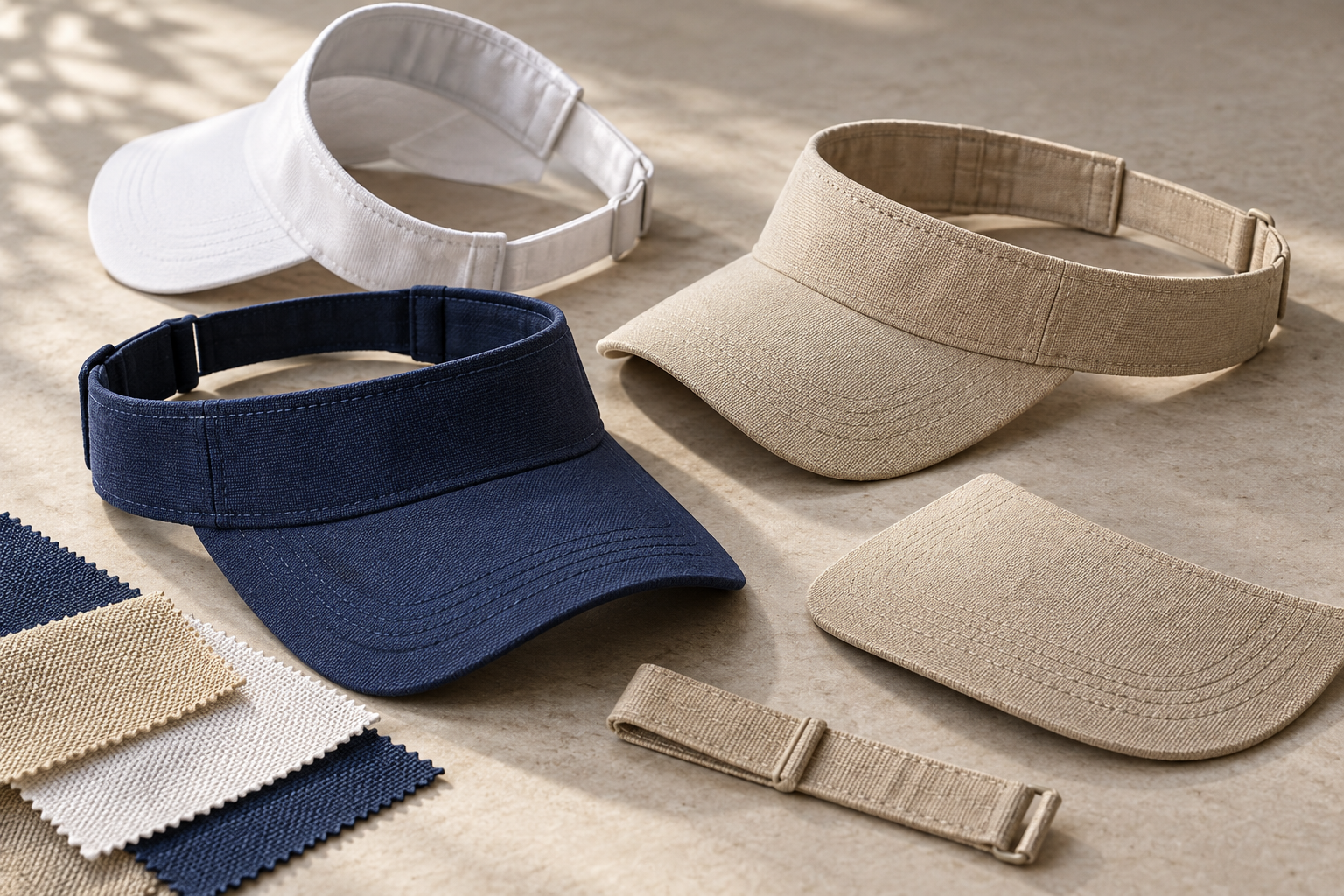
For United Arab Emirates buyers arranging visor cap wholesale supply, keep the evaluation specific to the person-worn textile product. Describe its peak, headband or partial crown, fastening, fit, and decoration. Ask each supplier to explain the proposed approach to those features and identify decisions it needs from the buyer.
Agree the next deliverable, its review criteria, responsibilities, and charges before authorizing work. Keep approval of paid development separate from authorization for bulk production.
Define the wearable visor cap development brief
Start with the intended wearer, activity, appearance, and purchasing purpose. Identify the preferred peak outline, headband construction, adjustment arrangement, and decoration locations. Attach drawings or physical references you are authorized to share, and explain which features the supplier should interpret from each reference.
Separate fixed requirements from choices open to proposals. If the peak silhouette must remain unchanged but the fastening is negotiable, record that distinction. Ask the supplier to flag conflicts between the requested appearance, materials, and construction before preparing a sample proposal.
Define the questions that development must resolve. For fit, identify measurement locations, intended adjustment needs, and the buyer responsible for reviewing the sample. For appearance, identify the surfaces, edges, seams, and decoration positions to review. Mark undecided dimensions and permitted variation as items for agreement rather than allowing unstated assumptions into the brief.
Include requested order quantities and intended variants as buyer inputs. Ask whether the proposed development scope covers every textile, color, fastening, and decoration combination. Require the supplier to identify variants needing separate review.
Give the brief a revision identifier and name its owner. Resolve conflicting sketches, artwork, and written instructions before authorizing the affected work. Ask suppliers to list missing inputs against that revision.
Compare product development capability for United Arab Emirates buyers
Issue the same brief to each candidate and request a response against each requirement. Ask for proposed deliverables, buyer inputs, responsible contacts, exclusions, and dependencies. Identify which tasks the supplier proposes to perform directly and which would involve another party.
Use the following table to record purchasing decisions. Keep alternatives separate from the response to the original brief, and assign an owner to every unresolved item. Treat an offered development approach as a proposal to assess; request the agreed deliverable before approving its completion.
| Development decision | Ask the supplier to provide | Buyer action before proceeding |
|---|---|---|
| Interpret the visor design | A proposed drawing showing the peak, headband or partial crown, fastening, and unclear instructions. | Approve the interpretation or return specific corrections before sample preparation. |
| Select the development route | The starting design, retained features, proposed changes, and exclusions for each offered route. | Choose the route against fixed requirements and record any accepted compromises. |
| Identify materials and components | Component descriptions, proposed alternatives, and selections awaiting agreement. | Approve identifiable selections and keep unresolved components open. |
| Define sample coverage | The features, variants, materials, and decoration represented by each proposed sample. | Decide whether the sample can answer the intended review questions. |
| Assign responsibilities | Tasks, buyer inputs, coordinating contacts, and proposed outside-party involvement. | Resolve unassigned work and name the contact authorized to consolidate comments. |
| Agree revision terms | Included corrections, additional-change charges, and the proposed response to a changed brief. | Agree the revision scope and authorization process before commissioning work. |
| Establish access to deliverables | Proposed design files, patterns or tooling where applicable, and access or reuse terms. | Agree ownership, custody, delivery format, and permitted use for relevant items. |
| Release the bulk specification | Linked drawings, component details, artwork, sample identifiers, and remaining exceptions. | Resolve critical exceptions and authorize only the agreed revision and scope. |
For the United Arab Emirates destination, ask your purchasing and receiving teams which label, packaging, or documentation details the development brief should accommodate. Assign responsibility for confirming unresolved destination requirements before approving affected artwork or packaging. Request the supplier's response to those instructions without assuming it covers requirements the buyer has not yet defined.
Agree the development route and deliverables
Ask the supplier to distinguish adaptation of a proposed existing visor design from development against your own design brief. For each offered route, request the starting point, permitted changes, required buyer inputs, sample stages, and separately charged work.
For adaptation, ask to review the proposed base design. Identify construction details that would remain unchanged and compare them with your fixed requirements. If a requested peak shape, headband detail, or fastening falls outside the offer, decide whether to accept that limitation, revise the brief, or request another proposal.
For development against your design, agree the drawing and specification fields needed before sampling. Include the peak outline, headband construction, fastening placement, component choices, and decoration references where applicable. Identify which details the supplier may propose and which require buyer instructions.
Where dedicated patterns, templates, or tooling are proposed, agree the deliverable, charge, ownership, custody, access, modification permission, and reuse arrangement. Specify the design files to be supplied and their delivery format. Keep these requests conditional on the actual proposal.
Define completion of the paid development scope. Agree included revisions, charges for additional changes, and deliverables if the project stops before a bulk order. If the supplier proposes crediting development charges against a later purchase, ask it to state the conditions in the quotation.
Give each visor sample a clear approval purpose
Assign a decision purpose to every proposed sample. Ask whether it will address shape, construction, fit, materials, decoration, or the combined specification. Require identification of provisional features before commissioning the work.
For example, if a sample is intended to review peak shape while using a provisional inner band, limit approval to the attributes actually reviewed. Keep the final inner-band decision open and agree how it will be resolved. Ask whether a proposed departure from the brief still permits the intended review before accepting it into the sample scope.
Record the sample revision, included components, decoration status, charges, proposed dispatch date, and review responsibilities. Distinguish dates requested by the buyer from dates accepted by the supplier. Agree how a changed brief or further sample request will affect the proposed sequence.
Use a review record with fields for sample identifier, feature reviewed, observation, requested change, decision owner, and next action. Mark each feature as approved, requiring revision, or awaiting information. Keep acknowledgment of sample receipt separate from permission to continue.
Name the contacts responsible for artwork, fit and construction, commercial changes, and final release. Identify who may resolve conflicting comments and issue a consolidated buyer response.
Before closing the sample stage, ask the supplier to identify differences between the reviewed sample and the proposed bulk materials or construction. Decide whether each difference needs another sample or another form of review. Agree how the final approved sample will be identified and retained for order comparison.
Review materials, fit, and decoration as a complete design
Request a component list covering the outer textile, inner band, peak covering and insert, fastening, binding, stitching, decoration, and labels where applicable. Ask for descriptions specific enough to identify the proposed selections. Require clarification of ambiguous terms and record alternatives separately from approved components.
Define the appearance and handling attributes to review, such as textile surface, inner-band feel, seam appearance, edge finishing, and peak shape. If a loose swatch leaves a construction question unanswered, request a sample showing the relevant feature on the visor. Agree measurement methods and permitted variation where needed for acceptance.
For fit, identify the wearer group and sample configuration to be reviewed. Record the measurement points and the process for assessing adjustment and wear. Keep the approval specific to that configuration, and agree when a component change should reopen the fit decision.
For decoration, provide the current artwork and placement references. Ask the supplier to submit proposed artwork changes before implementation. Review the decoration in its intended position on the proposed visor construction, then record the accepted artwork revision, appearance, and placement in the specification.
If the proposed product description includes protection, moisture-handling, durability, or other performance wording, request documentation relevant to the exact claim and visor configuration. Ask what it covers and what remains unresolved. If an evaluation is proposed, agree its scope and acceptance criteria before authorization. Withhold approval of unsupported wording, and keep appearance or fit approval separate from any performance claim.
Connect design changes to the wholesale quotation
Request a quotation tied to the product revision and buyer-specified quantities. Ask for separate identification of design work, samples, proposed tooling, bulk visor supply, decoration, labels, packaging, and delivery charges where applicable. Clarify exclusions, buyer-supplied items, and payment stages associated with development.
Compare the same scope across candidates. If an offer excludes a decoration sample or leaves a component provisional, request a comparable response or record the difference as an open purchasing decision. Ask for clarification before treating an unresolved task as included.
For every proposed design change, request its effect on sample charges, order conditions, variant combinations, and the schedule. Link an accepted commercial revision to the corresponding design revision. Agree whether the change requires additional approval before work continues.
For delivery to the United Arab Emirates, ask the supplier to distinguish the offered scope for samples from the scope for the bulk order. Ask the party arranging transport to identify remaining cost inputs. Keep any landed-cost estimate provisional while its assumptions or exclusions remain unresolved.
Request proposed milestones for buyer inputs, sample review, corrections, final approval, and production release. Update the agreed sequence when a development decision changes it.
Release an agreed visor specification for bulk supply
Prepare a release package containing the approved drawing, component list, measurement requirements, artwork, decoration placement, labels, packaging instructions, and sample reference where applicable. Identify the current revision of each item and resolve conflicting versions before requesting supplier acknowledgment.
Ask the supplier to confirm the package it proposes to use for the bulk order. Require disclosure of unresolved components, substitutions, and departures before authorization. Decide whether each proposed change needs an updated drawing, material review, new sample, revised quotation, or revised schedule.
Make the approval decision explicit. Authorize the next stage when its deliverables and review conditions are agreed. Request a revision when a defined correction can resolve the gap. Hold the affected authorization when a critical question remains unanswered, and state the information needed to resume review.
Tie receipt acceptance to the released visor specification. Agree the sample reference, review responsibilities, checks, discrepancy reporting route, and proposed response to goods the buyer does not accept. Resolve exceptions to those arrangements before order approval.
For a repeat order, request confirmation that the approved components, construction, decoration, and packaging are still offered as specified. Ask for proposed changes before accepting the order confirmation. Decide which changes require renewed development approval and identify the revision that will apply.
RFQ Checklist
- Specify wearable textile visor caps, the intended wearer and activity, peak shape, headband or partial-crown construction, and adjustment needs.
- Identify fixed design features and negotiable choices, and attach the current brief, drawings, artwork, and authorized reference materials.
- Specify the United Arab Emirates destination, requested quantities, intended variants, receiving contact, and requested sample and order delivery windows.
- Require a development response listing tasks, deliverables, buyer inputs, contacts, exclusions, and proposed outside-party involvement.
- Ask the supplier to distinguish adaptation from development against your design, including retained features and excluded changes.
- Require a component proposal identifying materials, alternatives, and selections awaiting buyer agreement.
- Specify measurement locations, fit review responsibilities, appearance criteria, and the process for agreeing dimensions and permitted variation.
- Ask the supplier to define each sample's purpose, revision, represented variants, provisional features, charges, and proposed dispatch date.
- Require advance disclosure of departures from the brief and buyer approval before incorporating alternatives into the released specification.
- Specify the artwork version, decoration placement, review criteria, and contact authorized to approve artwork changes.
- Agree included revisions, additional-change charges, completion deliverables, and the treatment of development work if the project stops.
- Ask about proposed dedicated patterns, tooling, and design files; agree charges, ownership, custody, access, and reuse where applicable.
- Request documentation for proposed performance wording and withhold approval of claims whose basis remains unresolved.
- Require a quotation linked to the design revision, quantities, development scope, order conditions, delivery scope, and exclusions.
- Specify label and packaging instructions identified for the order, and assign responsibility for confirming unresolved destination details.
- Require a final release package, supplier acknowledgment, named production-release authority, agreed receipt acceptance process, and approval controls for repeat-order changes.
For a CrownsForge enquiry, send the checklist with the current visor brief. Ask for each item to be marked included, excluded, proposed for agreement, or awaiting buyer input. Use the response to agree the next development deliverable, its acceptance criteria, and the person authorized to approve it.
Discuss Your Requirements
Review our manufacturing capabilities, then share your specifications for a supplier-fit review.