Bucket Hat Wholesale Supplier Sustainability Sourcing Criteria for Europe
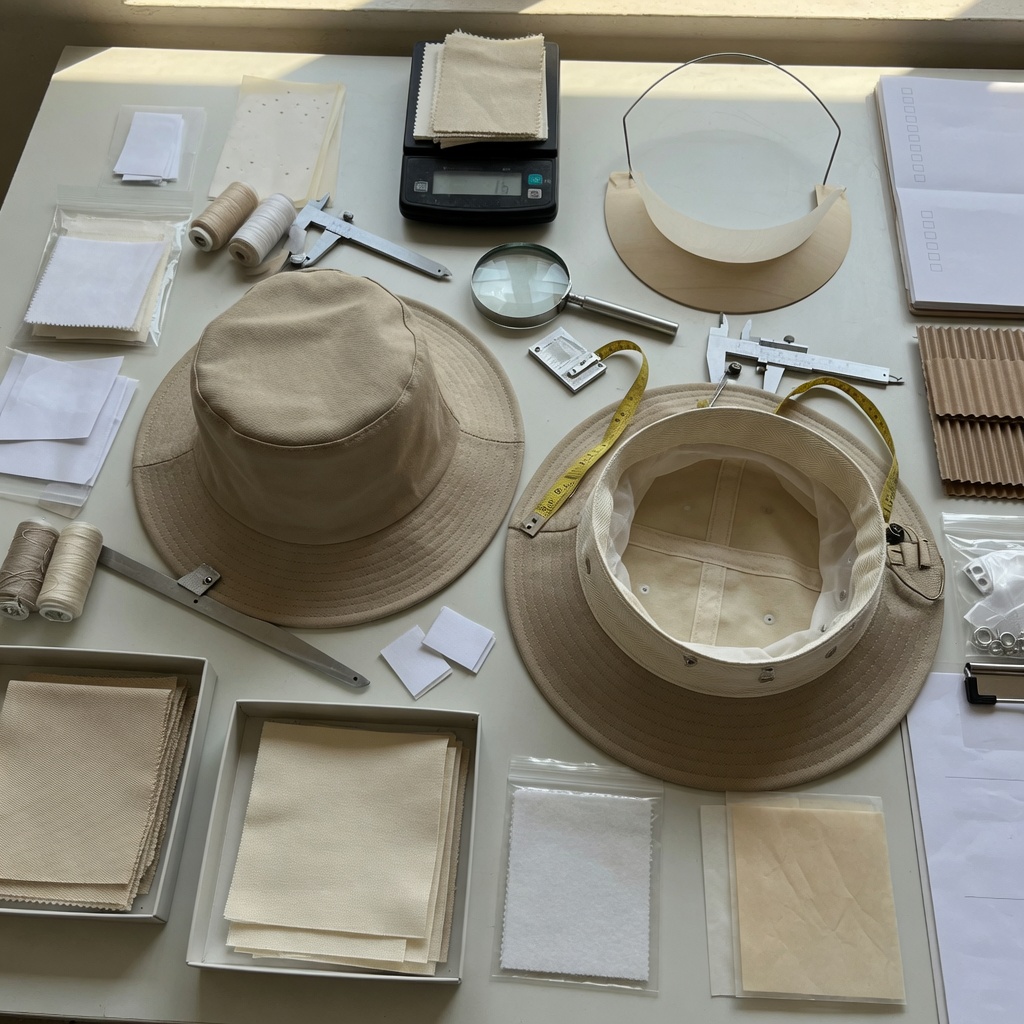
By Vincent Xi, Editorial Author
Procurement answer: For a Europe-bound wholesale order, bucket hat wholesale supplier sustainability sourcing criteria should work as pass-or-hold RFQ gates. Require each bidder to connect every environmental or labour claim to the quoted product code and revision, covered component, percentage denominator, production entity, site and process, current evidence file, validity, lot link and intended destination. If those links are absent or inconsistent, mark the claim unverified. Where the evidence is mandatory, hold supplier award, claim use or shipment until the discrepancy is resolved.
This is a buyer-defined approval method, not a claim that a cited standard or jurisdiction prescribes the workflow. Keep separate destination rows for a named EU country, a non-EU EEA destination, Great Britain, Northern Ireland and any other European country. The cited EU and UK sources apply only within their current scope; they should not be combined into a Europe-wide compliance checklist.
Sustainability sourcing criteria for bucket hat wholesale supply in Europe
Apply these gates before comparing headline unit prices:
| RFQ gate | Evidence required from the bidder | Hold condition |
|---|---|---|
| Controlled quote and product identity | Supplier legal entity, quotation line, product code, tech-pack revision, construction, colour, dimensions and tolerances, decoration, packaging and approved-sample reference | The quote, evidence, sample or production plan refers to a different entity, revision or construction |
| Sustainability claim boundary | Exact claim wording, covered component, material, percentage, denominator, exclusions, process, site and intended claim location | A broad claim such as recycled, organic, ethical or lower impact lacks a defined boundary |
| Evidence scope and status | Document type, issuer or data owner, holder, covered entity, site, process, material or product scope, issue status, expiry status and verification route | A logo, policy, expired file or unrelated document is presented as evidence for the finished bucket hat |
| Manufacturing route | Material supplier, mill, wet-processing site, sewing factory, decoration or finishing subcontractor and packing site where used | A relevant stage or subcontractor is missing or differs from the quoted route |
| European destination file | Named destination, proposed label file, material and chemical file, claim-substantiation file, accountable business and document owner | A generic Europe file, or a file for another territory, is reused without destination review |
| Sample, lot and change control | Approved sample, measurement record, buyer-selected test and inspection plan, incoming-material records, lot links and written substitution controls | Evidence cannot be connected to the sampled and shipped revision, or the supplier retains an uncontrolled substitution right |
These are procurement controls unless current destination law, an applicable scheme document or the executed contract expressly makes a particular control mandatory.
Build a comparable bucket hat supplier RFQ before price review
Send the same response schedule to every bidder so commercial terms and sustainability claims can be compared on matching boundaries.
| RFQ field | Required supplier response | Decision use |
|---|---|---|
| Commercial response | Legal name, quotation date and validity, currency, delivery basis, unit price, order minimum, material minimum, sample lead time, production lead time, testing cost, evidence cost, packaging route, payment terms and exclusions | Prevents a low headline price from hiding different scope, evidence or delivery assumptions |
| Controlled product record | Product code, quotation line, tech-pack revision, size method, construction, colour, decoration, dimensions, tolerances, packaging and sample identifier | Establishes which bucket hat the quote and evidence cover |
| Component schedule | Shell, lining, sweatband, brim insert or interfacing, seam tape, sewing and decoration threads, eyelets, labels, print or embroidery inputs, product packaging and shipping packaging where present | Exposes components omitted from a broad finished-product claim |
| Claim schedule | Buyer-assigned claim identifier, exact wording, intended use, covered component, percentage, denominator and exclusions | Keeps product-page, label, packaging, tender and internal-report wording within the evidence boundary |
| Evidence register | Document name, issuer or data owner, holder, entity, site, material or product scope, process scope, issue and expiry information and verification route | Shows whether the evidence matches the bidder, route and product revision |
| Facility environmental data | Facility and process, reporting period, source records, energy in kilowatt-hours, water in cubic metres, waste in kilograms, output denominator, allocation method, estimates, assurance status and limitations when the associated claim is made | Prevents unrelated facilities, periods or denominators from being compared as product evidence |
| Labour claim data | Facility, worker category, pay period, base pay, overtime, benefits, deductions, hours, relevant legal minimum, benchmark source where used, audit scope, findings and corrective-action status when the associated claim is made | Prevents evidence from another site, date or worker population from supporting the proposed wording |
| Exceptions and substitutions | Excluded components, estimates, pending files, subcontractors, allocation methods and proposed material, process, site, decoration or packaging changes | Makes unresolved evidence and route changes visible before award |
Do not compare percentages until the component boundary, denominator and exclusions match. As a procurement control, do not accept a feedstock marketing phrase as the final fibre declaration. Require proposed destination-appropriate fibre wording and have the accountable compliance owner verify it for the named European destination.
Check sustainability evidence without overstating a standard
The supplied CNCAPS sustainable-hats page, ACCAPS supplier-selection article and Verified Market Reports bucket-hat excerpt provide manufacturer, supplier-selection and commercial context for topics that may arise in an RFQ. They do not validate a bidder, factory, certificate, audit, test result or finished bucket hat.
| Proposed claim or evidence | Verification starting point | Request in the RFQ | Hold when |
|---|---|---|---|
| Organic textile wording where GOTS is cited | GOTS standard information | Exact scheme and current standard cited, certificate holder, covered entity, site, process, material or product scope, validity, issuer-verification route and any chain or shipment evidence applicable under current scheme documents | Fabric evidence is extended to the complete bucket hat, decoration or assembly route without matching scope |
| Material-content wording where a Textile Exchange standard is cited | Textile Exchange standards overview | Exact standard, holder, covered site and process, claimed material, scope, validity, denominator, chain records and any applicable transaction evidence | A component percentage is applied to complete-hat mass or the evidence cannot be linked to the quoted route |
| OEKO-TEX-related wording | OEKO-TEX standards information | Exact scheme, certificate or report identifier, holder, covered article or component, material, colour, finish, scope, validity and issuer-verification route | The bidder provides an unspecified OEKO-TEX reference or extends it to environmental or labour claims outside the named scheme's documented scope |
| Energy, water, waste or climate wording | Bidder facility records, calculations and any assurance report identified in the response | Site, process, reporting period, source records, units, output denominator, allocation, estimates, assurance, offsets where used and limitations | Group-wide or unrelated-site data is presented as product-specific evidence without a documented allocation |
| Labour or wage wording | Bidder site records and audit evidence identified in the response | Legal entity, address, process, worker population, reporting period, pay and hours method, benchmark source where used, audit scope, findings, remediation and closure evidence | The evidence covers another facility, omits a relevant subcontractor or does not support the exact wording |
A named standard requires only what its current standard and applicable scheme documents state. Component schedules, broader site disclosure, buyer-selected testing, shipment holds and purchase-order remedies remain buyer controls unless those documents expressly require them. A supplier's internal policy or preferred production method is the supplier's own practice, not a scheme requirement. Do not state or imply certification without a current document whose holder, scope, site, process and validity match the claim.
Europe destination approval: separate EU, EEA, Great Britain and Northern Ireland files
Sustainability evidence accompanies the destination file; it does not replace destination review. Keep the bucket hat, claim and supplier decision central in every row.
| Intended European destination | Supplied source context | Bucket hat RFQ action | Approval hold |
|---|---|---|---|
| Named EU country | Start with the EU textile-labelling guidance and ECHA REACH overview within their stated scope | Name the destination country, proposed fibre and label file, actual materials, colour, finish and decoration, chemical documentation, claim wording, accountable business and document owner; verify current country-specific implementation and language needs | The supplier provides only a voluntary scheme file or fails to identify the destination and accountable party |
| EEA destination outside the EU | The supplied citation set does not establish a complete destination-specific file for this row | Create a separate country record and verify current local authority guidance, labelling, chemicals, language, packaging and accountable-business responsibilities | Approval relies solely on an EU operational file without a destination-specific check |
| Great Britain | Start with the UK textile-labelling guidance and HSE UK REACH guidance, confirming the current territorial scope of each source | Request the Great Britain label, material and chemical file, responsible-business identity, claim file and document owner | An EU file is reused without Great Britain review, or the source scope is not confirmed |
| Northern Ireland | The supplied Great Britain-oriented sources are not treated as a complete Northern Ireland file | Maintain a separate review and obtain current destination-specific authority or professional guidance | Great Britain evidence is assumed to apply automatically |
| Other European country | The supplied sources do not establish a complete rule set for every European country | Obtain current country-specific authority or professional guidance and assign responsibility for labels, chemicals, claims, packaging and records | No destination-specific source or accountable compliance owner is identified |
For UK-bound supply, do not merge the Great Britain and Northern Ireland workstreams unless current official evidence supports the same treatment for the issue under review. Cross-reference every destination file to the exact bucket hat material, colour, finish, decoration, packaging and claim wording. Reopen approval if the destination, product revision, route or responsible business changes before shipment.
Tie supplier sustainability approval to the bucket hat sample, QC and purchase order
The following controls are buyer-defined unless an executed contract or verified current requirement says otherwise.
| Control | RFQ and purchase-order requirement | Hold or remedy trigger |
|---|---|---|
| Approved sample | Sample identifier, product revision, component route, colour, construction, measurement method, dimensions, mass boundary and approval status | Production is based on an unmatched or superseded sample |
| Measurement record | Named measurement points, conditioning method, measuring tool, tolerances, results, inspector and sample identity | The supplier changes the measurement method or omits agreed tolerances |
| Performance test plan | Buyer-selected methods, sample identity, material and colour coverage, pass criteria, laboratory responsibility and failed-test remedy for relevant attributes such as colourfastness, dimensional stability, seam performance, decoration integrity and brim recovery | An environmental description is used to approve a material or process change without the required performance review |
| Inspection and lot traceability | Product revision, lot definition, inspection stage, selection method, defect categories, shipment-hold rule and codes connecting incoming materials, production records, QC results, cartons and shipment documents | Records cannot connect the quotation, sample, material route, production lot and shipment |
| Packaging control | Packaging bill of materials, pack configuration, product-protection check, shipping-carton identification and damage remedy | A packaging change is introduced without meeting the buyer's stated protection criteria |
| Change control | Written approval before changing material, percentage, mill, factory, subcontractor, dye, finish, decoration, construction, label or packaging | A substitution occurs without renewed evidence and sample review |
| Document timing and remedies | Evidence due at quotation, pre-production approval and shipment, with responsibility for retesting, rework, replacement, cancellation or claim withdrawal | Evidence is missing, expired, outside scope or inconsistent with the shipped route |
Worked bucket hat RFQ normalization example
All figures below are buyer-created assumptions for an illustrative Europe-bound RFQ issued on 15 March 2025. The issue date and values are examples, not market benchmarks, legal limits, standard requirements, CrownsForge specifications or supplier claims. Verify or replace every value in the bidder quotation, approved sample, purchase order and production records.
| Example field | Hypothetical value and scope | Source and verification status |
|---|---|---|
| Illustrative construction | Neutral cotton-twill shell, plain-weave lining, flexible brim interfacing, sweatband, sewing thread, eyelets, blank labels, paper sleeve and corrugated shipping carton for the illustrative RFQ | Buyer-created assumption for the illustrative issue date; the supplier must confirm actual composition, component mass and route |
| Order scope | 10,000 finished bucket hats per Europe-bound RFQ lot as of the illustrative issue date | Buyer-created assumption; verify in the bidder quotation and purchase order |
| Product measurements | 580 mm finished head-opening circumference, 90 mm crown depth and 60 mm circular brim width for the buyer-defined sample size and measurement method as of the illustrative issue date | Buyer-created assumptions; verify the measurement method, tolerances, quotation and approved sample |
| Product mass boundary | 80 g per finished bucket hat, covering product components but excluding packaging, as of the illustrative issue date | Buyer-created assumption; verify by weighing the approved sample and agreed production output |
| Calculated lot mass | 10,000 hats × 80 g per hat = 800 kg of finished bucket hats, excluding packaging, for the illustrative lot as of the issue date | Arithmetic derived only from the buyer-created assumptions; verify against quoted and production values |
| Conditional content calculation | If a bidder claims 60% against the same 800 kg complete-hat denominator, the implied claimed content is 480 kg for the illustrative lot as of the issue date | Conditional arithmetic derived from the buyer-created assumptions; it is not proof of composition, certification or chain of custody and must be verified in supplier evidence |
The arithmetic checks whether the quotation uses a consistent mass boundary. It does not prove material identity, scheme coverage, chain of custody, site coverage or lot traceability. Component-only evidence cannot support a complete-hat claim unless the wording, denominator, calculation and traceability records justify that extension.
Supplier award and shipment-release decision
Require every RFQ response line to be marked Supplied, Pending with a committed date or Unavailable. A blank response is not approval.
A quote is ready for comparison only when:
- The supplier identity, commercial terms and controlled bucket hat revision are complete.
- Each proposed sustainability claim is connected to its component, denominator, site, process, evidence scope and intended use.
- The destination file names the relevant EU country, non-EU EEA destination, Great Britain, Northern Ireland or other European country.
- The approved sample, test plan, inspection records and lot codes match the quoted route.
- The purchase order prevents undisclosed substitutions and assigns remedies for missing or failed evidence.
If a mandatory claim or destination gate remains unavailable, do not treat the bid as equivalent to a fully evidenced offer. Supplier award, approval to publish a claim and shipment release may remain separate decisions.
Evidence methodology, source contexts and limitations
Methodology
The method classifies each supplied citation by source type and permitted use. Relevant topics are then converted into controlled RFQ objects: product revision, component, denominator, entity, site, process, evidence, reporting period, lot and destination. Supplier responses are compared only after those fields are aligned. The worked example uses only the clearly labelled buyer-created assumptions and straightforward mass arithmetic.
Source contexts
| Source context | Permitted use in this article | What it does not establish |
|---|---|---|
| CNCAPS, ACCAPS and Verified Market Reports | Manufacturer, supplier-selection and commercial context for sourcing topics a buyer may encounter | Supplier approval, product quality, market access, regulatory compliance or evidence for any bidder's claim |
| GOTS, Textile Exchange and OEKO-TEX | Scheme-owner starting points when a bidder cites one of these schemes | Current certification or coverage of a bidder, site, process, component, decoration, shipment or finished bucket hat |
| EU textile-labelling guidance and ECHA REACH overview | Official starting points for EU destination review within their stated subject scope | A complete operational file for every EU country or a non-EU European destination |
| UK textile-labelling guidance and HSE UK REACH guidance | Official starting points subject to current territorial-scope verification | Automatic Northern Ireland coverage or proof that an EU file can be reused unchanged |
| Vincent Xi author profile | Site-owned source for the author's name and Editorial Author role | Factory visits, product tests, client work, certifications or procurement outcomes |
Limitations and what to verify
No supplier, factory, manufacturing route, material, certificate, audit, test result, destination file or finished bucket hat was evaluated or approved for this article. A bidder's documents may be expired, outside scope or unrelated to the quoted production route. Environmental and labour datasets may use different facilities, periods, denominators, allocation methods, estimates or assurance levels. Treat every audit or test only within its stated entity, site, product, sample, date and scope.
The supplied citations do not establish a complete legal checklist for every EU country, non-EU EEA destination, Northern Ireland or other European country. Verify current source scope and destination requirements at quotation, pre-production approval and shipment. Confirm that the quotation, approved sample, bill of materials, manufacturing route, evidence register, inspection records, destination file and final shipment remain aligned. Obtain destination-specific professional advice when the accountable party cannot establish the applicable requirements.
Author evidence basis: The approved CrownsForge author profile identifies Vincent Xi as Editorial Author. It supports the byline and role only; it does not support factory-visit, product-testing, certification, client or buyer-outcome claims, and none are made.
Discuss Your Requirements
Review our manufacturing capabilities, then share your specifications for a supplier-fit review.