Beanie Sourcing Financial Stability Assessment for New Zealand Procurement
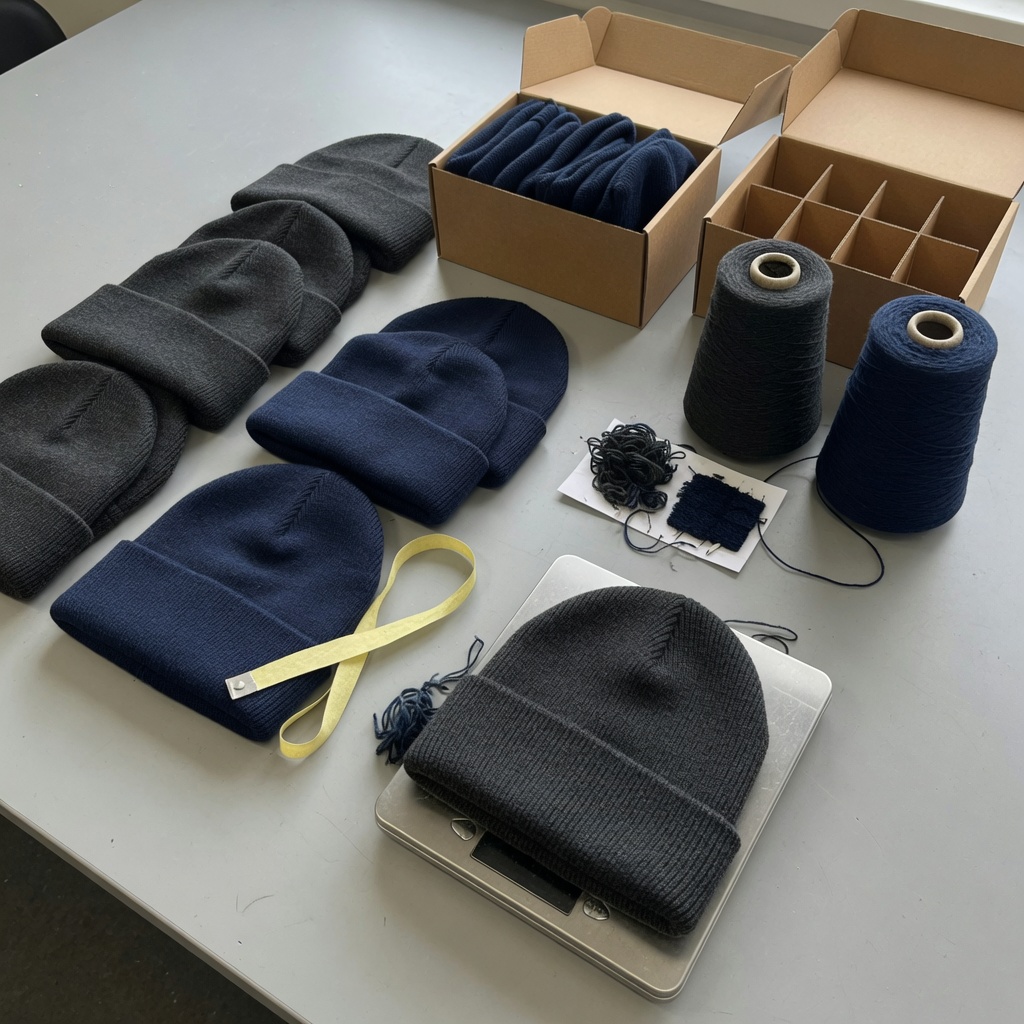
New Zealand procurement teams should finish a beanie sourcing financial stability assessment before any deposit, yarn booking or knit-capacity reservation. The decision is to approve, approve with safeguards, or stop. Approve only when the invoicing legal entity can fund yarn, wages, knitting, finishing and shipment of the approved beanie quantity. Approve with safeguards when records are incomplete but the payee authority and relationship to the knitter are documented and each payment depends on evidence. Stop when supplier, payee and workshop relationships are unexplained or undocumented, or when liquidity risk for this order is unexplained. A showroom or an online turnover figure does not show that the supplier can fund and finish the beanie order.
Procurement Tactics describes a supplier financial health assessment as a structured review of financial statements, key ratios, credit reports and payment history, used to judge whether a supplier can meet obligations through the contract and to flag liquidity or insolvency risk (Procurement Tactics). For a New Zealand beanie order, apply that definition to one check: whether the invoicing entity can buy yarn, hold one dye lot, knit, finish and ship the quantity approved on the order.
Vincent Xi, Editorial Author https://crownsforge.com/authors/vincent-xi/
This page is an editorial procurement note for New Zealand buyers. It is not a CrownsForge audit, client outcome, laboratory result or certification claim. A factory named outside New Zealand is a manufacturing-origin check only, not another sales market.
What the financial stability assessment must decide
Treat the review as a stage gate before money moves. Procurement Tactics places the assessment inside supplier selection, contractual safeguards and later monitoring, so disruption risk is handled across the contract rather than only at onboarding (Procurement Tactics).
The New Zealand buyer should close these questions before a deposit:
- Can this legal entity fund yarn and wages until shipment?
- How much cash sits in the deposit and in yarn that cannot be reused?
- Does the credit file name the same company as the bank account?
- Who owns unfinished and finished beanies if work stops?
As a general commercial control, not a measured result for any named factory, a smaller first order and staged payments limit cash exposed if work stops. A higher deposit increases the loss if insolvency occurs before export. Write the deposit, the milestones and work-in-progress ownership into the purchase order.
Documents and ratios New Zealand buyers should compare
Supplier Ally describes a financial-stability review, especially for factories in China, as a look at capital structure, profitability trend, cash flow and customer concentration, supported by registration and credit files rather than by sales claims (Supplier Ally). China in that source is a manufacturing origin. The buyer and the delivery decision in this note remain in New Zealand.
The figures in this section are screens published on that cited page. They are not New Zealand law, not an accounting standard and not a beanie-industry rule.
Supplier Ally claims that nearly 40 percent of small businesses experience significant financial losses from supplier failures within their first two years of sourcing from China. Unit: percent of businesses. Scope: that source's statement about the first two years of China sourcing; its underlying study and sample were not independently verified. As-of date: not stated on the cited page. Source: Supplier Ally. Do not read it as a New Zealand statistic. Use it only as a reason to collect documents for the beanie order.
Debt-to-equity above 3:1 is Supplier Ally's red-flag level, meaning debt greater than three times equity. Unit: ratio of debt to equity. Scope: that source's warning level for a supplier's capital structure. As-of date: not stated on the cited page. Source: Supplier Ally. A result above that level is a funding question for yarn and wages on this order, not an automatic legal breach.
Customer concentration over 40 percent of sales is Supplier Ally's flag for one customer. Unit: percent of sales. Scope: that source's concentration flag, not a share measured for any factory on this page. As-of date: not stated on the cited page. Source: Supplier Ally. If the largest account is above that flag, cash for a smaller beanie programme can disappear, or the reorder can wait behind that account, when the large customer pays late or leaves.
Ask for files that name the same entity as the invoice:
- Income statement, balance sheet and cash-flow statement for more than one labelled period.
- A third-party credit report. Supplier Ally names Dun & Bradstreet and Sinosure reports, plus bank and trade references.
- Official registration. For a mainland China factory, the same source points to SAMR registration so the name, status and address can be matched to the workshop that will knit.
- Trade references who will speak about paid invoices and shipped goods, not only about a relationship.
Read profitability and operating cash flow across the labelled periods. One strong year does not show whether yarn is paid from operations or from new deposits. A large annual sales figure does not answer a near-term cash gap: unmet bills leave the knit order exposed.
These cited pages do not publish a New Zealand duty rate, GST rate or ocean transit time, and this page does not state one. Ask a New Zealand customs broker to confirm classification, import GST treatment and fibre-labelling expectations for the blend in the specification before ranking ex-works prices. On the order, state currency, Incoterm, the deposit share and who owns work-in-progress if the contract ends early. Those clauses are buyer instructions, not CrownsForge standard terms.
Example calculation to verify in the supplier quote, not a selling price and not a market index: assume 3,000 adult beanies at USD 4.00 ex-works each. Order value is USD 12,000. A 30 percent deposit is USD 3,600. If production stops after the deposit and before shipment, at least USD 3,600 is exposed, plus approved yarn that cannot be reused. Unit: US dollars, percent of this assumed order value, and piece count. Scope: this worksheet assumption only. As-of: not a dated market price. Replace every figure with the quoted currency, quantity and deposit.
Why online revenue and floor area are weak stability evidence
Accio's page on beanie manufacturers presents marketplace screens that some buyers treat as stability evidence. The screens cover online revenue, floor area, named compliance programmes, on-time delivery, reorder rate and a lead time from Zhejiang and Hebei (Accio). Zhejiang and Hebei are manufacturing-origin hubs on that page, not sales markets for this note. As used here, the page gives no measurement date and no definition that separates platform turnover from audited sales of the invoicing entity.
US $1 million or more is the online-revenue level Accio presents as an indicator of stability for beanie manufacturers on that page. Unit: US dollars of online revenue. Scope: that page's screen only. As-of date: not stated on the cited page. Source: Accio. High online revenue is not sufficient evidence of financial stability for a New Zealand wholesale beanie order. Marketplace turnover can belong to a trading company, another product, or a different legal entity from the invoice. It does not show cash, debt or free knitting capacity.
1,000 square metres or more is the factory floor area cited on the same page. Unit: square metres of floor area. Scope: factory size on that page. As-of date: not stated on the cited page. Source: Accio. Floor area is not solvency and is not open capacity on the gauge this order needs.
On-time delivery at or above 95 percent, and reorder rates above 20 percent, are rates named on that page. Unit: percent. Scope: rates with no published numerator, denominator or date range. As-of date: not stated on the cited page. Source: Accio. Without the formula and the dates, the percentages cannot be compared with a booked New Zealand receipt date.
15 to 30 days is that page's lead-time claim for custom and wholesale beanie orders from Zhejiang and Hebei. Unit: days. Scope: the hub claim on that page. As-of date: not stated on the cited page. Source: Accio. The span is not a reserved slot for the approved yarn and decoration, and it is not ocean transit into New Zealand.
ISO 9001 sets requirements for a quality management system at a defined scope. It does not test credit strength. BSCI and WRAP, as named on the Accio page, are social-compliance programmes, not financial ratings. Mention of those names is not a certification of CrownsForge or of any factory. If a supplier offers a certificate, require the holder, address, scope, expiry and issuer, and match the address to the production floor before treating it as current.
Procurement decision table for the beanie order
Compare the file with the order, then approve, safeguard or stop. Do not release a deposit because a brochure repeats a marketplace screen. The ratio, revenue, area, delivery and lead-time figures keep the unit, scope, missing as-of date and source given above; this table does not repeat them.
| Check | Supports approval | Safeguard or stop | Order effect |
|---|---|---|---|
| Legal entity | Contracting supplier registration matches the invoice; workshop relationship and bank-account authority are documented (Supplier Ally) | Unexplained or undocumented relationship between payee and knitter | Funds may miss the factory that knits the beanies |
| Statements | Income, balance sheet and cash flow for more than one labelled period | Undated summary or refusal | Cannot see whether operations fund yarn |
| Leverage | Debt-to-equity explained against the Supplier Ally red-flag ratio cited above (Supplier Ally) | Red-flag leverage with no funding plan for this order | Yarn or wage payments may stop mid-run |
| Concentration | Largest-customer share disclosed and explained against the Supplier Ally flag cited above, or a written contingency (Supplier Ally) | Share not disclosed | The beanie reorder can wait behind a larger account |
| Credit file | Current Dun & Bradstreet, Sinosure or equivalent, plus payment references (Supplier Ally) | No external file | Distress can stay hidden |
| Revenue | Sales tied to the same periods as the statements | Online-revenue screen offered as proof of stability (Accio) | Marketplace turnover is not cash |
| Capacity | Monthly beanie output and loading during the ship window | Floor area claimed without a loading plan (Accio) | Floor area is not a reserved needle |
| Delivery | On-time formula, dates and order count | Undefined delivery rate with no formula (Accio) | New Zealand receipt date is not evidenced |
| Payment | Deposit and balance tied to yarn receipt and accepted inspection | Large upfront payment with no milestone | Loss rises if failure comes before export |
| Continuity | No yarn or dye-lot change without written approval; finished-gram tolerance set | Substitution allowed to protect a date | Colour and finished weight can drift |
Safeguards when accounts are incomplete
A factory may refuse full audited accounts. Record that limit and add controls. Refusal is not, by itself, proof of failure, and it is not a reason to skip the review. Safeguards and monitoring are part of the assessment Procurement Tactics describes (Procurement Tactics).
Cap the first beanie order and the deposit at a loss the business can absorb. Pay against yarn receipt, an in-process count and a pre-shipment inspection. Keep the knit specification and artwork so another factory can start if the order must be moved. Require every dye, knit or embroidery subcontractor to be named before approval. Repeat the registration and credit checks before the next season, because a file from onboarding goes stale.
Supplier Ally lists site visits among ways to notice distress on the floor (Supplier Ally). A visit does not replace financial statements. No factory visit, client trial or measured outcome is reported on this page.
Tie financial risk to the beanie specification
Cash pressure can show up as a lighter knit, a fibre change or a second dye lot. Make each of those a contractual reject before the deposit, not a surprise at receipt in New Zealand.
In the specification, state fibre percentages, yarn count, gauge, target head size and tolerance, cuff height, crown length, grams per finished beanie and tolerance, colour standard, decoration method and packing. Agree the shrinkage and colourfastness method, and require the lot report with the shipment. A logo on a web page is not that report.
Example calculation, assumption only, to verify against the sealed sample: a target of 80 grams with a tolerance of 5 grams means the illustrative band is 75 to 85 grams. A piece at 70 grams is 10 grams under target and outside that band. If every piece in the same worksheet quantity of 3,000 beanies were 10 grams light, the difference would be 30,000 grams, or 30 kilograms, of fibre below the target. Unit: grams per beanie, piece count and kilograms of fibre difference. Scope: this illustration only. As-of: not a dated product weight, and no factory weight is claimed. Weigh a defined sample at inspection and apply the tolerance written in the order.
RFQ Checklist
- Ask the supplier to name the legal entity, registration number and bank-account holder for the beanie invoice, and require the three to match before any payment.
- Require the manufacturer to provide statements for more than one labelled reporting period, or a current third-party credit report, before you approve a deposit.
- Ask the supplier to state the largest customer's share of sales and to explain any share above 40% of sales. Unit: percent of that supplier's sales. Scope: Supplier Ally's customer-concentration flag, not a share measured for a named factory. As-of date: not stated on the cited page. Source: Supplier Ally.
- Require the manufacturer to report debt-to-equity and to explain funding of yarn and wages for this order if the ratio is above 3:1. Unit: ratio of debt to equity. Scope: Supplier Ally's red-flag level, meaning debt greater than three times equity, not a statute. As-of date: not stated on the cited page. Source: Supplier Ally.
- Specify fibre, finished grams per beanie with tolerance, size, cuff, colour standard and a written ban on substitution.
- Ask the supplier to define on-time delivery with a numerator, a denominator and a date range rather than an undefined rate of 95% or higher. Unit: percent. Scope: the on-time rate named on the Accio beanie-manufacturer page, which publishes no numerator, denominator or date range. As-of date: not stated on the cited page. Source: Accio.
- Compare the offered lead time with the published 15 to 30 day hub claim, then lock a dated schedule for your yarn and decoration instead of the generic range. Unit: days. Scope: Accio's lead-time claim for custom and wholesale beanie orders from Zhejiang and Hebei, stated there as manufacturing origins and not as transit into New Zealand. As-of date: not stated on the cited page. Source: Accio (Accio).
- Require the manufacturer to list every subcontractor that will knit, dye or embroider, and withhold site approval until the same identity and credit checks are complete.
- Specify currency, Incoterm and the evidence that releases the deposit and the balance.
- Verify classification, import GST treatment and fibre labelling with a New Zealand customs broker before you accept a price.
- Approve the inspection plan for count, piece weight, measurements and critical defects, and state that balance payment follows your acceptance of that report.
Method, limits and checks still open
How this page was derived: it is an editorial comparison of three public sources for a New Zealand beanie procurement decision. It is not a supplier score and it is not a test of any named factory. Procurement Tactics supplies the definition of a financial health assessment and the role of statements, ratios, credit reports, payment history, contractual safeguards and monitoring (Procurement Tactics). Supplier Ally supplies the China-sourcing context for supplier-failure losses, the debt-to-equity flag, the customer-concentration flag, and the document names SAMR, Dun & Bradstreet, Sinosure, bank references, trade references and site visits (Supplier Ally). Accio supplies the marketplace screens for beanie manufacturers: online revenue, floor area, mention of ISO 9001, BSCI and WRAP, on-time delivery, reorder rate and hub lead time in Zhejiang and Hebei (Accio). Each exact figure above carries its unit, scope, source and as-of context beside the number. The US-dollar deposit example and the gram example are labelled assumptions for a buyer worksheet, not quoted prices or measured weights.
Limits and what to verify: the cited pages, as used here, do not give as-of dates, sample frames or audit opinions for the percentages and ratios. Supplier Ally's loss statement is not an official New Zealand statistic. Crossing that source's leverage flag or concentration flag is a published warning, not a statute. Naming ISO 9001, BSCI or WRAP does not certify CrownsForge or any factory. Only a current certificate whose holder, address, scope and expiry match the production site would do that, and no certificate is reproduced here. Online revenue is not audited sales. A hub lead-time claim is neither reserved knitting capacity nor freight time into New Zealand. Confirm classification, import GST and freight with a New Zealand customs broker and forwarder on the actual Incoterm and fibre blend. Refresh the credit report before each reorder. A satisfactory credit file still leaves the sealed sample, the gram tolerance and pre-shipment inspection as separate acceptance controls.
Vincent Xi, Editorial Author, is the bylined author: https://crownsforge.com/authors/vincent-xi/. The public author profile is the only attribution used here. No personal factory trial, client result, credential or certification is claimed.
Discuss Your Requirements
Review our manufacturing capabilities, then share your specifications for a supplier-fit review.