Baseball Cap OEM Subtier Vendor Oversight for Europe Manufacturing Buyers
Baseball Cap OEM Subtier Vendor Oversight for Europe Manufacturing
Baseball cap oem subtier vendor oversight is the buyer process for knowing, approving, and controlling every company behind the main supplier that touches materials, components, decoration, assembly, packing, or inspection for a baseball cap order. For Europe buyers, the main OEM contact is rarely the whole supply chain. Fabric, peak inserts, sweatbands, eyelets, closures, embroidery, printing, labels, and cartons may each come from a different subtier vendor. Oversight makes those hidden steps visible before sampling and before bulk production, so the buyer and the supplier agree who does what, what can change, and what needs approval first.
This page focuses only on subtier vendor oversight for baseball cap manufacturing. It does not replace a product specification. Instead, it helps a buyer structure questions, comparison criteria, and approval fields that connect the cap specification to the vendors who actually supply or process each part.
How Subtier Vendor Oversight Works in Baseball Cap Manufacturing for Europe
Subtier vendor oversight starts with a simple distinction. The OEM supplier is the party the buyer contracts with. A subtier vendor is any other party that supplier uses to source, make, decorate, finish, pack, or check part of the order. Oversight does not mean the buyer must manage every subtier vendor directly. It means the buyer defines disclosure, approval, change control, and evidence expectations, and the OEM supplier remains responsible for coordinating its vendors against the agreed specification.
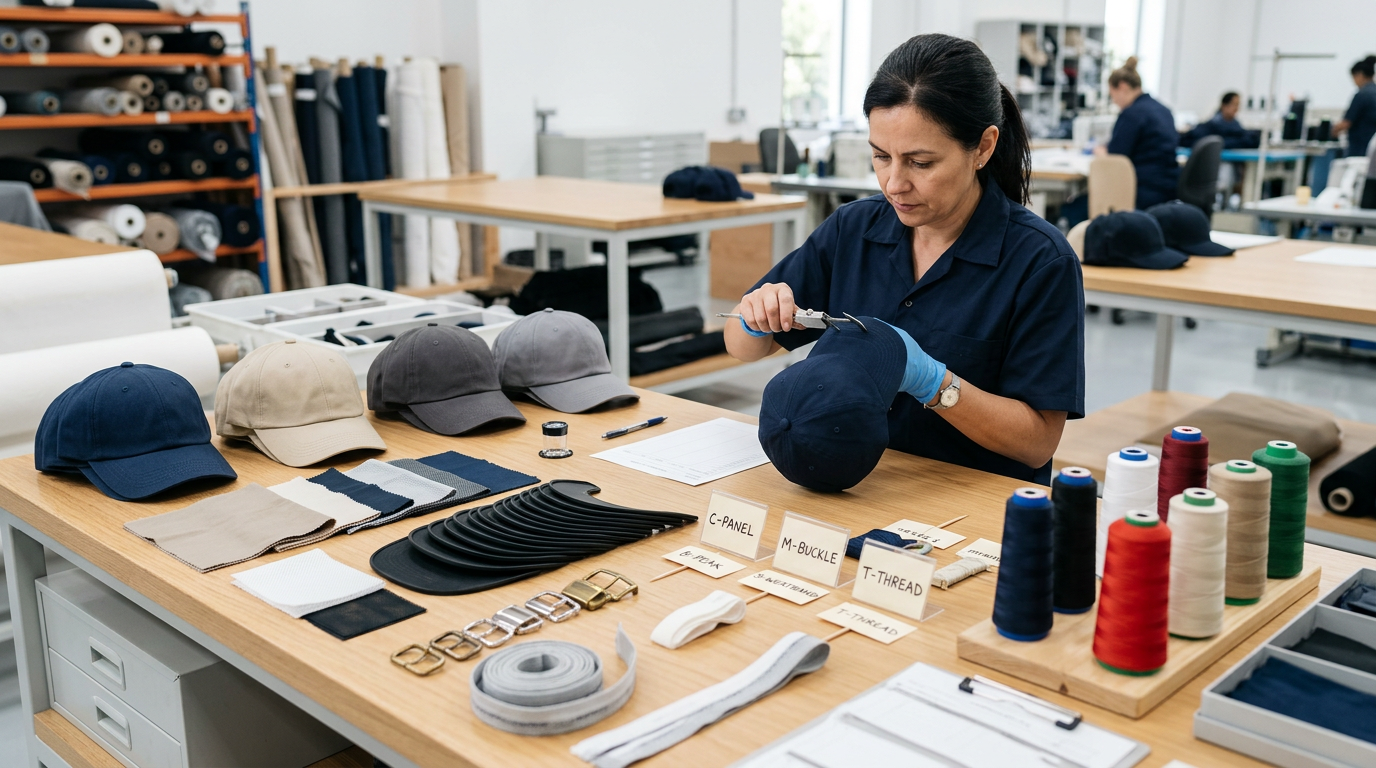
For a baseball cap, useful oversight usually covers five layers. First, material vendors for shell fabric, lining, sweatband, and interlining. Second, component vendors for peak inserts, eyelets, buttons, buckles, hook and loop closures, elastic, and thread. Third, decoration vendors for embroidery, printing, patches, labels, and transfers if those steps are not done by the OEM supplier itself. Fourth, assembly and finishing locations if sewing, shaping, steaming, or trimming is split across sites. Fifth, packing and inspection support if cartons, polybags, inserts, or final checks are handled elsewhere.
Europe adds a coordination point rather than a single uniform rule. Buyers selling into different European markets should ask the supplier to identify which documentation, labelling information, and product information fields the supplier will provide for the intended destination, and should not assume that one set of paperwork fits every country or sales channel. Where a requirement depends on the destination country, the product claim, or the material composition, the buyer should record the agreed field in the order documents and ask the supplier to confirm what will be supplied, rather than relying on a general assurance.
Good oversight is proportionate. A repeat order using the same approved vendors and the same specification needs a lighter review than a new cap with a new fabric, a new decoration vendor, or a new assembly site. The buyer should state in advance which changes trigger a fresh approval, which changes only need notification, and which routine replenishment actions need no notice.
Buyer Decision Table for Baseball Cap OEM Subtier Vendor Oversight
Use the table below to compare OEM suppliers on process control, not on unsupported claims. Each row is a buyer-defined check. Ask every shortlisted supplier to answer in the same format so the comparison is consistent across quotations.
| Decision area | What to compare | Buyer action before approval | If left undefined |
|---|---|---|---|
| Subtier scope disclosure | Which materials, components, decoration steps, assembly steps, and packing steps are handled by parties other than the OEM supplier | Ask the supplier to provide a written subtier list linked to the cap specification and sample version | The buyer approves a sample without knowing who made key parts of it |
| Material vendor control | How shell fabric, sweatband, lining, and thread vendors are selected and linked to the approved material specification | Require the supplier to name the material source for each approved swatch and to link it to the sample record | A later bulk order may use a different material source with a different hand feel or colour behaviour |
| Component vendor control | Sources for peak inserts, eyelets, buttons, closures, and labels, and how component substitutions are handled | Specify which components are locked to the approved sample and which allow an agreed equivalent | Small visible or functional parts may change without the buyer noticing until delivery |
| Decoration subtier control | Whether embroidery, printing, patches, or transfers are done in-house or by a subtier vendor, and how artwork files are controlled | Ask the supplier to confirm the decoration location, the artwork version, and the approval sample for that step | Artwork, stitch execution, or print placement may vary between sample and bulk |
| Assembly site control | Whether sewing, shaping, and finishing happen at one site or are split, and how work moves between sites | Require the supplier to disclose each production site used for the order and the step performed at each site | The buyer cannot trace a quality issue to the step or site where it occurred |
| Change approval rights | Which subtier changes need prior written buyer approval, notification only, or no notice | Specify approval triggers in the purchase documents before sampling starts | The supplier may treat a vendor change as routine while the buyer treats it as material |
| Sample to bulk linkage | How the approved sample connects to the subtier vendors, materials, and components used for bulk production | Ask the supplier to keep a sample record that lists the vendors and versions used to make the approved sample | Bulk production may not match the sample the buyer actually approved |
| Inspection and traceability | How cartons, lots, and production batches link back to materials and components, and where checks happen | Require the supplier to define lot identification, check points, and the records the buyer will receive | A defect found on arrival cannot be isolated to a batch, material, or process step |
| Packing subtier control | Who supplies cartons, bags, inserts, and labelling, and how packing instructions are passed to that party | Specify the packing instruction version and ask the supplier to confirm who received it | Packing or labelling errors may appear even when the caps themselves are correct |
A supplier that answers these rows clearly is easier to compare than one that offers only a general assurance of quality. Gaps in the answers are not automatic grounds for rejection, but they should become explicit RFQ questions or order conditions before the buyer commits.
A Practical Process for Setting Up Oversight Before Production
The following steps sequence the work from first enquiry to bulk approval. Numbered steps are a process aid, not a promise about timing or outcome.
- Define the cap specification first, including crown profile, panel construction, fabric, peak type, closure, sweatband, decoration method and placement, label content fields, colour references, size range, and packing method, so subtier questions attach to a concrete product.
- Ask the OEM supplier to map each specification element to the party that supplies or performs it, marking each element as in-house, subtier supplied, or subtier processed.
- Review the map for concentration and visibility, noting any element where the buyer has no named source, no approval sample, or no change rule.
- Agree approval triggers, covering changes to material vendor, component vendor, decoration vendor, assembly site, artwork version, and packing supplier, and record which triggers need a new sample.
- Link the approved sample to its subtier record, so the sample, the specification version, the artwork version, and the vendor list all reference the same version identifier.
- Set the evidence the buyer will receive at each stage, such as material swatches tied to the specification, decoration approval samples, pre-production confirmation, and packing confirmation, without assuming a document exists until the supplier confirms it can provide it.
- Confirm how issues will be handled, including how a defect is traced to a lot or step, how affected units are separated, and what corrective action the supplier will propose for buyer approval.
- Lock the agreed subtier list and change rules into the order documents, so sampling, bulk production, and any repeat order start from the same baseline.
This process keeps the OEM supplier accountable for its own supply chain while giving the buyer a clear view of where the cap is actually made and sourced. It also prevents a common failure: approving a strong sample and then discovering during bulk production that a different vendor supplied the fabric, decoration, or closure.
RFQ Checklist
Copy these buyer actions into the RFQ so every supplier answers the same oversight questions for the same baseball cap specification.
- Ask the supplier to list every subtier vendor by step, covering materials, components, decoration, assembly, finishing, packing, and inspection support for this order.
- Ask the supplier to confirm which steps are performed in-house and which are performed by a subtier vendor, and to name the location type for each outsourced step.
- Require the manufacturer to link each material and component in the specification to its source and to the approved sample record.
- Specify which subtier changes require prior written buyer approval, which require notification, and which are not permitted for this order.
- Require the supplier to obtain buyer approval for a new decoration vendor, material vendor, or assembly site before using that vendor on bulk production.
- Ask the supplier to confirm the artwork, label, and packing instruction versions that will be passed to any subtier vendor, and how version control is maintained.
- Specify the lot, batch, and carton identification the buyer requires so delivered caps can be traced back to materials, components, and production steps.
- Ask the supplier to state what records, swatches, and approval samples it will provide before production, during production, and before dispatch, and in what format.
- Require the supplier to describe how a quality issue found at inspection or on arrival will be traced, contained, and reported back to the buyer.
- Ask the supplier to confirm what product information and documentation it will provide for the intended Europe destination, and to flag any field it cannot provide.
Change Control and Ongoing Review for Europe Orders
Oversight continues after the first order. The most useful control is a short change log maintained by the OEM supplier and shared with the buyer. Each entry should record the date the change was proposed, the specification element affected, the current vendor and the proposed vendor, the reason given, whether a new sample is required, and the buyer decision. A change is not approved because it was mentioned in a message thread. It is approved when the buyer records the decision against the specification version.
For repeat orders into Europe, the buyer should re-confirm the subtier list rather than assuming it is unchanged. Vendors, sites, and component sources can change between seasons even when the cap design does not. A brief re-confirmation at RFQ stage for each repeat order catches silent changes while there is still time to request a sample or an alternative.
Buyers should also separate three conversations that are often merged. Specification changes are about the cap itself. Vendor changes are about who supplies or performs a step. Commercial changes are about price, quantity, or delivery terms. A vendor change can affect the product even when the written specification looks identical, so it deserves its own approval path and, where the buyer decides it is needed, its own sample.
Finally, keep the oversight record proportionate and usable. A single maintained vendor map, a sample record linked to that map, a change log, and the RFQ answers form a compact file that supports sampling, bulk approval, issue tracing, and repeat ordering. That file, agreed between buyer and supplier, is the practical outcome of baseball cap oem subtier vendor oversight: no hidden step, no silent substitution, and no approval based on assumption.
Discuss Your Requirements
Review our manufacturing capabilities, then share your specifications for a supplier-fit review.