Baseball Cap OEM Customization Options for Manufacturing RFQs in Canada
By Vincent Xi, Editorial Author
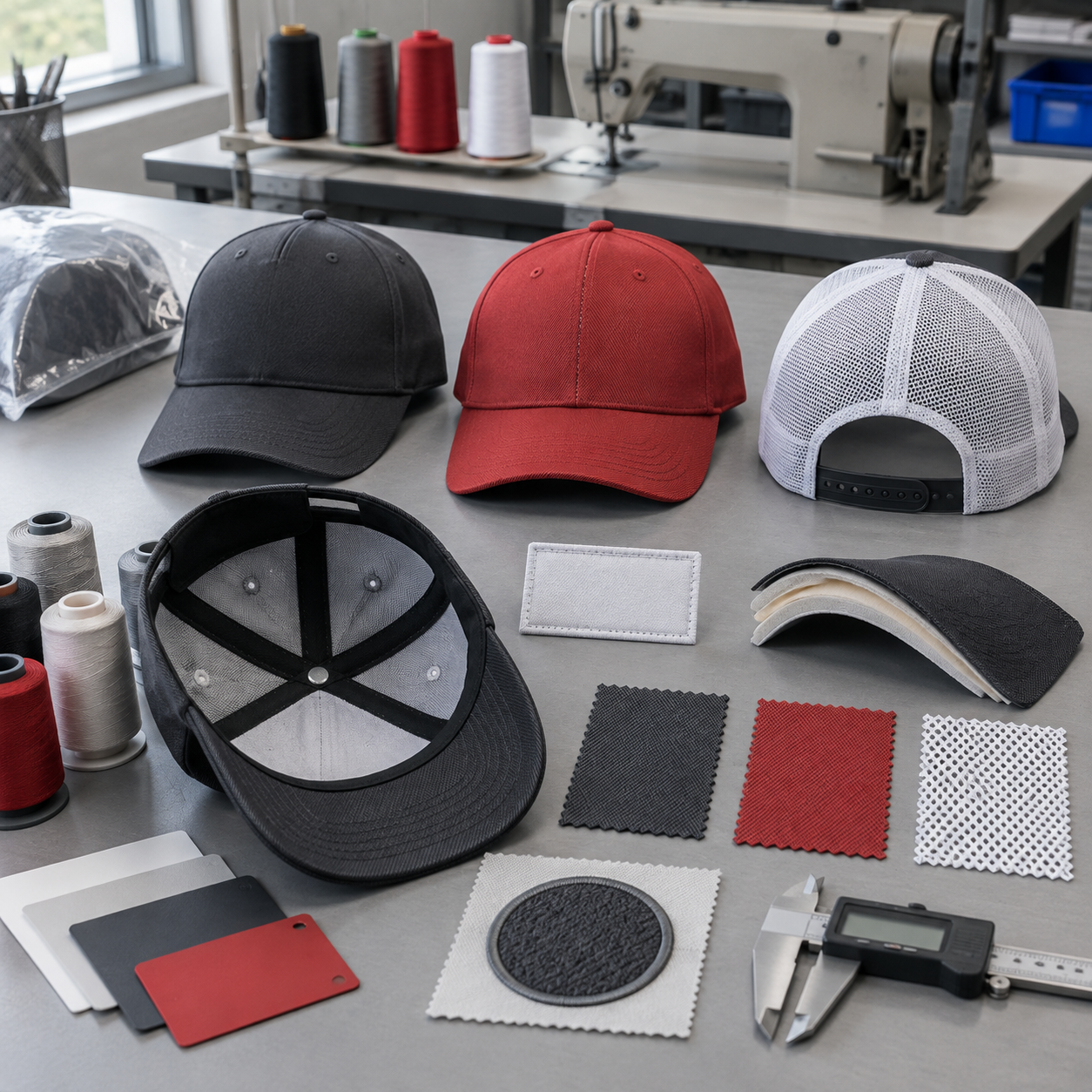
For a Canada-bound baseball cap OEM order, customization choices need to become measurable manufacturing inputs before supplier prices can be compared. Start with the cap construction and production artwork, then define component materials, visor, closure, fit, decoration, trims, packing, samples, and commercial scope. Send every candidate supplier the same RFQ revision and require written disclosure of omissions, assumptions, substitutions, and exceptions.
A centre-front seam can interfere with detailed centred artwork, while an uninterrupted front presents a different decoration field (baseball-cap procurement guide). That source supports the construction concern, but it does not prove that a quoted supplier can reproduce the requested result. Verify capability through a supplier-specific bill of materials, proposed panel pattern, production-equivalent decoration sample, and finished cap sample.
The controls below are proposed buyer requirements, not claims about CrownsForge capabilities or guaranteed supplier performance. Catalogue terms such as premium, heavy, standard, or high quality remain incomplete unless the quote states the underlying material, construction, measurement, or supporting evidence.
Canada RFQ framework for baseball cap OEM customization options
Use the same measurable fields for every supplier response. A price is not comparable when its construction, artwork, packing, quantity, or exclusions differ from the RFQ basis.
| Customization decision | Put in the RFQ | Require from the supplier | Approval consequence |
|---|---|---|---|
| Front panel and crown | Profile, structured or unstructured construction, panel and seam layout, support-material requirement, button, eyelets, artwork dimensions, placement datum, and buyer-defined tolerances | Proposed pattern, support-material description, bill of materials, decoration sample, and finished sample | Keep artwork and construction open until seam interaction, dimensions, and support can be inspected |
| Face and back materials | Fibre composition, fabric construction, mass or thickness with unit and measurement basis, colour reference, and mesh requirement when applicable | Component-level material statement, physical swatches, proposed substitutions, and finished sample | Do not approve a marketing descriptor in place of measurable material information |
| Visor | Flat or pre-curved form, insert specification, top and underside materials, edge treatment, stitching, and buyer-defined measurement points | Visor construction statement and finished sample | Resolve asymmetry, undocumented materials, and construction changes before release |
| Closure and fit | Closure type, material, colour, attachment details, target head-circumference range with unit, and measurement method | Closure specification, recorded adjustment range, and measured fit sample | Keep fit approval open when the measurement method or evidence is missing |
| Decoration | Process by location, controlling artwork revision, finished dimensions, colours, placement origin, tolerance, and backing or attachment method | Production-equivalent sew-out, patch, or print on the proposed cap material | Do not use a digital rendering as the sole approval record when construction can affect the result |
| Labels, trims, and packing | Buyer-approved content, dimensions, locations, pack format, and carton-mark files | Trim schedule, physical label samples, and packed sample | Resolve unapproved copy, substituted trims, and packing exceptions before production |
| Commercial basis | Quantity by variant, currency, requested breakdown, quote validity, inclusions, exclusions, sample charges, tooling charges, and requested delivery basis | Dated quote tied to the RFQ revision, with assumptions and exceptions identified | Mark the quote non-comparable until material differences are clarified or normalized |
The custom-hat design source lists cotton, mesh, and polyester as material starting points and places style selection before final fabric and decoration decisions (custom-hat design guide). This supports an option sequence, not a performance ranking for any quoted fabric. Guidance on finding a custom-cap manufacturer discusses shape, fit sensitivity, and physical comparison (custom cap manufacturer guidance). It supports sample-based review but does not provide acceptance tolerances or validate a supplier's measurements, capacity, or outcome.
Converting customization options into approval evidence
Panel layout and crown support
Connect the panel layout to the production artwork instead of selecting construction from a style name alone. For each front decoration, state the controlling file and revision, finished width and height in millimetres, placement datum, seam restriction, horizontal and vertical tolerances, required crown profile, and support construction.
Require the supplier to identify the panel pattern, front support material, support location, and attachment method. These are verification fields, not assumed features of a baseball cap. A proposed change to the seam layout or support material should appear as a written exception and trigger a replacement sample when it can affect appearance, fit, or decoration.
For seam-sensitive artwork, request a production-equivalent sew-out on the proposed cap fabric and construction. The seam-interaction concern comes from the cited procurement guide; the supplier's finished sample remains the evidence for the quoted program (hats.sn-intl.com).
Component materials and colour
Build a component schedule covering the crown, mesh back when used, visor top, visor underside, sweatband, seam tape, closure, labels, and decoration. For each applicable component, request:
- Fibre composition and fabric construction.
- Material mass or thickness, including the unit and measurement basis.
- Buyer-approved colour reference and physical approval method.
- Proposed substitutes disclosed before sampling.
- Any buyer-required test method, specimen basis, and acceptance criterion.
Cotton, mesh, and polyester appear in the supplied design source as option context (ottocap.com). The source does not establish durability, colourfastness, shrinkage, weather resistance, or other performance results for the material in a supplier quote. A fibre name should not replace evidence from an agreed test method when performance is part of the RFQ.
Visor, closure, and fit
Specify the visor and closure as bill-of-material items. For the visor, request its form, insert material, layer materials, underside treatment, edge construction, stitching, and measurement points. For the closure, request the component type, material, colour, attachment details, adjustment range, and substitution rule.
Define fit through a target circumference range with a stated unit and a repeatable buyer-defined measurement method. Require the supplier to record those same measurement points on the approval sample. The cited physical-comparison guidance supports reviewing shape and fit on samples, but the buyer must define the applicable tolerances for the quoted construction (Purnaa).
Decoration and trims
List each decoration location separately. State the process, finished dimensions, colour references, placement datum, tolerance, backing or attachment method, and receiving material. Require disclosure when a process limitation would alter the artwork, seam position, cap structure, or quoted amount.
For embroidery, record the supplier's quote-specific stitch estimate and approve a sew-out on the proposed material. For patches or prints, require a production-equivalent sample using the proposed substrate and attachment method. Treat an estimate as a quote input until the physical sample and commercial basis are approved.
Include side or rear decoration, visor decoration, interior labels, hangtags, and packing identifiers only when they belong to the program. The design source supports coordinating style, material, and decoration decisions; it does not establish a mandatory trim set (custom-hat design guide).
For a Canada-bound order, submit only buyer-approved label and packing copy. The cited sources do not establish Canadian label wording, bilingual content, customs treatment, taxes, freight, brokerage, or transit requirements. Confirm those transaction-specific matters through qualified current review before approving copy or presenting any amount as landed cost.
Manufacturing sample and quote controls
| Control | Required record | Stop condition |
|---|---|---|
| Revision control | Matching revision identifier on the specification, artwork, sample request, and quote | Documents refer to different revisions |
| Exception schedule | Supplier list of omissions, assumptions, substitutions, and exclusions | A material or process change is undisclosed or unresolved |
| Bill of materials | Component-level construction and material response | Descriptions are incomplete or conflict with the sample |
| Measurement control | Buyer-defined points, units, method, and tolerances | Results cannot be reproduced from the written record |
| Decoration approval | Identified physical sample tied to the artwork and cap construction | Approval relies only on a rendering or unrelated material |
| Sample identity | Supplier, sample identifier, RFQ revision, material revision, and approval status | The sample cannot be linked to the quote and specification |
| Change control | Written notice and buyer disposition for pattern, material, process, closure, trim, or packing changes | A change that can affect the finished cap has not been reviewed or resampled |
| Document scope | Holder, manufacturing site, product or process scope, issue status, and validity information where applicable | A certification name or logo is offered without a current scope document |
| Quote normalization | Common quantity, specification, currency, packing, inclusions, exclusions, and delivery basis | Material quote differences remain unrecorded |
| Bulk release | Approved specification, identified physical sample, exception record, and supplier confirmation | Any controlling approval field remains open |
No specific standard is named because the cited evidence does not establish that a particular standard applies to this program. If the buyer specifies a standard or test method, quote its requirements separately from the supplier's own operating practice. Do not imply certification without a current document identifying the relevant holder, site, scope, status, and validity period.
The wholesale-supplier source presents quality, reliability, and price as broad supplier-selection considerations (Aung Crown / accaps). In this RFQ framework, those considerations are investigated through documents, samples, measurements, exception records, and comparable quote fields. The source is not independent proof of a supplier's capability, reliability, price, certification, or customer outcome.
The pre-production approval record should identify the supplier, sample, RFQ revision, artwork revision, component materials, measured construction, visor, closure, fit, decoration, labels, packing, accepted exceptions, and approval status. Bulk release should require written supplier confirmation that the approved specification and identified sample control manufacturing.
Practical Canada RFQ checklist for baseball cap customization options
Use this checklist as the buyer-side completeness record for each supplier response. A checked item means the requested information or evidence is present; it does not by itself prove capability or compliance. Keep unresolved items open and record their effect on price comparison, sampling, or bulk release.
RFQ issue package
- [ ] Record the project name, RFQ revision, issue date, response deadline, buyer contact, and approval authority.
- [ ] State Canada as the destination market and identify the requested delivery location and delivery basis.
- [ ] Enter the finished quantity by style, colour, closure, and other variant, plus the buyer's permitted quantity-variance rule.
- [ ] Attach the controlling cap specification, artwork files, artwork revision, placement drawing, colour references, and measurement method.
- [ ] Define the crown profile, structured or unstructured construction, panel and seam layout, support materials, button, eyelets, and sweatband.
- [ ] Complete the component schedule for crown fabric, mesh when used, visor layers, closure, seam tape, labels, trims, decoration, and packing.
- [ ] State the visor form, insert requirement, top and underside materials, edge treatment, stitching, and measurement points.
- [ ] State the closure type, material, colour, attachment method, adjustment range, target fit range, and substitution rule.
- [ ] List every decoration location separately with its process, finished dimensions, colour references, placement datum, tolerance, backing, and receiving material.
- [ ] Attach buyer-approved label, trim, packing, and carton-mark content. Record the status of any transaction-specific Canadian legal or compliance review without assuming requirements from the supplied sources.
Required supplier response
- [ ] Return a dated quote that identifies the RFQ revision, currency, validity, quantity basis, inclusions, exclusions, and delivery basis.
- [ ] Provide a component-level bill of materials and identify the proposed manufacturing site and manufacturing origin for transaction review.
- [ ] List every omission, assumption, substitution, exception, and process limitation in a separate response schedule.
- [ ] Provide physical swatches and a sample plan tied to the proposed materials, cap construction, artwork revision, and packing method.
- [ ] Itemize the undecorated cap, each decoration location, labels, trims, packing, samples, tooling, and requested delivery line.
- [ ] State the measurement method used for fit, visor, placement, and other buyer-controlled dimensions.
- [ ] Supply a production-equivalent decoration sample and finished cap sample identified by supplier, sample code, specification revision, and material revision.
- [ ] Provide a current scope document for any certification claim, identifying the holder, site, applicable scope, issue status, and validity information.
Comparison and release
- [ ] Normalize quantity, variant allocation, currency, materials, decoration scope, packing, delivery basis, inclusions, and exclusions before comparing prices.
- [ ] Match each physical sample to the quote, bill of materials, specification, and artwork revision.
- [ ] Inspect seam interaction, crown support, dimensions, fit, visor construction, closure operation, decoration, trims, and packing against buyer-defined criteria.
- [ ] Record accepted and rejected exceptions and require written confirmation of any resulting quote or sample revision.
- [ ] Verify transaction-specific Canadian label, customs, tax, freight, brokerage, and landed-cost inputs through qualified current sources before relying on them.
- [ ] Release bulk manufacturing only after the specification, identified physical sample, quote basis, exception schedule, and change-control terms are approved in writing.
Example quote assumptions for customization options
Every exact value in this section is a hypothetical example assumption for a Canada-bound baseball cap RFQ. The values are not source-derived specifications, dated market observations, factory defaults, averages, or forecasts. They have no market as-of date. Verify each value in the supplier's dated quote and approved sample before using it in an award decision.
| Example input | Hypothetical scope | Quote verification required |
|---|---|---|
| Finished quantity | 1,000 finished caps for the example Canada-bound program | Confirm the finished quantity, variant allocation, and permitted quantity variance in the supplier's dated quote |
| Colour split | 1 colourway across 1,000 finished caps in the same example program | Confirm colour allocation, material availability, and the quote basis |
| Front artwork envelope | 55 mm wide x 35 mm high per cap for the example front decoration | Confirm finished dimensions, seam interaction, and buyer-defined placement tolerance on the physical sample |
| Embroidery estimate | 8,000 stitches per cap for the example front artwork revision | Confirm the supplier's estimate, decoration amount, artwork revision, and production-equivalent sew-out |
| Unit pack | 1 finished cap per individual unit pack for the example packing scope | Confirm the pack material, method, identifiers, and itemized quote inclusion |
Request separate quote lines for the undecorated cap, decoration by location, labels and trims, packing, samples, tooling, and any buyer-requested delivery line. Compare quotes only after quantity, materials, artwork dimensions, packing, currency, inclusions, and exclusions share the same basis. Record any remaining difference as an exception rather than treating unlike prices as equivalent.
The supplied sources do not support a Canada-specific landed-cost figure, customs classification, tariff treatment, tax amount, freight rate, brokerage charge, or delivery-time claim. Verify manufacturing origin, shipment information, and the final product specification for the current transaction before calculating landed cost.
Evidence, methodology, and limitations
| Source context | Supported use in this article | Not established by the source |
|---|---|---|
| Construction: baseball-cap procurement guide | Panel and seam vocabulary, possible interference between a centre seam and detailed centred artwork, and organization of crown, brim, and closure decisions | A quoted supplier's capability, measurements, tolerances, certification, test result, or production outcome |
| Materials and design: custom-hat design guide | Cotton, mesh, and polyester as option context, plus the sequence of choosing style before final fabric and decoration decisions | Guaranteed material performance, a mandatory process, or supplier-specific results |
| Physical sample review: custom cap manufacturer guidance | Shape and fit sensitivity and the value of physical comparison | Buyer acceptance tolerances, production capacity, or proof of a supplier outcome |
| Supplier selection: wholesale supplier article | Quality, reliability, and price as broad areas to investigate through evidence | Independent verification of any supplier, price, certification, client result, or customer outcome |
| Author attribution: Vincent Xi author profile | Author name, Editorial Author role, and profile URL | Factory, production, testing, sourcing, or client experience |
Methodology. Each cited page was mapped only to the narrow construction, material, design, sample-review, or supplier-selection context shown above. Editorial recommendations were derived by converting those contexts into RFQ inputs, supplier evidence requests, checklist fields, comparison fields, and approval conditions. No cited statement was recast as a CrownsForge capability. Publication and access dates were not supplied for the guide pages, so no time-sensitive legal, logistics, pricing, or performance conclusion was derived from them. The quantitative values are confined to the clearly labelled hypothetical RFQ assumptions.
Limitations and items to verify. Confirm supplier-specific materials, measurements, tolerances, decoration parameters, sample charges, tooling, production timing, packing, manufacturing origin, quote scope, and document validity in the dated response and approved sample. Material names do not replace a buyer-defined test method or acceptance criterion. The supplied evidence does not establish Canada-specific legal, labelling, customs, tax, freight, brokerage, or product-compliance obligations. No factory visit, product test, certification, award, client result, or customer outcome is claimed.
Author note. Vincent Xi is the named Editorial Author. This article is an editorial synthesis of the cited public sources.
Discuss Your Requirements
Review our manufacturing capabilities, then share your specifications for a supplier-fit review.